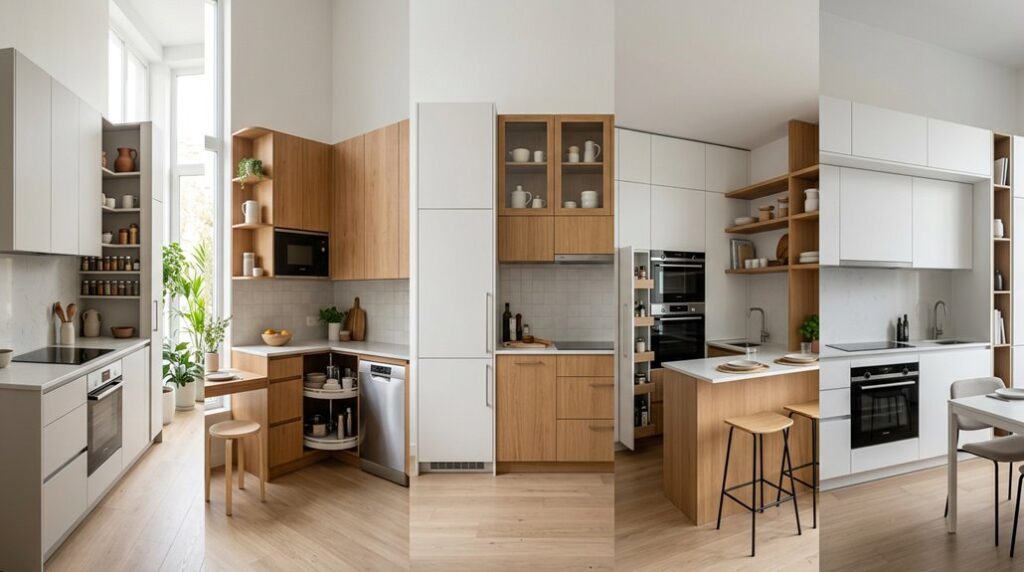
Most people overlook how ceiling-height cabinets reclaim up to 40% of wasted vertical space in compact kitchens.
I’ll show you how extending storage upward, layering in bright colors like Benjamin Moore’s “Swiss Coffee,” and strategizing your layout create functional cooking areas from cramped studios.
The techniques that follow, from smart zoning to rent-friendly upgrades, reveal why constraints often spark the most practical design solutions.
Make Tiny Kitchens Feel Twice as Big: Vertical Storage + Light Colors
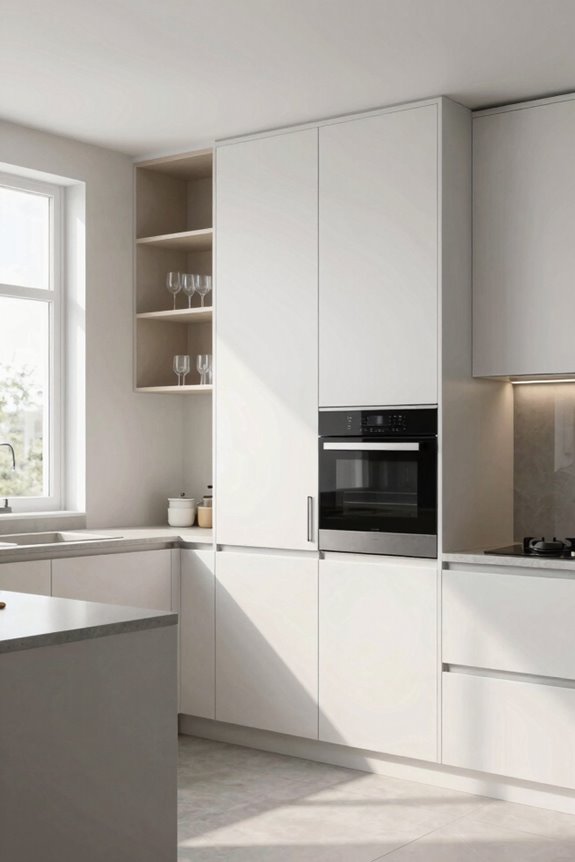
How do designers make cramped kitchens feel spacious instead of suffocating? They utilize two interconnected strategies: vertical storage and light colors.
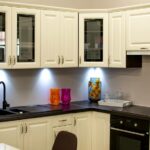
Extending wall cabinets to the ceiling-height maximizes usable square footage while drawing the eye upward, creating visual expansion in small kitchens. Open shelving and tall cabinetry eliminate wasted space above standard units, boosting efficient layout possibilities.
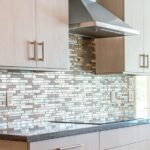
Simultaneously, bright palettes matter enormously. Lighter colors on cabinetry, countertops, and backsplashes reflect more light, contributing to an open feel. When you combine ceiling-height cabinets with soft whites or pale neutrals, you’re not just adding storage solutions; you’re fundamentally shifting how the space reads.
This dual approach maximizes space psychologically and functionally, making your small kitchen feel larger while maintaining organizational efficiency.
Zone Your Kitchen to Maximize Function
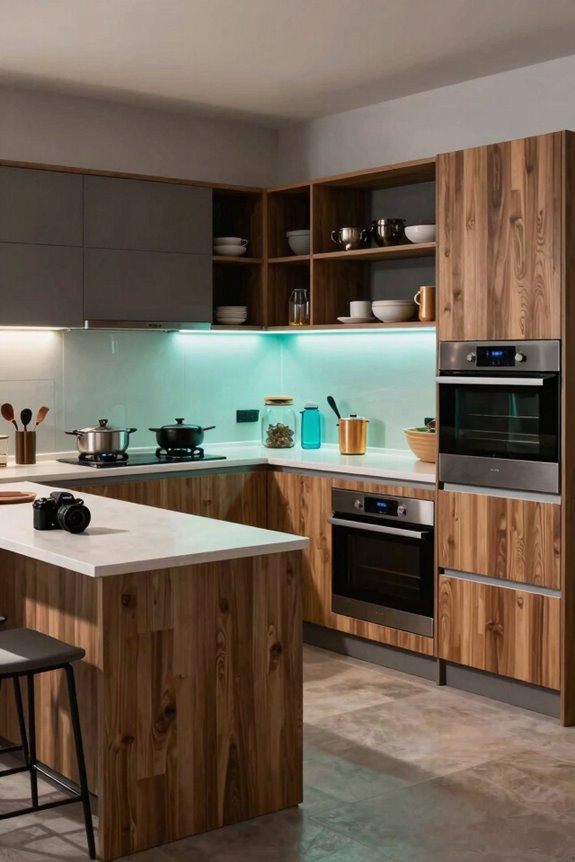
Since small kitchens demand intentional planning, zoning, the practice of separating prep, cooking, and cleaning into distinct workflow areas, creates efficient workspaces from cramped layouts. A galley layout naturally separates your prep zone from your cooking station, minimizing cross-traffic and wasted movement.
Implement tall cabinetry and vertical storage to reclaim counter space; extending cabinets to the ceiling creates dedicated zones for spices and small appliances. Position open shelving adjacent to your prep zone alongside under-cabinet organizers and pull-out pantry shelves for streamlined access. Frame your cooking area with floating shelves or glass-front uppers, situating lighting and spice storage within arm’s reach.
A multipurpose space such as an island or peninsula doubles as both dining and prep surface, maximizing function without consuming excessive footprint.
Show Style, Hide Clutter: Open Shelving That Works
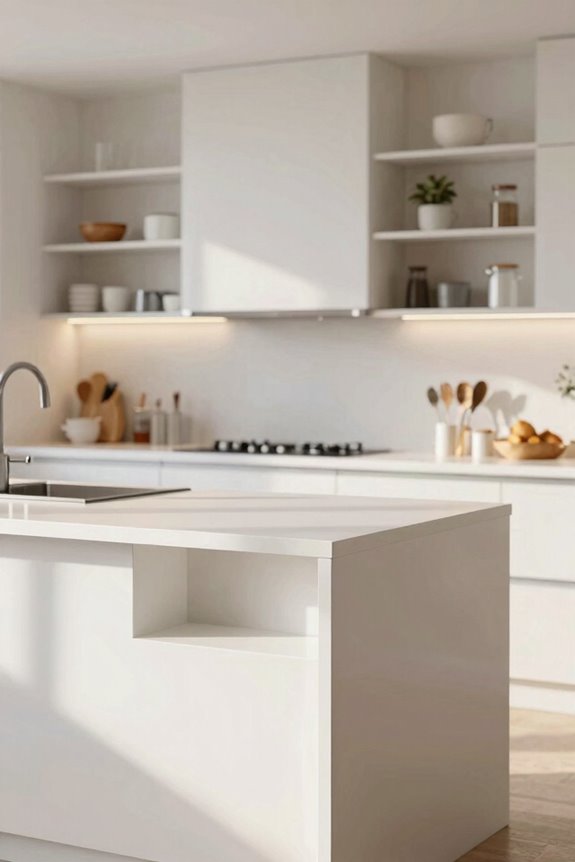
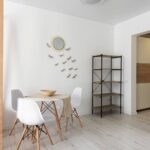
While zoning establishes your kitchen’s functional backbone, the surfaces you choose to display or conceal determine whether your space feels well-planned or chaotic. Open shelving in small kitchens eliminates visual bulk that upper cabinets create, letting light penetrate and space breathe. Slim metal shelves work particularly well in compact layouts, where narrow dimensions complement bold design elements without crowding.
Strategic open plan storage showcases your best dishware: colorful plates, glasses, and bowls. Wall-mounted faucets and smart storage solutions keep counters accessible. The key is to display only what you use regularly.
Floating shelving balances openness with practical storage needs, creating that light and airy aesthetic while maximizing perceived square footage. This approach turns clutter-free kitchens into functional galleries that work beautifully.
The Tiny Kitchen Island: Why It Works in Small Spaces
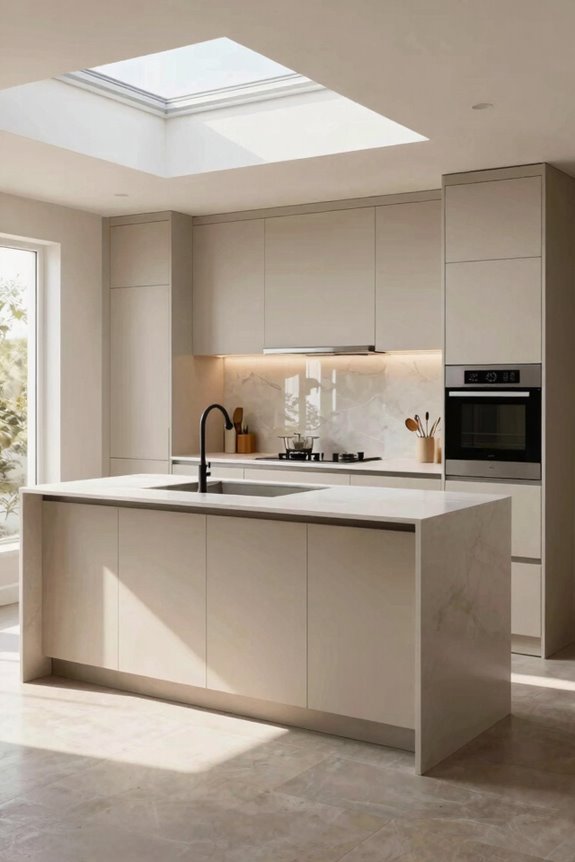
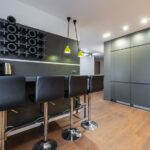
When square footage is limited, a compact island becomes your kitchen’s hardest-working element. It serves as a prep surface, dining table, and workspace depending on your needs. A well-designed island bridges functionality gaps in small spaces without sacrificing flow.
The multifunctionality matters: you’re gaining seating for four or six while maintaining open sightlines to adjacent living areas.
| Feature | Benefit | Application |
|---|---|---|
| Marble continuity | Cohesive design | Countertops & surfaces |
| Open shelving | Visual lightness | Storage optimization |
| Vertical elements | Space planning | Narrow shelves & bars |
| Compact footprint | Perceived spaciousness | Zone definition |
| Dual-purpose design | Multifunctionality | Prep & dining |
Pairing your tiny kitchen island with open shelving and consistent materials creates a sense of spaciousness while defining your kitchen zone within open plans. This storage optimization approach preserves the lightness your space needs.
Rent-Proof Kitchen Hacks: No Landlord Drama
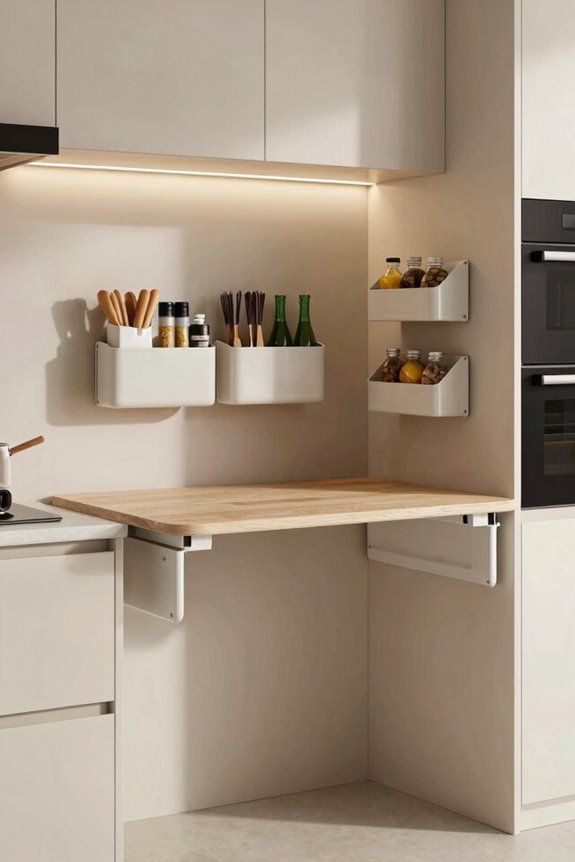
How do you keep your security deposit while upgrading a rental kitchen? You embrace rent-proof, reversible upgrades that maximize your space while keeping landlords happy. I recommend installing lightweight open shelving above existing counters; these temporary upgrades create accessible storage without permanent alterations. Slim metal shelves and wall-mounted faucets function as space-saving solutions that remain easily removable.
Consider non-permanent flooring like vinyl tile, which you can swap out quickly. Bold brass hardware and statement wall tile add personality without structural changes. DIY alder plywood counters offer upgradable surfaces that tenants can replace upon moving.
These rental-friendly strategies make cramped kitchens more functional and livable. You’re not just maximizing square footage; you’re protecting your deposit while building a kitchen designed for your lifestyle.