Split-level kitchens can feel like architectural puzzles designed to confound every design principle you’ve learned. I’ll walk you through ten concrete strategies, from removing non-load-bearing walls to installing flush-mount appliances, that create functional, visually unified zones in these challenging spaces.
Each approach addresses a specific problem: disconnected levels, wasted vertical space, or visual fragmentation. The solution you need depends on your layout, but one strategy stands out as the approach that most designers recommend first.
Understand Your Split-Level Kitchen’s Unique Challenges
Split-level homes present distinct architectural constraints that differ markedly from conventional single-story or two-story layouts. Your kitchen sits within a compartmentalized environment where multiple staggered levels and nearby staircases interrupt flow optimization. This chopped-up design creates spatial challenges you’ll need to address through strategic space planning.
The entry foyer, typically 40″ × 40″, offers minimal storage solutions for daily kitchen essentials. Primary living spaces lack the open concept integration that modern homeowners increasingly desire. Kitchen, dining, and living areas remain visually separated rather than unified, which limits how you perceive your home’s overall functionality.
Understanding these architectural realities helps you develop realistic design expectations. You’re working within existing constraints, not against them. Smart space planning acknowledges what you have while maximizing usable kitchen territory through intentional layout modifications.
Open Your Split-Level Kitchen Across Floors
How can you create an open-concept kitchen that flows across multiple levels? Removing non-load-bearing walls and installing pass-through windows create genuine connections between your kitchen and adjacent dining or living areas. Before proceeding, you’ll need professional structural assessment and permits for any load-bearing modifications.
| Design Element | Cross-Floor Benefit | Visual Impact | Material Option | Practical Use |
|---|---|---|---|---|
| Island | Transitional cooking zone | Anchors layout | Quartz countertop | Dining integration |
| Pony wall | Safety with openness | Preserves sightlines | 42″ railing height | Light flow |
| Pass-through | Direct connectivity | Sight-line extension | Arched opening | Service access |
| Coordinated finishes | Visual unity | Cohesive palette | Matching cabinetry | Aesthetic continuity |
| Low railings | Floor definition | Maintains flow | Metal balusters | Safety compliance |
Islands or peninsulas function as transitional zones, enhancing cross-floor collaboration while maintaining safety through proper railing specifications and strategic placement.
Choose a Layout Built for Multiple Levels
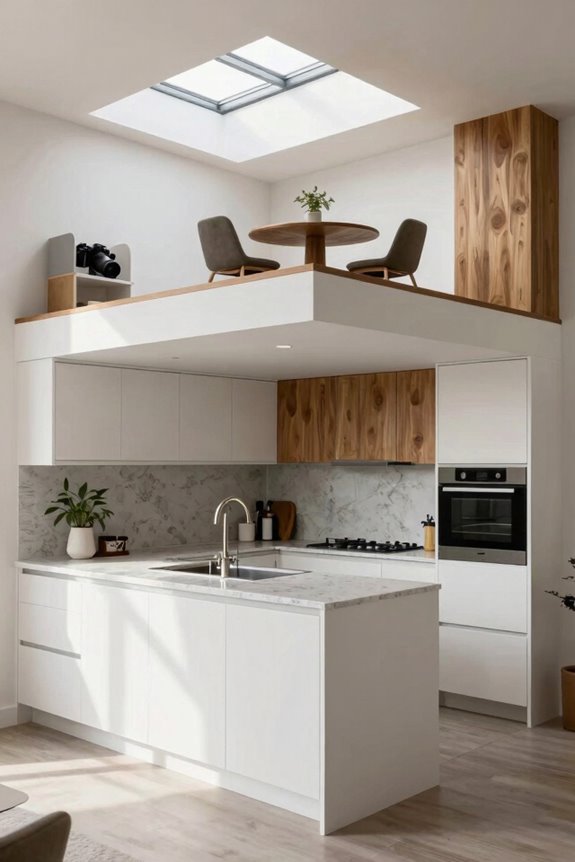
When you’re working with a split-level kitchen, I recommend prioritizing workflow efficiency by positioning your sink, stove, and refrigerator—the classic work triangle—on the same level whenever possible. This prevents unnecessary trips between floors and reduces the choppy feeling that multi-story kitchens can create.
You’ll find that space-conscious layouts like L-shaped or galley configurations work particularly well in these homes because they maximize corner zones and narrow work areas without requiring extensive structural changes or load-bearing wall removal. Islands with integrated storage or dining surfaces serve double duty here, adding workspace and seating while creating a natural focal point that visually connects your kitchen across both levels.
Workflow Efficiency Across Levels
Why do so many split-level kitchens feel disconnected from their adjoining spaces? The answer lies in poor workflow design. I find that open-concept layouts with strategically positioned island or peninsula configurations create natural bridges between levels. An island with built-in seating functions as both a cooking hub and gathering point, reducing unnecessary stair traversals.
Your workflow improves when you prioritize sightlines that connect the cooking zone, dining area, and living space across different elevations. Cross-level unity matters equally; matching cabinetry finishes like matte white or warm gray tones throughout visually unifies fragmented areas. When materials and colors flow consistently, the physical separation diminishes psychologically.
This intentional planning converts isolated kitchen zones into interconnected social spaces that feel genuinely connected.
Space-Conscious Layout Options
Which layout strategy works best depends on your split-level’s existing footprint and elevation changes. You’ll find that an island with built-in dining serves as your strongest multi-level integration tool, bridging cooking and seating zones seamlessly. This space-conscious layout maximizes functionality without requiring structural modifications.
| Layout Type | Best For | Key Benefit |
|---|---|---|
| Island with Built-in Dining | Connecting levels | Unified cooking/dining zone |
| U-Shaped Configuration | Limited footprints | Efficient workflow |
| Open Concept | Larger homes | Visual continuity |
U-shaped or galley-focused arrangements contain workflow within tight spaces typical of split-level homes. If you’re considering open concept renovations, structural review and permits become necessary when removing walls between kitchen and dining areas.
Coordinated finishes and consistent flooring unify distinct zones across your elevation changes, creating organized storage solutions throughout your multi-level kitchen design.
Go Floor-to-Ceiling With Smart Storage
Because split-level kitchens often operate within confined square footage, you’ll find that floor-to-ceiling storage becomes your most practical investment for reclaiming wasted vertical space. Rather than settling for standard 36-inch cabinets that leave awkward gaps, you’re maximizing every vertical inch available.
Smart storage solutions, like custom pullout organizers and corner carousels, make tight footprints into functional zones. These built-in accessories keep frequently used items accessible without consuming counter real estate. Tall, efficient cabinetry replaces bulky outdated pieces, increasing capacity without widening your room.
The result is a streamlined aesthetic where everything has its place. Your counters stay clutter-free, workflow improves, and storage efficiency climbs significantly. This approach works particularly well in split-level layouts where awkward geometry often creates dead zones you’ve previously ignored.
Add an Island That Bridges Levels and Seats
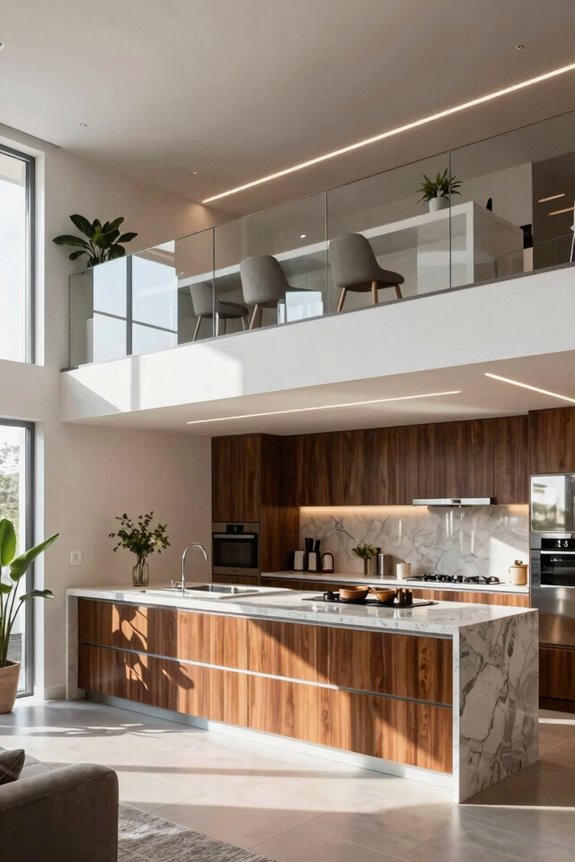
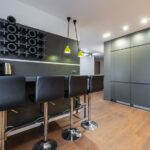
How can you unify a choppy split-level kitchen into one cohesive space? An island that bridges levels solves this challenge effectively. Positioning an island with built-in seating creates additional workspace on one level while establishing an adjacent dining area, connecting your split-level kitchen seamlessly.
| Island Shape | Primary Benefit | Seating Capacity | Best For |
|---|---|---|---|
| Rectangular | Maximum counter space | 4-6 seats | Traditional layouts |
| L-shaped | Corner flexibility | 3-5 seats | Workflow optimization |
| Rounded | Safety and flow | 2-4 seats | Tight spaces |
| Slim | Circulation preservation | 2-3 seats | Narrow kitchens |
This multi-functional approach combines cooking, dining, and circulation zones. You’ll gain extra storage underneath while improving overall flow.
Islands maximize seating without sacrificing workspace, making them practical for split-level homes seeking unity and functional design.
Light Multiple Zones Without Blocking Sight Lines
I’ll guide you through strategic lighting placement that keeps your split-level kitchen visually connected while illuminating distinct zones. Recessed fixtures overhead provide even ambient brightness across multiple levels, while under-cabinet LED strips target work surfaces without creating sight-line obstruction; interior designers like Joanna Gaines frequently employ this technique in open-concept renovations.
Pendant lights placed judiciously above your island or counter create visual interest. Pairing them with light-reflective finishes like white cabinetry and subway tile backsplashes amplifies daylight perception and maintains the openness that makes split-level kitchens function well.
Strategic Lighting Placement
When you’re designing lighting for a split-level kitchen, where should you start? I recommend layering three distinct sources: recessed lighting, pendant lighting, and under-cabinet lighting. Recessed fixtures mounted in the ceiling provide even general illumination across work zones without creating visual clutter. Pendant lighting positioned over countertops or dining areas establishes points of interest while delineating separate spaces.
Under-cabinet lighting reduces shadows on work surfaces and enhances perceived spaciousness. The key to split-level lighting is placement that preserves sight lines between levels. Position recessed cans to avoid glare on windows or reflective backsplashes. Angle pendant fixtures to illuminate task areas without casting light upward. This strategic approach to layered lighting maintains openness while ensuring each zone receives adequate, focused illumination.
Maintaining Visual Openness
Why do some split-level kitchens feel cramped while others have spacious, open qualities? The answer lies in maintaining visual openness through strategic design choices. I’ve found that pony walls, typically 36 to 42 inches tall, subtly separate cooking zones while preserving sightlines and allowing light to flow freely between areas.
Pairing these with light-filled cabinetry in whites or soft grays amplifies perceived spaciousness, while mirrored backsplashes bounce natural and artificial light across zones. Vertical millwork and tall cabinetry draw eyes upward, enhancing split-level openness without cluttering your ceiling. Recessed general lighting combined with pendant fixtures over peninsulas creates focal points while maintaining clarity.
These layered approaches, including low walls, reflective surfaces, and vertical elements, work together to give you a kitchen that feels both defined and spacious.
Unify Your Split-Level Kitchen With Consistent Colors
How do you keep a fragmented floor plan from feeling disjointed? A unified color palette connects everything together. When you select spaces through consistent finishes on cabinets, countertops, backsplashes, and flooring, you create visual continuity that links different areas. This approach works because your eye follows the repeated hues and materials across varying elevations.
Rather than fighting your split-level’s natural divisions, embrace them with intentional color choices. Neutral grays or warm whites on cabinetry, paired with matching stone countertops and coordinated tile flooring, establish continuity. These consistent finishes minimize jarring transitions between levels.
The result is a unified kitchen where different openness levels feel purposefully designed rather than accidentally fragmented. Your split-level becomes architecturally confident and visually settled.
Position Furniture to Connect Levels
While consistent colors establish visual harmony across your split-level kitchen, the physical placement of furniture and fixtures can actually bridge the spatial gaps between elevations. An island or peninsula serves as a functional connector, anchoring your open-plan layout while improving sightlines between cooking and living zones.
Position your island perpendicular to the level change to create natural sight lines that draw the eye across both areas. Built-in seating on one side encourages interaction, while the opposite side accommodates food prep. This strategic placement creates intentional connectivity by making what could feel disjointed feel purposeful. The island becomes your design anchor: a visual and functional hub that makes your split-level kitchen feel unified rather than fragmented, helping you reclaim every square inch of usable space.
Choose Space-Saving, Energy-Efficient Appliances
I’ll guide you toward appliances that won’t overwhelm your split-level kitchen’s footprint while cutting your utility bills substantially. Built-in and counter-depth models, like LG’s 24-inch refrigerators or Bosch’s integrated dishwashers, create clean lines that respect compact layouts. Freestanding units consume valuable square footage and disrupt the visual arrangement of your space.
Smart-enabled appliances with Wi-Fi connectivity and touchless controls let you monitor cooking remotely and adjust settings for your specific space constraints. This merges convenience with the energy savings that define modern efficient design.
Built-In Appliance Solutions
When you’re working with a split-level kitchen’s compact footprint, why settle for standard-depth appliances that eat up precious square footage? Built-in appliance solutions offer the seamless integration you’re seeking. Panel-ready fronts allow your refrigerator, dishwasher, and microwave to blend directly with your integrated cabinetry, maintaining visual continuity throughout your space.
Counter-depth refrigerators and space-saving appliances reduce protrusion by up to 7 inches compared to conventional models. Energy-efficient models qualify you for federal tax credits while lowering utility expenses. Brands like Miele and Bosch specialize in customizable built-ins with flush installation options.
This approach creates a kitchen with a unified design where appliances blend into the architecture rather than dominate it. You’re not just maximizing square footage; you’re achieving the refined, integrated aesthetic that defines contemporary split-level kitchens.
Smart Technology Integration
How do you leverage smart features without compromising the streamlined aesthetic that makes split-level kitchens work? Smart appliances with Wi-Fi connectivity create an intelligent workspace in your compact kitchen. I’d recommend built-in models featuring touchless controls, such as sensor-activated faucets and motion-detecting range hoods, that eliminate visual clutter while enhancing functionality.
Energy-efficient refrigerators and dishwashers from brands like Bosch and Miele integrate seamlessly into cabinetry, their flush-mount designs preserving your kitchen’s clean lines. These units communicate with your smartphone, allowing remote monitoring and adjustment. Customizable settings let you program cycles aligned with your specific workflow, whether preheating ovens or adjusting refrigerator zones.
The integration means technology serves your space’s compact footprint rather than dominating it, maintaining the sophisticated simplicity split-level kitchens demand.
Energy Efficiency Benefits
Most split-level kitchens benefit considerably from energy-efficient appliances because their compact footprint magnifies the impact of reduced consumption on both utility bills and environmental footprint. Built-in appliances that fit flush with cabinetry eliminate wasted space while smart appliances optimize performance through programmable controls. Energy Star-rated refrigerators, dishwashers, and ranges consume significantly less water and electricity than standard models, directly lowering monthly expenses.
I recommend selecting appliances with customizable settings: adjustable chill temperatures and specialized wash cycles that prevent unnecessary energy draw. These upgrades qualify for federal tax credits, offsetting initial investment costs. Counter-depth refrigerators save precious square footage without sacrificing capacity.
Remote operation via Wi-Fi enables you to monitor usage patterns and adjust settings from anywhere, maximizing efficiency across your split-level layout while maintaining modern functionality.
Select Durable Flooring That Ties Levels Together
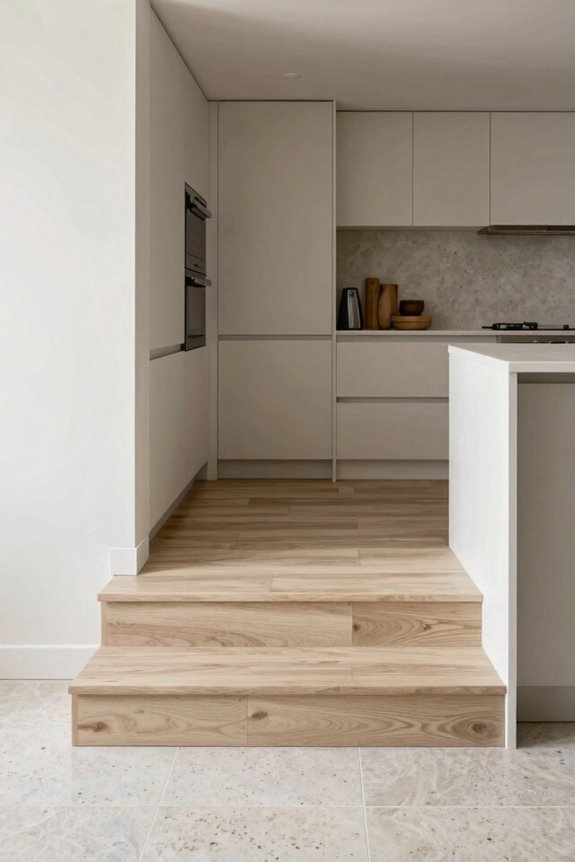
Why does flooring matter more in split-level kitchens than in traditional single-plane spaces? The answer lies in visual continuity. Staggered floor levels create natural breaks that demand intentional choices to maintain cohesion.
Staggered floor levels create visual breaks that demand intentional flooring choices to maintain kitchen cohesion.
I recommend these flooring strategies:
- Select wide-plank hardwood or luxury vinyl plank (LVP) in consistent color and grain across all levels
- Install matching baseboard and transition strip profiles at major level changes
- Align plank orientation uniformly throughout to reduce visual choppiness
- Choose materials rated for high foot traffic, providing durability where levels meet
A seamless transition between your kitchen’s split-level sections unifies fragmented space into one cohesive design. Durable flooring materials like engineered hardwood or commercial-grade LVP withstand the increased wear at transitions.
This intentional approach creates the sense of belonging you’re seeking, a kitchen that feels deliberately designed rather than accidentally constructed.