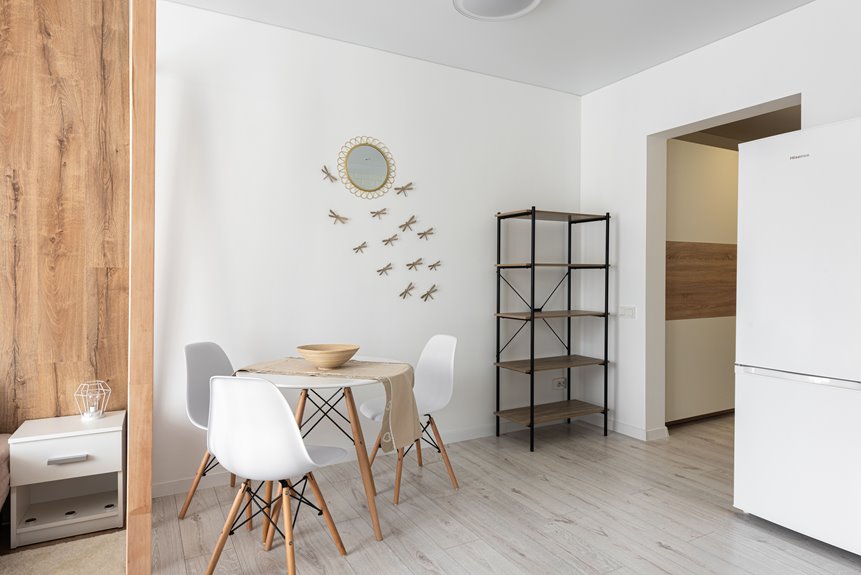
A small kitchen table isn’t just furniture; it’s the anchor that determines whether your space feels cramped or functional. I’ll help you navigate the decisions that matter: prioritizing dimensions, understanding which shapes maximize flow, and identifying flexible designs that work harder than they look.
The five tables I’ve selected combine practical specifications with aesthetic appeal, solving the puzzle of dining in tight quarters. Here’s what separates smart choices from wasted space.
What to Look for When Choosing a Small Kitchen Table?
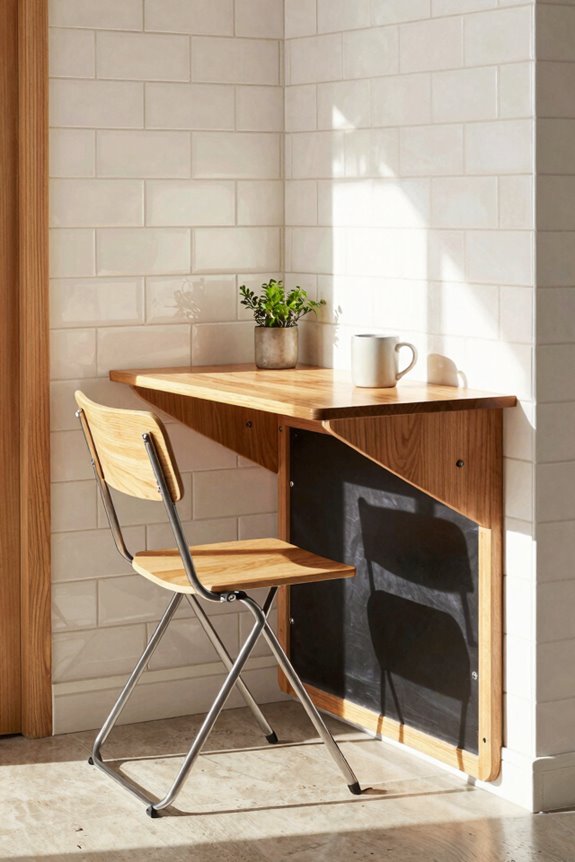
How do you select a dining table that fits your compact kitchen without compromising functionality? I’d recommend prioritizing dimensions first. Round small dining tables shouldn’t exceed 42 inches in diameter for four comfortable seats, while rectangular options should stay under 48 inches long. These measurements preserve floor flow in tight spaces.
Consider your room’s layout next. I find that extendable or drop-leaf features solve the space-saving puzzle by expanding seating only when needed. This flexibility makes your small dining table a versatile asset.
Finally, evaluate aesthetics alongside practicality. Whether you prefer mid-century modern, sleek pedestal designs, or farmhouse charm, your choice should reflect your style while fitting your kitchen’s dimensions and visual balance. Your space-saving investment should feel well-planned rather than compromised.
Round, Square, or Rectangular: Which Shape Saves the Most Space?
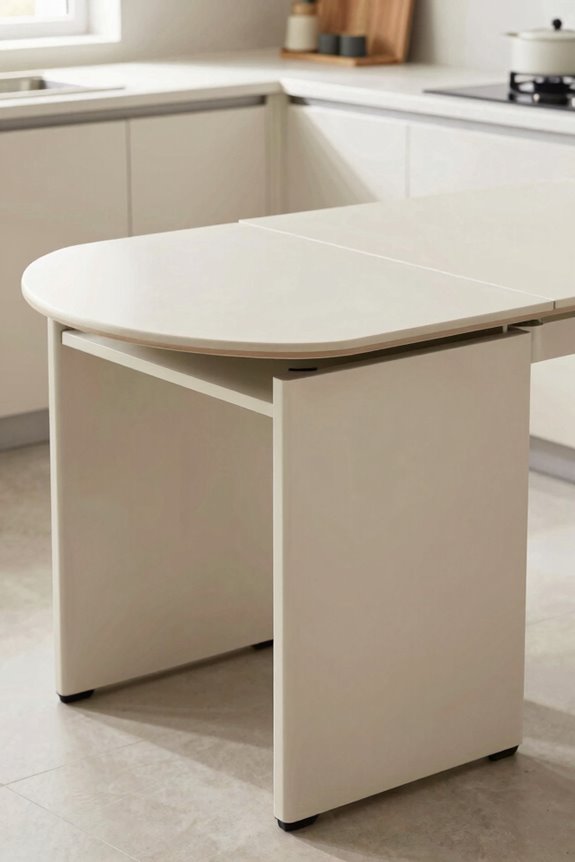
When it comes to maximizing floor space in compact kitchens, your table’s shape matters as much as its dimensions. Round tables create natural flow around your space, particularly when you’re working with tight quarters. A 42-inch round design comfortably seats four while minimizing your footprint compared to rectangular alternatives.
Square tables offer versatility, fitting snugly against walls or corners without awkward protrusions. Rectangular models, staying under 48 inches long, provide efficient seating while preserving movement around the area. I’d recommend round or square options if accessibility matters most to you; their streamlined profiles reduce the visual weight that rectangular tables impose on small spaces.
Consider drop-leaf varieties within these shapes. They’re space-saving solutions that expand only when needed, maintaining your kitchen’s everyday functionality.
Extendable and Drop-Leaf Tables: Flexibility When You Need It
Why settle for a permanently oversized table that dominates your kitchen layout? Extendable and drop-leaf tables deliver the flexibility you’re seeking without sacrificing daily functionality.
Extendable tables expand from compact four-seaters to six-seaters by adding leaves, adapting smoothly to your entertaining needs. Drop-leaf designs collapse entirely, freeing precious floor space when you’re cooking solo. I find that tables storing leaves externally rather than beneath the top keep your surface uncluttered and accessible.
You’ll appreciate how leaves stack individually or together, accommodating everything from intimate dinners to larger gatherings. This space-saving approach means you’re not permanently committing kitchen square footage to occasional entertaining. Whether you choose extendable or drop-leaf mechanisms, you’re investing in a table that works as hard as you do, making your small kitchen an adaptable hub for both daily meals and celebrations.
Choosing Compact Table Styles That Fit Your Kitchen’s Look
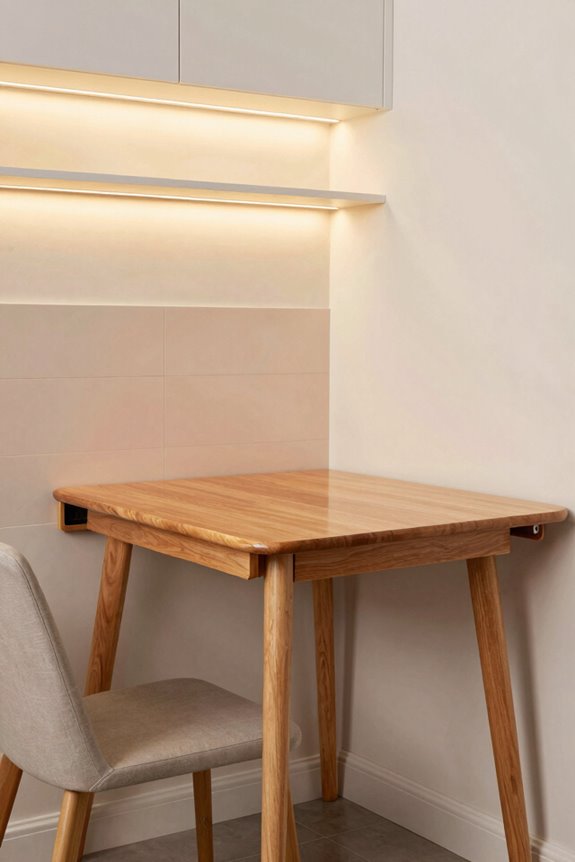
Just as your table’s dimensions matter, so does its silhouette: you have three primary shapes to consider, each affecting how your kitchen feels and functions. A round dining table maximizes seating efficiency while softening corner placement, ideal when floor space is tight. Square options work well for galley kitchens, offering balanced visual weight without protruding edges. Rectangular tables, kept under 48 inches, provide practical linearity for narrow spaces.
Your aesthetic choices span mid-century, modern pedestal, or farmhouse styles. Mid-century designs feature tapered legs that create visual lightness. Modern pedestals eliminate bulk beneath the surface. Farmhouse pieces bring warmth through natural wood finishes. Each style maintains space-saving functionality while reflecting your kitchen’s personality. Pairing your chosen shape with thoughtful styling ensures your small kitchen feels both organized and livable.
5 Best-Rated Small Tables Worth Your Budget
How do you know which compact dining table offers real value without sacrificing style or functionality? I’ve identified five standout options that balance budget-consciousness with design merit.
The East Urban Home Drea combines solid wood construction with dark walnut staining, seating four comfortably within rectangular footprints. For round dining enthusiasts, the Jensen features a 42-inch tempered glass top paired with modern angular wood framing, making it ideal for corner placement. The Mid-Century Rounded Extendable model extends via drop-leaf mechanism to accommodate six guests, though storage space becomes necessary.
The Gesthaven Drop Leaf delivers flexibility through individual or combined leaves plus four leg color choices and mango-veneer detailing. Finally, the Alexa-Mae compact rectangular design measures 48 by 34 inches with eight finish options, offering end-seat versatility beyond standard four-person capacity.
Each delivers distinct advantages depending on your spatial constraints and aesthetic preferences.