I’ve found that small kitchens don’t require sacrifice; they demand strategy. When you work vertically with ceiling-height cabinetry and incorporate reflective surfaces like mirrored backsplashes, you expand your square footage without renovation costs. Two-tone finishes and cabinet-depth appliances create visual breathing room while maintaining functionality.
The real challenge is balancing storage density with that desired airy feel. Here’s how designers achieve it.
Maximize Storage Vertically
How can you reorganize a cramped kitchen into one that feels organized and spacious? I extend cabinetry to the ceiling, capitalizing on often-wasted vertical real estate. Wall-to-ceiling cabinets conceal clutter while maintaining glassware accessibility through strategic placement. I incorporate tall cabinetry paired with two-tone finishes, light uppers and darker lowers, to draw the eye upward and enhance perceived height.
I maximize space efficiency through corner rotating shelves, which capture awkward angles productively. Vertical millwork and open vertical shelving display items without crowding countertops. Magnetic knife rails eliminate drawer bulk.
This layered approach to vertical storage enhances my kitchen’s functionality. When I combine these elements with reflective backsplashes and wall-to-ceiling tile, the space feels simultaneously larger and more deliberate, proving that smart storage solutions need not sacrifice style.
Expand Space With Light and Mirrors
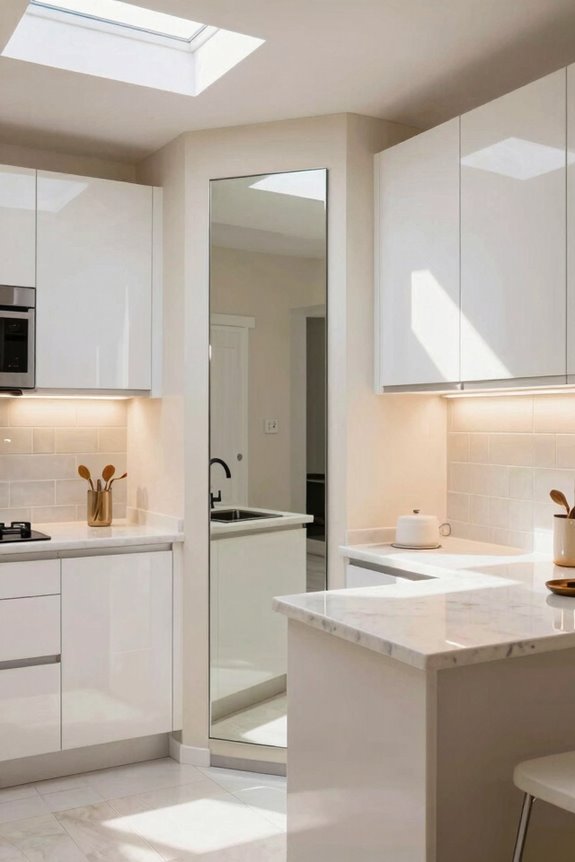
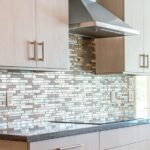
Where vertical storage conceals clutter, strategic lighting and reflective surfaces shift how a space feels. I’ve found that installing a mirrored backsplash creates genuine spatial expansion by bouncing light throughout the kitchen. Positioning mirrors across from windows maximizes natural light, amplifying brightness noticeably.
Mirrored backsplashes bounce light throughout kitchens, creating genuine spatial expansion when positioned across from windows.
Consider these proven approaches:
- Combine under-cabinet lighting with ceiling fixtures to reflect light off countertops, reducing that enclosed sensation
- Choose light colors and glossy finishes on cabinetry to boost reflectivity and visual square footage
- Install floor-to-ceiling tile or bright surfaces that bounce light around narrow spaces effectively
Glossy cabinet finishes and reflective materials work together to expand perceived dimensions. Light colors on walls paired with strategic under-cabinet lighting and ceiling fixtures create an airier atmosphere. This layered approach to illumination and reflectivity makes even compact kitchens feel open and welcoming.
Choose the Right Layout and Appliances
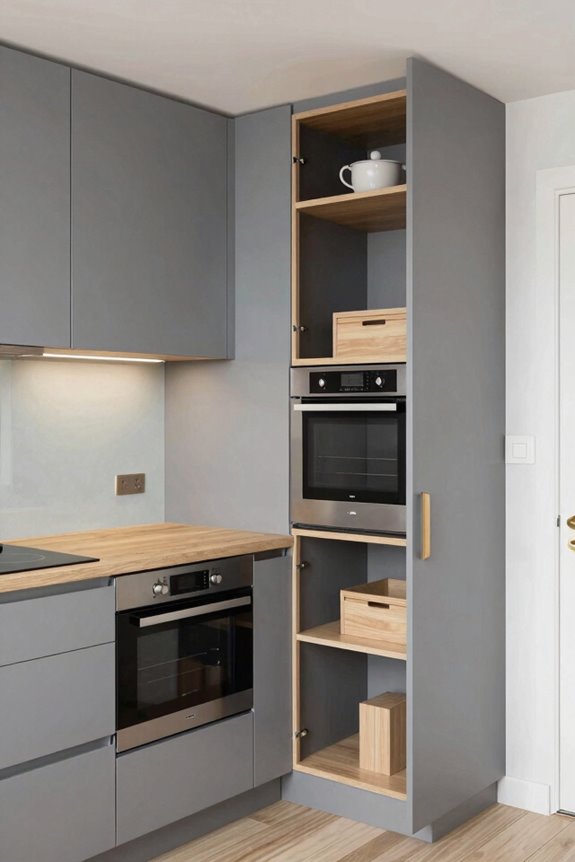
I’ll guide you through selecting appliances and layouts that work within compact footprints. Cabinet-depth refrigerators like those from LG and Samsung reduce the typical 24-30 inches of protrusion to align flush with cabinetry, while compact dishwashers and slide-in ranges preserve workflow without consuming extra floor space.
Strategic island or peninsula placement matters equally. A 24-36 inch-wide curved or rectangular island anchors the work triangle between stove, sink, and fridge without blocking sightlines or movement paths through the room. Your layout choice, whether L-shaped, galley, or U-shaped, should prioritize these appliance positions and maximize corner storage. This approach ensures efficiency doesn’t sacrifice the visual openness that makes small kitchens feel purposeful rather than cramped.
Cabinet Depth Refrigerators
When you’re working with limited square footage, why not let your refrigerator disappear into the design rather than dominate it? Cabinet-depth refrigerators sit flush with surrounding cabinetry, creating a seamless kitchen that feels cohesive and open. Unlike standard models that protrude awkwardly, these space-maximizing appliances reduce your fridge’s footprint while maintaining full capacity.
This approach works particularly well with continuous cabinetry or tuxedo-style finishes, establishing visual harmony throughout tight-parameter kitchens. The result is that perceived space expands simply because nothing juts beyond your counter lines.
Consider these benefits:
- Seamless integration with existing cabinetry
- Enhanced footprint reduction for walkway clearance
- Streamlined fridge appearance that minimizes visual clutter
Yes, cabinet-depth units cost more than standard models. However, they’re important investments for achieving perceived space in compact layouts where every inch matters.
Compact Appliance Solutions
How do you maintain full kitchen functionality without sacrificing precious countertop real estate? I’ve found that compact appliances like 5-in-1 ovens and microwave-convection combos deliver professional performance in minimal footprints. Pairing these with fold-away shelving and an appliance garage keeps small appliance storage hidden until needed, preserving clear space.
Vertical storage, including open shelving and tall cabinetry paired with cabinet-depth refrigerators, maximizes your layout without expanding outward. Colorful compact appliances serve as design accents, eliminating the need for additional cabinetry modifications.
| Solution | Space Saved | Best For |
|---|---|---|
| 5-in-1 ovens | 40% | Baking, roasting, air frying |
| Appliance garage | Full counter | Coffee makers, toasters |
| Fold-away shelving | Variable | Seasonal items |
| Microwave-convection combos | 35% | Reheating, cooking |
Strategic Island Placement
Two key considerations: kitchen layout and appliance selection determine whether an island becomes a functional asset or an awkward obstacle in compact spaces. I recommend evaluating your work triangle and overall space efficiency before committing to permanent fixtures.
A movable island or peninsula offers flexibility that fixed installations can’t match. These adaptable options maintain open plan sightlines while providing essential counter and storage solutions.
Consider these placement strategies:
- Position your island perpendicular to main appliances, preserving the work triangle and traffic flow
- Install lighting around the island to define the cooking zone and enhance visibility
- Incorporate floor-to-ceiling storage nearby for surface clutter control
The right kitchen island placement improves how you navigate your compact kitchen, supporting both functionality and visual cohesion without consuming precious square footage.
Select Cabinetry and Finishes That Define Your Style
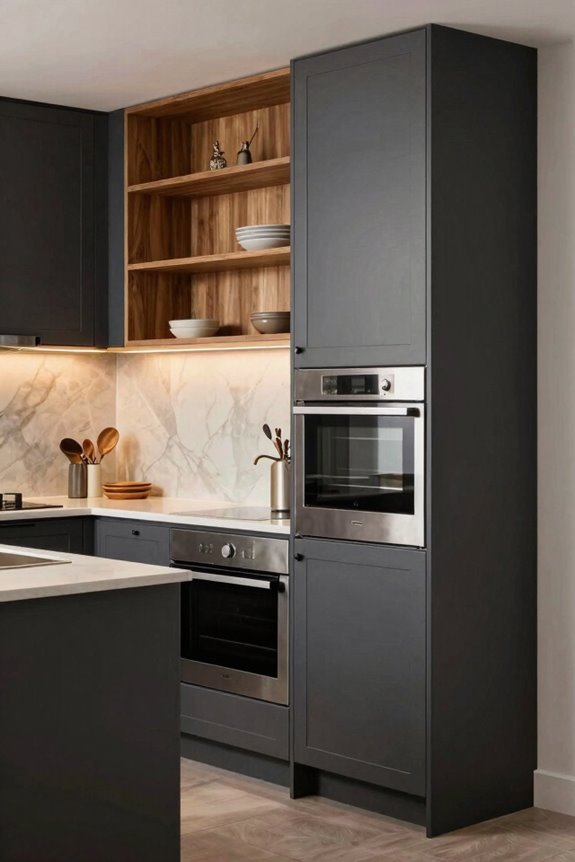
Your cabinetry and finishes set the foundation for a small kitchen’s visual impact, so I recommend selecting materials that brighten the space while maintaining sophistication. Light woods like white oak paired with white marble countertops create an airy, timeless look that reflects natural light and enlarges perceived square footage.
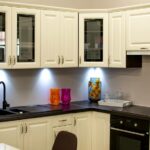
Two-tone styling, pairing light upper cabinets with darker lower units, grounds the design while maximizing brightness. These choices work together with reflective surfaces to express your style without overwhelming a compact footprint.
Light Wood and Finishes
Why do designers consistently gravitate toward light wood cabinetry when tackling compact kitchens? The answer lies in reflective surfaces. Light wood reflects both natural and artificial light, expanding perceived dimensions while creating visual breathing room.
I’d pair cerused oak or pale wood tones with white marble countertops and a neutral palette for visual harmony. This combination achieves an airy aesthetic that feels carefully considered rather than sparse.
To maximize impact, consider:
- Minimal hardware that doesn’t interrupt sightlines
- Uncluttered surfaces that emphasize openness
- Natural light streaming through unobstructed windows
These design moves work together. Light wood cabinetry isn’t merely decorative; it’s functional strategy. When you eliminate visual clutter and embrace reflective materials, your compact kitchen gains dimension. The space becomes more livable. You’ve created an environment where style and practicality work in tandem.
Reflective Surfaces and Color
Beyond light wood’s inherent brightness, the strategic use of reflective surfaces and a purposeful color palette amplifies that expansive feeling even further. I recommend incorporating a mirrored backsplash or high-gloss finishes that bounce light throughout your kitchen, creating depth where square footage falls short.
White cabinets paired with an airy palette establish cohesion and airiness. Consider two-tone cabinetry with lighter uppers and darker lowers to brighten upper zones while maintaining visual interest. Floor-to-ceiling tile reflects additional light and extends walls vertically, maximizing perceived space.
| Design Element | Visual Impact |
|---|---|
| Mirrored backsplash | Reflects light dramatically |
| High-gloss finishes | Creates luminous surfaces |
| White cabinet boxes | Establishes brightness |
| Two-tone cabinetry | Adds depth and dimension |
| Under-cabinet lighting | Eliminates shadows effectively |
Pair these reflective surfaces with under-cabinet lighting to eliminate shadows and enhance your kitchen’s perceived dimensions significantly.
Two-Tone Cabinet Styling
How do you create visual lift in a compact kitchen without expanding its footprint? Two-tone cabinets deliver the answer through strategic color placement that enhances space perception and kitchen contrast.
Light uppers paired with dark lowers ground your room while brightening the overall aesthetic. This approach guides the eye upward, making ceilings feel higher and spaces feel larger. When combined with reflective surfaces, such as glossy subway tile backsplashes or polished quartz countertops, you amplify light reflection and openness.
Consider these styling strategies:
- Pair matte dark lowers with semi-gloss light uppers for sophisticated visual depth
- Use minimal hardware and streamlined doors to reinforce an uncluttered aesthetic
- Select complementary neutrals like white uppers with charcoal lowers for architectural definition
Two-tone styling effectively defines separate zones within compact layouts while establishing the small kitchen styling foundation your home deserves.
Incorporate Functional Islands and Seating
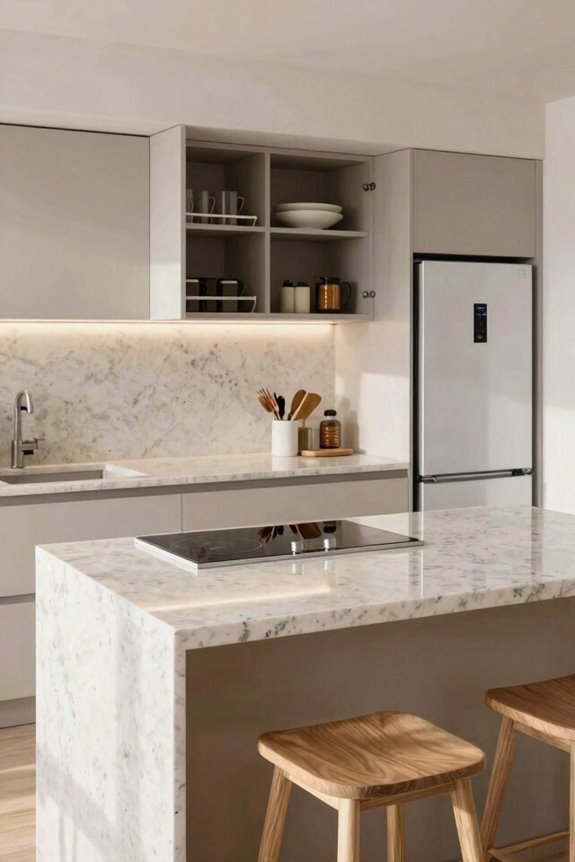
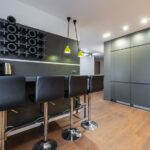
When you’re working with limited square footage, where does a traditional island fit? A multifunctional island creates a versatile workspace in your small kitchen. Consider a transformer-style unit that functions as desk, prep surface, and dining table for four to six people, eliminating the need for separate furniture.
If a full island crowds your layout, downsize to a mobile version that you’ll move as needed. Curved edges on islands increase walking room and improve traffic flow through tight spaces. Alternatively, a peninsula preserves your open concept while providing countertop expansion and seating without consuming excessive floor space.
Optimize dining areas with bar seating or booth configurations featuring hidden storage beneath. These solutions maximize functionality while maintaining the open, connected feeling your small kitchen requires.
Design Touches That Elevate Small Kitchens
What makes a cramped kitchen feel spacious and polished? Strategic design choices that balance function with visual lightness. Thoughtful decisions significantly improve small kitchen design.
Consider these essential elements:
- Lighting as focal point: A statement fixture paired with under-cabinet lighting brightens work areas without consuming floor space
- Reflective surfaces: Mirrored backsplashes or glossy cabinetry bounce light, expanding perceived dimensions
- Two-tone cabinetry: Light uppers with darker lowers create visual contrast while brightening the overall space
Open shelving displays glassware strategically, reducing visual clutter. Vertical storage and ceiling-height cabinets maximize capacity without crowding countertops.
Light wood or reflective finishes amplify natural illumination throughout the space. These design decisions work together, creating kitchens that feel carefully planned and welcoming rather than confined.