I’ll show you how I’ve transformed cramped bedrooms into spaces that feel twice their size, and you can replicate these strategies immediately.
By strategizing your storage vertically, choosing lighter palettes, and positioning furniture strategically, you’ll maximize every square foot.
The key isn’t expanding your walls; it’s redirecting your eye upward and outward.
Let’s explore the five specific techniques that interior designers consistently recommend, starting with the power of vertical storage.
Make Your Small Bedroom Feel Bigger With Vertical Storage
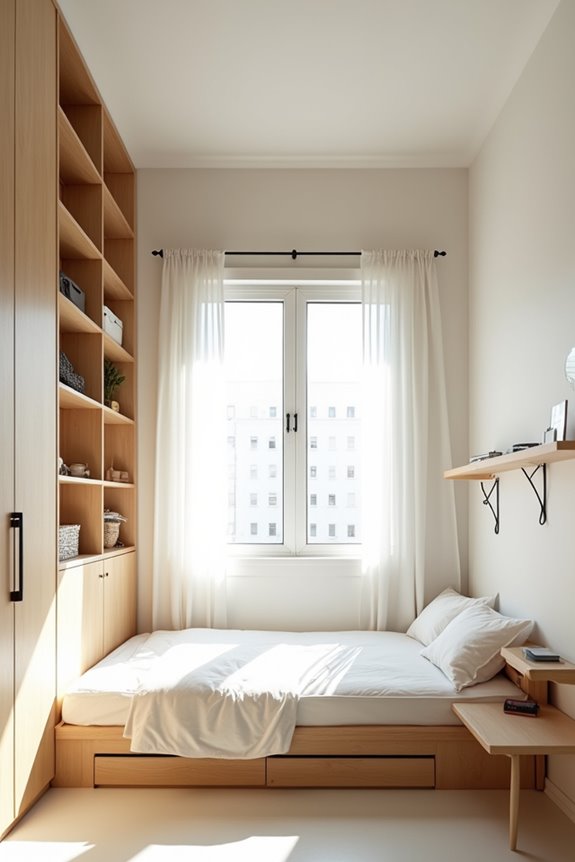
How do you reclaim usable floor space in a cramped bedroom without sacrificing storage? Vertical storage solutions are your answer. Install floor-to-ceiling shelves or built-in units that maximize every inch while drawing the eye upward, creating a height illusion that expands your room visually.
Wall-mounted cabinets and recessed shelving minimize bulk and maintain open sightlines. Tall bookcases function as dual-purpose room dividers or headboard alternatives, adding storage without consuming floor area. Pairing these vertical solutions with slim-legged furniture keeps sight lines clear and emphasizes the room’s proportions.
These strategies work together: the upward visual movement makes your bedroom feel airier while the space-saving design preserves precious floor real estate for movement and breathing room.
Use Light Colors and Mirrors to Amplify Space
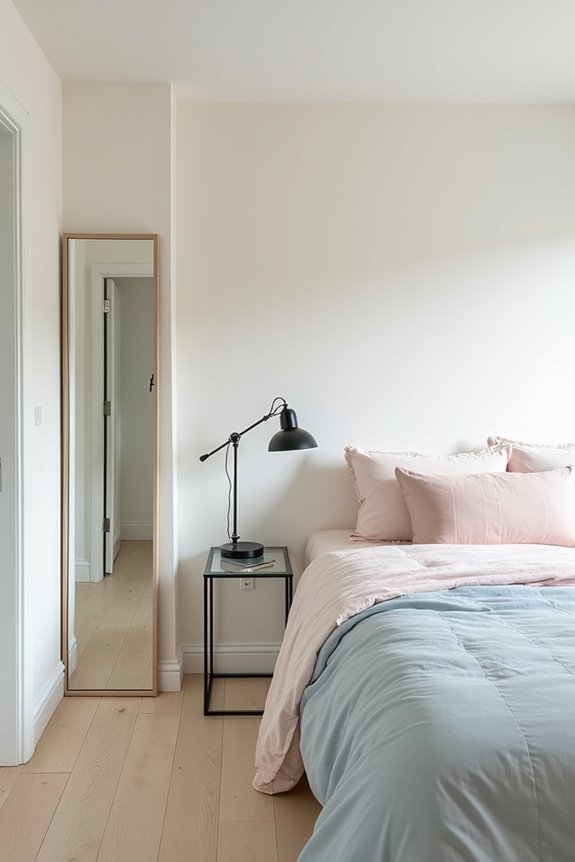
While vertical storage reclaims your floor space, light colors and mirrors work together to push your room’s visual boundaries outward. Paint walls in soft whites or pale grays to reflect ambient light throughout your small bedroom, creating perceived space. Strategic mirror placement, particularly opposite windows, bounces natural light and amplifies brightness, enhancing your room’s open feel.
A monochromatic palette maintains visual continuity across surfaces, preventing the fragmentation that shrinks spaces. Pair these light colors with uncluttered decor to avoid visual heaviness. Reflective surfaces like polished metals or glossy finishes complement this approach.
Ceiling color matters as well. Painting it white or a shade lighter than walls draws your eye upward, reinforcing height and spaciousness. Together, these elements create a genuinely spacious look within compact dimensions.
Choose Furniture With Legs and Multi-Purpose Pieces
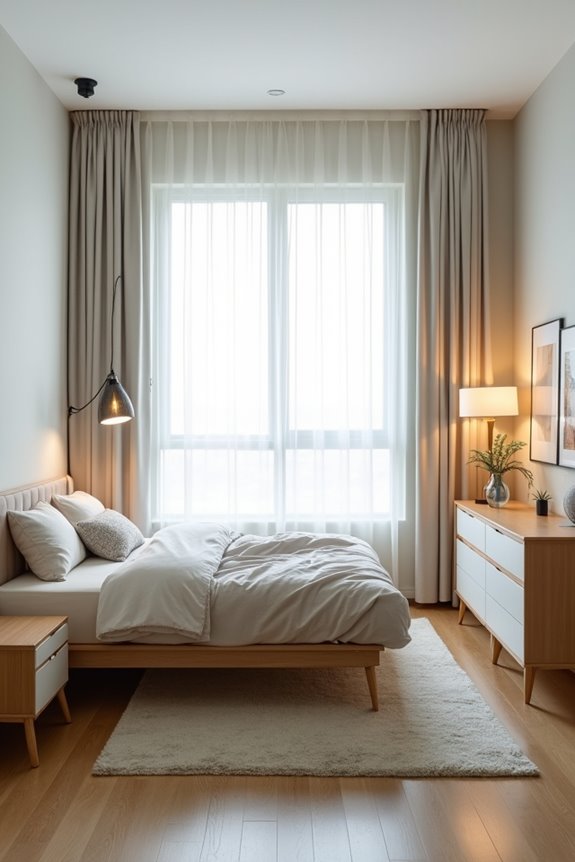
Because your floor space directly influences perceived room size, selecting furniture with legs rather than skirted or solid bases becomes essential to making a small bedroom feel airier. Legs furniture maintains continuous sightlines and reveals under-space clearance, allowing your eye to travel unobstructed across the room.
Multi-purpose pieces amplify this effect further. A storage bed with drawers combines sleeping and organization functions. Wall-mounted bedside tables eliminate floor clutter while keeping surfaces accessible. When you anchor art with a chest of drawers beneath it, you create visual cohesion without blocking sight lines.
This space-saving furniture strategy works because open floor space registers as spaciousness. Avoid bulky, chunky pieces that obstruct movement and create crowded impressions. Position each item intentionally to maintain an unobstructed layout where the floor remains visible and inviting.
Hang Curtains High and Add Tall Trim Details
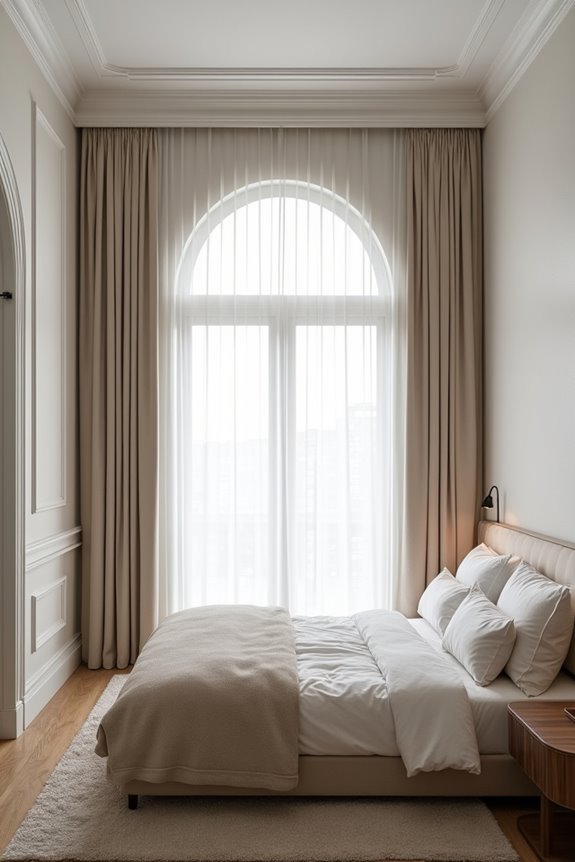
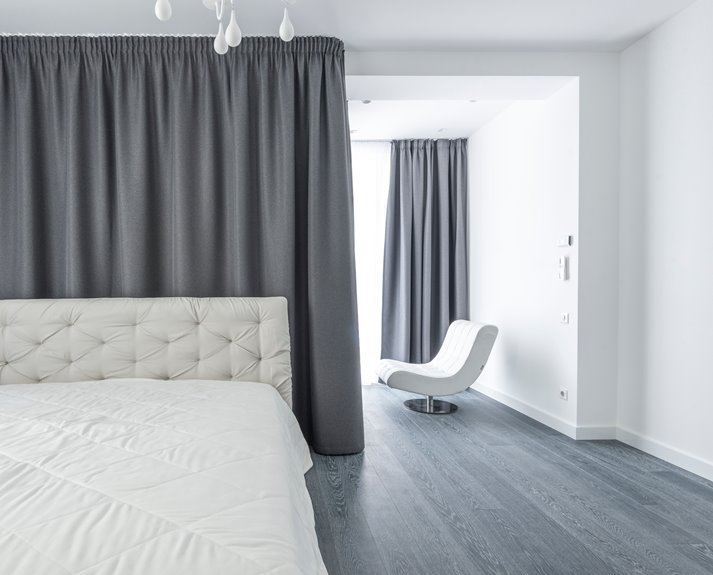
Your furniture choices establish the foundation for spatial perception, but your window treatments and architectural details amplify that effect exponentially. Hanging curtains close to the ceiling rather than at the window frame creates immediate ceiling height gains. This vertical emphasis draws the eye upward, making rooms feel less confined. Extend panels to the floor for continued visual length.
Tall trim details matter equally. Baseboards, door casing, and window casing add finished architectural presence while suggesting expansiveness. Painting trim matching your wall color minimizes visual breaks, enhancing an airy aesthetic. Alternatively, bold contrasting trim intentionally emphasizes vertical lines.
Pair high curtains with light, neutral wall colors to maximize natural light reflection. This combination of strategic placement, proportional trim, and coordinated colors creates a spacious feel without structural renovation.
Declutter Your Small Bedroom for an Airy Feel
How does a cluttered surface shrink a room’s perceived size? Visual noise overwhelms small bedrooms, making them feel cramped and disorganized. I recommend decluttering your small bedroom by keeping only essential items on display while stowing the rest in closed baskets or storage solutions. Under-bed storage preserves your floor plan while hiding excess belongings. A low-profile bed with simple, minimal bedding contributes to clean lines and an open feel. Choose a cohesive palette, such as soft grays or warm whites, to reduce visual clutter. Minimal decor matters; each piece should serve a purpose. This strategic approach maximizes perceived space without sacrificing functionality, creating the organized, calm environment you’re seeking.