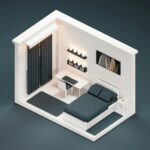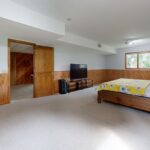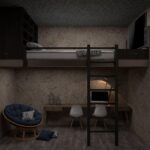
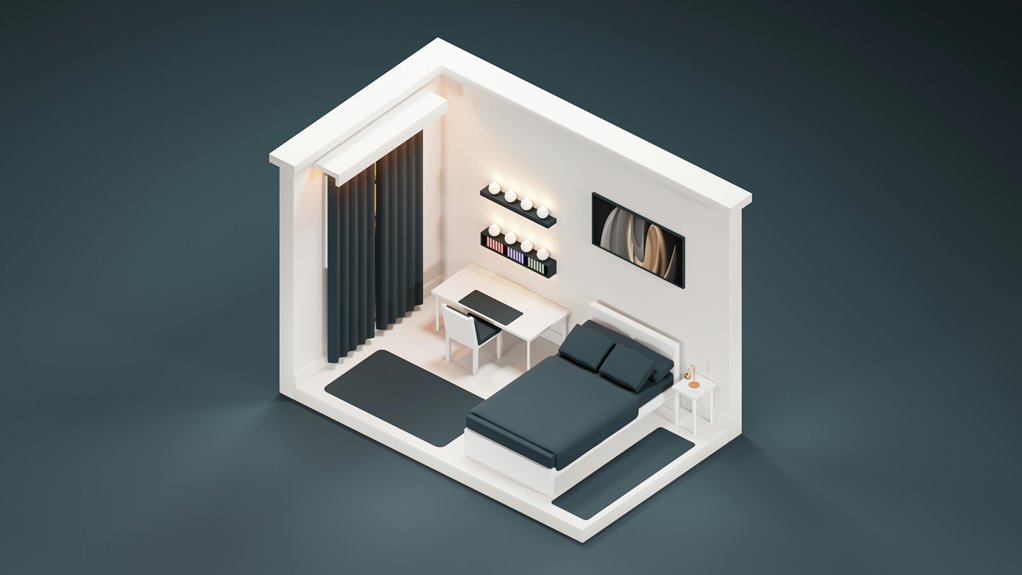
Most people don’t realize that bed placement affects how spacious a room actually feels, not just how it functions. I’ll walk you through positioning strategies that anchor your bedroom while creating visual balance, then show you how thoughtful furniture arrangement, strategic lighting, and zone definition can work together in even modest square footage.
The difference between a cramped bedroom and an expansive one often comes down to these foundational layout decisions.
Position Your Bed: The Foundation of Bedroom Layout
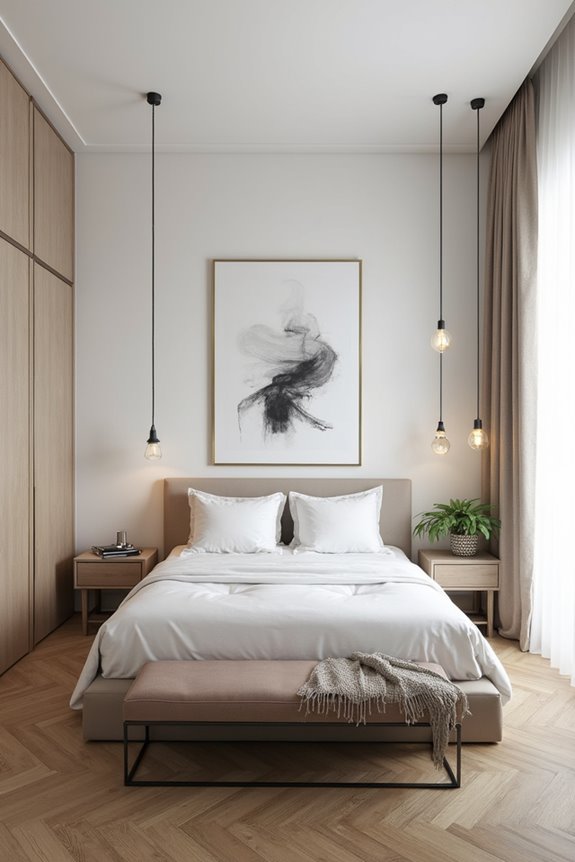
Where should your bed actually go? Your bed position forms the foundation of your entire room layout, influencing traffic flow, natural light distribution, and overall balance. I recommend measuring your space first, noting doorways and windows before deciding placement. Centering your bed on the wall opposite the door creates a focal point that anchors the room, while positioning it away from windows maximizes natural light and prevents glare. Consider your room’s architectural features: alcoves, niches, or sloped ceilings. Align furniture accordingly for harmonious sightlines. Pair your bed position with symmetry through matching nightstands and lamps; this balance creates calm and order. Simple floor plans help visualize options. Strategic bed placement establishes space planning success and ensures your bedroom feels intentional, organized, and welcoming.
Choose Symmetrical or Asymmetrical Furniture Placement
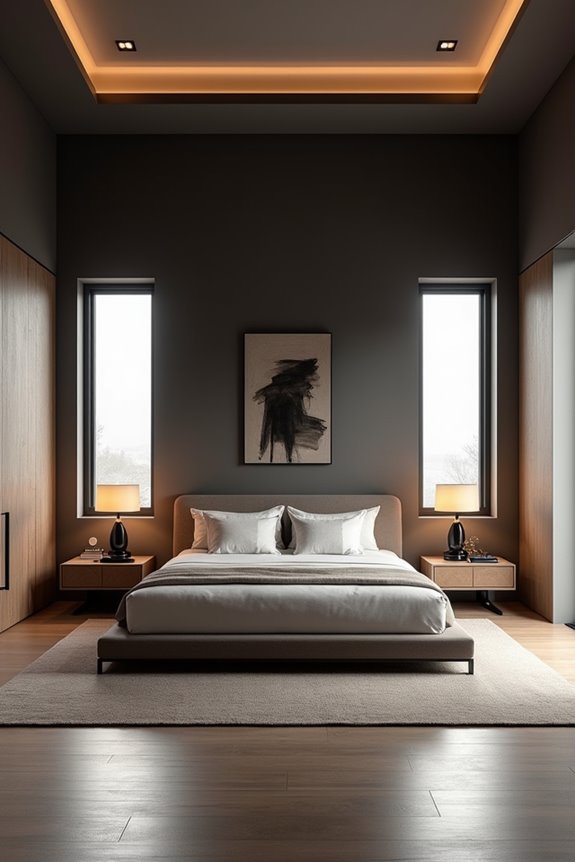
Once you’ve anchored your bed as the room’s focal point, you’ll shape the surrounding furniture arrangement through one of two approaches: symmetrical or asymmetrical placement.
Symmetry creates visual balance through matching nightstands and identical lamps flanking your bed, establishing calm and order. This approach works particularly well in rooms with high ceilings, where aligned furniture complements vertical proportions while maintaining clear pathways for airflow.
Asymmetrical layouts demand thoughtful offsetting of furnishings. Balance heaviness on one side using mirror placement or art on the opposite wall to maintain harmony. Though less structured, asymmetrical designs still preserve sightlines and cohesion when thoughtfully arranged.
Both methods keep your bed prominent without blocking natural lighting. Choose based on your space’s dimensions and your personal need for visual calm versus dynamic arrangement.
Maximize Natural Light and Window Placement
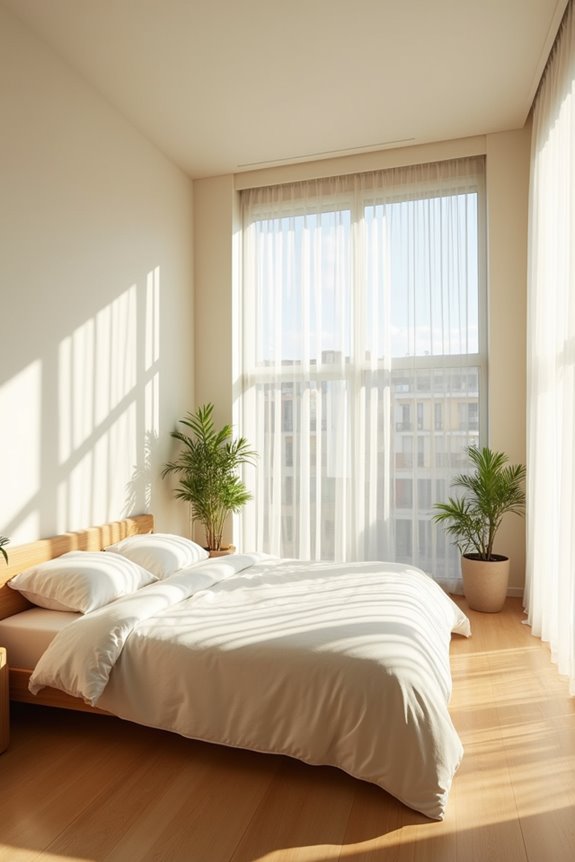
Position your bed perpendicular to the window. Interior designers recommend this strategy to capture natural light while maintaining a clear sightline without sunrise glare. This placement becomes your foundation for the entire room’s luminosity. Your window view matters equally; if you can angle your bed to frame an outdoor vista, you’re leveraging what architect Christopher Alexander called “connection to the natural world.” This connection reinforces both the aesthetic and psychological benefit of the layout.
Pair this perpendicular positioning with light-reflective materials like soft linens in cream or warm white tones near the window. Position a reading nook or seating area along the glass to maximize daylight hours throughout morning and afternoon. These strategies work together to optimize how natural light moves through your space during different times of day.
Strategic Bed Positioning
How you position your bed fundamentally determines whether your bedroom feels open or cramped, well-lit or cave-like. Measure your space first, noting doorways and windows before committing to your bedroom layout. Placing your bed away from windows maximizes natural light while creating balanced sightlines throughout your room. Consider centering the bed on the opposite wall or positioning it off-center, depending on your floor plan’s geometry. Strategic bed positioning directly impacts traffic flow and storage solutions around your space. Align furniture with architectural features such as alcoves, slopes, and openings to maintain harmonious sightlines. Matching nightstands and identical lamps build symmetry, which enhances visual calm. Your bedroom design choices here establish foundational space optimization that makes rooms feel larger and more deliberate.
Window View Optimization
Why does natural light matter so much in a bedroom? Strategic window view optimization determines your entire bedroom layout. Position your bed perpendicular to windows when feasible, balancing sunlight flow with glare minimization. This bed placement strategy maintains clear pathways while capturing natural light without overwhelming your space.
Window-focused seating, such as a bay window featuring a chaise lounge and side table, creates functional light distribution zones. Consider hanging curtain fabric behind your headboard to simulate additional window softness and enhance symmetry.
Your sunlight patterns directly influence mood and spatial perception. Avoid blocking windows with bulky bed frames; instead, use window placement to guide your overall design. Light distribution becomes your layout’s foundation, turning ordinary bedrooms into spaces that feel carefully planned.
Use Built-ins and Floating Furniture to Free Floor Space
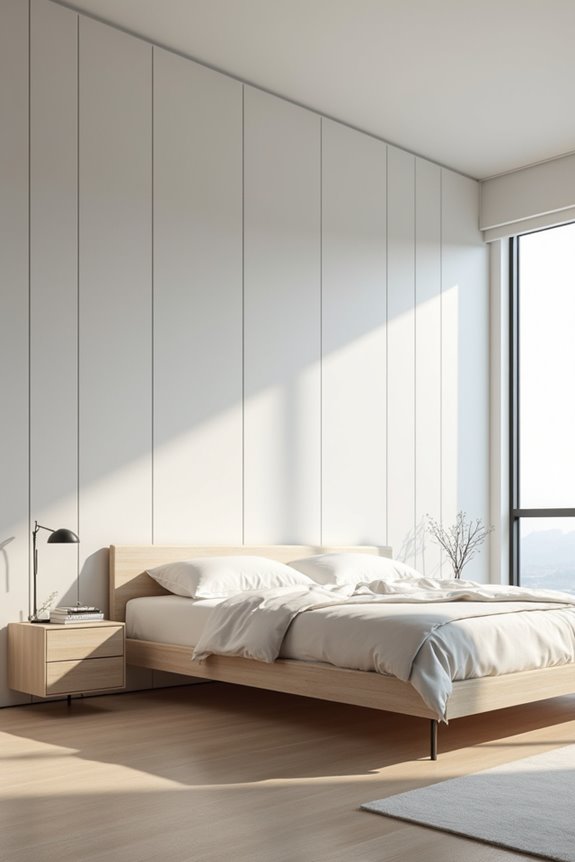
Built-in storage and floating furniture represent two of the most effective strategies for reclaiming floor space in compact bedrooms. Vertical storage solutions, including wall-mounted shelves, nook designs, and corner-fit bookshelves, maximize your room’s footprint while preserving sightlines. These elements create a streamlined layout that feels organized rather than cramped.
Floating furniture pieces elevate your bed or desk, revealing floor area beneath that amplifies spatial perception. Pairing this approach with under-bed drawers provides accessible storage without sacrificing mobility.
Custom built-ins accommodate awkward layouts and architectural quirks that standard furniture cannot address. When you integrate lighting or decorative accents into these installations, you establish warmth and cohesion throughout your bedroom.
The result is a space where every square inch serves a purpose while maintaining the breathing room you need.
Create Separate Zones for Sleep, Work, and Relaxation
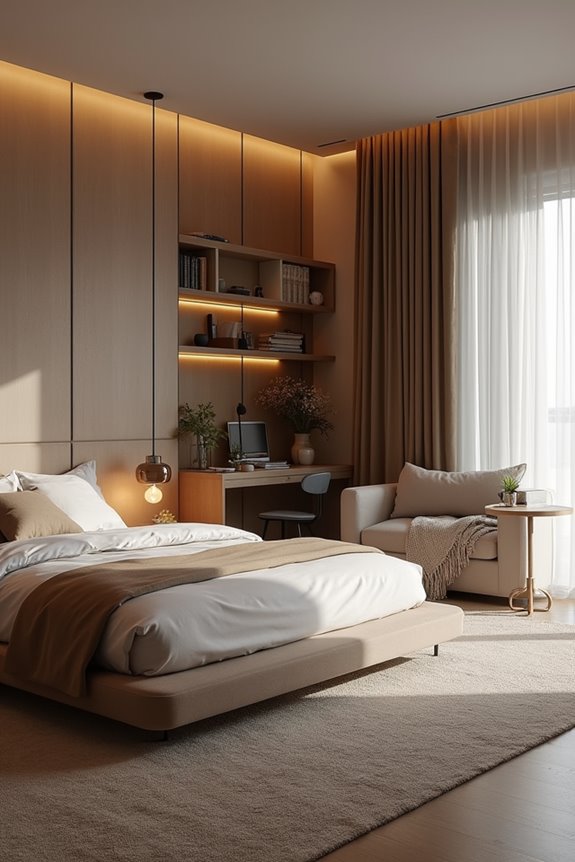
When you’re furnishing a bedroom that serves multiple functions, zoning becomes essential. It’s the difference between a cohesive multipurpose room and a chaotic space where activities bleed into one another. Use a room divider or sliding door to physically separate your sleep zone from work and relaxation zones. Position a desk that doubles as a nightstand, anchoring it with a coordinating back panel that defines the work zone without overwhelming sleeping quarters. Add comfortable seating near windows to establish your relaxation zone distinctly. Incorporate multifunction furniture like beds with drawers and storage ottomans to maximize layout options for small bedrooms. Maintain open pathways and balanced sightlines throughout. These separation strategies allow each zone to function purposefully while keeping your entire bedroom organized and intentional.
Plan Your Bedroom’s Lighting Layout for Function
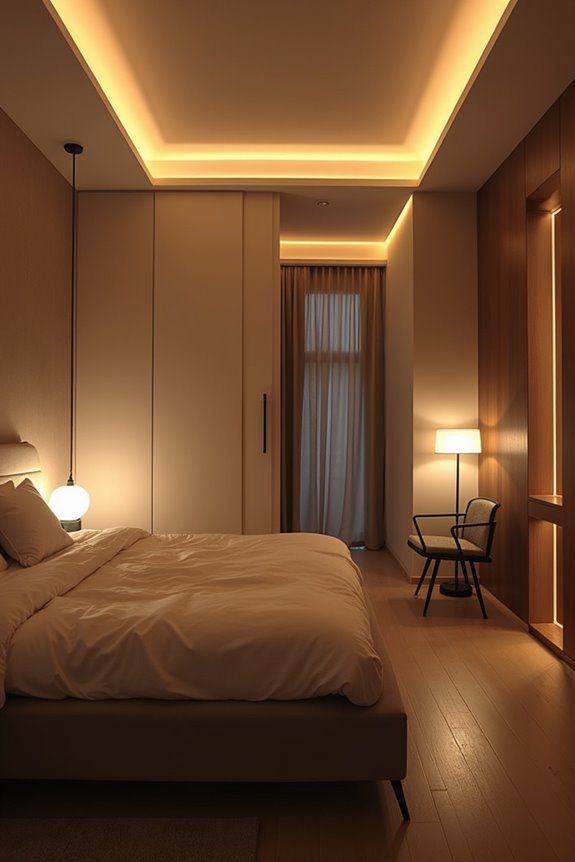
How you layer your bedroom’s lighting fundamentally determines whether the space functions as a restful retreat or a poorly lit, multipurpose room that fails to support any single activity. I’d recommend creating a lighting layout that combines ambient, task, and accent fixtures, each serving distinct purposes across your bedroom’s zones.
| Lighting Type | Function | Placement |
|---|---|---|
| Ambient | General illumination | Ceiling fixtures, dimmable |
| Task | Reading, work activities | Bedside sconces, desk lamps |
| Accent | Mood, visual interest | Shelving, architectural features |
| Natural | Daylight maximization | Window-aligned fixtures |
| Integrated | Storage + light | Built-in shelving units |
Position bedside lighting at eye level to frame your sleep zone while freeing nightstand surfaces. Align your lighting plan with window placement and sunlight patterns to minimize glare. Dimmable fixtures let you adjust brightness throughout the day, while integrated lighting with built-in storage maintains a clutter-free aesthetic across multiple zones.