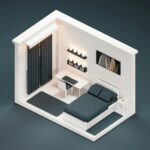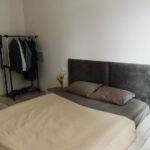
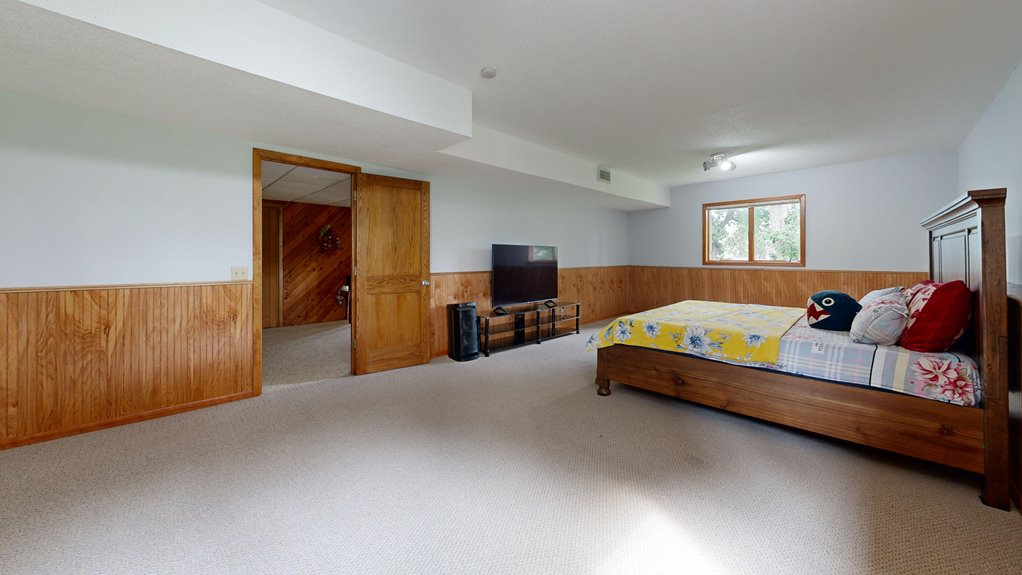
When you’re facing moisture concerns, dim lighting, and cramped proportions, you need a strategy; not wishful thinking. I’ll walk you through moisture-resistant vinyl plank flooring, layered lighting systems, and light-reflective paints (aim for 50–70 LRV) that actually work together.
The real change happens when you combine these elements strategically, but here’s what most people miss first.
Start With Moisture-Resistant Flooring
Why does basement flooring require different consideration than upper-level rooms? Moisture penetration poses the primary challenge in below-grade spaces, making standard hardwood unsuitable. I selected vinyl plank flooring, specifically Allure in Honey Butter Oak, because it resists water damage while maintaining aesthetic appeal. This material won’t warp or swell when exposed to humidity, providing durability in unpredictable basement environments.
Vinyl planks offer practical advantages beyond moisture control. They’re scratch-resistant, easy to clean, and support heavy foot traffic in a bedroom setting. The warm oak tone brightened my basement considerably, compensating for limited natural lighting typical of underground spaces. Professional installation proved essential; it guarantees proper moisture control beneath the surface and a secure, long-lasting fit. Choosing moisture-resistant basement flooring establishes a foundation for the comfortable, low-maintenance retreat you’re planning.
Brighten Dark Spaces With Layered Lighting
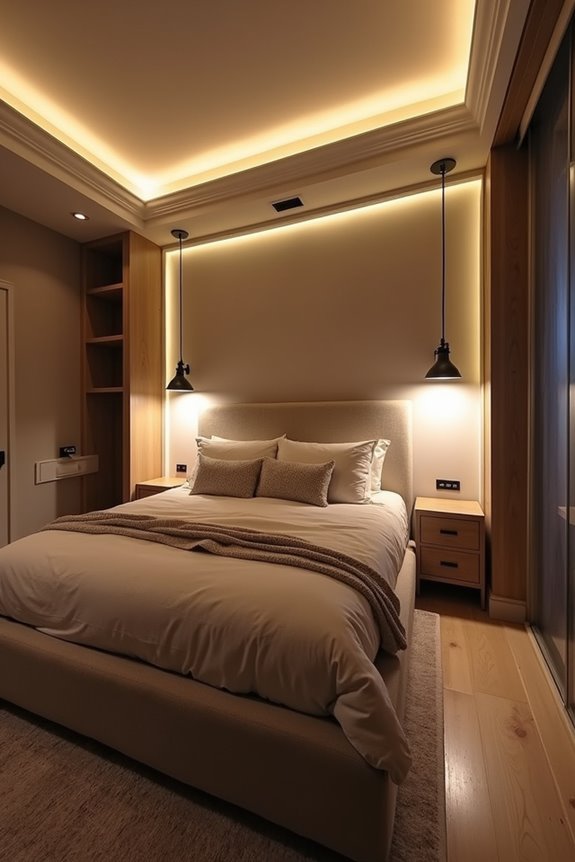
How do you combat the perpetual dimness that defines most basement bedrooms? I recommend layered lighting. Since basements lack natural light, combine recessed ceiling lights with wall sconces and floor lamps to create balanced illumination across your space. Install warm bulbs paired with dimmers, allowing you to shift from functional brightness to relaxation mode without difficulty. Backlighting, positioned behind your headboard or accent wall, adds modern depth without raising ceilings. Position mirrors opposite light sources to bounce rays throughout the room, visually enlarging your basement while multiplying available glow. Prioritize this planning early in your makeover. Designate separate lighting zones for work areas, seating, and sleeping quarters, ensuring each receives appropriate, adjustable illumination tailored to its function.
Paint Colors That Reflect Light and Feel Cozy
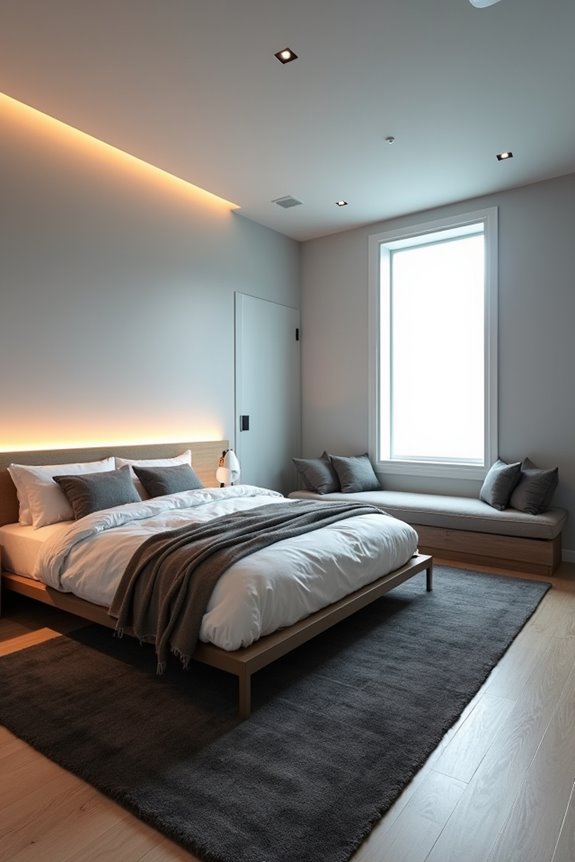
I recommend focusing on Light Reflective Value (LRV) when selecting basement paint, as higher-LRV colors like Sherwin-Williams EvenTide bounce available light more effectively than flat whites that can appear dull in low-natural-light conditions. Color drenching, which involves applying your chosen hue uniformly across walls, trim, ceiling, and molding, creates visual continuity that subtly extends perceived ceiling height while establishing the cozy atmosphere you want. This unified approach works with your layered lighting to amplify brightness and create a more intentionally designed space.
Light Reflective Value Strategy
When basement bedrooms lack natural light, paint selection becomes your most accessible design tool for brightening the space. Understanding Light Reflective Value, or the percentage of light a paint color reflects, directly addresses basement lighting challenges.
Consider these LRV strategies:
- Choose paints with LRV ratings between 50-70 for optimal light reflectivity without appearing stark
- Avoid pure white (LRV 100), which can feel flat and uninviting in low-light conditions
- Apply the same paint color across walls, trim, and ceiling to create visual cohesion and perceived height
- Pair higher-LRV selections with strategic basement lighting to maximize perceived openness
Sherwin-Williams EvenTide exemplifies this approach. When draped across walls, ceiling, doors, and molding, it creates a cohesive color scheme that feels both brightened and cozy. Fresh paint yields significant improvement, making it your most cost-effective design investment.
Color Drenching For Depth
Why does painting a single color across every surface (walls, ceiling, doors, and trim) create such a dramatic shift in a basement bedroom? Color drenching eliminates harsh transitions that fragment space, creating a unified appearance that visually enlarges rooms and increases perceived ceiling height. Sherwin-Williams EvenTide delivers the depth and coziness basements need while maintaining enough LRV to reflect available light sources.
| Design Element | Benefit | Application |
|---|---|---|
| Single-hue coverage | Seamless visual flow | Walls, ceiling, molding |
| Higher LRV paints | Enhanced brightness | All surfaces equally |
| EvenTide shade | Balanced warmth | Complete room saturation |
Avoid pure white, which flattens basement spaces. Instead, select warmer or lighter shades that reflect light without sacrificing the intimate atmosphere color drenching provides. This approach turns underground bedrooms into intentional retreats rather than afterthought spaces.
Install a Finished Ceiling to Maximize Height
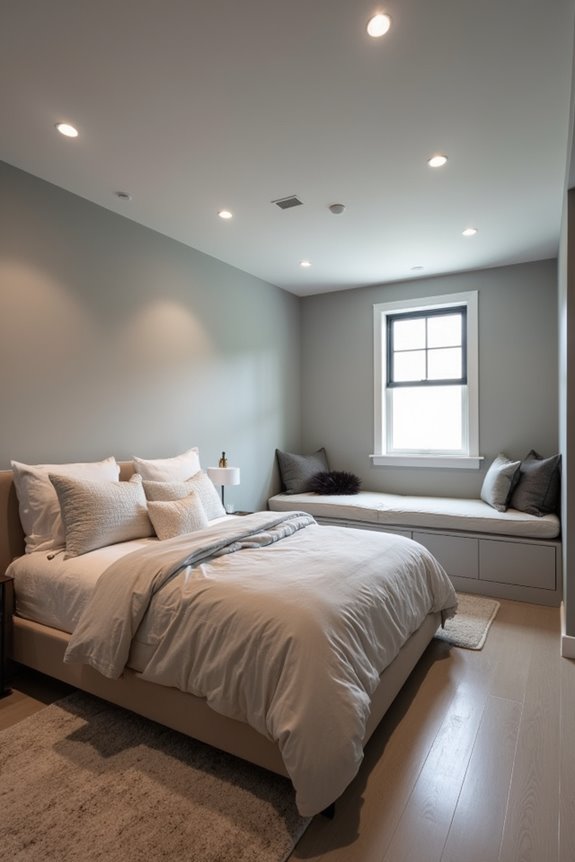
I’ll maximize your basement bedroom’s perceived height by installing a beadboard ceiling with 2×4 framing, which creates visual interest while the vertical paneling lines draw the eye upward and counteract the confined feeling of low ceilings. Pairing this finished surface with recessed lighting, positioned after removing outdated light boxes, eliminates shadows that compress space and produces the bright, open atmosphere you’d find in a hotel suite. The combination of crisp white or pale gray beadboard paneling with strategically spaced recessed fixtures turns an otherwise cramped overhead plane into an architectural feature that enhances both proportion and functionality.
Beadboard And Framing Solutions
How do you turn a basement bedroom that feels cramped and unfinished into one with visual spaciousness and polished character? Installing a beadboard ceiling with 2×4 framing delivers both aesthetic refinement and practical height enhancement. Here’s what I’d recommend:
- Frame the ceiling structure using 2x4s spaced 16 inches apart for proper panel support and load distribution.
- Install beadboard paneling vertically to draw the eye upward, creating the illusion of greater ceiling finish height.
- Add recessed lighting throughout to eliminate shadows that compress the space in your basement bedroom.
- Trim perimeter gaps with molding to conceal panel edges and achieve a polished, hotel-quality appearance.
This approach replaces exposed rafters with a refined aesthetic while maintaining practical functionality. Spackling and sanding imperfections before priming produces a professional ceiling finish that anchors your entire bedroom design.
Recessed Lighting For Depth
Once you’ve framed and installed the beadboard ceiling, recessed lighting provides the final layer that makes your basement bedroom feel bright and spacious. Strategically placed recessed fixtures eliminate bulky ceiling boxes while delivering even, low-profile illumination. This approach maximizes perceived height without the visual clutter that typically weighs down compact spaces.
Layered lighting from these fixtures supports both ambient and task lighting, which is essential for desk areas in basement bedrooms. The recessed lights work seamlessly with your beadboard ceiling to create visual cohesion. By drawing the eye upward subtly, they enhance vertical space perception while maintaining a warm aesthetic. This cost-effective strategy avoids expensive remodeling while delivering a polished result for your underground bedroom.
Expand Space With Mirrors and Reflective Surfaces
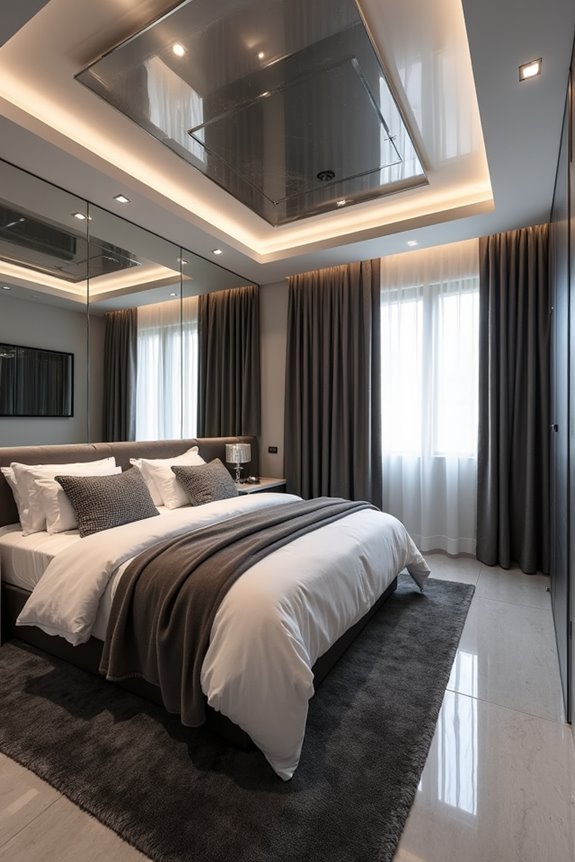
Mirrors are your basement bedroom’s most effective tool for combating cramped quarters and insufficient natural light. Strategic placement amplifies light bounce throughout the space, visually expanding perceived dimensions without architectural changes.
Consider these mirror applications:
- Position full-height mirrors opposite windows or recessed lighting to maximize reflective capacity and brighten dim corners
- Install mirrored closet doors that extend floor-to-ceiling, creating the illusion of elevated ceilings and deeper walls
- Layer multiple reflective surfaces by pairing a substantial mirror with mirrored side tables or decorative panels to enhance depth perception
- Combine mirrors with light-colored furniture and warm textiles, preventing cold institutional feelings while maintaining cozy ambiance
This multisurface approach works well in cramped basements. Light bounces strategically across reflective planes, creating atmospheric warmth and spatial generosity where basement bedrooms traditionally feel confined. The reflective surfaces work synergistically with your recessed lighting system, maximizing every lumen’s potential.
Add Warmth With Textiles and Upholstery
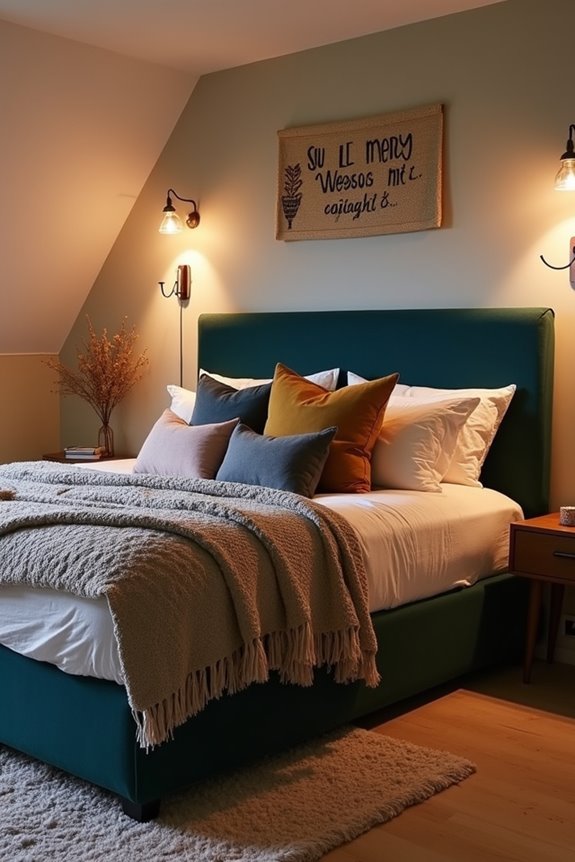
I’ll layer textiles strategically throughout your basement bedroom to create tactile depth that counteracts the cool, hard surfaces typical of below-grade spaces. Combine faux fur throws, bouclé upholstery, and waffle weave blankets to build warmth and texture.
Anchor your sleeping and seating zones with oversized area rugs topped by smaller runners. This approach serves dual purposes: insulating cold floors and visually defining functional areas. Warm wood bed frames and upholstered headboards soften the room’s industrial feel while contributing to the overall coziness.
Pair these textured fabrics with dimmer-controlled warm-bulb lighting and task lamps to amplify the inviting atmosphere without requiring structural changes. Textiles and strategic illumination work together to establish comfort that masks the inherent coldness of basement environments.
Layered Textures For Depth
Textiles and upholstery serve critical functions in basement bedrooms. They combat cold, austere conditions and establish inviting, dimensionally rich spaces. Strategic material combinations address basement lighting challenges while building a warm atmosphere.
- Layer faux fur and bouclé fabrics over upholstered furniture to add tactile softness
- Place waffle weave blankets on beds and seating for visual and textural interest
- Combine multiple area rugs to insulate floors, reduce echo, and anchor furniture groupings
- Select textiles in cohesive color schemes, such as EvenTide-coordinated palettes, that unify walls and furnishings
Layered textures work synergistically with soft upholstery and warm wood tones. This combination creates depth that counterbalances cool basement environments. Throw blankets and cushions soften hard surfaces. Coordinated textiles introduce the lived-in warmth that underground spaces require to feel welcoming and comfortable.
Upholstered Headboards And Comfort
Now that you’ve established textural layers throughout your basement bedroom, the upholstered headboard becomes your anchor point; a piece that grounds the entire aesthetic while delivering both comfort and function. I’d recommend selecting fabrics in warm hues like caramel or taupe, which reflect layered lighting and counteract limited natural daylight. Pairing your headboard with warm textiles (bouclé throws, faux fur blankets, quilts) creates softness against hard basement surfaces. Consider built-in storage integration. Hooks and shelves boost organization without consuming floor space. Warm wood tones coordinating with your headboard establish hotel-like sophistication.
The result: your upholstered headboard serves as more than a visual anchor. It functions as a strategic design element that enhances basement depth perception while establishing an inviting retreat tailored to your underground space.
Area Rugs And Warmth
Strategic layering of area rugs converts basement flooring from cold and austere into an inviting foundation for your bedroom retreat. Combining textiles strategically creates both visual warmth and practical insulation that reduces chilly feet on concrete surfaces.
- Layer wool or vintage area rugs to establish foundational warmth while defining your sleeping zone
- Add faux fur throws and bouclé upholstery that create tactile depth and a lived-in aesthetic
- Choose honey-toned vinyl or hardwood alternatives paired with larger rugs to visually extend warmth across the room
- Position multiple textiles (throws, pillows, and upholstery fabrics) to build coziness without requiring extensive remodeling
This layering approach delivers insulation benefits while establishing the intimate atmosphere basements typically lack. The combination addresses both thermal concerns and design goals simultaneously, making your underground bedroom feel genuinely welcoming.
Create Functional Storage Without Clutter
How do you keep a basement bedroom feeling spacious when storage demands are high? I recommend layering multifunctional pieces that serve dual purposes. A storage bed with under-bed bins conceals linens and seasonal items while maintaining floor clarity. Built-in closets and floor-to-ceiling cabinetry maximize vertical space without consuming walkway footage. Multipurpose furniture, like dressers doubling as desks or storage ottomans, reduces visual clutter while offering seating. Strategically placed mirrors reflect light and enlarge the perceived room dimensions when aligned with light sources. Full-height curtains soften walls and improve acoustics without the bulk of traditional furniture. These storage solutions work together, creating an organized environment that feels open rather than cramped, allowing your basement bedroom to function efficiently without sacrificing comfort or flow.
Add Smart Features and Creature Comforts
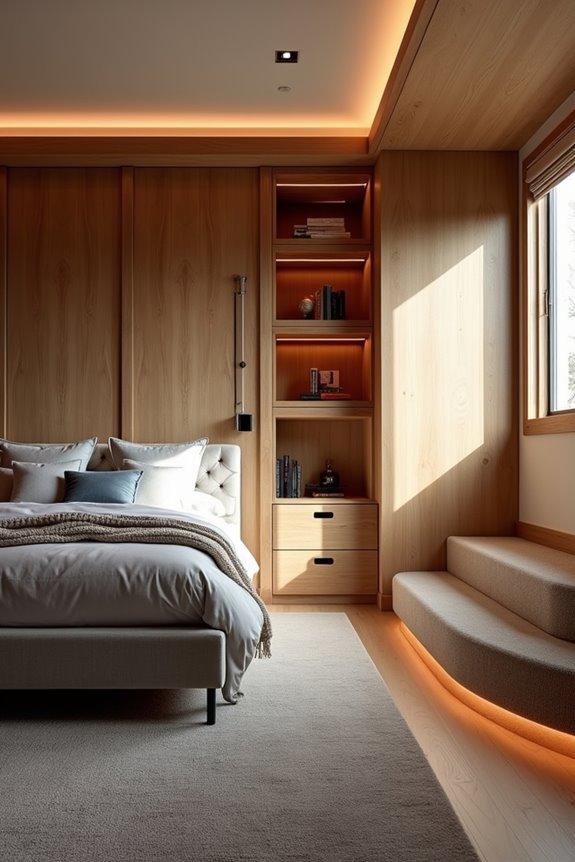
Once you’ve established a functional storage system, your basement bedroom’s livability depends on integrating smart technology and thoughtful amenities that convert it from a basic sleeping space into a versatile retreat. Consider prioritizing these upgrades:
- Install a smart thermostat and USB outlets for convenient device charging and climate control
- Add dimmable LED lighting with personal controls to shift ambience between study, relaxation, and guest modes
- Incorporate a sound machine to mask unwanted noise while establishing acoustic comfort
- Plan proper egress windows and consider backlit accent walls for both safety and visual depth
These additions create hotel-like convenience without requiring full remodeling. A mini fridge, lever handles for accessibility, and low-threshold flooring complete the upgrade, ensuring your basement bedroom functions as a comfortable, multi-use retreat that adapts to your evolving needs.
Layer Bedding and an Area Rug for Softness
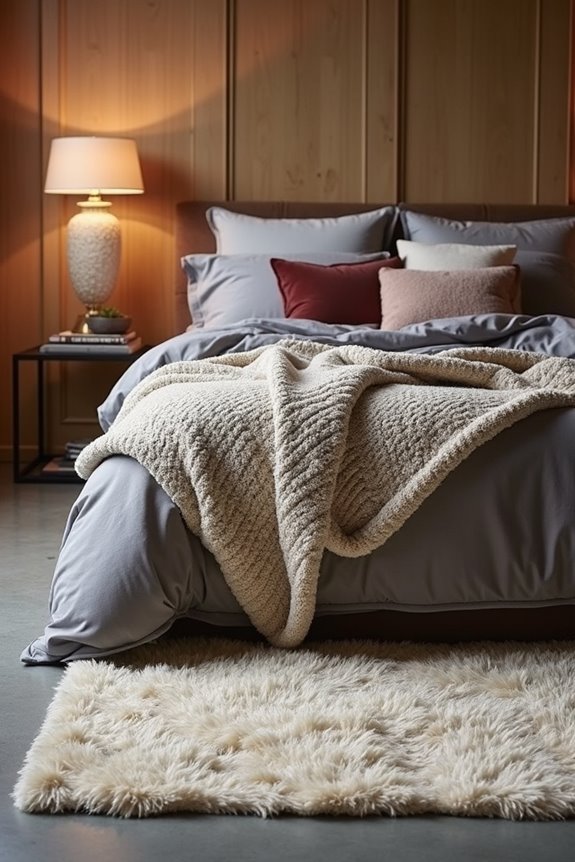
Why do basement bedrooms often feel cold despite adequate heating? The answer lies in layering—both bedding and flooring. I recommend basement bedroom layering with multiple textile components: sheets, a duvet, and a matelassé topped with a quilt, enhanced by throws in faux fur or bouclé. These cozy textures combat cool basement lighting while building visual warmth.
Area rug insulation transforms bare concrete floors into inviting zones. Large rugs or layered combinations provide underfloor warmth and acoustic softening. Pair layered bedding textures with warm wood furniture and upholstered seating to balance hard surfaces without overwhelming compact spaces.
| Textile Layer | Material | Function |
|---|---|---|
| Base | Quality cotton sheets | Foundation comfort |
| Mid | Duvet or matelassé | Primary insulation |
| Top | Quilt plus throws | Depth and warmth |
Coordinate your palette with EvenTide walls and textile selections that maintain cohesion throughout your bedroom.
Design Layouts for Guest Suites, Teen Retreats, or In-Law Spaces
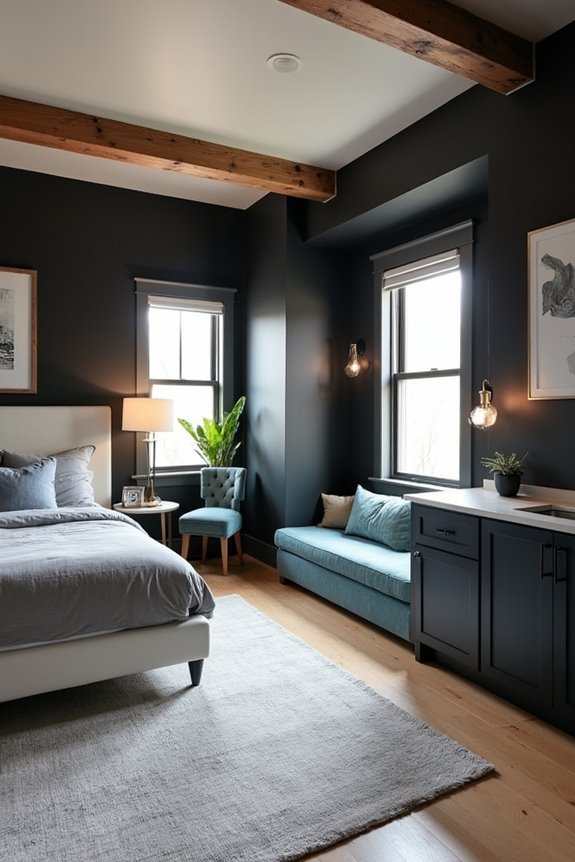
Basement bedrooms serve distinct purposes, and their layouts demand tailored approaches that balance functionality with comfort. Customizing your basement bedroom layout depends on your specific needs.
Consider these design strategies:
- Guest suites require queen beds with blackout curtains, closets, and optional ensuite bathrooms that maximize privacy and accommodate visiting family.
- In-law spaces need accessibility features: wide door frames, low-threshold flooring, and lever handles. Walk-in showers and sitting areas support multigenerational comfort.
- Teen retreats benefit from space-saving furniture like loft beds with desks underneath, creating dedicated study zones without consuming floor area.
- Primary bedrooms deserve considered details. King beds, accent walls, built-in lighting, optional fireplaces, and walk-in closets with organizational built-ins create functional luxury.
Each basement bedroom layout reflects its occupants’ needs while maintaining consistent design standards throughout your underground space.