
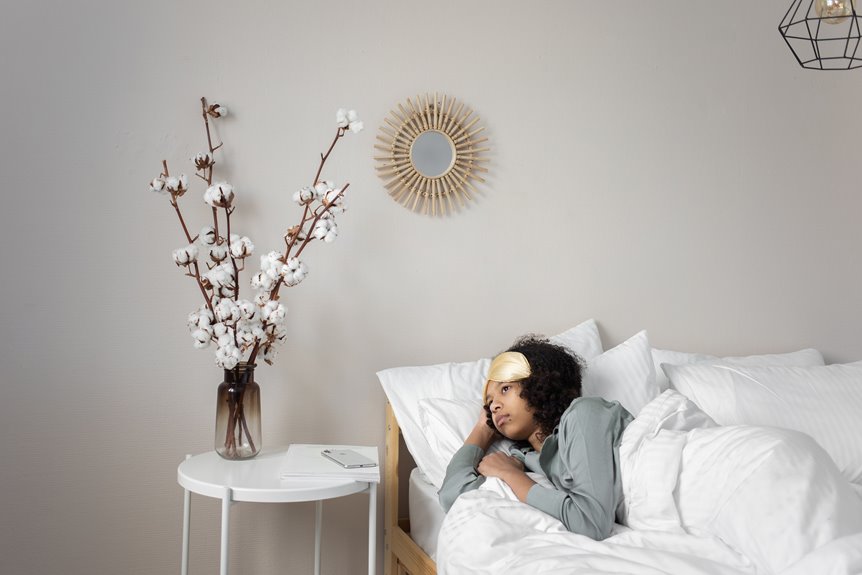
Your bedroom should function as a genuine retreat, not just a place to sleep. This space succeeds based on seven interconnected design decisions; from the foundation of quality bedding to the final touches of personalized decor. Each element builds upon the last, creating an environment that quiets your mind and invites restorative rest. Here’s what actually works.
Layer Quality Bedding and Soft Textures for Comfort

Why does a bedroom’s comfort level often come down to what touches your skin? Because layering quality bedding creates the foundation for genuine rest. I’d recommend starting with high thread count sheets, at least 300, using breathable fabrics like cotton, linen, or bamboo that regulate temperature effectively. Add plush blankets and comforters in complementary colors to build warmth without bulk. A pillows variety accommodates different sleeping positions and lounging preferences; mix firm support pillows with softer decorative options. Layer textures across throws and rugs to establish depth. Coordinate your headboard with bed accents such as tufted or velvet details, anchoring the space visually. This tactical approach to soft textures and layering bedding creates a cocoon-like feel that encourages the tactile comfort your body craves.
Choose a Cozy Color Palette to Promote Relaxation
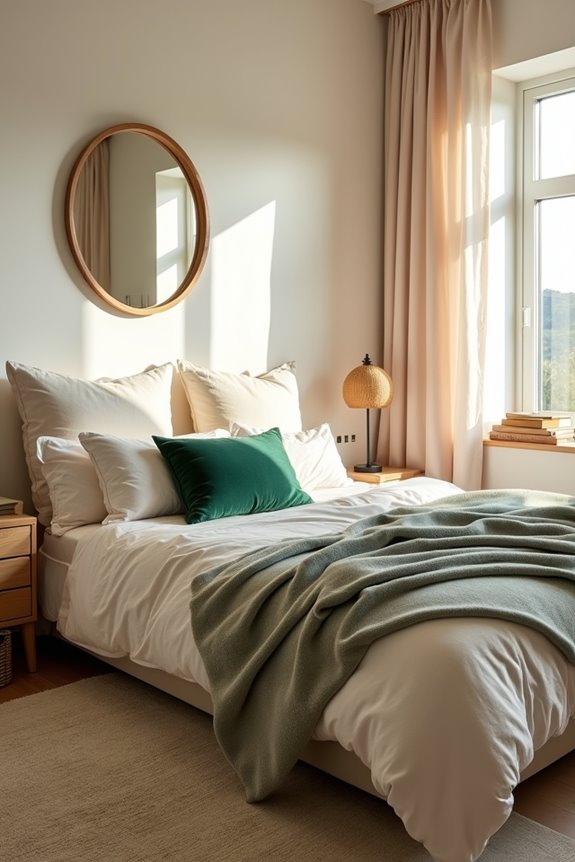
How much of your sleep quality hinges on the colors surrounding you? A calming color palette fundamentally shapes your restful sleep environment. Soft textures paired with neutral tones, such as warm beige, light blue, and muted green, create visual harmony that supports relaxation. These hues work because they’re inherently soothing, unlike stimulating bright reds or neons that sabotage sleep.
Start by anchoring your space with neutral wall colors, which make rooms feel spacious and open. Layer in cozy textiles like plush bedding and soft throws that complement wood accents, amplifying warmth throughout your bedroom. This cohesive approach combines calming color choices with tactile materials to create a bedroom conducive to rest rather than mental stimulation. The result is a space that supports the quality sleep you need.
Use Warm, Dimmable Lighting to Set the Mood
I’ve found that layered lighting, combining table lamps, wall sconces, and string lights rather than relying solely on overhead fixtures, creates the soft, multidimensional glow that turns a bedroom into a restful retreat. Dimmable bulbs and smart controls let you adjust color temperature and brightness throughout your evening routine, shifting from cooler tones during the day to warm 2700K bulbs at night, which supports your circadian rhythm while enhancing relaxation. Candlelight and ambient sources like flameless LED candles or low-wattage accent lighting amplify this cocoon-like atmosphere when paired with blackout curtains, enabling you to control light exposure and improve sleep quality without sacrificing visual warmth.
Layered Lighting Sources
When you’re designing a bedroom that prioritizes rest, the lighting scheme matters as much as the furniture itself. Layering multiple light sources creates a balanced, functional environment that adapts to your needs throughout the day.
Consider incorporating:
- Table lamps on nightstands for focused, soft lighting during evening routines
- Floor lamps positioned in corners to eliminate dark shadows and provide ambient lighting
- Sconces mounted on either side of your bed for reading without overhead glare
- String lights or a small chandelier as decorative elements that enhance coziness
Install dimmer switches or smart bulbs to control brightness intensity. This approach prevents harsh overhead fixtures from washing out textures and colors. By strategically placing lighting across your space, you’ll create an inviting retreat that supports restful sleep while maintaining functionality for daily activities.
Dimmable Bulbs and Controls
Because lighting sets the foundation for relaxation, dimmable bulbs paired with control systems create a bedroom that functions as a genuine retreat. Warm lighting between 2700K and 3000K produces an amber glow that signals your body it’s time to wind down. Installing dimmer switches on bedside lamps allows you to adjust brightness without jarring transitions, eliminating the harsh flicker that disrupts sleep preparation. Smart bulbs offer additional control; you can schedule gradual dimming or manage lighting remotely, supporting consistent bedtime routines. Pairing dimmable lighting with soft textures throughout your room reinforces the cohesive ambiance necessary for rest. This layered approach to lighting mood creates a sleep-friendly environment where both functionality and comfort work together.
Candlelight and Ambient Glow
How do you turn harsh overhead lighting into a restful bedroom? Candlelight and ambient glow form the foundation for a comfortable atmosphere that supports relaxation and sleep.
Consider layering your lighting through these strategic choices:
- Scented candles positioned on nightstands and dressers provide gentle flickering warmth that complements soft textiles
- Warm bulbs (2700K–3000K) in bedside lamps and wall sconces offer dimmable lighting you can control
- Blackout curtains regulate natural light while supporting layered lighting schemes throughout the day
- Multiple light sources including string lights create ambient light that reduces harsh shadows
This combination of candlelight, warm bulbs, and blackout curtains produces a soft glow without overwhelming brightness. The result is a bedroom designed for relaxation and better sleep, where each lighting element serves your comfort and rest needs.
Position Your Bed and Seating for Flow
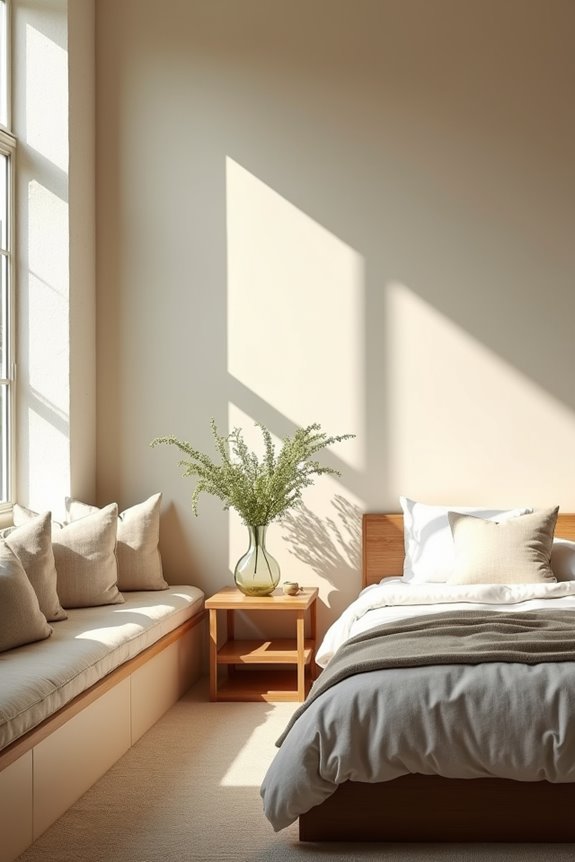
Where you position your bed fundamentally determines whether your bedroom feels spacious or cramped. Centering your bed against the wall creates visual balance and establishes a clear focal point while allowing access from both sides; this is a principle that design professionals consistently recommend for optimal flow. Pair this bed positioning with a cozy reading nook by placing an upholstered chair and side table near a window or corner. This arrangement encourages relaxation without crowding the space. Decluttering surfaces throughout your bedroom layout prevents visual overwhelm and enhances movement between zones. Strategic seating placement creates distinct functional areas while maintaining an open atmosphere. This thoughtful arrangement makes your bedroom a place where every element serves both aesthetic and practical purposes, providing the belonging and comfort you need.
Add Plants and Natural Elements to Breathe Life Into Your Space
What’s holding your bedroom back from feeling truly serene? Introducing plants and natural elements creates spaces where you’ll actually want to spend time.
Consider these additions to your calm retreat:
- Snake plants and lavender: Low-maintenance houseplants that purify air while requiring minimal attention
- Wooden furniture and rattan accents: Materials that reinforce warmth and organic aesthetics throughout your room
- Strategic plant placement: Position greenery on window sills, shelves, or bedside tables for visibility and easy care
- Layered textures: Combine soft textiles with natural elements to enhance tranquility
Houseplants boost air quality while adding visual texture and focal points. When you integrate greenery with wooden pieces, you create an environment conducive to better sleep. The calm space you want isn’t about luxury. It’s about thoughtful choices.
Personalize With Artwork and Meaningful Decor
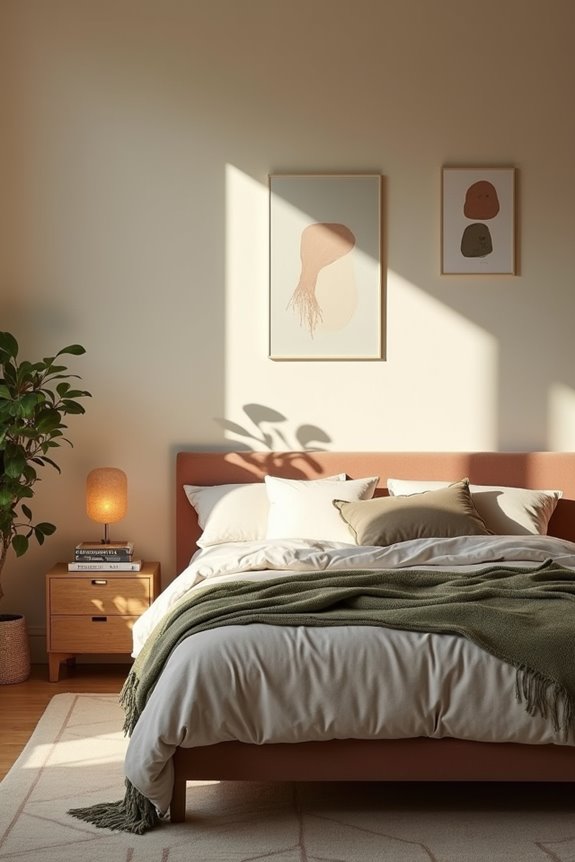
Your bedroom’s emotional resonance depends largely on the artwork and objects you surround yourself with, so intentional curation matters more than abundance. I recommend creating a gallery wall using varied frame sizes: mixing 8x10s with 5x7s to display sentimental photographs and artwork that reflect your color palette. Custom monogram bedding and embroidery details add personalization throughout your bedroom space.
| Decor Element | Placement | Purpose | Material |
|---|---|---|---|
| Gallery wall | Above headboard | Visual focal point | Mixed wood frames |
| Sentimental photos | Grouped display | Emotional connection | Archival prints |
| Monogram bedding | Bed centerpiece | Personalized touch | Cotton or linen |
| Bedside organization | Nightstand tray | Functional storage | Woven basket |
Keep your personalized decor cohesive by placing journals and nighttime essentials within arm’s reach using a bedside basket. This approach maintains calming aesthetics that support relaxation rather than overcrowding your bedroom with unnecessary items.
Declutter and Organize for a Serene Retreat
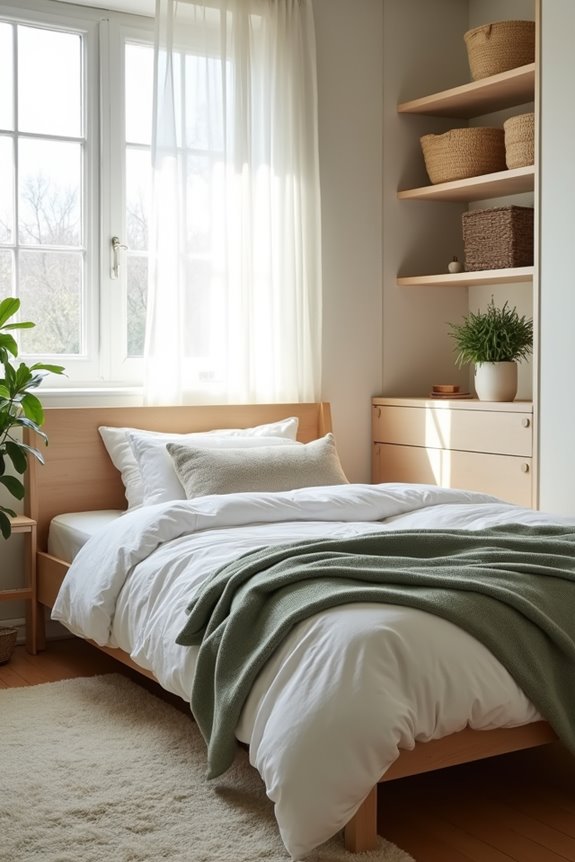
I’ll show you how strategic storage and minimalist principles create a calm bedroom sanctuary. Closed storage solutions, including woven baskets, under-bed organizers, and built-in drawers, remove visual noise by concealing everyday items. Designer Peter Salerno credits this approach as essential to reducing mental clutter and promoting restful sleep. When you keep only necessary pieces visible and layer textures through soft throws and area rugs rather than accumulating decorative objects, you create an airy, peaceful environment that naturally invites relaxation.
Storage Solutions That Work
Since a cluttered bedroom undermines relaxation, strategic storage improves both function and aesthetics. You don’t need to sacrifice style for organization; these space-saving solutions prove it.
- Storage baskets and decorative boxes create texture while concealing items on shelves and surfaces
- Under-bed storage maximizes vertical space, keeping seasonal items accessible yet invisible
- Wall-mounted shelves and floating storage preserve floor space while displaying essentials within arm’s reach
- Nightstands with organized zones (grouping books, a tray, and select décor) establish calm focal points
A minimalist decor approach means displaying only what you need. Restraint creates serenity. When you limit visible items, your bedroom becomes a clutter-free sanctuary rather than a storage facility. This deliberate curation makes your sleep space a peaceful retreat.
Minimalism Maximizes Bedroom Peace
A bedroom stripped of excess doesn’t just look cleaner; it fundamentally shifts how your nervous system responds to the space. A minimal bedroom creates the foundation for genuine serenity in your sleeping area.
Start by decluttering ruthlessly. Remove items unused in six months, then assess what remains. Keep only essentials that support rest and comfort, which reduces visual noise substantially.
Strategic storage solutions preserve this calm. Under-bed storage containers and wall-mounted shelves free floor space while maintaining accessibility. Baskets in neutral tones organize without cluttering surfaces.
Layer in soft textures through linens and throws in calming colors: whites, grays, and warm beiges work exceptionally well. This clutter-free approach lets your bedroom function as a peaceful sanctuary where minimal visual distraction promotes deeper sleep and genuine relaxation.