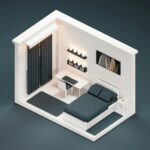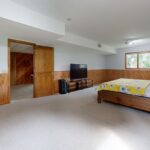
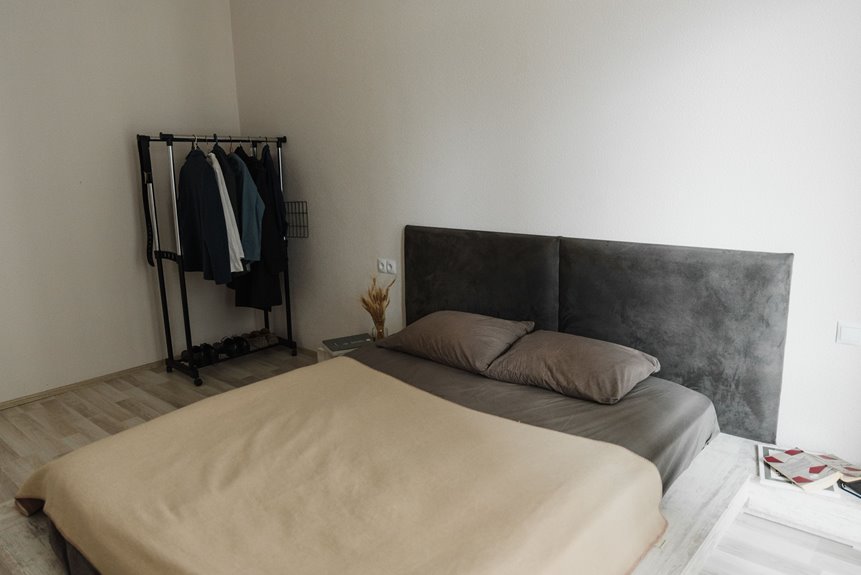
Like Marie Kondo organizing chaos into order, maximizing a single bedroom requires strategic choices that preserve both function and visual breathing room. I’ll walk you through seven designer-backed approaches: slim metal bed frames that maintain sightlines, wall-integrated storage solutions, and other practical methods that make compact quarters work better. Each technique addresses a specific spatial challenge, and when layered together, they create a cohesive environment where every square foot serves a purpose. Here’s what changes everything.
Choose a Metal Bed Frame to Maximize Visual Space
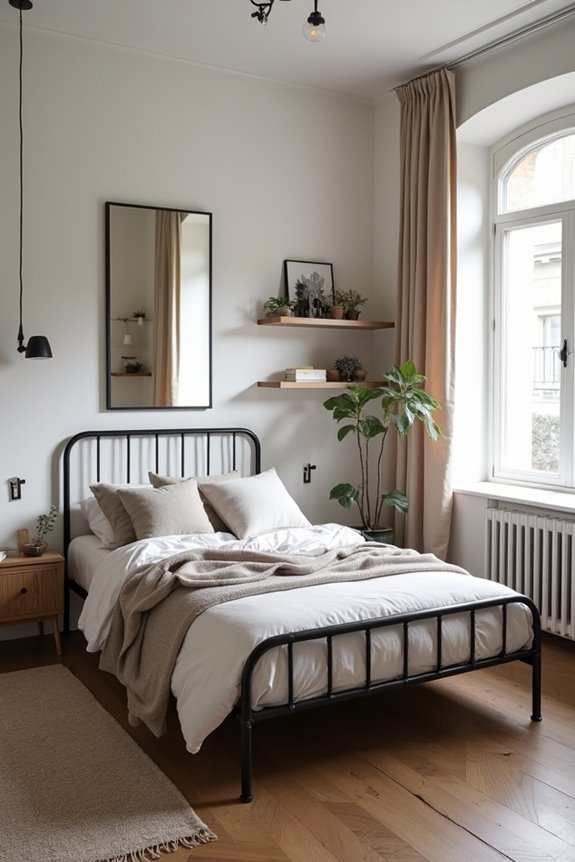
When you’re furnishing a single bedroom, the bed itself becomes your room’s anchor, and that’s precisely why its visual weight matters. A metal bed frame delivers what heavier upholstered or wooden alternatives can’t: genuine openness. Slim-railed metal designs preserve sightlines and floor visibility, creating depth in compact layouts. Unlike bulky headboards, metal frames blend seamlessly into your surroundings, allowing your eye to travel beyond the bed itself.
This choice directly addresses small bedroom storage concerns. By selecting a minimalist metal frame, you reclaim perceived floor space for functional pieces: dressers, shelving units, or seating. Metal’s lightweight construction means you’ll rearrange layouts easily as your needs evolve. Pair your frame with neutral walls and layered textiles to maintain visual calm while maximizing the architectural breathing room your single bedroom genuinely needs.
Pick a Murphy Bed or Loft to Reclaim Floor Area
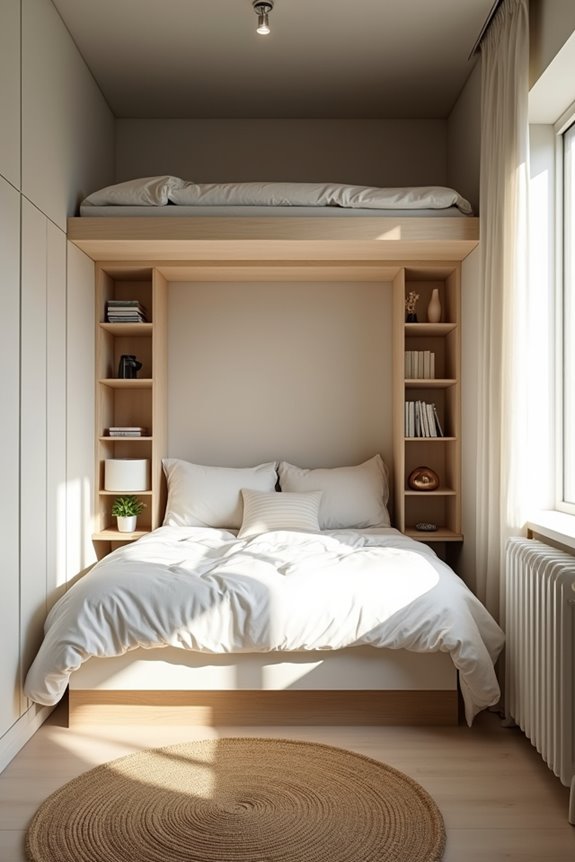
While a metal bed frame opens up your room visually, Murphy beds and loft systems take space reclamation further by eliminating the bed’s footprint entirely. A Murphy bed folds vertically into the wall, converting your bedroom into a functional office or guest area when not in use. Paired with integrated shelving, this space-saving design maintains an uncluttered aesthetic while maximizing storage capacity. Alternatively, a loft bed elevates your sleeping area above floor level, creating usable space beneath for a home office, reading nook, or additional storage. Both options prioritize functionality and sightline openness, helping your room feel markedly larger without compromising comfort. Custom-designed or pre-made options exist, allowing you to choose solutions that align with your lifestyle and design preferences.
Build Vertical Storage With Floating Shelves
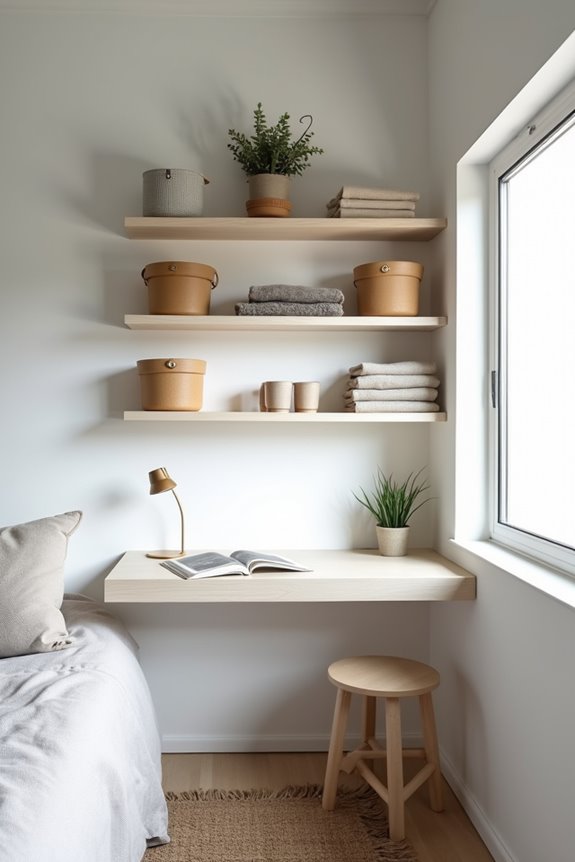
Floating shelves maximize your bedroom’s vertical potential by converting unused wall space into functional storage that keeps your floor uncluttered and visually open. Position these shelves at strategic heights, typically 12 to 18 inches apart, while maintaining clear sightlines and walkways. Pair them with slim woven baskets and curated display items that balance storage capacity with visual appeal.
Installing shelves that match your wall finish or coordinate with a wood-slatted backing creates a built-in look without requiring permanent structural changes. This approach works well for both renters and homeowners since it avoids significant renovation commitments.
Maximizing Wall Space Efficiently
Vertical storage opens up floor space in bedrooms while adding functional display areas, and floating shelves accomplish this without the visual weight of traditional cabinets. Staggered shelf heights, positioned at 36, 48, and 60 inches, maximize usable storage while maintaining clear sightlines across the room. Open, lightweight designs preserve airiness; avoid solid backs that create visual heaviness.
| Shelf Height | Ideal Items | Visual Impact | Access Level |
|---|---|---|---|
| 36 inches | Books, decor | Visible | Easy |
| 48 inches | Daily essentials | Balanced | Moderate |
| 60 inches | Display pieces | Upper focus | Requires reach |
A wood-slatted wall backdrop ties storage to your room’s texture while anchoring the installation. Position shelves away from traffic paths to maintain movement flow, keeping your floating shelves as integrated storage solutions rather than obstacles.
Stylish Organization and Display
How do you turn floating shelves from mere storage into a curated display that shows who you are? Install wall-mounted floating shelves paired with wood-slatted wall paneling to create visual texture while maximizing vertical space. This combination builds a cohesive aesthetic that doesn’t monopolize floor area, keeping your bedroom open and airy.
Strategic shelf placement matters substantially. Position shelves to showcase meaningful items, such as framed photos, books, or decorative objects, while maintaining clear circulation paths around your bed and furniture. Lightweight, open shelf designs prevent visual heaviness that compromises small-room proportions.
Align shelf finishes with your existing color palette and surrounding decor. Whether you choose natural wood tones, matte black metal, or painted surfaces, consistency ensures a seamless built-in appearance. This approach turns storage into intentional display that shows your identity while preserving functional bedroom space.
Installation Tips and Tricks
Getting floating shelves right requires careful planning before you drill a single hole. I position shelves strategically to avoid blocking movement paths while maintaining an open, light feel. Slim-profile shelves work best in compact bedrooms since they don’t overwhelm your space.
I pair floating shelves with built-in storage nearby to maximize vertical real estate efficiently. A wood-slatted wall backdrop creates visual cohesion and anchors your shelves within the room’s aesthetic. This approach ties everything together.
When installing, I account for weight distribution and stud placement for safety and stability. Consider recessed options that integrate flush with your walls, further reducing visual bulk. This layered storage strategy lets you display essentials while keeping clutter contained, creating an uncluttered space.
Replace Your Nightstand With a Wall Sconce and Shelf
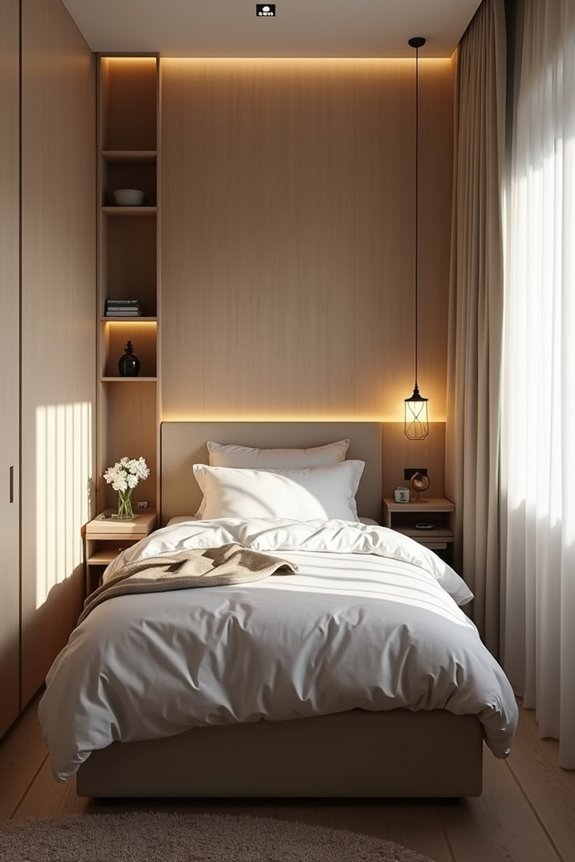
Why clutter your bedroom floor with a traditional nightstand when you can mount your lighting and storage directly to the wall? A wall sconce paired with a bedside shelf creates a space-saving solution that makes cramped quarters feel open and airy. This setup eliminates bulky furniture while providing essential task lighting and storage for your phone, book, or small lamp.
| Feature | Benefit | Material |
|---|---|---|
| Wall sconce | Ambient lighting without floor space | Brass or matte black |
| Slim shelf | Elevated storage for essentials | Walnut or white oak |
| Compact design | Improved sightlines and airflow | Steel brackets |
Select fixtures with rounded edges and neutral finishes to maintain visual cohesion. Installation at 24-30 inches above the mattress ensures comfortable reach and functional illumination throughout your evening routine.
Add a Window Seat for Hidden Storage and Seating
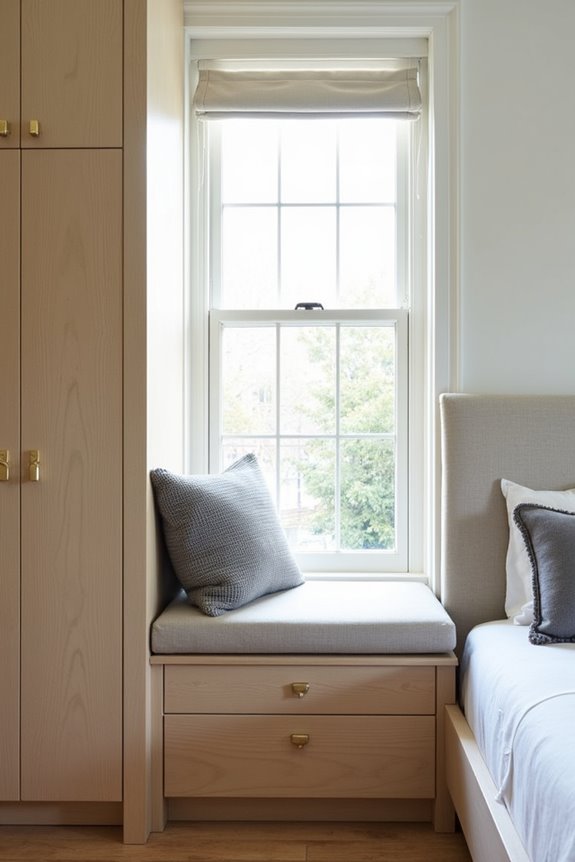
A window seat puts your bedroom’s overlooked architectural feature to work as a dual-purpose zone combining comfortable seating with concealed storage beneath. This approach works particularly well in rooms under 120 square feet. You can integrate drawers or lift-top compartments into the built-in frame; similar designs by interior architect Nate Berkus show how to stash seasonal bedding, extra throws, or storage boxes while maintaining visual flow. Pair a firm cushion base with upholstery in soft neutrals like warm gray or sage green, then add a slim backrest and layered throw pillows. The result is an inviting nook that anchors the space without consuming precious floor square footage.
Built-In Storage Solutions
Window seats represent one of the most effective strategies for reclaiming usable floor space in compact bedrooms. Integrating cushioned seating with hidden storage beneath transforms awkward alcoves into functional focal points. This built-in storage approach eliminates visual clutter by consolidating shelving and cabinetry directly into walls, freeing precious square footage for movement and circulation.
When designing your window seat, match the finish to surrounding decor, whether stained wood or painted trim, creating seamless integration rather than a bulky, separate piece. Incorporate quality cushions atop the seat while maximizing the cavity beneath for out-of-sight organization. This space optimization technique expands perceived dimensions while serving dual purposes: comfortable seating and practical storage.
Strategic built-in solutions like window seats demonstrate how thoughtful space planning addresses underutilized areas and converts them into essential bedroom amenities.
Dual-Purpose Seating Design
How can you reclaim precious floor space while creating a comfortable retreat?
A window seat combines seating with hidden storage beneath the bench, maximizing your bedroom’s usable square footage. This multifunctional seating design puts an often-underutilized alcove to work.
Consider these implementation strategies:
- Install cushioning in neutral tones that align with your room’s palette for visual cohesion
- Incorporate lift-top or pull-out drawers beneath the seat for throws, books, and seasonal items
- Select slim-profile frames with light upholstery to preserve sightlines and maintain airiness
- Position your window seat as a reading nook or daybed to support flexible daily use
Built-in storage reduces visible clutter while the integrated design anchors your space with purpose. This approach delivers practical comfort without sacrificing the open feel that smaller bedrooms require, making it an investment in both functionality and aesthetic calm.
Use Multipurpose Furniture to Layer Function
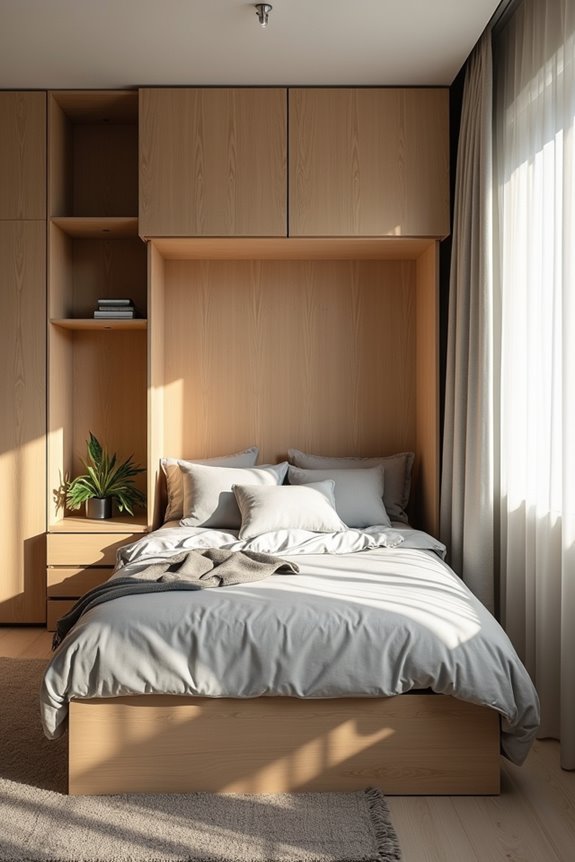
When you’re working with limited square footage, why settle for furniture that does only one thing? Multipurpose furniture strategically layers function into single pieces, maximizing your room’s potential. A bed featuring built-in drawers provides under-bed storage while eliminating the need for a separate dresser. This approach keeps clothing and linens concealed yet accessible, maintaining visual clarity in compact spaces.
Hidden storage seating, such as ottomans or benches with interior compartments, offers dual benefits: seating for guests and contained storage for seasonal items or extra bedding. A desk doubling as a vanity consolidates your workspace and grooming area, reducing standalone pieces that consume floor area.
These layered designs enable flexible room transitions between sleeping, working, and lounging without overcrowding. You’re not just furnishing a bedroom; you’re creating adaptable functionality within architectural constraints.
Refine With Pattern, Texture, and Intentional Window Treatments
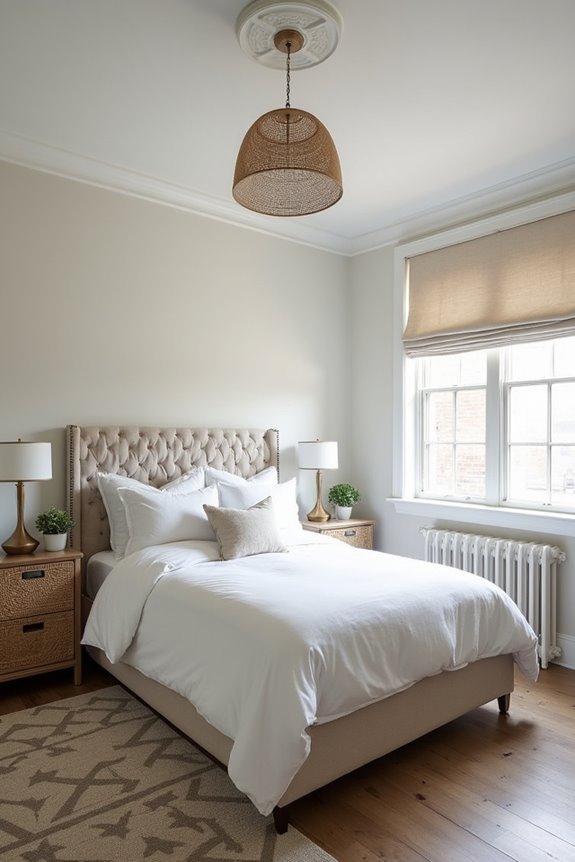
Why do small bedrooms often feel cramped despite thoughtful furniture choices? The answer lies in how you layer pattern, texture, and window treatments; elements that shape perceived space when executed strategically.
I recommend this refined approach:
- Layer woven grass cloth walls with patterned wallpaper in cohesive color families, avoiding visual chaos while adding depth
- Pair patterned rugs with coordinating wall coverings, keeping hues within the same palette to maintain calm integration
- Install natural woven shades beneath patterned panels, emphasizing windows as architectural elements that enhance openness
- Integrate velvet bed accents with linen sheers and textured surfaces, creating softness throughout the room
Strategic texture-first design prevents overwhelming your compact space. By balancing maximal pattern with restrained color use and intentional lighting choices, window treatments become architectural anchors. This cohesive layering makes small bedrooms feel deliberately designed rather than cramped, allowing you to inhabit the space comfortably.