
Grey bedrooms often disappoint. They land flat and cold when executed poorly. But here’s what I’ve found: the three approaches that actually work share a common thread. They’re not about slapping grey on every surface; they’re about understanding how light interacts with undertones, how texture breaks monotony, and when accent colors make a space go from forgettable to genuinely compelling.
The difference lies in three specific strategies. First, pay attention to undertones. Not all greys are created equal. Some lean warm with beige or taupe undertones, while others skew cool with blue or purple notes. Matching these undertones to your room’s natural light determines whether the space feels inviting or sterile.
Second, layer in texture. A flat grey wall paired with flat grey bedding creates visual fatigue. Instead, combine smooth surfaces with woven elements, upholstered pieces, and varied finishes. A linen headboard, chunky knit throw, or textured area rug introduces dimension that prevents the room from feeling one-note.
Third, use accent colors strategically. This doesn’t mean repainting; it means introducing color through artwork, pillows, plants, or furniture. A warm wood nightstand, deep jewel-toned accents, or even subtle pops of color in accessories provide contrast that brings the entire room to life.
These three elements work together. When you get them right, a grey bedroom becomes a restful, thoughtfully designed space rather than a default choice.
Tonal Grey Bedrooms: Layering Warm and Cool Shades
How do you create a grey bedroom that feels intentional rather than bland? The answer lies in embracing tonal grey bedrooms through layering warm and cool shades. This approach transforms a monochromatic gray palette into a sophisticated retreat by balancing light, mid, and dark grays rather than relying on a single flat color.
Start with lighter walls such as Ammonite or Salt, then introduce warm gray textiles in linen or cotton. Layer in cool gray textiles through velvet accents and throws. Incorporate grasscloth wallpaper for textured grays that catch light differently. Consider darker anchors like Peppercorn for visual grounding.
The Studio Seva founder emphasizes that this rhythm creates depth while preserving calm. Different textures, including woven fabrics alongside velvet, prevent monotony within the same gray family. This variation ensures your bedroom communicates careful design rather than default minimalism.
Textured Grey Bedrooms: Depth Through Wallpaper and Paneling
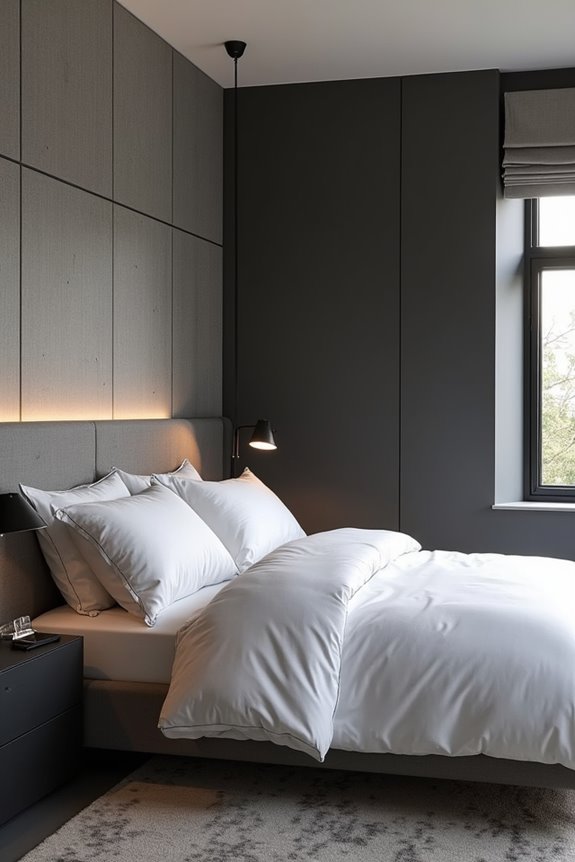
While layering different gray tones creates sophistication, texture delivers additional depth that flat paint cannot match. Textured wallpaper from Phillip Jeffries, such as grasscloth options like 6204 Driftwood Summer Storm or 6206 Driftwood Heather Grey, introduces tactile variation that strengthens a gray bedroom’s visual impact. Wall coverings like Newsworthy by Weitzner Limited provide similar depth through material authenticity. When you pair these textured surfaces with solid furnishings and architectural elements (wood beams or cedar-clad ceilings), you create balanced complexity within your serene palette. This approach to wall texture allows your space to achieve visual interest while maintaining the calm cohesion that makes gray bedrooms work effectively.
Grey Bedrooms With Accent Colour: When and How to Add Drama
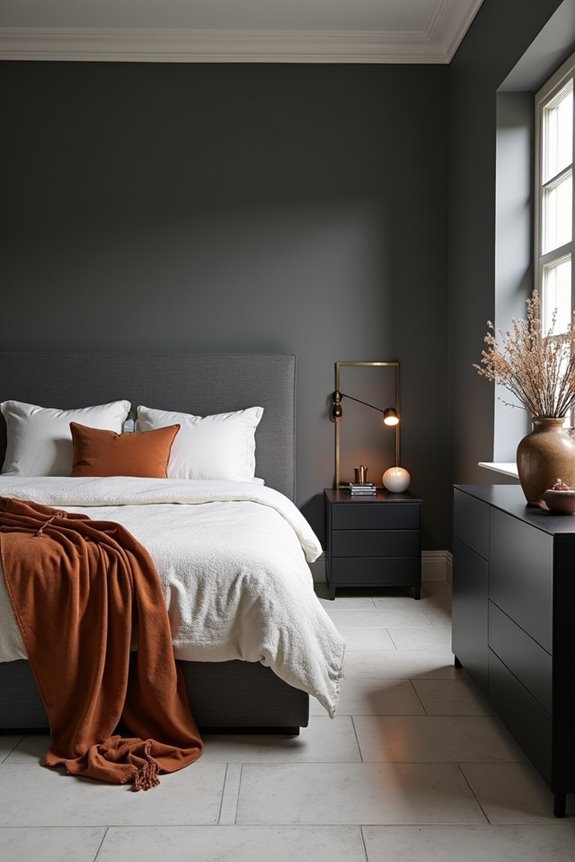
Grey Bedrooms With Accent Colour: When and How to Add Drama
A gray bedroom risks feeling monotonous without intentional design choices. The key to creating a sophisticated retreat lies in strategic accent colors that inject drama while preserving the calming base that gray walls provide.
Effective Approaches:
- Pair emerald green or navy against charcoal tones. This amplifies contrast and creates moody spaces with visual interest that prevents flatness.
- Design a statement headboard extending behind nightstands. This serves as your room’s focal point and anchors the accent color throughout the space.
- Layer warm wood tones and soft textures: velvet, jute, cotton. These materials prevent the space from feeling stark or cold by introducing warmth and tactile appeal.
Pattern through wallpaper or textiles featuring nature motifs complements your gray foundation while evoking serenity. Combining these elements creates a balanced approach that delivers drama alongside genuine warmth. The result is a bedroom that feels both sophisticated and welcoming rather than austere or cold.