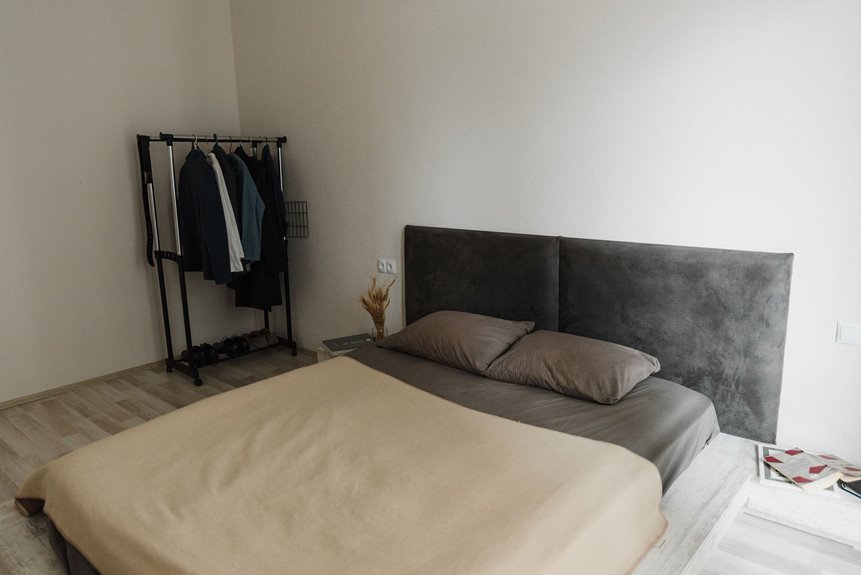
When a 120-square-foot bedroom houses two teenagers, a standard bunk bed consumes precious floor space that could serve multiple functions. Strategic placement, modular construction, and integrated storage can convert that vertical real estate into a dual-purpose zone that avoids feeling cramped.
The key lies in five design approaches that balance openness with practicality, each offering distinct advantages depending on your layout constraints and lifestyle needs.
What separates a cluttered bedroom from an organized one comes down to deliberate choices about how you use every inch.
Minimalist Bunk Designs That Maximize Sight Lines
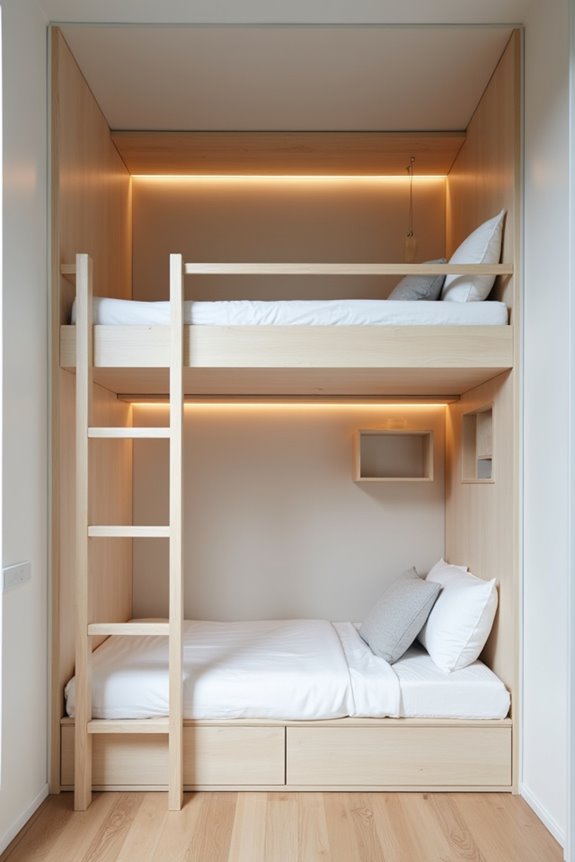
How does a double deck bed actually make a cramped bedroom feel larger? Minimalist bunk designs prioritize sight lines by eliminating visual clutter. Focus on clean lines and neutral color palettes that reduce visual weight throughout small spaces.
When you select lightweight materials, such as slim metal frames or thin-profile wood, you create an airy aesthetic. Low-profile guardrails further minimize bulk, preserving unobstructed views from floor to ceiling. Space-saving configurations positioned against walls or corners maintain open central floor areas, which matters for perceived spaciousness.
Adjustable Heights and Configurations for Evolving Needs
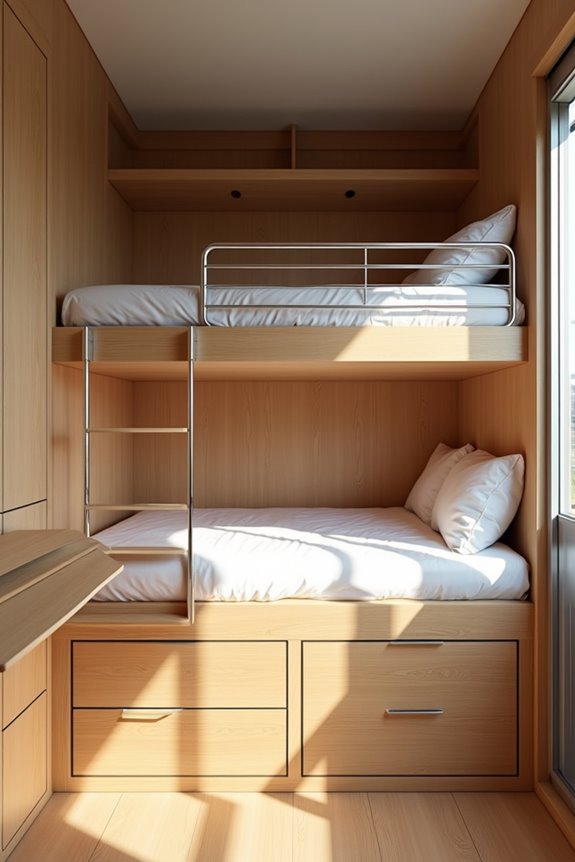
While minimalist designs preserve visual openness, adjustable-height double deck beds address a different challenge: they grow with your family. You’ll find telescoping vertical supports that shift the upper bunk between 40 and 70 inches, accommodating toddlers and teenagers alike. This adaptability allows small spaces to serve multiple functions. The lower bunk converts to a seating area or desk, enabling quick reconfiguration for study or guests. Modular ladders reposition to the foot or side, preserving floor space and vertical space efficiency. Locking pins secure each new height setting, maintaining stability with weight ratings typically between 200–400 pounds. Built-in storage compartments beneath the frame maximize utility in compact layouts. These configurations make adjustable-height double deck beds practical for households needing flexibility without replacing furniture.
Under-Bed Storage That Replaces Standalone Furniture
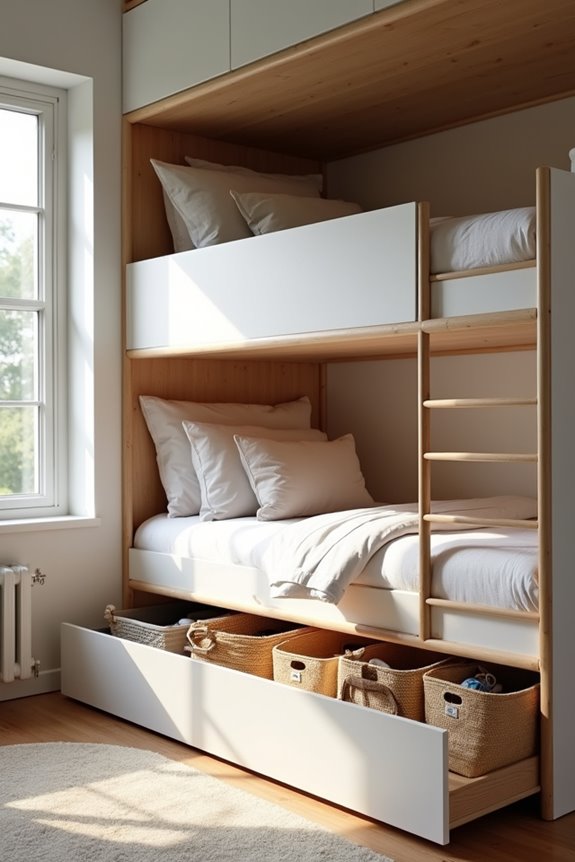
Why clutter the floor with a dresser when your double deck bed’s undercarriage can do the job? Built-in storage changes how you organize small spaces. Integrating under-bed drawers eliminates the need for standalone furniture while maximizing vertical real estate.
Consider these storage solutions:
- Sturdy roller drawers supporting 50+ pounds, ideal for seasonal clothing and bedding
- Under-bed cubbies organizing toys, shoes, or accessories within arm’s reach
- Sliding baskets concealing items while maintaining accessibility
Your double deck bed’s hidden storage frees 6–12 square feet of floor space, depending on drawer depth. This space-saving approach preserves the minimalist aesthetic you want. The streamlined profile remains clean and uncluttered. Quality under-bed drawers with smooth glides provide long-term usability through frequent access, making them a practical alternative to traditional dressers in compact bedrooms.
Integrated Desks for Combined Sleep-Study Zones
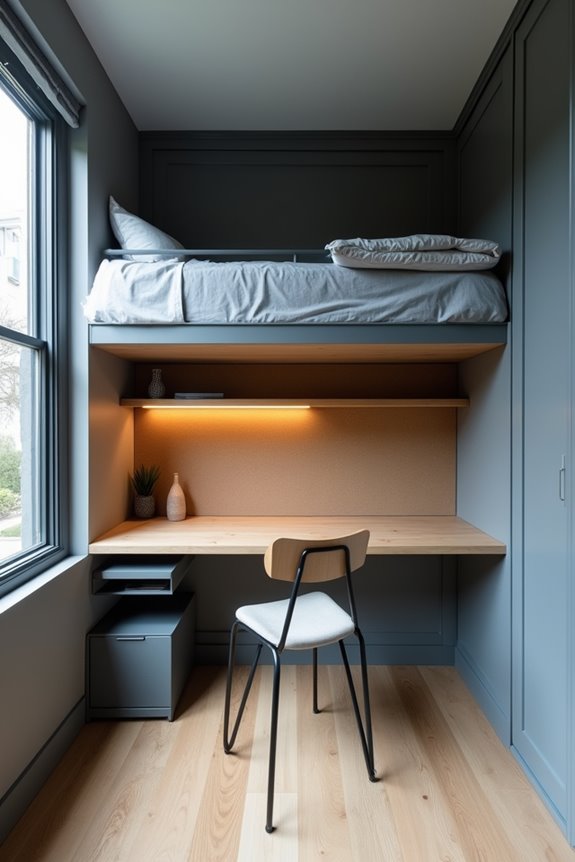
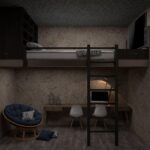
When you’re furnishing a bedroom that doubles as a study space, stacking a desk beneath the upper bunk converts wasted vertical territory into functional real estate. Integrated desks in double deck bed designs typically measure 28 to 30 inches tall, aligning ergonomically with standard chairs for comfortable writing and computer work. This space-saving configuration combines sleeping and studying into one freestanding unit, eliminating the need for separate furniture. Built-in desks often include cable management cutouts and modest storage, such as drawers or shelves, keeping study materials organized. Safety considerations matter here: verify stable desk attachment to the bunk frame and confirm adequate headroom for seated users. A well-designed sleep-study zone maximizes small spaces while supporting focused work beneath the upper bunk.
Warm Wood Finishes That Define Intentional Spaces
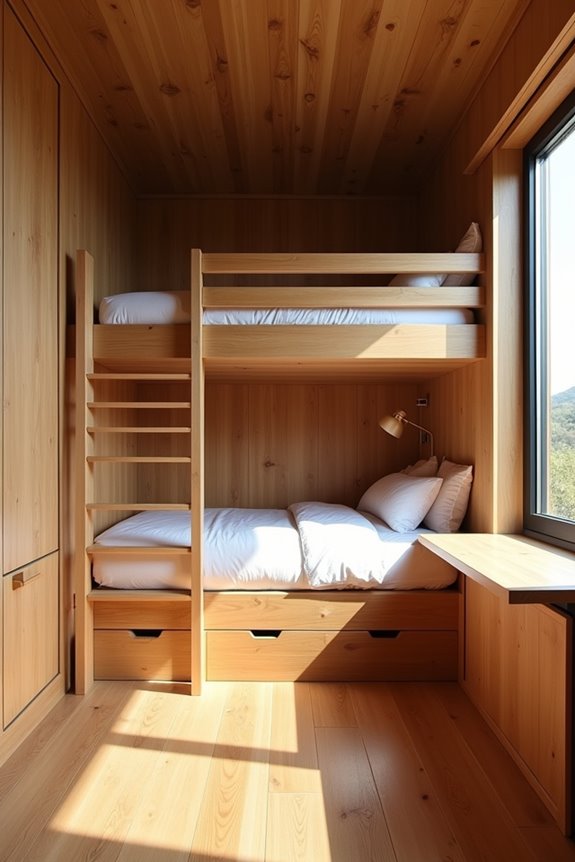
How does a material choice transform a cramped bedroom into a deliberately designed sanctuary? I’ve found that warm wood finishes, particularly medium to dark oak or walnut veneers, create the foundation for intentional spaces within compact layouts. These finishes work because they add natural texture and visual depth without consuming square footage.
Warm wood finishes create intentional spaces within compact layouts, adding natural texture and visual depth without consuming square footage.
Consider these design elements:
- Rich wood tones paired with matte metals: establishing timeless aesthetics across modern and rustic interiors
- Exposed wood grain and brushed finishes: enhancing warmth while maintaining refined, uncluttered environments
- Warm LED lighting (2700K–3000K): amplifying inviting feels without overwhelming small spaces
Solid wood or high-quality veneer constructions keep your double deck bed functioning as a lasting centerpiece rather than temporary furniture. When selecting bunk beds for small spaces, prioritize quality construction that responds beautifully to subtle lighting. This approach allows your bedroom to become a deliberately curated retreat.