
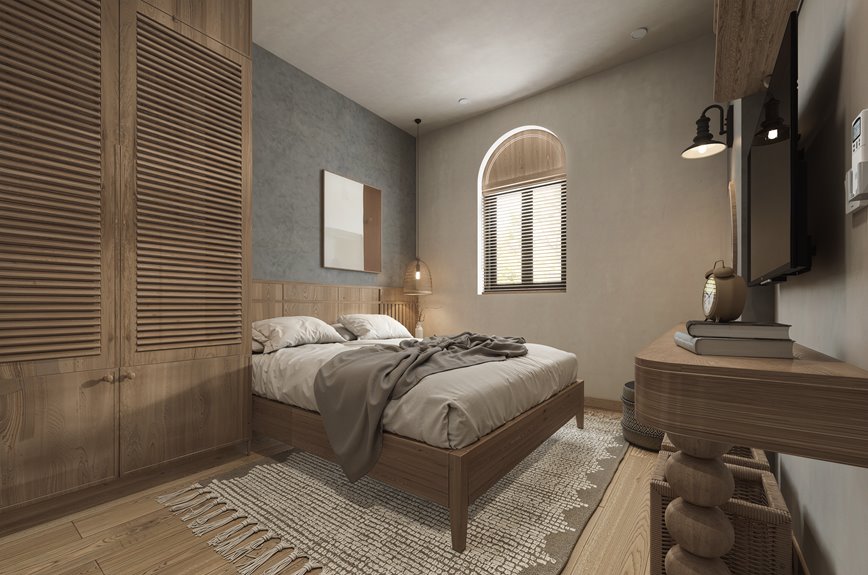
I’ve watched homeowners abandon dark bedrooms after painting entire walls in navy or charcoal, only to feel trapped in a cave. But the issue wasn’t the color itself; it’s how you layer the supporting elements. You can absolutely create a sophisticated, intimate sanctuary with deep hues. You just need to understand the specific strategies that prevent darkness from becoming oppressive. The difference between a luxurious retreat and a gloomy box hinges on three critical decisions you’ll make before ever opening a paint can.
Assess Your Space Before Going Dark
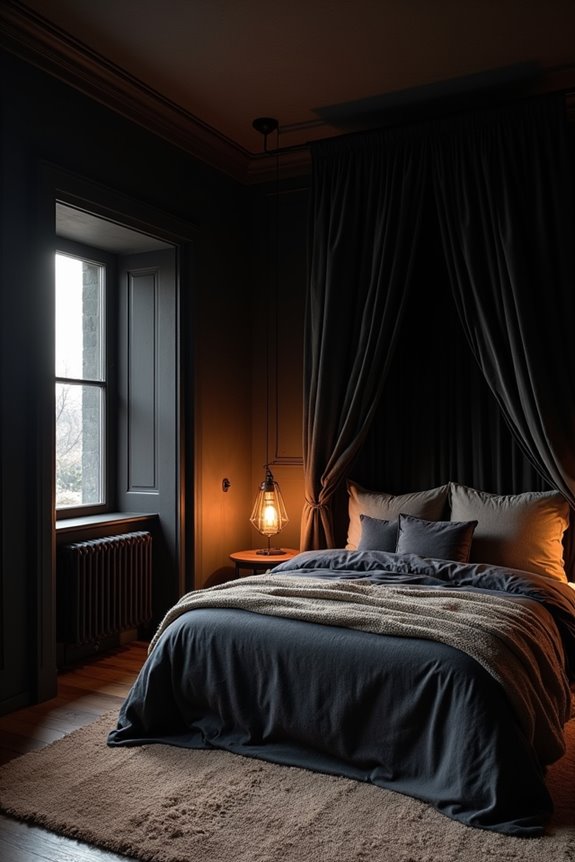
How does your bedroom currently capture natural light? This question anchors your natural light assessment before selecting dark tones. Rooms flooded with daylight handle deeper hues better, while north-facing spaces demand lighter undertones to prevent gloom. Test swatches on multiple walls at different times; morning light reads differently than evening conditions, and dark colors shift accordingly. Consider your ceiling and trim too. Painting them a complementary lighter shade enhances perceived height and prevents heaviness. Warm lighting fixtures counterbalance dark walls and create inviting depth. Dimmable options and reflective accents work together, turning potential coldness into sophisticated comfort. This assessment phase determines whether your dark bedroom becomes a welcoming retreat or an unwelcoming cave.
Pick Your Dark Color Based on Room Size and Light
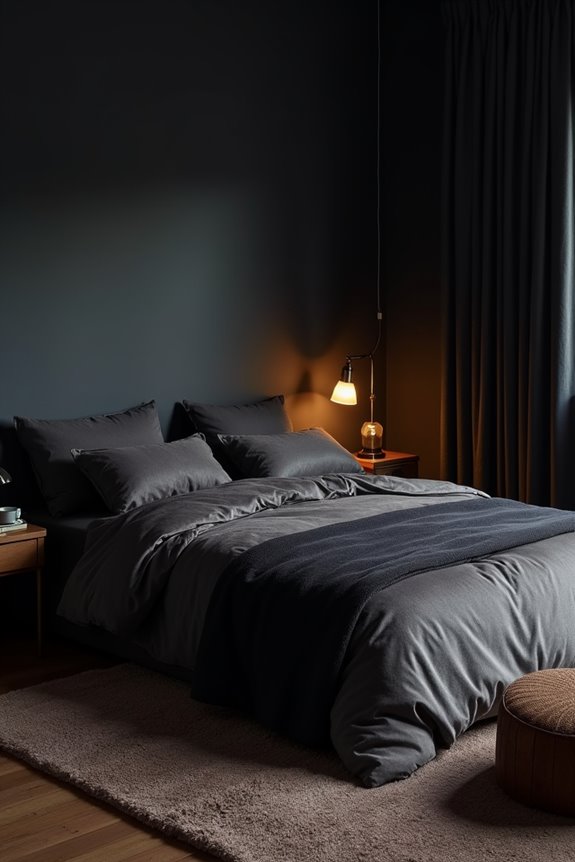
To contemplate both your room’s dimensions and its natural light availability, since these factors fundamentally determine which dark shades will feel sophisticated rather than confining. For smaller spaces under 150 square feet with limited windows, I’d recommend reserving deep tones like London Clay or warm-undertoned browns for accent walls only, keeping ceilings and trim in crisp white or ivory to maintain visual breathing room. In larger bedrooms or those blessed with consistent daylight, you can confidently extend darker palettes across multiple surfaces and even ceiling accents, creating the cohesive, hotel-like atmosphere that deeper hues promise without the risk of claustrophobia.
Dark Colors For Small Spaces
When you’re decorating a compact bedroom, the color selection becomes essential. Dark hues can either amplify coziness or inadvertently shrink the perceived square footage. Warm dark tones like deep taupe, charcoal, and rich navy create intimate retreats without closing in walls. Pairing dark walls with lighter ceilings or trims lifts your eye upward, counteracting any enclosed feeling. Consider anchoring one focal wall behind your bed in deep color while keeping remaining surfaces in neutral tones.
| Color | Mood | Best For |
|---|---|---|
| Deep Taupe | Warm, grounded | All lighting conditions |
| Charcoal | Sophisticated, balanced | Natural light rooms |
| Rich Navy | Calming, depth | Artificial lighting |
Incorporate varied textures (velvet, linen, wood) alongside reflective metallics and mirrors. These elements add dimension to small spaces, preventing flatness while maintaining the coziness dark walls provide.
Lighting Considerations For Dark Walls
Why do the same dark navy walls appear radiant in one bedroom yet oppressive in another? Lighting makes the difference. Pair dark walls with warm, reflective fixtures: soft lamps, brass sconces, and dimmable overhead lights counteract that enclosed feeling. These choices create depth through highlights and shadows that texture catches beautifully.
Test your color throughout the day. Deep greens shift toward olive at dusk, while charcoal reads differently under incandescent versus LED bulbs. This matters because lighting dramatically affects how your dark walls feel.
Balance moodiness with contrast by using lighter ceilings, trim, and metallics like brass or polished wood to reflect light against dark surfaces. Velvet accents amplify this interplay. Strategic lighting determines whether dark bedrooms feel claustrophobic or intimate. The distinction between cozy and cramped lies entirely in how you illuminate the space.
Plan Your Lighting Strategy to Brighten Dark Walls
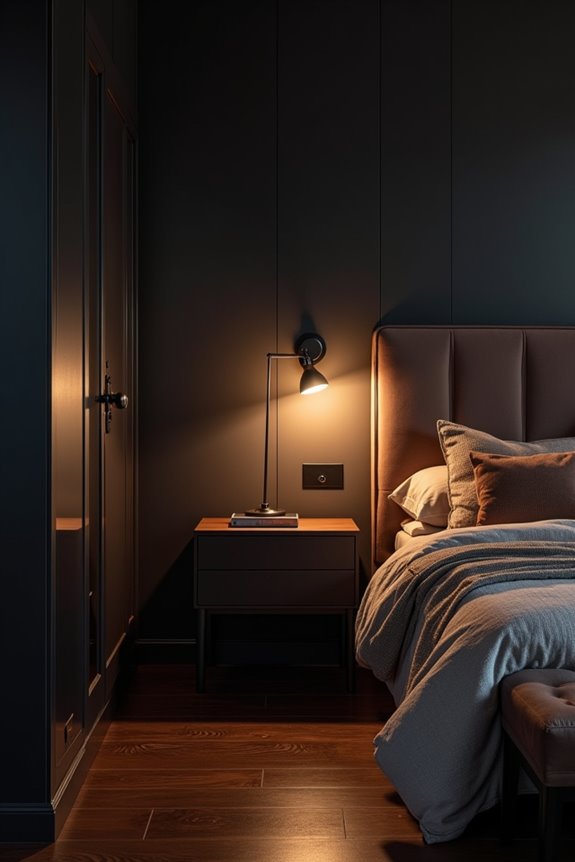
How can you combat the gloom of dark bedroom walls without abandoning the moody aesthetic you’re after? Strategic soft lighting makes shadowy spaces more inviting. Layer your illumination with dimmable lights positioned at varying heights: bedside sconces, wall-mounted fixtures, and a statement floor lamp create depth while maintaining control over ambiance. Smart bulbs let you adjust color temperature throughout the day, shifting from warm 2700K tones at evening to brighter 3000K settings during morning routines.
Reflect light deliberately using brass or brushed gold fixtures that bounce illumination across the room. Strategically positioned mirrors amplify this effect, counteracting wall darkness without harsh overhead lighting. A decorative chandelier or focal pendant draws the eye upward, adding visual interest while distributing light more evenly. This layered approach balances drama with functionality, keeping your dark walls feeling sophisticated rather than cave-like.
Use Mirrors and Metallics to Bounce Light Around
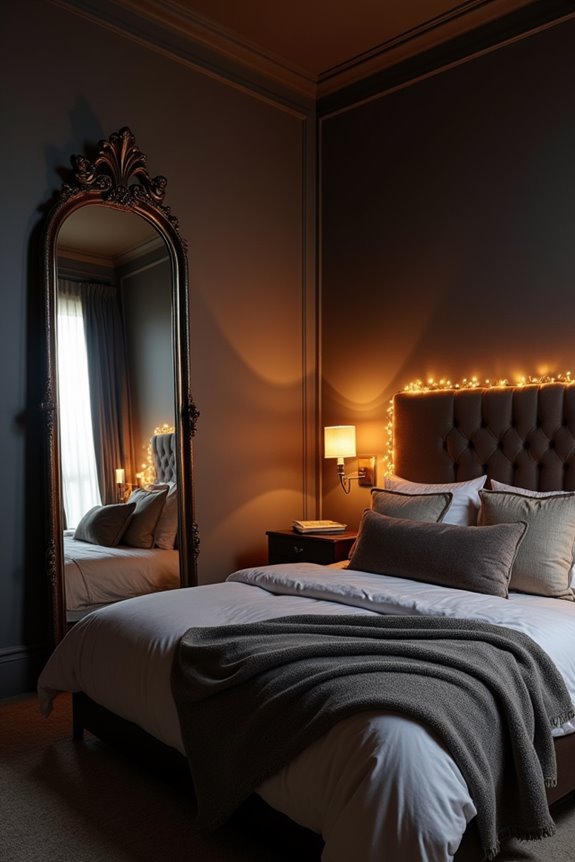
Mirrors function as a dark bedroom’s most efficient light-amplifying tool, and should be treated as essential design infrastructure rather than mere decoration. Strategic placement near windows or light sources creates effective light bounce throughout your space, expanding perceived dimensions considerably.
Metallics amplify this effect substantially:
- Brass and brushed gold accents on furniture and lighting fixtures serve as reflective focal points that heighten brightness
- Silver elements on accessories and frames multiply light distribution across walls
- Layered metallic pieces create depth without overwhelming your retreat
Pair mirrors with dimmable warm-tone lighting to enhance drama while maintaining coziness. This combination prevents flat, cold interiors that undermine your sanctuary’s purpose. Balance mirror size and placement against solid dark walls; this restraint preserves the moody cohesion you’re cultivating while maximizing functional light bounce. You’ll achieve both brightness and intimacy simultaneously.
Layer Textures: Velvet, Linen, and Leather for Depth
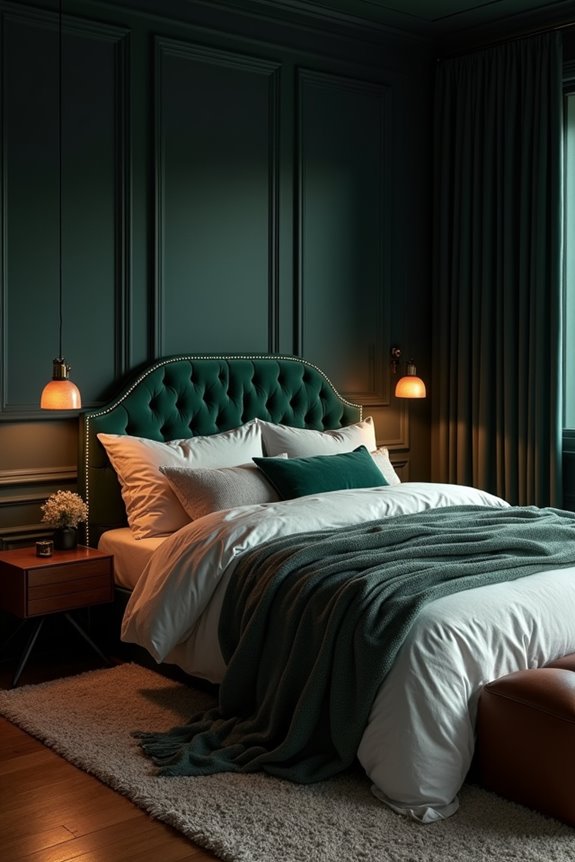
Texture converts a dark bedroom from visually flat to dimensionally rich, and layering velvet, linen, and leather accomplishes this with sophistication. I recommend pairing plush velvet pillows with matte linen curtains; the combination maintains softness while preserving your room’s moody aesthetic. A velvet headboard paired against a linen bedding ensemble, anchored by a leather bench, creates layered warmth without overwhelming darkness. These materials work together: velvet adds richness, linen provides breathability, and leather introduces organic contrast. Balance dark surfaces by introducing lighter-toned linen throws across darker velvet bedspreads. This variance maintains visual contrast and coziness. The interplay between these textures enhances tactile interest, inviting you to experience your bedroom as both visually compelling and physically inviting—a retreat designed for genuine comfort.
Add Greenery and Natural Elements for Balance
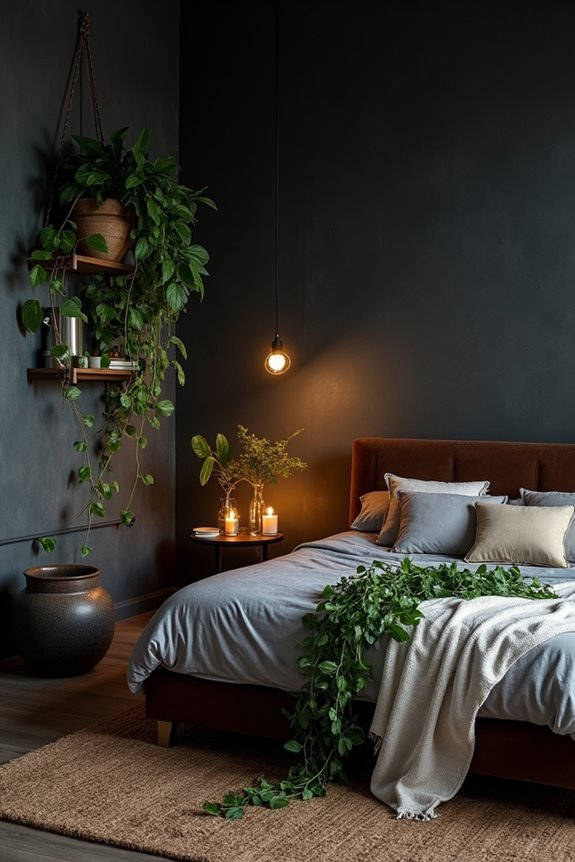
I’ve found that introducing greenery into dark bedrooms serves a dual function: it breaks up heavy wall colors while simultaneously improving air quality, making the space feel both visually lighter and fresher. When you layer natural elements like wooden nightstands, jute rugs, and rattan pendant fixtures alongside plants—whether tall fiddle leaf figs in corners or trailing pothos on shelves—you create vertical interest that softens dark tones without compromising the moody aesthetic. Pairing these organic textures with earthy accent colors such as clay reds, olive greens, and warm browns keeps the room cohesive, whereas faux botanicals or wall-mounted planters work equally well when live plants aren’t practical for your maintenance schedule.
I’ve found that introducing greenery into dark bedrooms serves a dual function: it breaks up heavy wall colors while simultaneously improving air quality, making the space feel both visually lighter and fresher. When you layer natural elements like wooden nightstands, jute rugs, and rattan pendant fixtures alongside plants (whether tall fiddle leaf figs in corners or trailing pothos on shelves), you create vertical interest that softens dark tones without compromising the moody aesthetic. Pairing these organic textures with earthy accent colors such as clay reds, olive greens, and warm browns keeps the room cohesive. Faux botanicals or wall-mounted planters work equally well when live plants aren’t practical for your maintenance schedule.
Plants Brighten Dark Spaces
Why do dark bedrooms benefit so dramatically from greenery? Plants introduce vertical height, texture, and natural focal points that counteract shadowy environments. Strategic placement can shift a dim room into a balanced sanctuary.
Consider these plant options for immediate impact:
- Tall fiddle leaf fig (reaches 6+ feet, creating architectural interest while improving air quality)
- Trailing pothos (cascades from wall-mounted planters, softening dark corners without demanding floor space)
- Low-light varieties such as snake plants and ZZ plants that thrive in minimal natural light
Pair your greenery with earthy tones: clay reds, olive greens, warm browns. These colors reinforce calm, grounded moods. Wall-mounted planters and rattan containers maximize small bedroom square footage, ensuring plants appear integrated rather than cramped. This approach blends botanical elements with dark wood and metal fixtures in a cohesive, airy atmosphere.
Natural Textures Add Warmth
Wood, rattan, and woven materials form the foundation for making a dark bedroom feel inviting rather than austere. They function as structural anchors that ground your space, not decorative afterthoughts. Layering these natural textures creates genuine warmth without relying on bright lighting.
Consider incorporating woven baskets for storage, reclaimed wood shelving, and rattan headboards. These elements establish an organic foundation that pairs beautifully with warm neutrals: clay reds, olive greens, and sandy beiges. The interplay between deep wall tones and light-colored natural materials prevents your room from feeling cave-like.
Greenery amplifies this effect. Tall fiddle leaf figs and trailing pothos offset moody palettes with vibrant life. Wall-mounted planters add dimension without consuming floor space. If live plants aren’t feasible, high-quality faux alternatives or botanical wall art deliver similar balance, anchoring your retreat within nature-inspired calm.
Build a Cohesive Palette So Dark Walls Feel Intentional
How do you prevent dark walls from feeling like you’ve simply turned off the lights? Build a cohesive palette by layering complementary tones across your entire room. This approach keeps dark walls from feeling oppressive and instead makes them work as part of a larger design strategy.
Here’s my strategy:
- Layer 2–3 tones: Pair your primary dark shade (such as Farrow & Ball London Clay) with a secondary charcoal and accent it with deep jewel tones across textiles and artwork
- Repeat consistently: Echo these colors through upholstery, curtains, and furniture so nothing feels random or disconnected
- Balance with light: Incorporate lighter trims, ceilings, and natural wood tones that prevent overwhelming darkness
Add warm lighting through dimmable lamps and chandeliers, plus reflective surfaces like mirrors and metallic accents. This bounces light throughout your space, creating depth and preventing that closed-off feeling dark walls can inadvertently create.