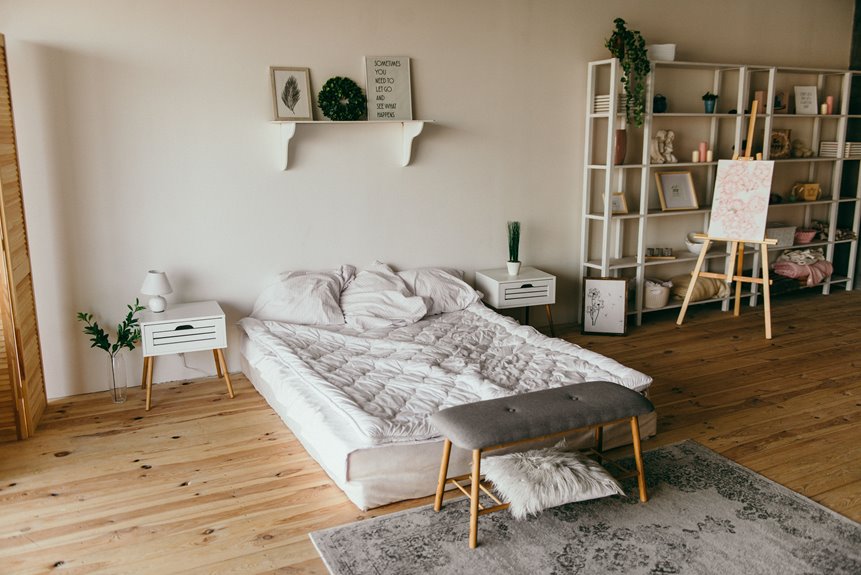
I’ve found that bedroom shelving doesn’t have to mean sacrificing floor space or aesthetic cohesion. Whether you’re working with a cramped corner or an expansive wall, the right shelving strategy changes how you live in the room by creating storage that serves a clear purpose. From floating designs that challenge visual weight to built-in solutions that disappear into architecture, there’s an approach that’ll solve your specific layout challenge. Let’s explore how.
Asymmetrically Grouped Floating Shelves for Visual Interest
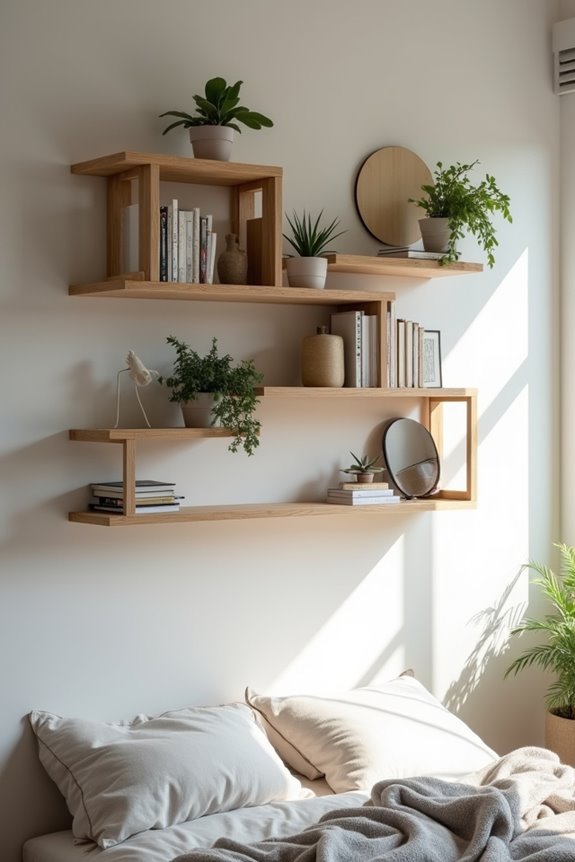
Why settle for uniform, predictable shelving when asymmetrical arrangements can add visual interest to a bedroom wall? Varying shelf heights and lengths creates depth without overwhelming your space. Floating shelves accomplish this well; they save floor space while keeping small bedrooms feeling open and airy.
The key is precise installation. I recommend using quality wall anchors rated for your shelf weight to ensure safe support for uneven groupings. These shelves work best with lightweight items: potted plants, hardcover books, and small decorative accents that don’t demand industrial-grade support.
To maintain a cohesive aesthetic, pair asymmetrical groupings with a unified color palette and minimal accessories. This restraint prevents visual clutter while allowing each displayed object to have space within your arrangement.
Recessed Niches: Seamless Built-In Shelving
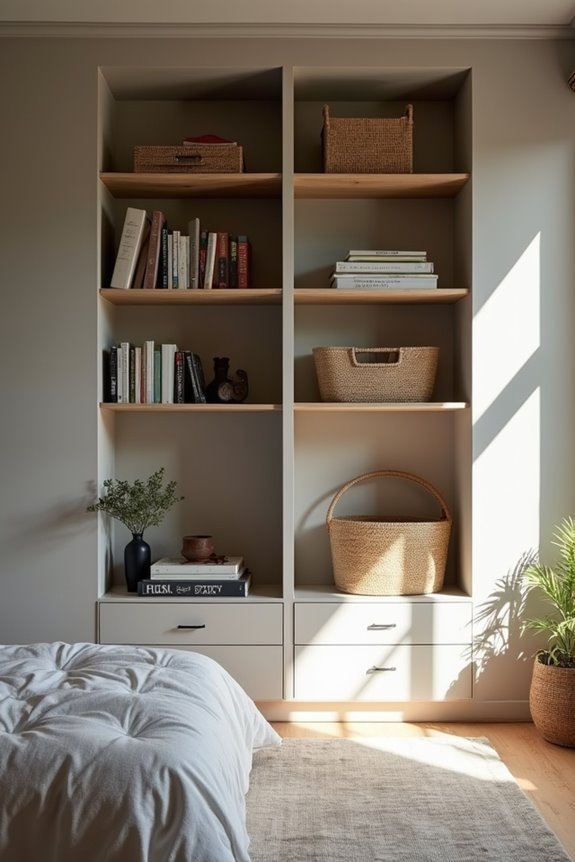
How do you create storage that feels less like furniture and more like part of the wall itself? Recessed niches convert shallow wall cavities into custom, dust-free shelving that integrates with your bedroom’s architecture. This space optimization technique requires upfront planning; you’ll need to verify wall depth and check for electrical wiring before any demolition begins. The carpentry and framing work demands higher labor investment than floating shelves, yet the payoff delivers polished built-in shelving that anchors your room’s design. Paint your niches to match surrounding walls for cohesion, or add subtle color definition to highlight the bed area. The result is storage that belongs, not storage that sits.
Corner Ladder Shelves for Awkward and Narrow Layouts

Corner spaces in bedrooms often become dead zones; too narrow for furniture, too visible to ignore. Corner ladder shelves convert these awkward layouts into functional display areas that won’t crowd your floor plan. Vertical storage solutions work exceptionally well in narrow spaces where horizontal furniture won’t fit. These slender ladder-style units accommodate plants, books, and decorative lamps while maintaining an open, airy feel.
Stability matters considerably. Place heavier items on lower shelves to reduce tipping risk, especially in high-traffic bedrooms. Corner shelves distribute weight strategically across the frame’s structure.
Photorealistic renders help you visualize how these pieces integrate into your specific bedroom layout before purchasing. This practical approach lets you maximize storage without sacrificing the floor space you need for movement and breathing room.
Headboard-Integrated Shelves for Bedside Storage and Reduced Clutter
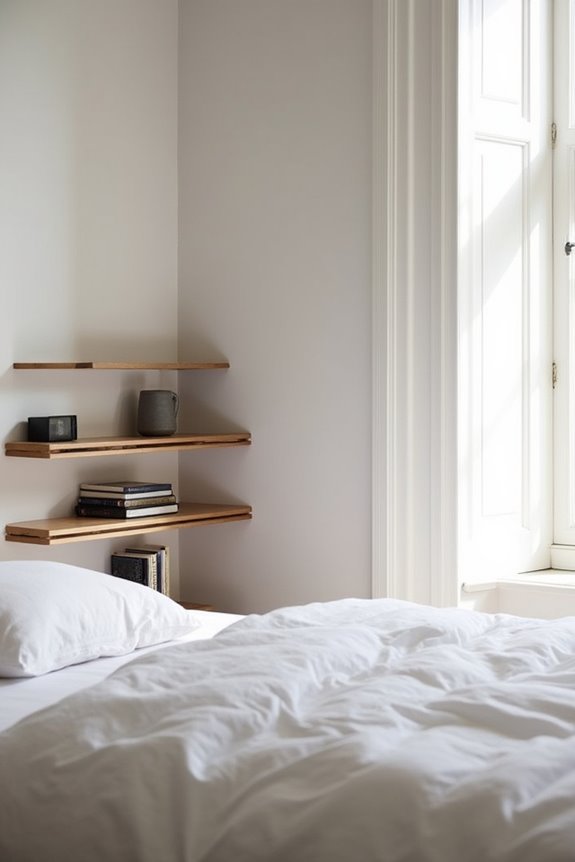
What’s often overlooked in bedroom design is that the wall behind your bed represents prime real estate; space that typically goes unused while your nightstands strain under books, glasses, and charging cables. Headboard-integrated shelving converts this unused zone into functional architecture. I embed shallow shelves around the bed perimeter, framing it while creating a cohesive focal point that reduces bedside clutter naturally.
The key is restraint. I keep shelves shallow (typically six to eight inches deep) to maintain the restful ambiance your sleeping space requires. Styling relies on a limited color palette and repeated materials that echo your bedroom’s existing finishes.
I pair these built-ins with dimmable lighting and integrated cable management, so form serves function. When painted to complement your headboard, these shelves blur the line between storage and architectural detail, anchoring your bedroom’s design narrative.
Clear Shelves That Won’t Weigh Down Your Walls
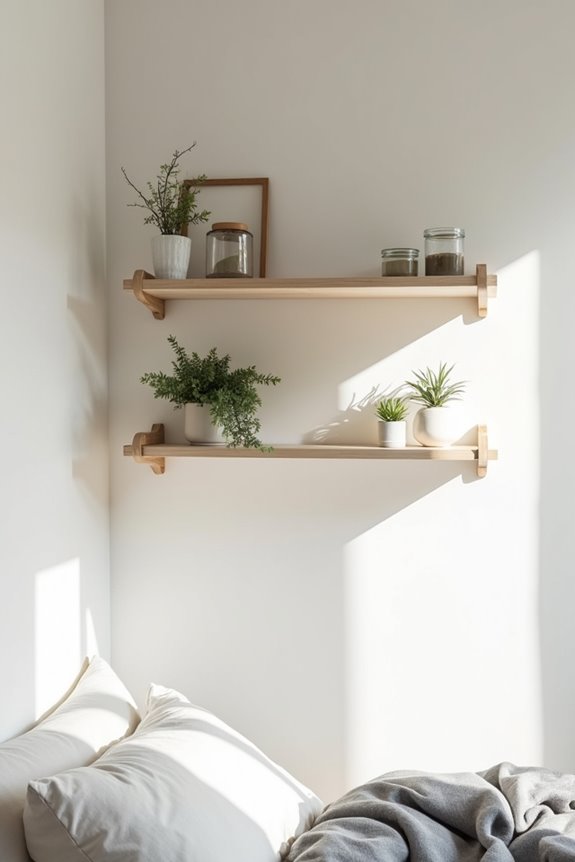
Why do most bedroom shelves feel architecturally heavy despite their modest dimensions? Clear acrylic shelves solve this problem by allowing light and wall color to pass through, creating visual transparency that prevents spatial crowding. Glass shelves similarly reflect light, minimizing obstruction while supporting a light-modern aesthetic.
Acrylic lightweight shelving works exceptionally well above nightstands or desks in compact bedrooms, where wall space demands strategic use. The transparency keeps rooms from feeling boxed in. Discreet hardware enhances the floating effect, making shelves appear almost weightless.
These materials accomplish what solid wood cannot: they store essentials without demanding visual attention. Your wall space remains visually open while functionality increases. This balance between storage and airiness defines contemporary bedroom design, allowing you to display necessities without architectural compromise.
Floating Wood Shelves Above the Bed
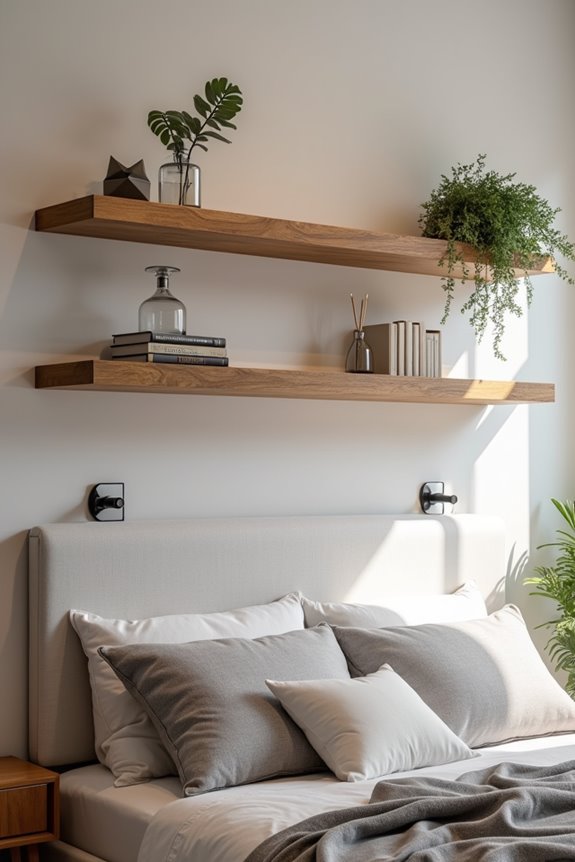
Light oak, natural birch, or whitewashed pine shelves work well for this project; these materials recede visually rather than dominate your wall. Keep each shelf to a maximum of 36 inches in length to maintain structural integrity and preserve that open bedroom feel.
Installation requires heavy-duty wall anchors rated for at least 25 pounds per shelf and a quality level to ensure perfectly horizontal placement. This prevents both visual imbalance and the uncomfortable sensation of objects shifting while you sleep.
When displaying items, keep the arrangement sparse. Stick to framed prints, a single pothos plant, or three to five carefully selected books. This restraint protects the visual calm of your bedroom and maintains a safe zone directly above your head.
Lightweight Wood Tone Selection
Floating shelves above your bed needn’t create visual heaviness if you’re intentional about wood tone selection. Light wood tones, such as oak, ash, or birch, reflect natural light and maintain the minimalism your bedroom deserves. Dark walnut or espresso finishes should be avoided since they anchor walls and contradict airy aesthetics.
| Wood Tone | Light Reflectance | Best For |
|---|---|---|
| White Oak | High | Modern minimalism |
| Ash | Very High | Scandinavian style |
| Birch | High | Contemporary spaces |
Lighter woods create breathing room while floating shelves preserve floor space. Pair these selections with 8 to 12 inch shelf depths to maintain proportion without overwhelming your sleeping space. This approach supports your minimalist storage vision while allowing the shelves to enhance rather than dominate the room.
Safety and Balance Considerations
Since floating shelves positioned above your bed combine aesthetics with practical storage, you’ll need to prioritize both structural integrity and visual equilibrium to create a safe, restful environment. I recommend implementing these safety measures:
- Install shelves using heavy-duty wall anchors rated for your wall type (drywall, plaster, or concrete), ensuring they support at least twice your intended load weight
- Avoid placing items exceeding five pounds per shelf; distribute weight evenly across the surface
- Secure light wood shelves with professional-grade brackets spaced 16 inches apart for optimal stability
A balanced arrangement prevents the wall from feeling cluttered or oppressive. Position décor asymmetrically if desired, but maintain visual weight distribution. Keep shelves relatively empty: art prints, small potted succulents, and three to four books create interest without overwhelming your restful space. This approach ensures longevity while preserving bedroom tranquility.
Go Vertical: Floor-to-Ceiling Shelf Columns
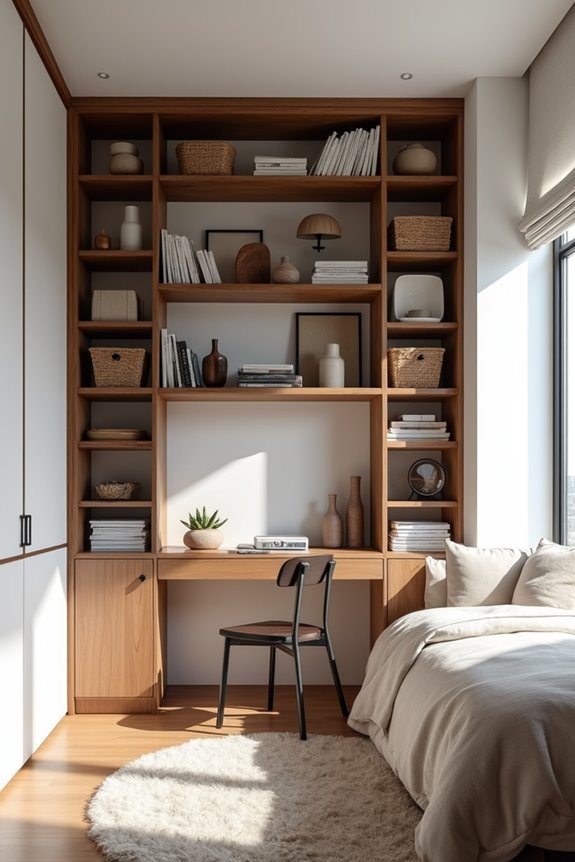
Floor-to-ceiling shelf columns stack storage vertically rather than horizontally, which preserves your floor space while visually stretching the room’s proportions. This approach works particularly well in bedrooms where square footage is limited. You’ll maximize display capacity for books, decorative boxes, and accessories by alternating open shelving with closed cabinetry in consistent intervals. This rhythm prevents visual chaos and maintains breathing room throughout the design.
Strategic placement matters. Position these tall structures beside your bed or along a single accent wall so they integrate smoothly with existing furniture while keeping your pathways clear. The result is a bedroom that feels spacious rather than cluttered, with vertical storage doing the heavy lifting without eating into your usable floor area.
Maximizing Vertical Storage Space
When you’re working with limited floor space, stacking shelves from floor to near-ceiling height creates an architectural solution that serves two purposes: you’ll gain substantial storage capacity while drawing the eye upward, which enhances your bedroom’s perceived height. This vertical storage approach maximizes wall shelving potential without consuming precious square footage.
To achieve effective space optimization, consider these strategies:
- Alternate open shelving with closed storage boxes to balance display with concealment
- Maintain consistent 8-12 inch spacing between shelves for proportional visual rhythm
- Vary object heights and depths to prevent monotonous, cluttered appearances
Pairing staggered heights with curated items (books, ceramic vessels, woven baskets) maintains visual lightness. This wall shelving method converts typically unused vertical real estate into functional display zones, creating the bedroom sanctuary you’re building.
Creating Visual Height Enhancement
Floor-to-ceiling shelf columns create a powerful visual anchor that draws the eye upward, effectively enhancing your bedroom’s perceived height, particularly valuable in spaces with standard 8-foot ceilings or lower. This vertical shelving strategy works by establishing a strong upward line that makes rooms feel taller and more expansive.
Staggering shelf heights and alternating between open storage and closed storage boxes maintains visual interest while keeping the space cohesive. A photorealistic render helps you preview how tall columns read in your actual room before installation. Wall-to-wall arrays maximize display potential while preserving floor space; this is essential in compact bedrooms.
The key is consistent spacing and thoughtful curation. Books, décor, and storage boxes grouped strategically prevent cluttered aesthetics. This approach turns blank walls into functional focal points that enhance both perceived height and usable storage simultaneously.
Styling Open And Closed Storage
How do you balance display and concealment within a single vertical system? Alternating open shelving with closed compartments creates functional rhythm throughout your vertical shelves. This mixed approach lets you showcase favorite books and décor while hiding less attractive storage boxes.
Here’s my strategy for styling this balance:
- Position open shelving at eye level where you’ll display curated collections and statement pieces that reflect your aesthetic.
- Reserve closed storage above and below for items you want concealed, maintaining visual weight distribution.
- Maintain consistent spacing between sections to avoid fragmentation and preserve cohesive design flow.
Wall-Mounted Nightstand Shelves to Preserve Floor Space
Most bedrooms benefit from eliminating traditional nightstands, and wall-mounted shelves offer a practical alternative that doesn’t sacrifice functionality. By installing wall-mounted shelves at mattress height, you create accessible nightstand space-saving storage while freeing valuable floor area. This approach works especially well in narrow bedrooms where every square foot matters.
Position shelves directly beside your bed to hold essentials: lamps, books, phones within arm’s reach. The key to success lies in restraint. Limit items to nighttime necessities and choose materials matching your bed frame for cohesion. Consider floating shelves in walnut or white oak paired with metal brackets for visual interest.
For enhanced symmetry, integrate headboard storage with built-in shelving on both sides. This integrated design reduces clutter significantly while creating a polished aesthetic that feels both spacious and complete.
Shelf Ledges for Flexible Art and Personal Display
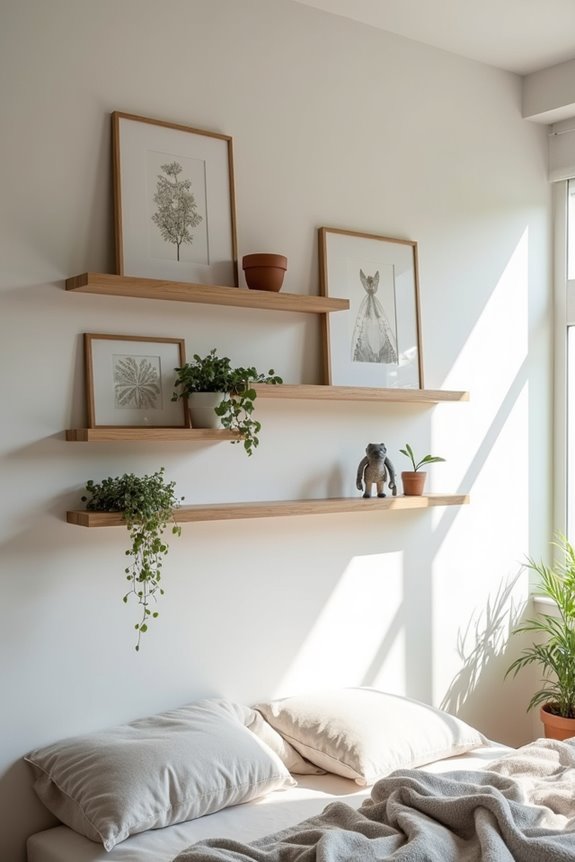
Why settle for permanent wall installations when shelf ledges offer the flexibility you need to refresh your bedroom’s visual narrative? These simple fixtures change how you display personal pieces without committing to fixed hardware.
Shelf ledges offer the flexibility to refresh your bedroom’s visual narrative without committing to permanent wall installations.
Shelf ledges work well for creating dynamic arrangements:
- Lean framed photos at varying angles above dressers to establish a relaxed, layered aesthetic
- Mix sculptural objects with framed art to build visual depth and interest across the surface
- Rotate pieces seasonally, reflecting evolving tastes without wall damage
The key to success lies in maintaining cohesive color palettes. Selecting frames and matting that harmonize prevents visual chaos. You’ll appreciate how quickly you can refresh displays, personalizing your space while keeping options open. This approach connects you to a design-forward community that values both flexibility and intentional curation.
Wall-Mounted Shelving Cabinets With Sliding Doors for Hidden Storage
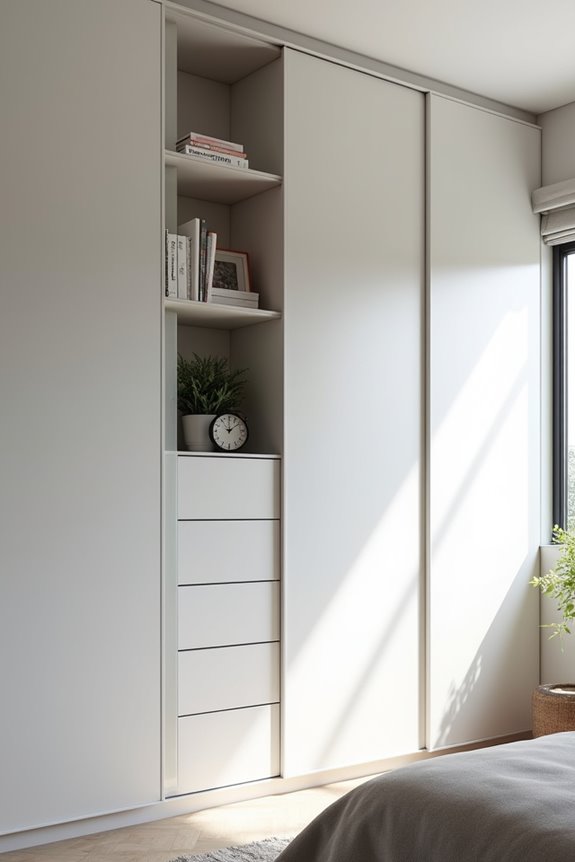
When you choose wall-mounted cabinets with sliding or tambour doors, you’re investing in a design strategy that pairs minimalist aesthetics with practical concealment. These shallow units hide clutter while maintaining clean sight lines, which works particularly well in bedrooms where visual rest matters. Installation above existing furniture or along underutilized wall space, typically 12–18 inches deep, preserves your floor plan and eliminates the spatial footprint of traditional dressers or freestanding storage.
The upfront cost exceeds basic open shelving, but the payoff comes through in a cohesive, organized appearance and reduced reliance on additional furniture pieces that would otherwise fragment your room’s visual continuity.
Minimalist Design And Functionality
Because visual clutter undermines the serene quality that minimalist bedrooms demand, wall-mounted shelving cabinets with sliding or tambour doors offer a practical solution that doesn’t compromise aesthetic principles. Slim storage units with concealed interiors create the clean sightlines essential to minimalist design while maintaining functionality.
These space-saving shelving options deliver three key advantages:
- Hidden organization: sliding doors keep belongings invisible, reducing visual noise and promoting psychological calm
- Preserved floor space: wall-mounted installation maintains openness, which matters for compact bedrooms
- Enhanced aesthetics: seamless surfaces and minimalist lines improve room value despite higher upfront costs
The design emphasizes privacy through its clean geometry. When you invest in these cabinets, you’re adopting a philosophy where every visible element serves a purpose. Consulting AI layout tools like Homestyler helps you visualize how these units integrate with your specific bedroom dimensions before making a purchase decision.
Installation And Space Optimization
Most wall-mounted shelving cabinets with sliding doors require professional installation or careful DIY execution, particularly when anchoring into studs to support the weight of stored items (typically 25–50 pounds per linear foot depending on material density and door mechanism). Slim wall cabinets maximize space optimization by eliminating floor footprint while maintaining accessibility. Wall-mounted installations work best when paired with cable management channels routed behind units, creating integrated solutions with bedroom décor.
| Installation Method | Wall Depth | Load Capacity | Cost Range | Best Use |
|---|---|---|---|---|
| Professional | 4–6″ | 50 lbs/ft | $800–$1,500 | High-traffic areas |
| DIY (stud-anchored) | 4–6″ | 35 lbs/ft | $300–$600 | Low-traffic zones |
| Floating rail system | 3–4″ | 25 lbs/ft | $400–$800 | Lightweight storage |
| Track-mounted | 5–7″ | 45 lbs/ft | $600–$1,200 | Heavy items |
| Adjustable brackets | 4–6″ | 40 lbs/ft | $350–$700 | Versatile layouts |