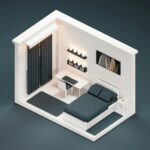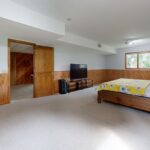
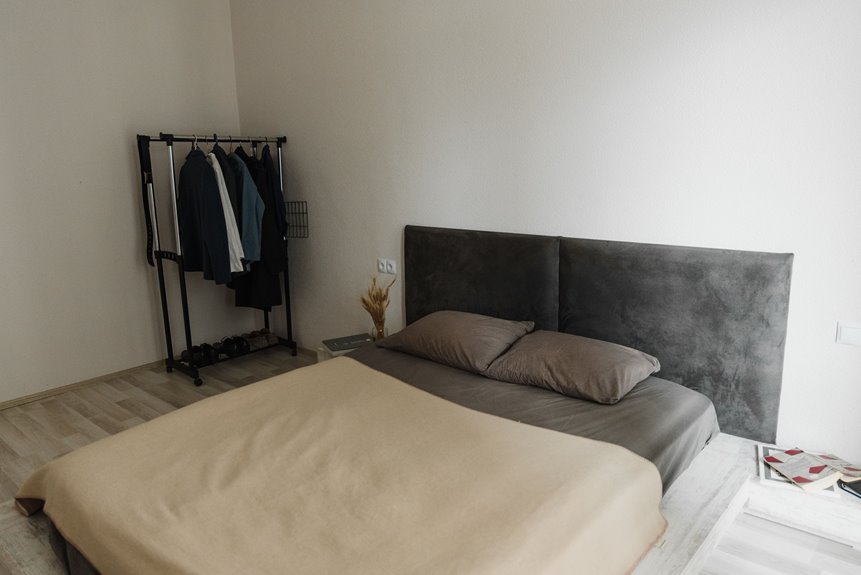
When you’re designing a boy’s bedroom, you’re solving a puzzle: how do you create a space that’s both functional and flexible enough to evolve as his interests shift? I’ll walk you through seven strategies that balance durability with style, from foundational choices like bed frames and wall colors to strategic storage solutions that actually contain chaos. Here’s what separates rooms that work from those that don’t.
Start With a Timeless Foundation
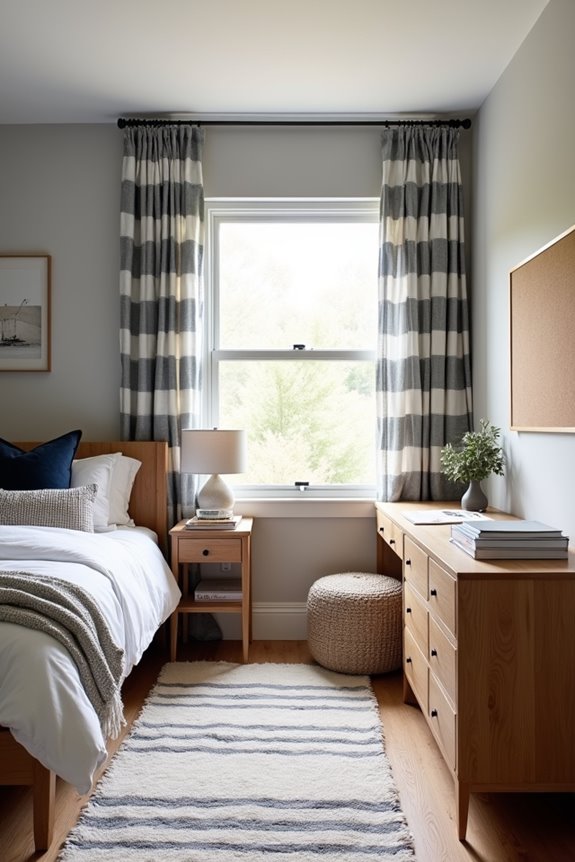
A timeless foundation starts with selecting furniture pieces that will grow with your son rather than become obsolete within a few years. I recommend investing in a quality bed frame, solid wood or metal construction in neutral tones, paired with classic lighting like a simple desk lamp or pendant fixture. These bedroom foundation elements establish durability and aesthetic longevity.
Next, layer in growth-friendly furniture: adjustable shelving, a versatile desk, and storage that adapts as his interests evolve. Choose a cohesive color palette, perhaps soft grays, warm whites, or muted blues, that unifies mixed pieces and accommodates future changes.
Rich textures through quality textiles matter equally. A substantial wool rug, linen bedding, and canvas artwork create visual interest while maintaining sophistication. This balanced approach allows timeless pieces to serve him from childhood through adolescence without requiring complete redesigns.
Create Visual Balance With Contrasting Paint Colors
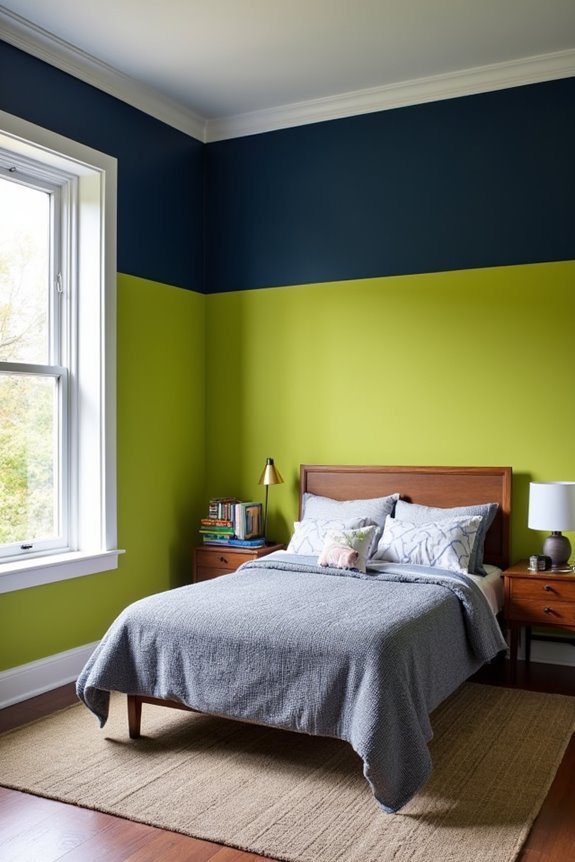
I recommend pairing deep navy walls, such as Sherwin-Williams Sea Mariner, with a crisp white or light ceiling to draw the eye upward and prevent the room from feeling cramped. This contrast creates structural definition that grounds the space while keeping it visually open, which works especially well in rooms with standard eight-foot ceilings where you want to maximize perceived height. Balance this bold color choice by layering in soft textures through bedding, area rugs, and window treatments, allowing the room to evolve with your son’s interests without requiring constant repainting.
Deep Navy And Light Ceilings
When you’re designing a boy’s bedroom, contrasting your wall and ceiling colors by pairing a deep navy like Sherwin-Williams Sea Mariner with a light ceiling such as Sherwin-Williams Greek Villa creates visual sophistication that anchors the room while maintaining brightness. Navy walls ground the space with elegance, while the light ceiling draws the eye upward, making the room feel larger and more open. This contrast pairing prevents the space from feeling heavy or enclosed, which matters as your child grows. Bold decor accents (neon signs or white trim) pop dramatically against deep navy backdrops, adding visual interest without overwhelming the room. The approach balances structure with softness, creating a foundation that adapts to evolving tastes and interests throughout childhood and adolescence.
| Design Element | Color Choice | Visual Effect | Benefit |
|---|---|---|---|
| Walls | Sherwin-Williams Sea Mariner | Anchoring depth | Grounds sophistication |
| Ceiling | Sherwin-Williams Greek Villa | Upward draw | Maintains openness |
| Accents | Neon or white trim | High contrast pop | Enhanced visibility |
| Overall | Navy and light pairing | Balanced structure | Lasting adaptability |
Drawing The Eye Upward
How do you prevent a boy’s bedroom from feeling cramped or bottom-heavy? Pairing deep navy walls with a bright ceiling creates the vertical emphasis your space needs. This ceiling focal point draws the eye upward, making rooms feel taller and more expansive. Sherwin-Williams Sea Mariner paired with Greek Villa ceiling paint establishes color harmony while preventing visual heaviness at floor level. The lighter overhead plane recedes visually, expanding perceived dimensions. When you layer bedding, furniture, and decor within this same palette, you achieve visual balance without competing elements. High-contrast schemes anchor the room structurally while softer wall tones keep the space breathable. This approach turns modest ceiling heights into architectural assets rather than constraints.
Balance Structure With Softness
Beyond drawing the eye upward, you’ll want the room’s color scheme to do double duty: establishing architectural definition while maintaining the softness that keeps a growing boy’s space from feeling austere. A two-tone color strategy accomplishes this balance effectively. Pair deep navy walls (such as Sherwin-Williams Sea Mariner) with a bright white ceiling to create ceiling contrast that emphasizes vertical balance without heaviness. This enduring color pairing works across childhood through adolescence because it avoids juvenile trends while remaining visually dynamic.
The contrast frames the room architecturally, giving structure that grows with your son. Lighter trims bridge the two tones, preventing the darker walls from feeling closed-in. This approach lets you introduce bolder accents and textured furnishings confidently, knowing the foundational palette remains grounded and timeless.
Design Boys’ Bedrooms Around Their Interests
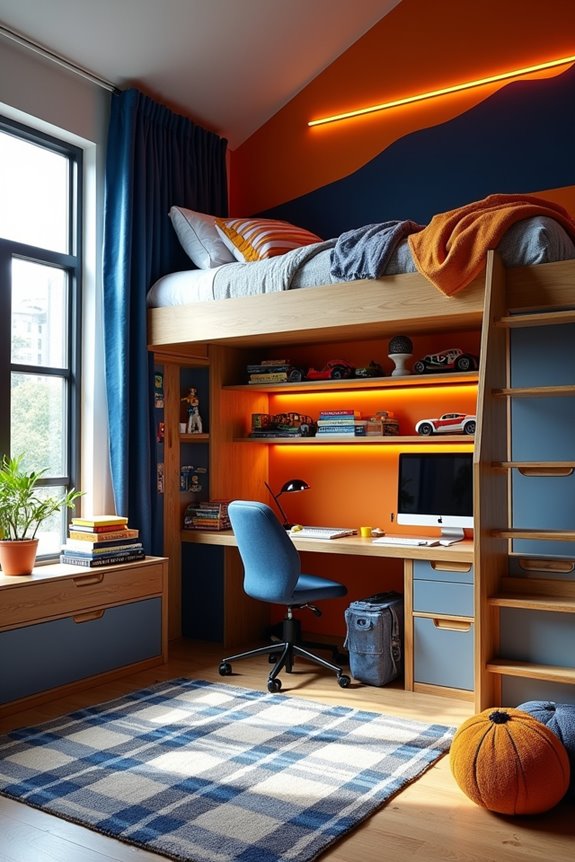
I’ve found that building a boy’s bedroom around his passions—whether that’s Lego architecture, basketball, or vintage comic books—creates an environment where he’ll actually want to spend time. Rather than chasing seasonal trends, you can anchor the room in a neutral base of soft grays or warm whites, then layer in interest-driven elements like wall-mounted display shelving for collections, a color palette pulled directly from his favorite hobby (think forest greens and oranges for a nature-focused theme), and strategic themed accents that feel purposeful rather than costume-like. This approach keeps the space feeling cohesive and mature as his interests evolve, since you’re building around timeless bones that’ll outlast any single passion.
Collections as Wall Art
Why settle for blank walls when your son’s treasured collections can become functional décor? Wall-mounted displays turn hobbies into curated gallery spaces. Organizing collections, whether Lego sets, action figures, or model cars, requires intentional display methods like floating shelves, shadow boxes, or dedicated pegboards that anchor visual interest without consuming floor space.
A cohesive color palette matters significantly. Selecting display frames and shelving that complement your room’s existing tones creates seamless integration rather than visual discord. Floating shelves in matte black or natural wood, paired with neutral backgrounds, establish sophistication while highlighting items.
Framing individual pieces or grouping similar objects creates intentional curation. This approach prevents cluttered aesthetics while showcasing personality. Pairing displays with adjustable storage solutions keeps collections organized as interests evolve, ensuring your investment in wall art remains relevant and functional.
Color Palette From Hobbies
How does a child’s passion become the foundation for cohesive room design? Your child’s hobbies directly inform the color palette, creating visual harmony throughout the space. If they’re passionate about sports, incorporate team colors through accent walls or trim work rather than overwhelming the entire room. For Minecraft enthusiasts, consider soft sage greens paired with neutral walls; this approach prevents visual fatigue while allowing interests to evolve into the teen years.
Gender-neutral storage solutions work best here. Display hobby-specific collections as focal points while keeping organized shelving nearby. A skateboard enthusiast might feature a mounted board against cream walls with black accents, combining décor with functional storage. This strategy balances bold hobby colors with restrained backgrounds, enabling your bedroom design to grow alongside your child’s changing interests without requiring complete redesigns.
Themed Accents Over Trends
While fleeting design trends promise quick visual updates, interest-based themes anchor a boy’s bedroom in authenticity and longevity. Rather than chasing what’s momentarily popular, build themed accents around genuine passions: astronomy, skateboarding, or engineering. This approach creates cohesive color palettes that feel deliberate, not scattered.
Install functional displays like wall-mounted shelving for model rockets or cork boards showcasing achievement certificates. These elements serve dual purposes: storing meaningful items while establishing visual focal points.
Pair themed accents with adaptable storage solutions. Modular cubbies or built-in units accommodate evolving interests without requiring complete redesigns. When design choices anchor to authentic interests rather than trends, the room matures alongside your son, maintaining relevance through changing seasons and ages.
Display Collections Without Visual Clutter
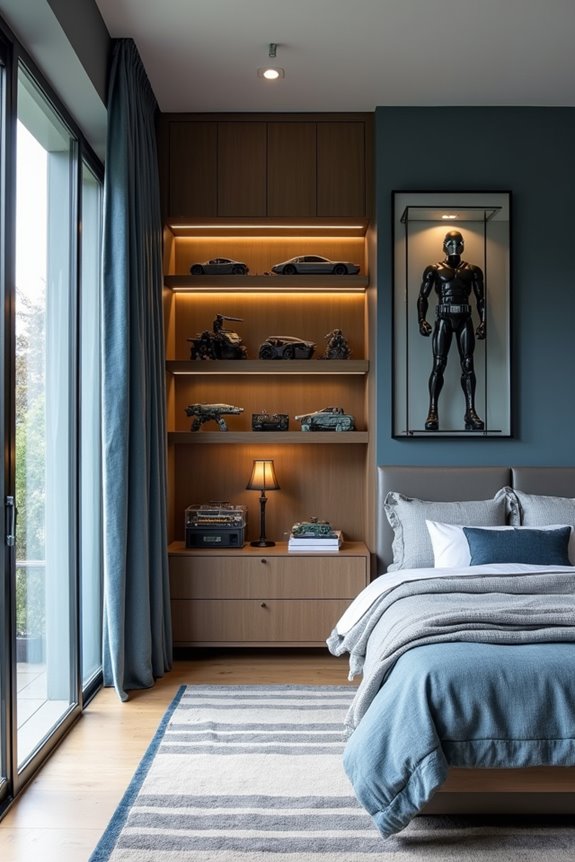
Collections like Lego sets, action figures, and vintage toys deserve to be displayed, yet they’ll overwhelm a bedroom if scattered across shelves and surfaces. A gallery-wall approach works well to turn clutter into organized décor. Here’s how to do it:
- Install wall-mounted displays using consistent frame finishes and cohesive framing to establish visual rhythm
- Incorporate hidden storage solutions beneath or beside your gallery to keep extras accessible yet concealed
- Arrange pieces to match your room’s color palette, ensuring mats complement existing décor
- Select frames with easy switch-out options, allowing you to rotate collections seasonally
This strategy maximizes your display-storage potential while maintaining the balanced aesthetic you’ve already established through themed accents. Wall-mounted presentations preserve floor space and position your collection as intentional décor rather than accumulated clutter.
Maximize Storage and Integrated Function
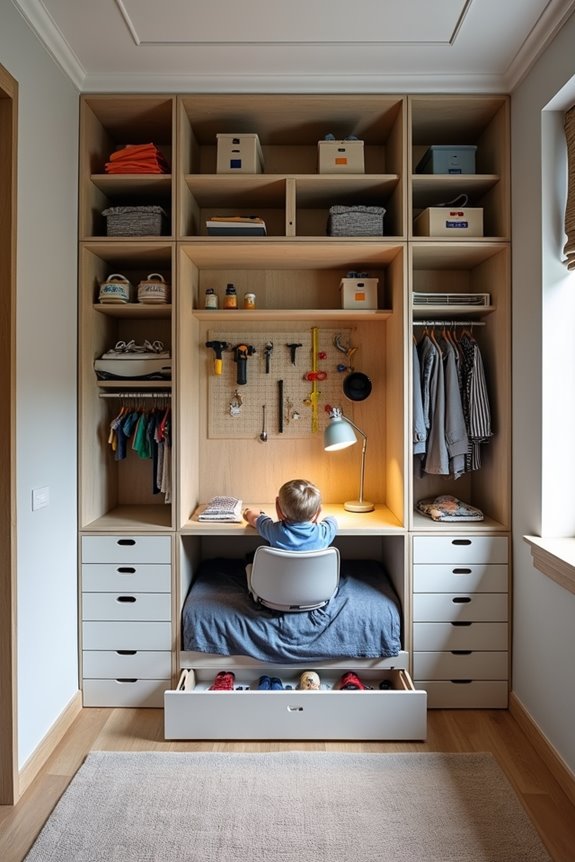
Why settle for scattered toys and tangled cords when you can architect a bedroom that stores, functions, and looks organized all at once?
Built-in storage with concealed drawers converts wasted wall space into purposeful organization. Pairing an integrated desk with task lighting creates an ergonomic study zone that anchors the room’s aesthetic. Modular furniture adapts as interests shift. Reconfigurable shelving and storage units grow with your son rather than against him.
| Feature | Material | Benefit |
|---|---|---|
| Built-in drawers | plywood, veneer | Hidden storage |
| Integrated desk | solid wood | Seamless workspace |
| Wall-mounted displays | steel brackets | Space efficiency |
| Modular shelving | MDF, laminate | Flexible organization |
Layered textures including linen, wool, and cotton make storage feel purposeful rather than utilitarian. Wall-mounted displays showcase collections without floor clutter, positioning Lego sets and memorabilia as design elements. This approach eliminates visual chaos while maintaining functionality and personal expression.
Layer Textures and Patterns for Lasting Style
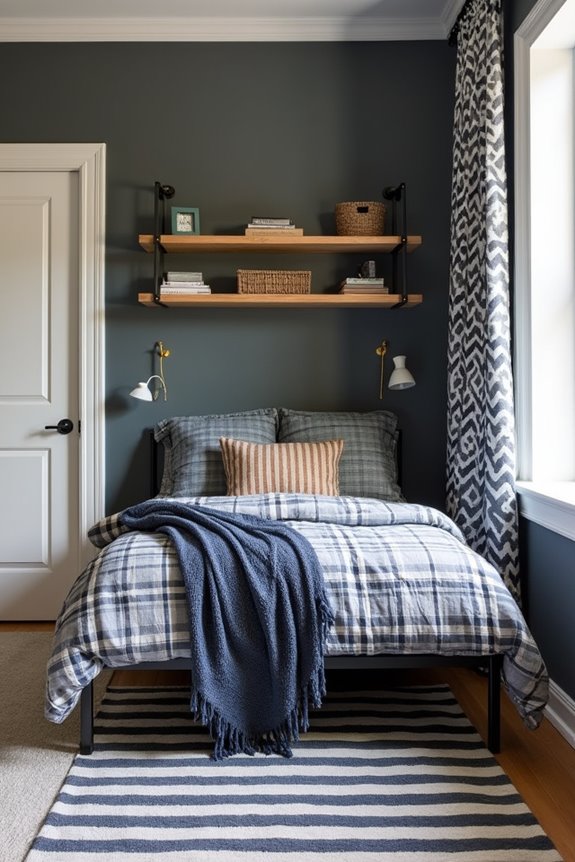
Once you’ve locked down your storage systems and functional zones, the room’s bones are set. What comes next is adding the elements that make a well-organized space feel inviting. Layered textiles create depth while aging gracefully from toddler through teen years. I recommend texture blending through linen, wool, and cotton fabrics that withstand wear.
Pattern mixing, varying scales without clutter, keeps visual interest alive. This approach supports your cohesive color story whether you’re working with neutrals or bolder palettes.
- Combine woven floor cushions with soft carpet layers for reading nooks
- Pair patterned bedding with textured wall elements for tactile richness
- Mix geometric and organic patterns at different scales
- Layer throw blankets across furniture for functional comfort
Textured textiles and patterned decor work together, keeping your investment polished and distinctly age-appropriate.
Choose Lighting and Decor That Grow With Him
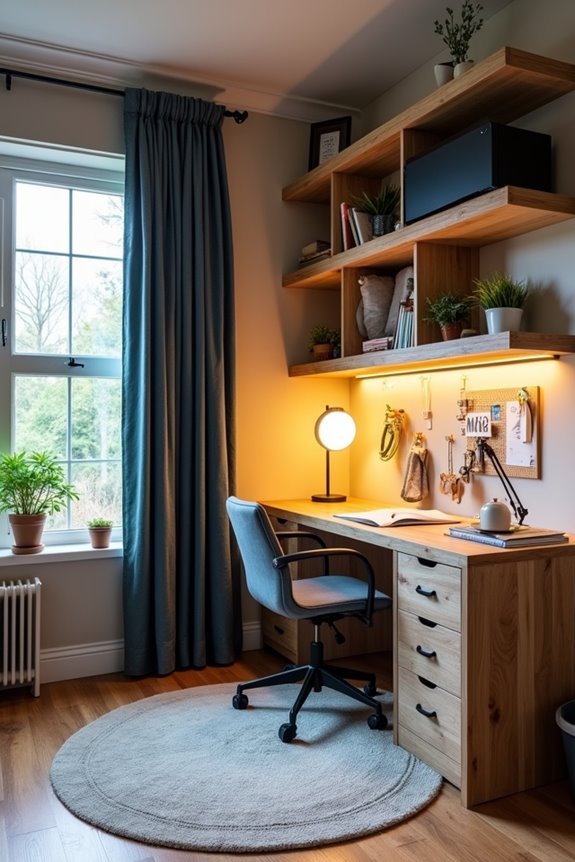
How do you design a boy’s bedroom so it doesn’t require a complete overhaul every few years? You invest in layered lighting and durable décor that adapts as he matures. A combination of ambient ceiling fixtures, task lighting like adjustable swing-arm lamps, and accent spots creates flexibility for studying, reading, or hobbies. Choose fixtures in brushed metal or wood finishes; these materials withstand wear while remaining timeless. Pair this lighting with an adaptable color palette using neutral bases like soft grays or warm whites, then layer interest through changeable textiles and artwork. This approach means you’re not repainting walls or replacing fixtures when interests shift from dinosaurs to sports or music. Quality pieces work harder, longer, and cost less over time.