I’ve found that selecting outdoor kitchen tiles isn’t just about picking what looks good; it’s about understanding how climate, budget, and your home’s aesthetic work together.
You’re probably weighing porcelain’s durability against natural stone’s elegance, or wondering whether wood-look tiles can truly replace authentic wood without constant sealing.
The right choice depends on what you’re willing to maintain and what Florida’s heat and humidity demand from your materials.
Here’s what creates beautiful patios with visual impact.
How to Choose Outdoor Kitchen Tiles: Climate, Budget, and Style
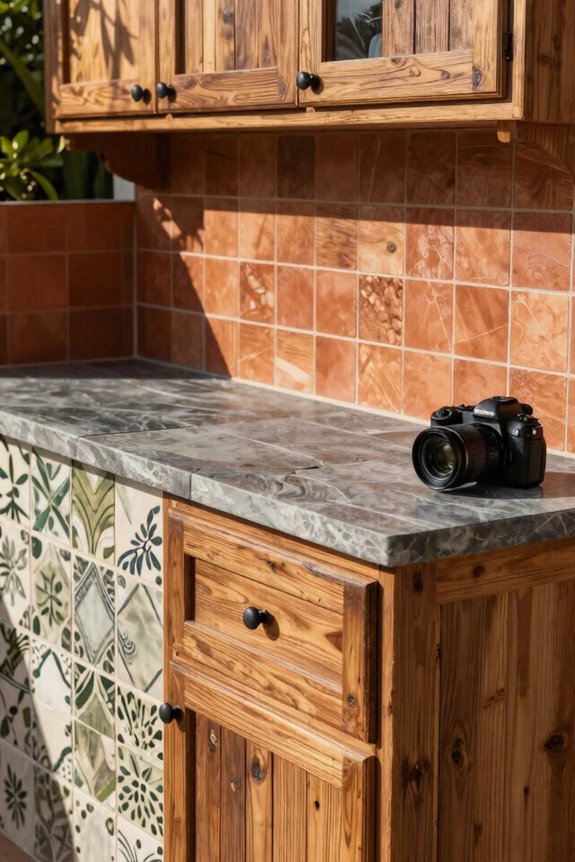
What makes a tile suitable for outdoor kitchens in Florida’s demanding climate? Porcelain tiles reign as the top choice because they resist freezing, thawing, fading, and staining; these qualities are necessary for Melbourne’s sunny, humid conditions. I’d prioritize non-porous options or stone-look porcelain for superior water resistance and slip resistance.
For budget-conscious homeowners, wood-look porcelain delivers warm aesthetics without requiring sealing or refinishing, reducing long-term maintenance costs. Large-format tiles, 24″×24″ or 24″×48″ dimensions, minimize grout lines and simplify cleaning while creating seamless visual expanses.
Your style preferences matter equally. Consider how porcelain’s durability combines with design versatility: natural stone aesthetics without marble’s sealing demands every six to twelve months. This approach balances weather resistance, durability, and aesthetic appeal within realistic budgets.
Porcelain Pavers: Durability That Lasts
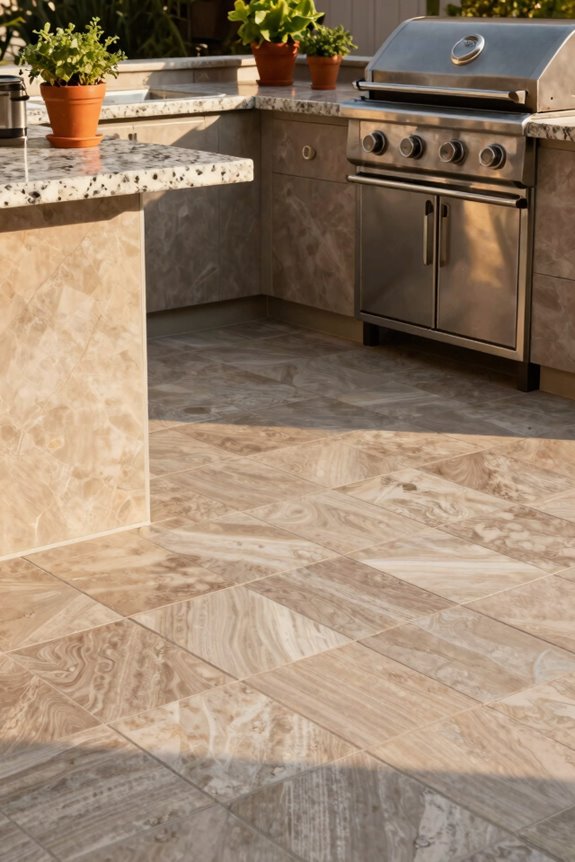
I’ll guide you through porcelain pavers’ durability advantages, which address the four critical performance areas that create long-lasting gathering spaces in outdoor kitchens. These engineered surfaces resist freezing cycles, UV fading, and moisture penetration simultaneously; standard ceramic tiles simply cannot match these capabilities. Their non-porous composition prevents water damage in poolside and wet-prep zones.
Large-format options like 24″ x 48″ pavers deliver both practical benefits and visual impact, reducing grout lines that trap debris while creating the unified visual flow designers prioritize for modern outdoor entertaining areas.
Weather Resistance And Longevity
When you’re investing in an outdoor kitchen, nothing derails your plans faster than materials that crack, fade, or stain within a season or two. Porcelain pavers resist these failures through engineered composition that withstands freezing cycles, UV exposure, and moisture infiltration. Their non-porous structure prevents water absorption, the primary culprit behind surface degradation in wet climates.
| Challenge | Traditional Tile | Porcelain Pavers |
|---|---|---|
| Frost Damage | Susceptible | Engineered resistant |
| Color Fading | 2-3 years | 10+ years |
| Water Staining | High risk | Minimal risk |
Large-format options (24″ × 48″) minimize grout lines, reducing weak points where moisture penetrates. This longevity makes porcelain pavers a legitimate investment for outdoor kitchens experiencing temperature fluctuations and seasonal weather demands.
Design Flexibility Meets Performance
How do you achieve a kitchen that looks like hand-laid natural stone yet performs like engineered laboratory material? Porcelain outdoor tiles deliver exactly that balance. Large-format options like Caldera Grigia 16″x47″ and Cordova LaBlanca 24″x48″ mimic authentic stone and wood textures while maintaining high density and low porosity, reducing maintenance demands substantially.
These weather-resistant pavers resist freezing, thawing, and fading across all climates. Slip-resistant finishes enhance safety in wet BBQ zones and poolside areas where moisture poses risks. The result is a durable outdoor space that preserves aesthetics without sacrificing longevity. Fewer grout lines create continuous visual flows that connect your outdoor areas seamlessly.
Your outdoor kitchen withstands extreme temperatures and heavy foot traffic while preserving color integrity and design appeal for years.
Low Maintenance, High Impact
While large-format tiles deliver visual continuity, it’s the material composition itself that truly sets porcelain pavers apart in outdoor spaces. Their non-porous density resists freezing, thawing, and staining—challenges that plague standard ceramics. You’ll appreciate the practical advantage: many finishes require no sealing whatsoever.
I find the 24″×24″ and 24″×48″ formats particularly strategic. They minimize grout lines, creating seamless surfaces that repel dirt and simplify cleaning. When summer heat radiates from your grill or unexpected rain arrives, these pavers maintain structural integrity without deterioration.
Slip-resistant finishes prevent accidents during wet conditions, while the durable surface withstands heavy foot traffic. Low maintenance means you’re spending weekends entertaining, not scrubbing. Porcelain pavers deliver that rare combination: visual appeal paired with genuine durability that sustains itself across seasons.
Wood-Look Tiles: The Warmth Without the Work
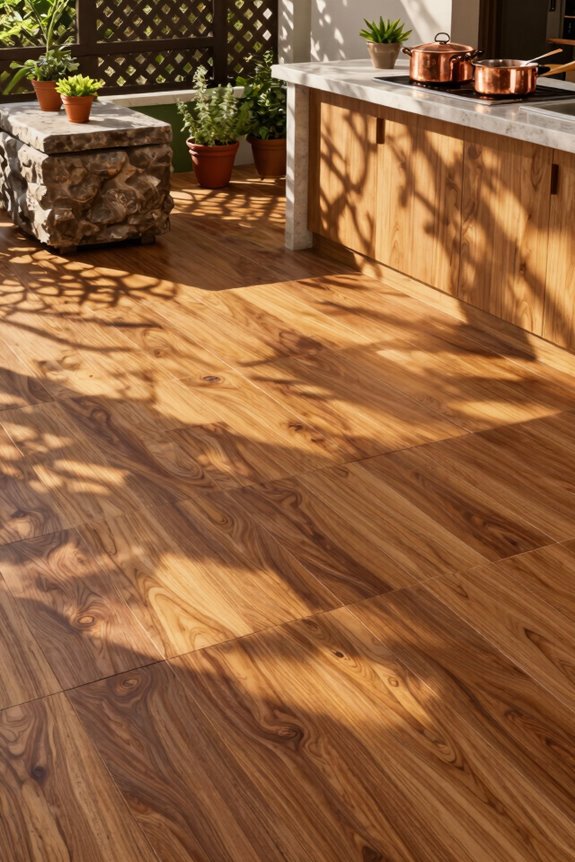
I’ve found that wood-look porcelain tiles deliver genuine hardwood aesthetics while eliminating the maintenance headaches; they won’t warp, fade, or require sealing like authentic timber. You’ll discover finishes replicating everything from rich walnut and honey oak to weathered grey tones, which means you can establish rustic, farmhouse, or contemporary kitchen designs with authentic visual warmth.
Because the durable porcelain backing resists cracking under weather exposure and high foot traffic, you’re investing in a material that maintains its appearance for decades without refinishing.
Durability Meets Natural Aesthetics
Most homeowners who envision an outdoor kitchen picture authentic hardwood decking, that inviting warmth and organic grain pattern, yet hesitate at the maintenance burden real wood demands. Wood-look porcelain tiles reconcile this tension. They deliver genuine wood aesthetics without sealing, staining, or refinishing cycles that consume time and resources.
These tiles excel where outdoor durability matters most. Their porcelain composition resists warping, fading, and staining—challenges that plague natural timber exposed to sun, rain, and humidity fluctuations. The natural aesthetics remain stable across seasons; the visual warmth persists indefinitely.
What distinguishes wood-look porcelain is its texture replication. Contemporary options faithfully mirror grain patterns and surface variations, supporting design schemes from rustic to contemporary. You’re investing in a surface that marries timeless appeal with practical longevity.
Low Maintenance Porcelain Appeal
You’ve now seen how wood-look porcelain delivers durability and natural warmth, but the real advantage emerges in everyday living: these tiles demand virtually nothing from you once installed. Unlike traditional wood, porcelain tiles won’t warp, fade, or stain. You’ll skip annual sealing and refinishing entirely. Cleaning requires only soap and water; stubborn marks rinse away effortlessly. Your outdoor kitchen maintains its color stability year-round without degradation.
| Maintenance Task | Wood Decking | Wood-Look Porcelain |
|---|---|---|
| Annual Sealing | Required | Not needed |
| Stain Removal | Difficult | Easy |
| Color Fading | Common | Resistant |
| Weather Damage | Warping likely | Minimal risk |
For Melbourne, FL’s humid climate, low maintenance porcelain tiles eliminate the burden of constant upkeep while preserving that authentic wood appearance. This practicality appeals to homeowners seeking beauty without the commitment.
Versatile Style For Every Theme
Where does authentic aesthetic meet practical performance in outdoor kitchen design? Wood-look porcelain tiles answer this question by delivering warmth across rustic, farmhouse, and modern themes without real wood’s vulnerabilities. I’ve found that large-format planks create seamless, deck-like surfaces that provide natural character to outdoor spaces.
These porcelain tiles resist the weather resistance challenges that compromise authentic hardwood in outdoor kitchens: warping, fading, and staining. The warm wood-inspired finishes and varied textures work strategically within different design schemes, whether you’re drawn to earthy farmhouse palettes or contemporary minimalism. Your outdoor kitchen gains the aesthetic richness of aged timber while maintaining the durability that porcelain delivers, letting you belong to a design community that prioritizes both beauty and longevity.
Natural Stone Tiles: Slate, Travertine, Marble
When you’re designing an outdoor kitchen, why not consider the timeless appeal of natural stone?
I find that slate, travertine, and marble each offer distinct character to outdoor spaces. Slate provides rugged texture and slip-resistant surfaces that enhance safety, while its earthy tones complement natural palettes. Travertine, like Eastern White beige varieties, offers warm neutrals and Mediterranean vibes, though it requires regular sealing.
Marble delivers luxurious veining and versatility across floors and countertops, yet demands sealing every 6–12 months due to its porous nature.
| Material | Color Palette | Maintenance |
|---|---|---|
| Slate | Earthy tones | Minimal sealing |
| Travertine | Warm neutrals, sandy browns | Regular sealing required |
| Marble | Distinctive veining | Sealing every 6–12 months |
These natural stones age gracefully outdoors, creating welcoming spaces that reflect your design vision while requiring thoughtful upkeep.
Glass and Ceramic Accent Tiles: Bold Color, Easy Care
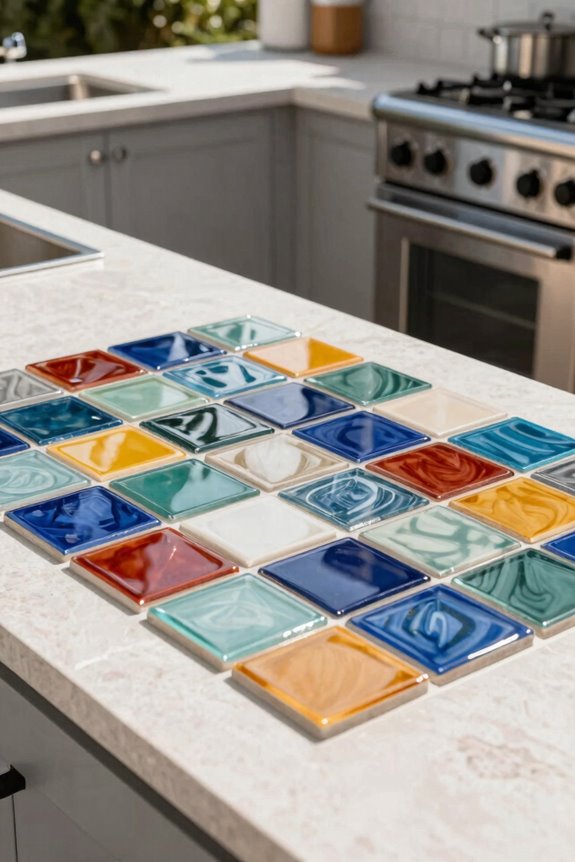
Why settle for neutral surfaces when glass and ceramic accent tiles can add personality and visual interest to your outdoor kitchen?
I’ve found that these materials deliver both aesthetic impact and practical benefits. Glass and ceramic accent tiles offer durability without requiring sealing, making maintenance straightforward for busy outdoor spaces.
Consider these distinctive options:
- Bianco Glossy Ellipse Glass Tile; white finish reflecting sunlight across prep areas
- Convex Aqua 2″ x 10″ Ceramic Tile; vibrant coastal aesthetic for backsplashes
- Azila 8″ x 8″ Porcelain Tile; Moroccan-inspired patterns creating textured focal points
- Stella Oceano 2″ x 10″ Ceramic Tile; deep blue glaze framing grills or pizza ovens
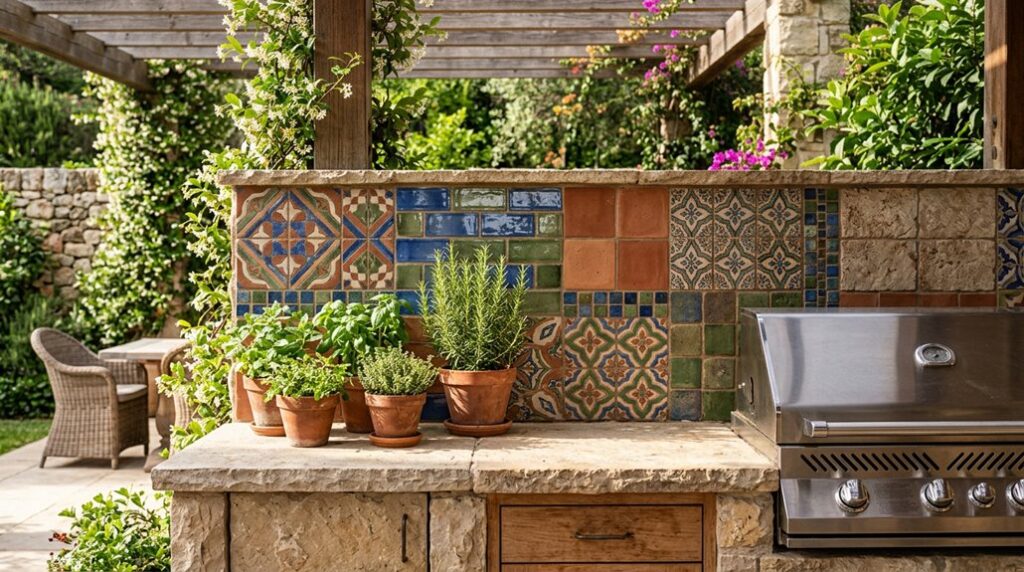
These ceramic tiles and glass tiles function as accent tiles that enhance ordinary spaces into designer-quality outdoor kitchens. Their non-porous surfaces resist staining while bold colors create cohesive design narratives you’ll appreciate for years.
Textured and 3D Tiles: Create Visual Drama
While glass and ceramic accents bring color and refinement, textured and 3D tiles operate on a different design principle. They sculpt your outdoor kitchen through shadow and dimension. These 3D tiles, crafted from durable porcelain or natural stone, create pronounced visual contrast as sunlight shifts across their raised surfaces. You’ll find they’re ideal for feature walls behind grills, where shadows amplify the dimensional drama.
Rather than covering extensive flooring, position textured surfaces as focal points that command attention. I’d recommend pairing 3D tiles with complementary outdoor accents like pebble mosaics or wood-look porcelain to amplify interest. The ridged surfaces require occasional maintenance, making accent applications more practical than full installations. This layered approach creates a gallery-quality outdoor kitchen with depth and visual richness.
Maintenance and Longevity: Which Tiles Keep Their Looks
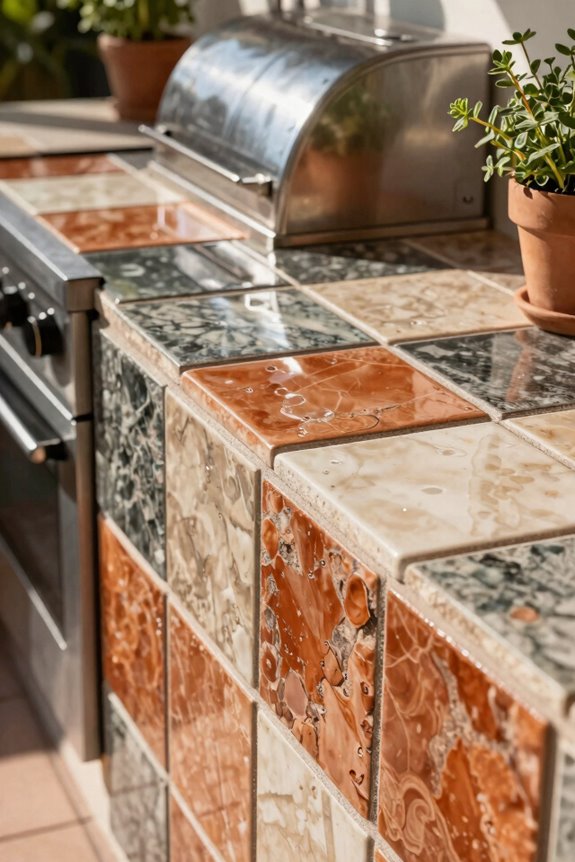
How long will your outdoor kitchen tiles actually maintain their polished appearance under relentless sun, moisture, and temperature changes? The answer depends on material selection and maintenance commitment.
- Porcelain tiles resist staining and weathering without sealing, making them ideal for busy outdoor spaces
- Wood-look porcelain delivers warmth aesthetically while eliminating warping and refinishing requirements entirely
- Natural stone demands periodic sealing; marble every 6 to 12 months; travertine regularly to combat moisture damage
- Large-format pavers (24″ × 24″ or 24″ × 48″) minimize grout lines, reducing dirt accumulation and upkeep
Matte finishes on slate or travertine-inspired surfaces conceal wear effectively, lowering visible maintenance needs.
Porcelain’s durability and low-maintenance profile make it the practical choice for those prioritizing longevity. Natural stone offers premium aesthetics but requires consistent sealing discipline. Your space’s longevity ultimately reflects your material choice and maintenance strategy.