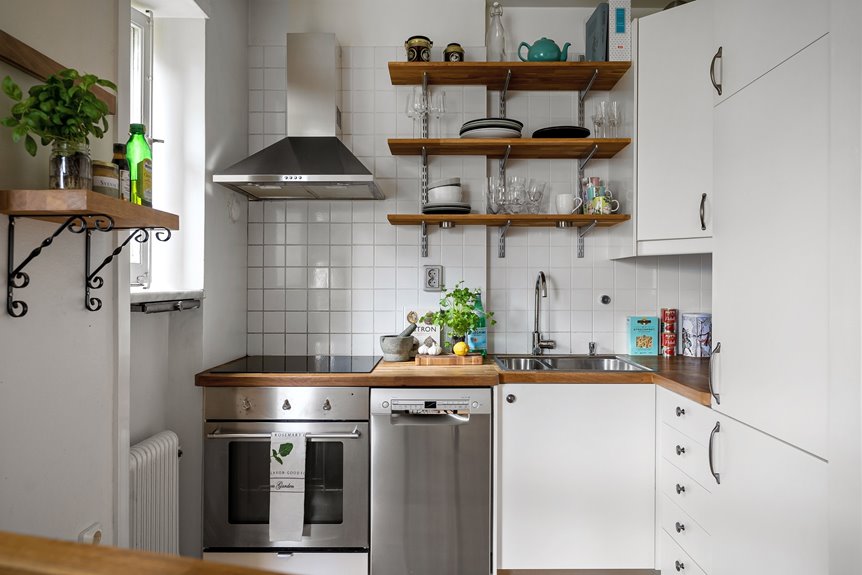
I’ve noticed that most homeowners redesign their kitchens without considering how layout fundamentally shapes daily function, and it’s a costly oversight. Your kitchen’s configuration determines everything from workflow efficiency to entertaining capacity.
Whether you’re working with a cramped apartment or sprawling suburban home, the right layout balances aesthetics and practicality. Certain arrangements reveal hidden potential you didn’t know existed in your space.
Galley Kitchen Layouts: Maximum Efficiency in Minimal Space
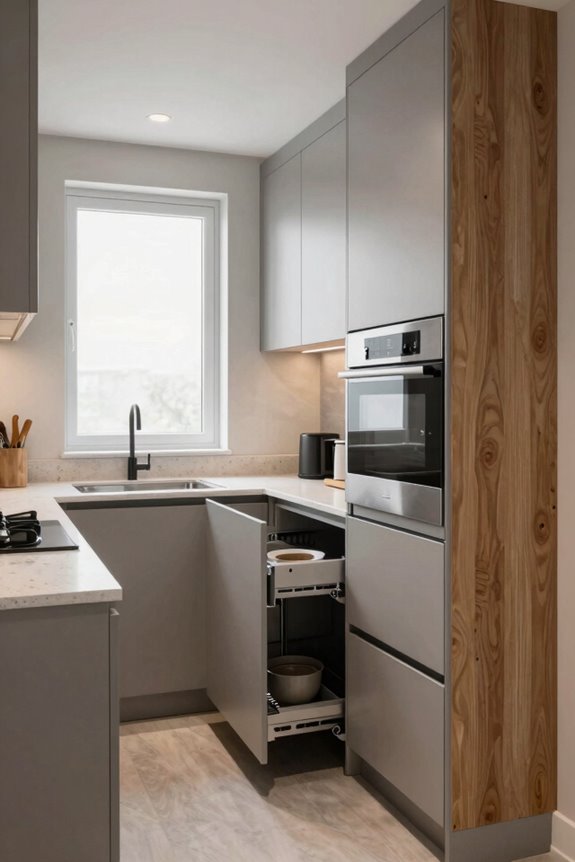
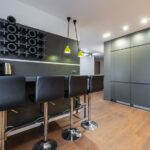
A galley kitchen, where cabinets, appliances, and work surfaces line two parallel walls, offers a proven solution for maximizing both storage and workflow in confined spaces. You’ll find this two-wall layout particularly valuable in apartments and tight homes where efficiency matters most.
The working triangle connecting your sink, range, and refrigerator becomes streamlined here, reducing unnecessary steps. I’d recommend installing tall, deep cabinets paired with pull-out shelves near your rangetop for convenient access. Pantry solutions deserve equal attention; vertical storage prevents aisle congestion while maintaining compact kitchen functionality.
Designers emphasize careful zoning to maximize storage without overcrowding movement. While you gain exceptional work zone efficiency and a strong footprint, consider that natural light and multi-person cooking require strategic planning. Thoughtful design makes the most of these constraints and highlights their advantages.
L-Shaped Kitchen Layouts: Flexible Design for Small to Medium Homes
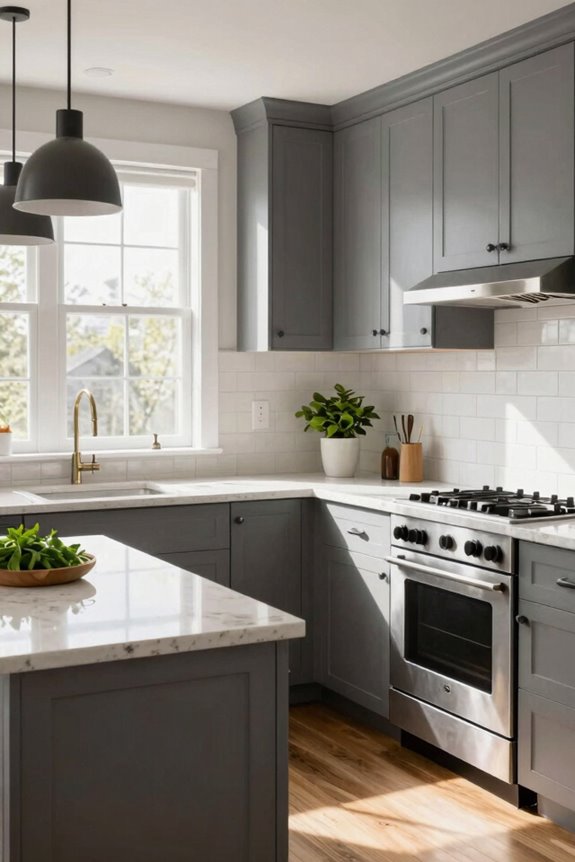
I’ll walk you through how an L-shaped layout creates an efficient work triangle that positions your sink, stove, and refrigerator within natural reaching distance, reducing unnecessary steps during meal prep. You’ll find that this configuration accommodates multiple cooks simultaneously, a feature interior designer Sarah Barnard emphasizes when designing for families or frequent entertainers, while the two perpendicular walls eliminate the cramped constraints of narrower galley kitchens.
Maximizing your usable space requires strategic solutions: corner cabinets with pull-out organizers, deeper 24-inch base cabinets along one wall, and optional island or peninsula additions can create limited prep surfaces into functional work zones.
Efficient Work Triangle Design
How can you maximize functionality in a compact kitchen without sacrificing workflow? The work triangle, connecting your sink, stove, and refrigerator, forms the backbone of an efficient L-shaped kitchen layout. I recommend positioning these three appliances within 4-9 feet of each other to minimize unnecessary movement during meal prep. This kitchen layout strategy directly impacts your workflow efficiency and daily cooking experience.
Place your sink along the longer wall, creating a natural prep station with generous countertop space. Position the stove adjacent to this work zone, then locate your fridge on the short wall’s end.
This appliance placement reduces cross-traffic and prevents bottlenecks during entertaining. Strategic storage optimization around each station keeps frequently used items within arm’s reach, making your L-shaped kitchen a functional cooking space.
Multi-Person Movement Benefits
While the work triangle establishes efficiency for a single cook, L-shaped kitchens truly excel when multiple people occupy the space simultaneously. You’ll find that two cooks can work independently within separate functional zones without constant collision. The layout naturally distributes traffic flow across the open floor plan, preventing bottlenecks near the sink or stove.
Consider these movement advantages:
- Dual prep stations allow simultaneous food preparation on opposite walls
- Clear traffic flow enables guests to circulate between kitchen and living areas
- Strategic island or peninsula placement creates additional workspace without obstruction
- Open sightlines reduce collision risks when navigating between appliances
This configuration accommodates your lifestyle whether you’re entertaining or managing weeknight dinners with family. The work triangle remains functional while the overall L-shaped kitchen design prevents the congestion typical of cramped single-wall layouts.
Storage and Prep Optimization
Where does an L-shaped kitchen fall short regarding workspace? Limited counter real estate and storage capacity restrict prep activities in compact homes. I’ve found that adding an island layout or peninsula works well with this constraint. An island extends your work triangle, connecting sink, stove, and fridge, while delivering substantial prep surface and cabinetry heights tailored to ergonomic needs.
Peninsula configurations provide similar benefits with less footprint intrusion. Strategically positioning storage near usage zones boosts efficiency: pots beside the cooktop, glasses adjacent to the beverage station. This functional grouping minimizes movement and maximizes accessibility.
Whether you’re accommodating multiple cooks or simply expanding capacity, these modifications help your L-shaped kitchen deliver professional-grade workflow without sacrificing the open-concept appeal that defines modern living spaces.
U-Shaped Kitchen Layouts: Storage and Workflow for Larger Spaces
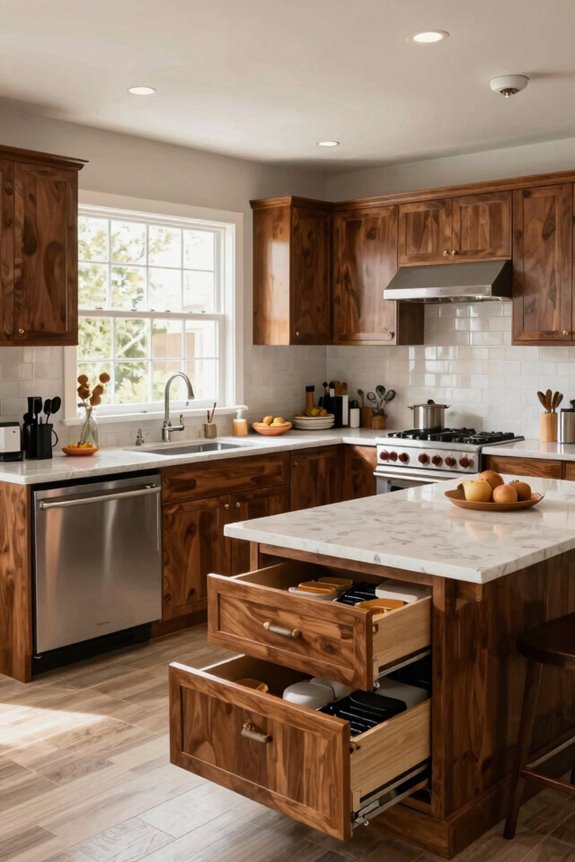
Why do so many designers recommend U-shaped kitchens for homes with ample square footage? This layout maximizes your storage and workflow efficiency by positioning cabinetry along three walls, creating an optimal work triangle that keeps you moving intentionally between prep, cooking, and cleanup zones.
A U-shaped kitchen delivers:
- Extensive cabinetry options with custom configurations for specialized storage
- Natural traffic flow that separates cooking activities from dining areas
- Peninsula or island additions that expand prep surfaces and seating
- Containment of kitchen tasks while maintaining sightlines to adjacent spaces
The layout works particularly well in larger rooms where you’re not compromising sightlines or natural light. You’ll appreciate how this configuration supports multiple cooks simultaneously while maintaining functional boundaries between your kitchen’s core activities and your home’s social spaces.
Peninsula Kitchen Layouts: Open-Concept Entertaining Spaces
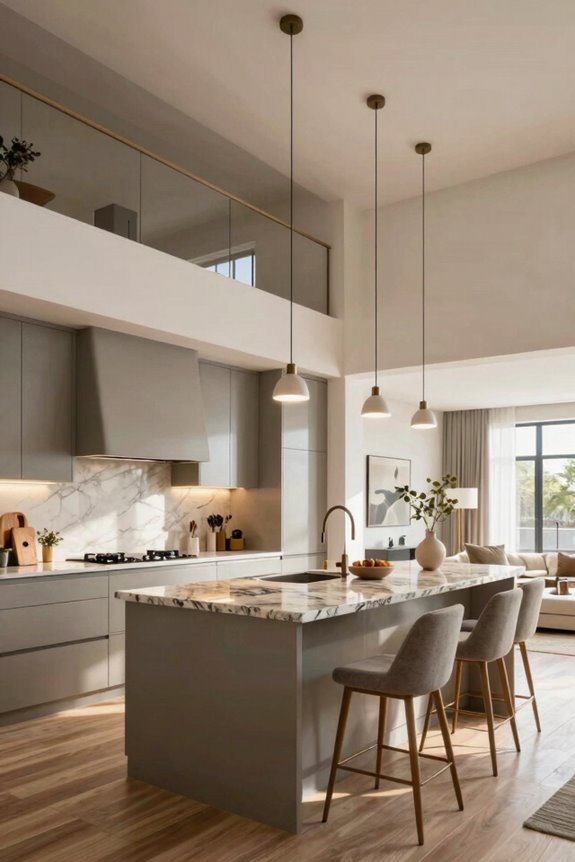
If you have an open-concept home, you’re likely looking for a kitchen layout that doesn’t wall itself off from your living spaces, and that’s where peninsula kitchens work well. A peninsula kitchen extends from a wall to create an integrated island or extended counter, adding prep surface while maintaining clear sightlines to adjacent rooms. This layout works particularly well when you want to separate the kitchen from living or dining areas without full separation.
Storage around the peninsula keeps essentials accessible, while seating options support casual dining and social interaction during cooking. The kitchen workflow remains efficient when you preserve your cooking triangle accessibility. However, the single point of entry may limit traffic flow in larger layouts, requiring careful measurement and custom cabinetry placement.
Single-Wall Kitchen Layouts: Smart Solutions for Compact Areas
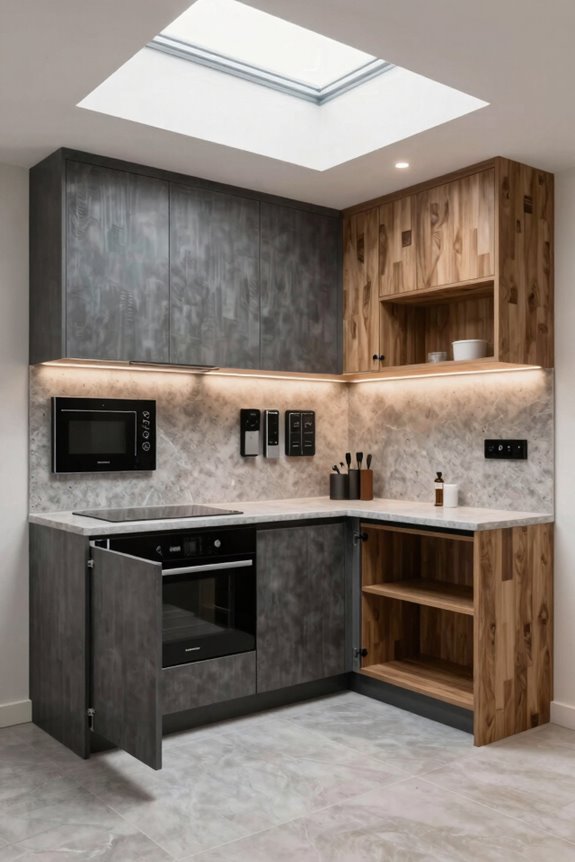
How can you maximize functionality when every inch counts? I’ve found that single-wall kitchens deliver efficiency through strategic design. This compact layout arranges all components along one wall, making it ideal for small or oddly shaped spaces where traditional layouts prove impractical.
To optimize your single-wall kitchen:
- Install tall cabinets that emphasize vertical storage and keep countertops clear
- Position sink, range, and fridge thoughtfully to minimize workflow disruption
- Use pull-out drawers and organizers to maximize storage capacity
- Select narrow appliances and compact fixtures to preserve prep space
While this layout offers lower costs and streamlined design, it does limit storage and prep areas. Careful placement remains essential since the absence of a defined work triangle can create crowding.
Single-wall kitchens work best for individuals or couples who prioritize space efficiency over entertaining capacity.
Island Kitchens: Centerpiece Layouts for Cooking and Gatherings
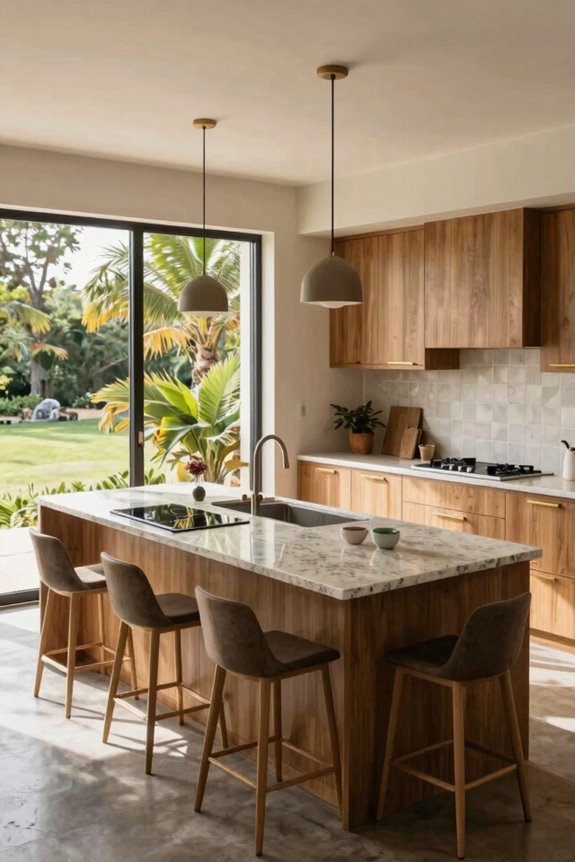
Where does the heart of your kitchen reveal itself in a space that truly works? An island kitchen creates a central prep area where cooking and social interaction blend together. I’ve found that positioning your island near the sink and range minimizes movement, enhancing workflow efficiency during meal preparation. Built-in seating along the counter invites family and friends to gather while you cook, fostering connection without compromising functionality.
The storage around your island, including pull-out shelves and deep drawers, keeps frequently used tools within arm’s reach. In open-concept homes, your island visually separates cooking zones from living areas while maintaining sightlines and natural flow. A well-designed island kitchen doesn’t just improve efficiency; it becomes the center where your household naturally congregates.
Plan Your Kitchen by Zone: A Data-Driven Approach
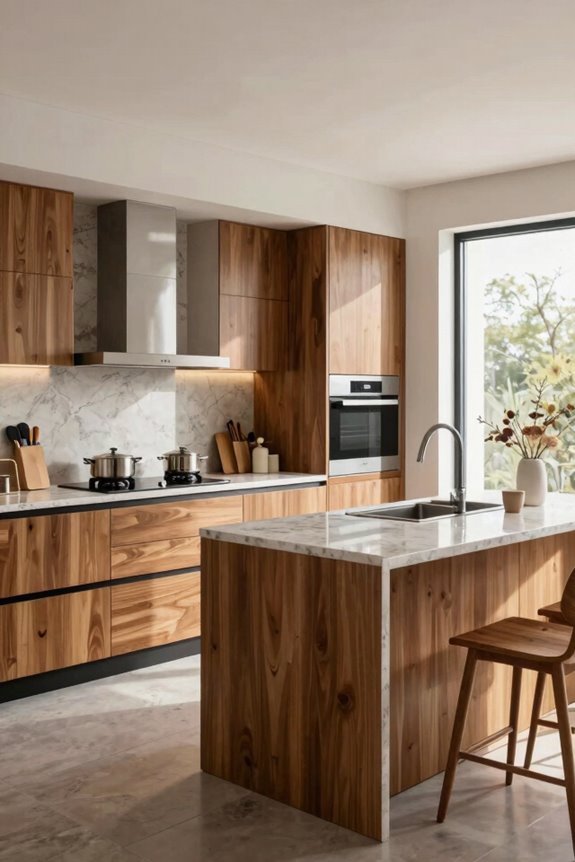
I’ll guide you through structuring your kitchen around four functional zones: Prepping, Cooking, Clean-up, and Putting Away. Designers like Kitchen Institute certified planners recommend this approach as the foundation for efficient workflow and reduced movement between tasks.
You’ll measure and inventory your actual items, including bowls, cutting boards, knives, and pantry staples. Document dimensions in inches to match storage precisely, ensuring prep tools cluster near your cutting zone while cleaning supplies concentrate around the sink and dishwasher.
Once you’ve mapped these zone-specific contents, you’ll configure your cabinet depths, drawer widths, and shelf heights to align with what you’re storing. This customized approach lets you optimize your cabinetry beyond its generic design, minimizing wasted space and maximizing accessibility.
Four Essential Kitchen Zones
Why do some kitchens feel effortless while others leave you frustrated by constant backtracking? The answer lies in strategic kitchen zones that align your workflow with daily tasks. Organizing your space into four distinct areas significantly improves storage and efficiency.
- Prepping zone: positioned near your rangetop with bowls, cutting boards, knives, and commonly used dressings within arm’s reach
- Cooking zone: housing cookware, cooking tools, and seasonings adjacent to prep for seamless transitions
- Clean-up zone: centered on the sink and dishwasher for streamlined washing and drying
- Putting away zone: located near the fridge with Tupperware, wrap, and inventory systems
This thoughtful arrangement minimizes unnecessary movement and clusters related tools together. It creates a logical progression through your kitchen’s workflow. You’ll notice immediate improvements in both efficiency and comfort.
Measuring and Inventory Strategy
Now that you’ve identified where each zone belongs in your kitchen, you’ll need concrete data to make those zones actually work. Start by transferring your kitchen inventory into a spreadsheet, documenting every item’s dimensions and frequency of use. This measurement phase reveals storage gaps and informs your cabinet dimensions strategy.
Measure your tallest frequently used items, such as oil bottles or cereal boxes, to establish optimal shelf heights within each zone. Next, map your workflow by placing heavy pots near the rangetop and cups adjacent to your coffee station. This inventory strategy minimizes unnecessary movement between zones.
Use these measurements to specify custom cabinet widths and drawer depths that accommodate your actual possessions. Your zoning and kitchen layout become purposeful when grounded in concrete data rather than assumptions about how you’ll cook.
Storage Optimization by Function
Once you’ve measured your inventory and mapped your workflow, the real work begins: organizing what you’ve got so you can actually find and use it. I’ll show you how a zone-based layout creates an organized kitchen storage system with streamlined access.
- Group heavy cookware near your rangetop for immediate access during cooking
- Position cups and mugs adjacent to your coffee station for morning efficiency
- Install pull-out shelves in your pantry to maximize vertical space and visibility
- Align sink and dishwasher placement to create a concentrated clean-up zone
Cabinet heights matter enormously. Measure your tallest frequently used item, whether that’s a stand mixer or stock pot, and adjust shelf spacing accordingly across zones.
This workspace proximity reduces unnecessary movement. Your pantry optimization and workflow efficiency depend on matching storage dimensions to actual item sizes, creating a zone-based layout where everything has its logical place.