According to design surveys, 68% of homeowners struggle to style their kitchen counters without creating visual clutter. I’m here to walk you through a systematic approach that refines your counter into a functional yet polished display.
By starting with decluttering and strategically grouping essentials into styled trays, you’ll create a space that feels both deliberate and livable. The key lies in understanding how height variation and focal points create designer-quality results, but which station should anchor your counter?
Start With a Clean Slate: Edit and Declutter Your Kitchen Counter
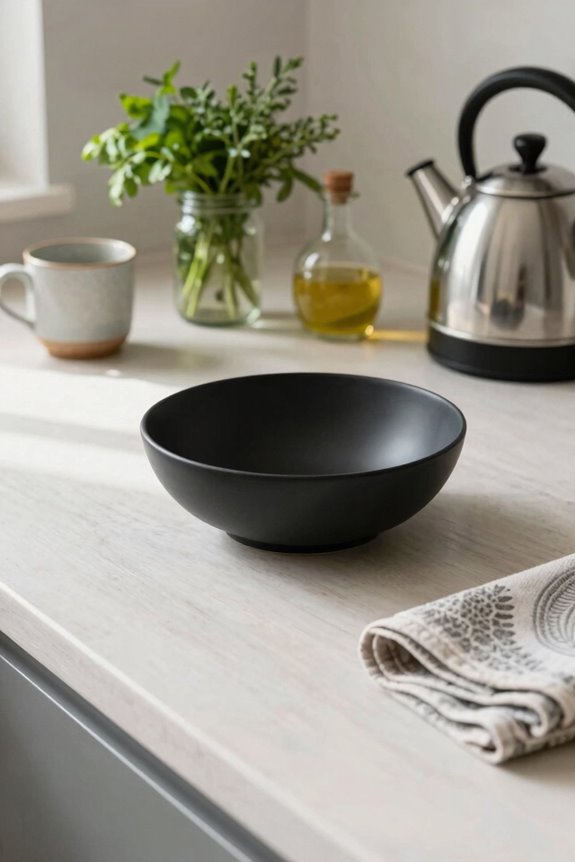
To create an organized, functional kitchen counter, you’ll want to strip it down completely, removing every item, appliance, and accessory to expose the bare surface beneath. This counter declutter gives you a clean slate for making thoughtful design decisions.
Next, assess what truly belongs in your kitchen. Relocate mail, keys, and papers to designated entryway spots rather than letting them accumulate on countertops. This creates essential breathing room on your counter.
With your surface bare, thoughtfully reintroduce only frequent-use items and storage solutions that serve daily needs. Select pieces that support a minimal counter aesthetic, perhaps a wooden utensil holder or ceramic container. Balance functional essentials with natural textures and restrained decorative accents. This deliberate approach makes your kitchen counter work as both a practical workspace and a carefully arranged display, supporting the organized lifestyle you want.
Decide What Stays: Assess Your Counter’s Purpose and Workflow
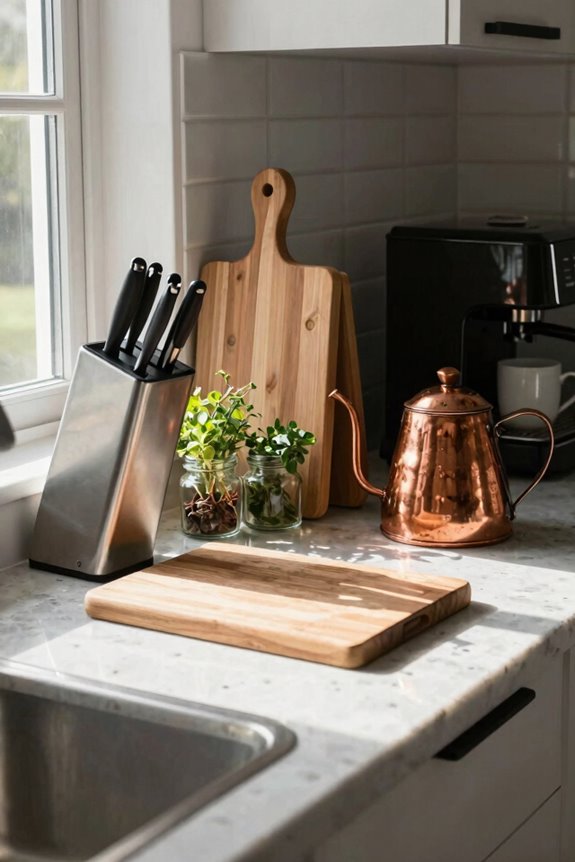
Now that you’ve cleared your countertop, the real work begins: determining which items actually earn their place in your daily workflow. I assess each piece by asking: Do I use this daily? Does it support my cooking routine? Non-kitchen items like mail and keys migrate to designated spots near entryways, not your prep zones.
| Item Category | Daily Use | Visual Appeal | Storage Method |
|---|---|---|---|
| Coffee maker | Yes | High | Permanent placement |
| Utensil holder | Yes | Medium | Tray grouping |
| Soap dispenser | Yes | High | Attractive container |
| Cookbooks | Occasional | High | Designated shelf |
| Decorative bowl | No | High | Rotating display |
Embracing the rule of 3 and a simpler approach creates breathing room. I prioritize functional decor—everyday items that look intentional.
Using trays for countertop organization groups like items together, establishing cohesion without overcrowding your kitchen counter decor.
Group Items in Trays and Upgrade to Better Containers
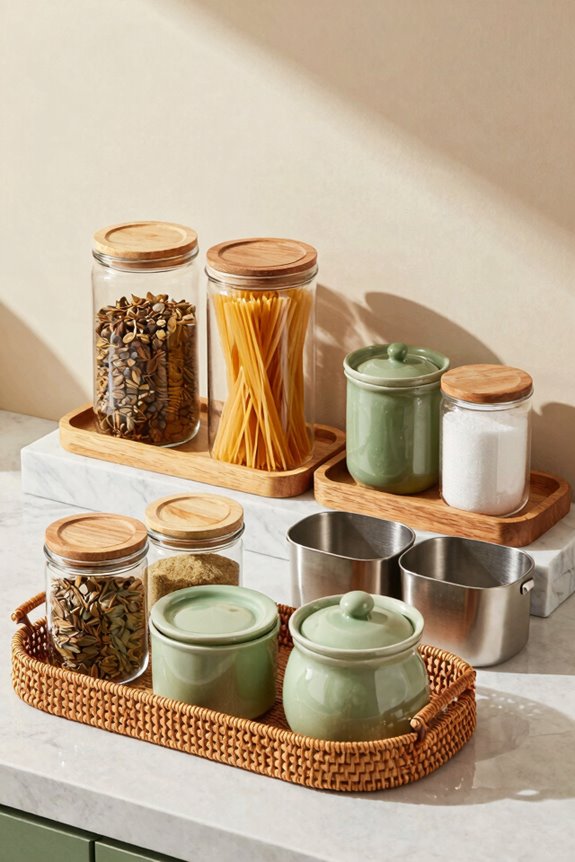
Trays help organize cluttered countertops by clustering related items into contained groupings. I recommend grouping three to four complementary items per tray to maximize counter space while maintaining visual harmony. Consider these essential tray groupings:
- Cooking essentials: salt, pepper, and olive oil near your stovetop
- Sink station: sponge, soap, and dish towel by the basin
- Coffee setup: beans, filters, and mugs in one spot
- Prep tools: knives, cutting board, and utensils within arm’s reach
Select tray materials that complement your kitchen counter decor; marble, wood, or brushed metal work beautifully. Upgrade everyday containers by displaying items in attractive display jars and canisters, which corral essentials while improving your kitchen’s appearance. Relocating non-daily appliances off-counter further reduces clutter and clarifies your workspace.
Build Visual Interest: Add Height, Plants, and Texture
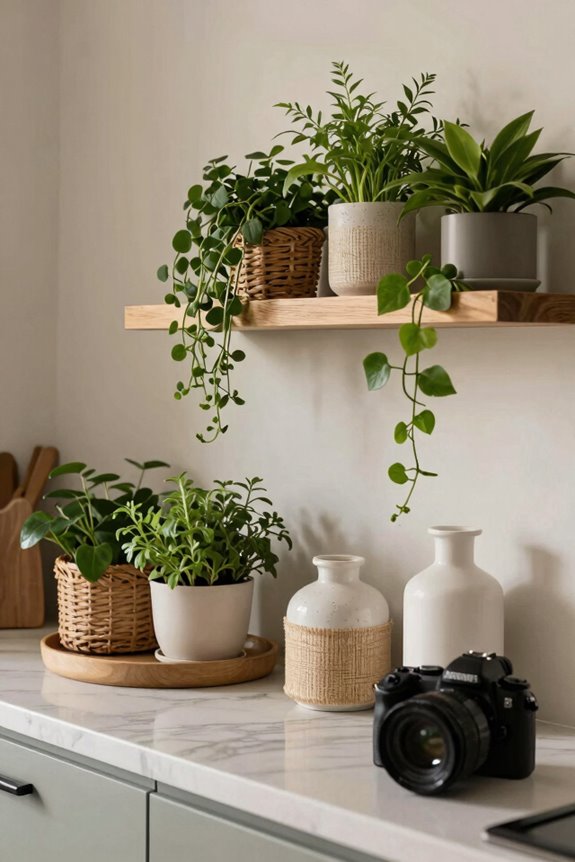
Why do flat, uniform countertops feel visually static? They lack the layered display that draws the eye and creates depth. I vary height by mixing vases, utensil holders, and upright cookbooks; this prevents a crowded appearance while building visual interest. A bold centerpiece, like a ceramic fruit bowl or artisan vase, anchors the surface without overwhelming adjacent items.
I introduce plants near the water source for practicality and life. Seasonal decor rotates through pumpkins, greenery, and flowers, keeping kitchen counter decor current. Texture variation matters too; combining smooth ceramics with natural wood and woven elements enriches the layered aesthetic.
Balance remains critical. I keep taller pieces from overwhelming shorter items while maintaining negative space for prep work. This counter space balance creates an inviting, considered look that feels deliberate rather than cluttered.
Choose Your Counter’s Focal Point: Coffee, Beverage, or Baking Station
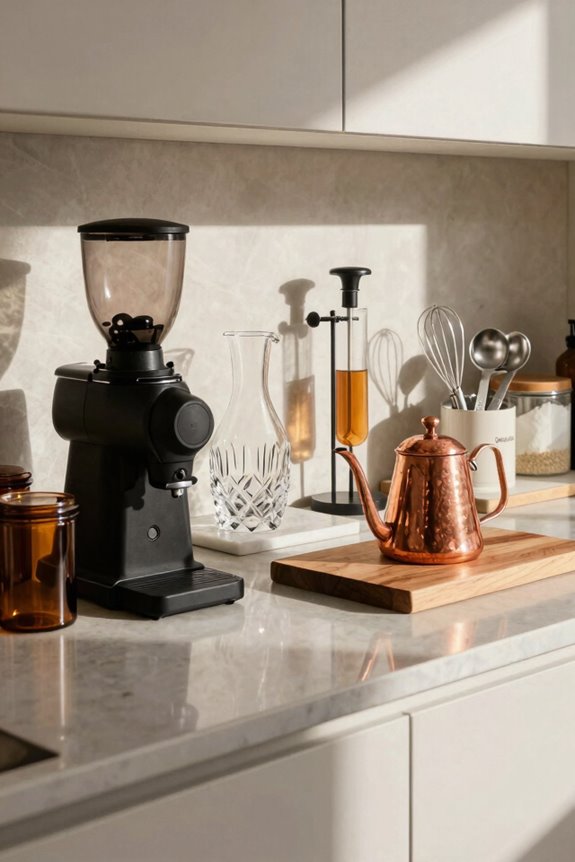
Rather than treating your kitchen counter as a catch-all surface, I anchor it around a single functional station, whether that’s coffee, beverages, or baking. This creates an organized, well-designed display that reflects your design sensibility while serving practical daily needs.
A coffee station becomes your countertop focal point by grouping essentials on a single tray: the maker, gourmet beans in uniform canisters, and stylish mugs. Intentional placement matters; keep frequently used items within arm’s reach while maintaining clear counter space for prep work.
Consider these four elements for a cohesive kitchen decor approach:
- Uniform canisters holding beans and sugar
- A small potted plant adding texture
- Seasonal mugs or art pieces rotating quarterly
- Trays organizing small appliances strategically
This beverage station or baking station approach turns counter space into an organized, well-designed display that works with your daily routine while looking polished and intentional.