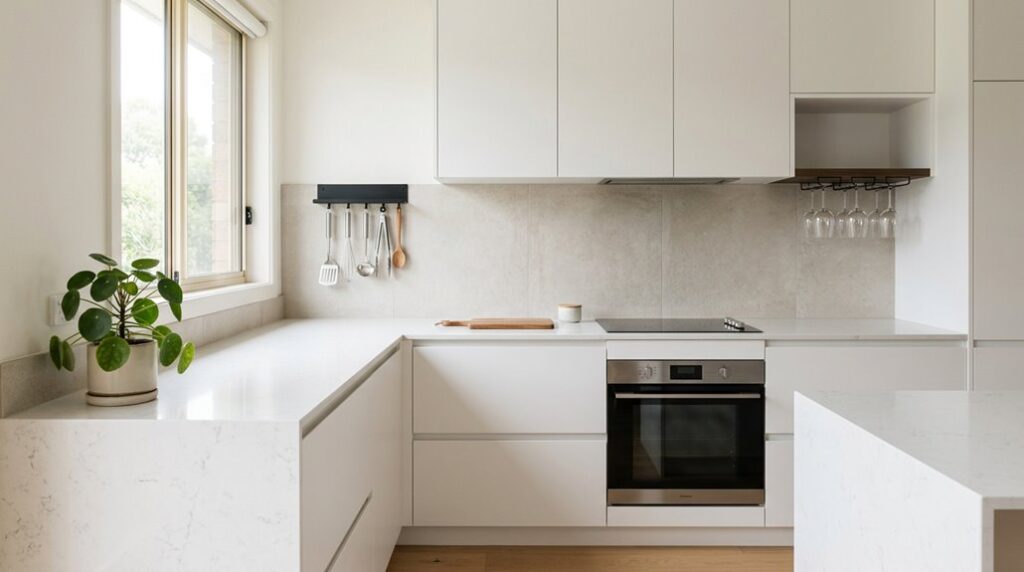
I’ve found that most kitchens suffer from the same problem: too much stuff competing for too little space. You’re likely holding onto gadgets you’ll never use, while daily essentials get buried behind clutter.
The solution isn’t buying better organizers. It’s ruthlessly eliminating what doesn’t serve you. But here’s where it gets interesting: the real magic happens when you understand how to layer storage, display, and aesthetics together.
Assess Your Kitchen First: Identify What You Actually Use
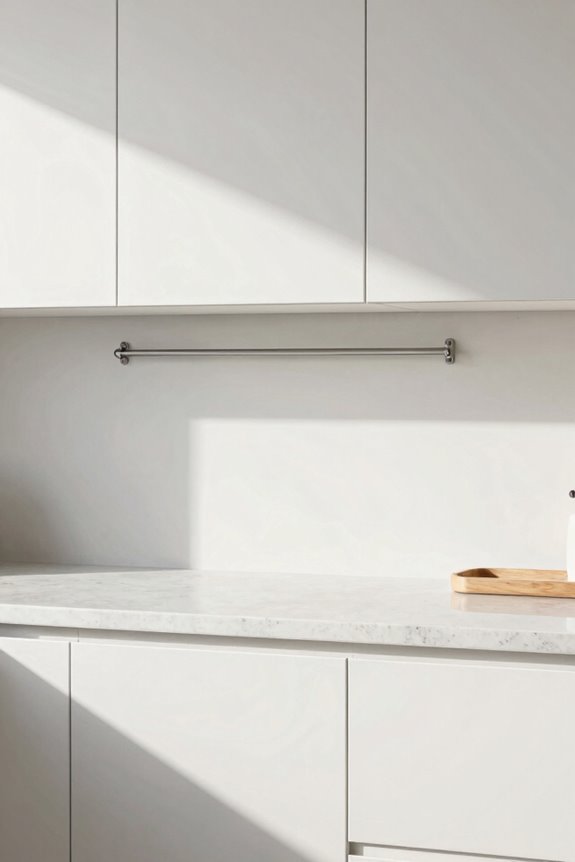
How often do you actually reach for that martini set gathering dust in your cabinet? I’m asking because storage optimization begins with honest assessment. Walk through your kitchen: cabinets, countertops, drawers, pantry. Evaluate what serves your daily use patterns. Create two boxes: one for items to donate, another for items to discard.
Identify tools you rarely touch: specialty bartender equipment, unused gadgets, rarely-used appliances. These occupy valuable real estate without purpose. Focus instead on what you genuinely cook with and how frequently you use it.
This decluttering process reveals your authentic cooking habits. Your findings guide reorganization decisions. Keep essential items visible and accessible. Remove everything else. This approach makes your kitchen a functional space where every item earns its place, reducing visual clutter while enhancing workflow efficiency.
Hide Everything But Essentials: The Closed Storage Strategy
Now that you’ve identified what actually belongs in your kitchen, it’s time to put those findings into practice through strategic storage. I recommend implementing these approaches:
Now that you’ve identified what belongs in your kitchen, strategic storage transforms those findings into a functional, clutter-free reality.
- Install built-in cabinetry that conceals small appliances like toasters and juicers, keeping only daily-use items visible
- Deploy hidden storage solutions such as wall-embedded drawers to replace open jar displays and utensil clutter
- Maintain open shelving exclusively for frequently accessed pieces, limiting decorative items to essential basics
By tucking away infrequently used gadgets and bartender tools, you eliminate countertop clutter immediately. Your kitchen becomes both cleaner and more functional, with the appliances you actually use daily remaining accessible while everything else disappears behind cabinetry.
This strategy aligns your storage directly with your cooking habits, creating a streamlined environment that supports your lifestyle rather than fighting against it.
Create Open Shelving That Breathes: Less Is More in Display
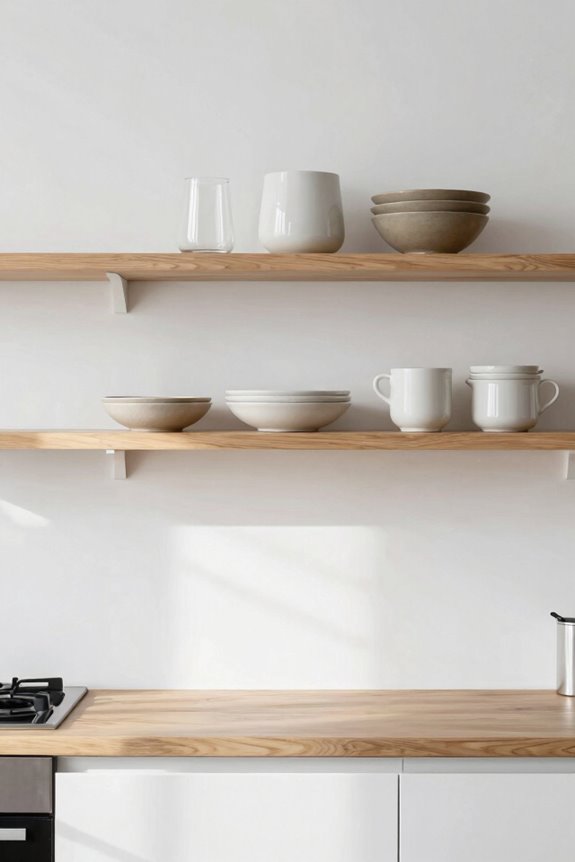
While the closed storage strategy eliminates visual noise, open shelving, when used strategically, can actually improve a minimal kitchen’s functionality and aesthetic appeal. I keep my open shelving with minimal display items: a few ceramic bowls, stacked linen tea towels, and fresh greenery create breathing room rather than clutter-free storage that feels sterile.
You’ll want to limit items to what you genuinely use daily, preventing dust accumulation and visual fatigue. I rotate pieces seasonally, swapping in fresh flowers or adjusting arrangements to maintain visual interest without overwhelming the space. Neutral tones—whites, grays, and natural wood—preserve the clean aesthetic.
This approach turns open shelving from a decorative liability into a functional asset, proving that restraint creates the most welcoming kitchens.
Build a Calm Aesthetic: Handleless Cabinets, Neutral Colors, Natural Light
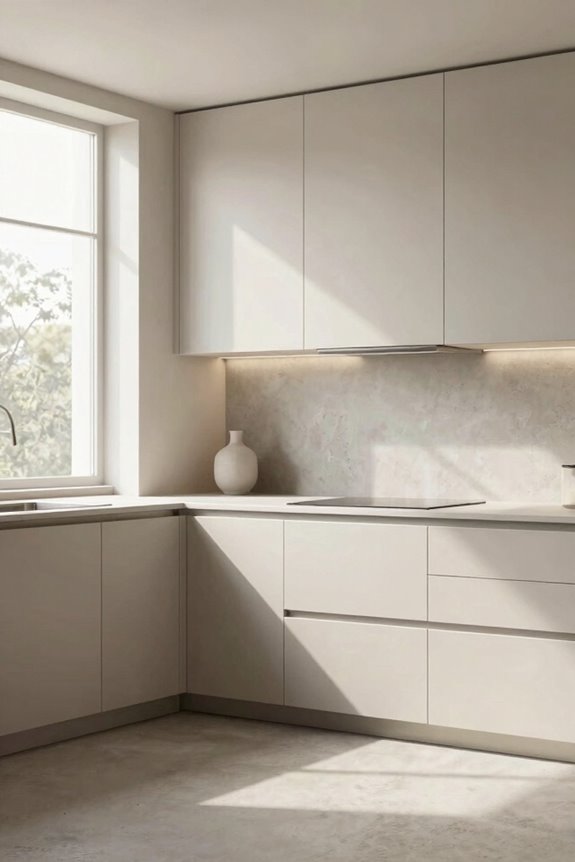
What creates a kitchen that feels genuinely serene? I’ve found that three elements work together to build calm:
- Handleless cabinets that establish continuous surfaces, eliminating visual interruptions and simplifying cleaning routines
- Neutral color palettes—whites, soft grays, beiges, and warm taupes—that expand perceived space and reduce visual noise
- Maximized natural light through minimal window coverings or light-filtering plissé blinds that maintain clean lines
When I pair handleless cabinetry with simple materials like marble or natural wood, depth emerges without clutter. These choices ground a kitchen in restraint rather than decoration.
The result feels carefully considered: a space where calm isn’t accidental but built into every surface and opening. Your kitchen becomes a retreat where functionality and serenity coexist naturally.
Assign Every Item Its Own Home: The Organization System That Sticks
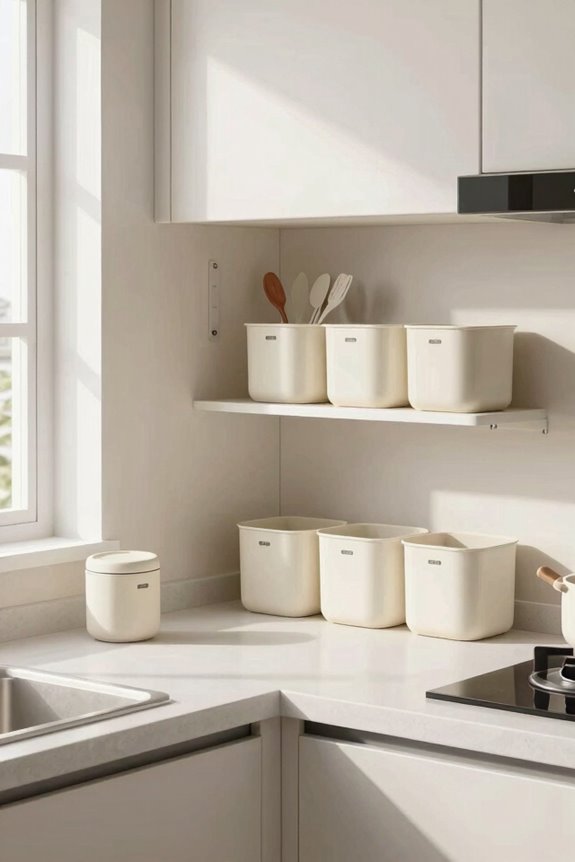
A kitchen stays minimal only when every object has a designated location. This principle makes organization from occasional tidying into a consistent habit. I’ve discovered that assigning home zones eliminates decision fatigue during cooking and cleanup.
| Zone | Items | Storage Method | Benefit |
|---|---|---|---|
| Prep Area | Knives, boards, bowls | Deep drawers | Quick access |
| Appliances | KitchenAid, toaster | Gadget garage | Hidden clutter |
| Spices | Seasonings, wraps | Larder system | Streamlined cooking |
| Waste | Trash, recycling | Near prep zone | Efficient cleanup |
When you relocate items based on your actual cooking habits, your storage system remains functional and clutter-free. This deliberate organization approach means countertops stay clear and cleaning accelerates.
Your kitchen supports your lifestyle rather than fighting against it.