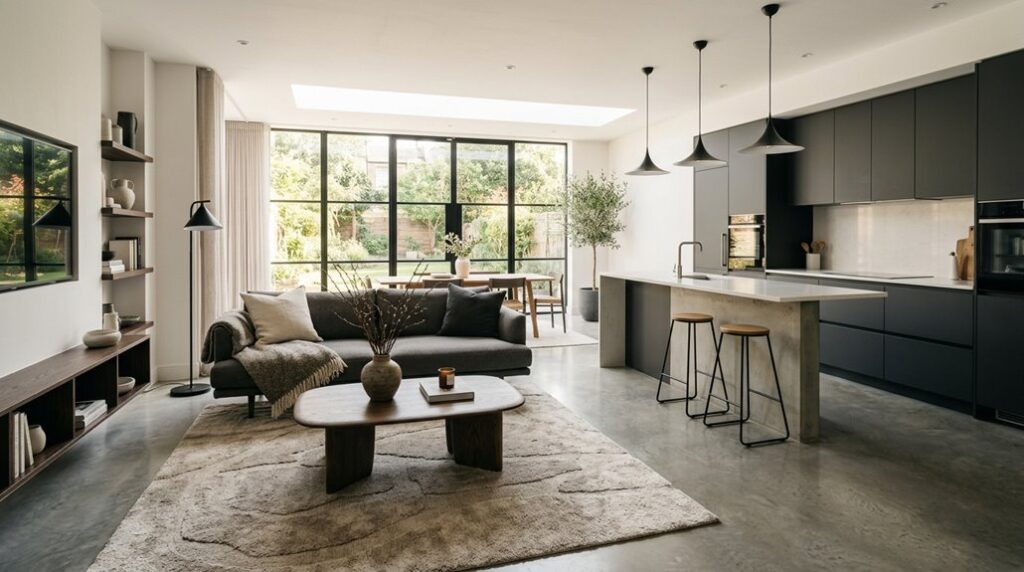
When Norm Architects designed the Copenhagen loft for a young family, they anchored the open kitchen around a central island that naturally guided movement and sparked conversation.
I’ve found that this single element, paired with intentional color blocking and strategic furniture placement, creates unified zones throughout scattered spaces.
However, here’s where most people stumble: they overlook how lighting, materials, and traffic flow work together to either unite or fragment the entire layout.
The Island: Kitchen’s Social Heart and Zone Divider
How do you create definition in an open-plan kitchen without sacrificing the visual flow that makes these spaces feel expansive? The island serves as your social heart and interior zone divider. It anchors the kitchen functionally while remaining visually connected to adjoining living areas.
Consider marble-effect porcelain stoneware cladding with a Calacatta-inspired finish: bright white background, gray veins, and golden reflections that match your flooring flawlessly. This consistent material choice spans the entire space visually.
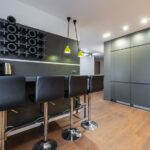
An island’s design directly influences foot traffic patterns and conversation flow. Positioning seating at one side creates casual dining without full separation from the lounge, supporting sociable layouts. The island guides movement intuitively, defining functional zones while maintaining the openness your space demands.
An island’s design guides movement and defines functional zones while maintaining the openness your modern space demands.
Strategic placement turns it from mere countertop into the gathering point that anchors your modern home.
Why Open-Plan Needs Color Definition
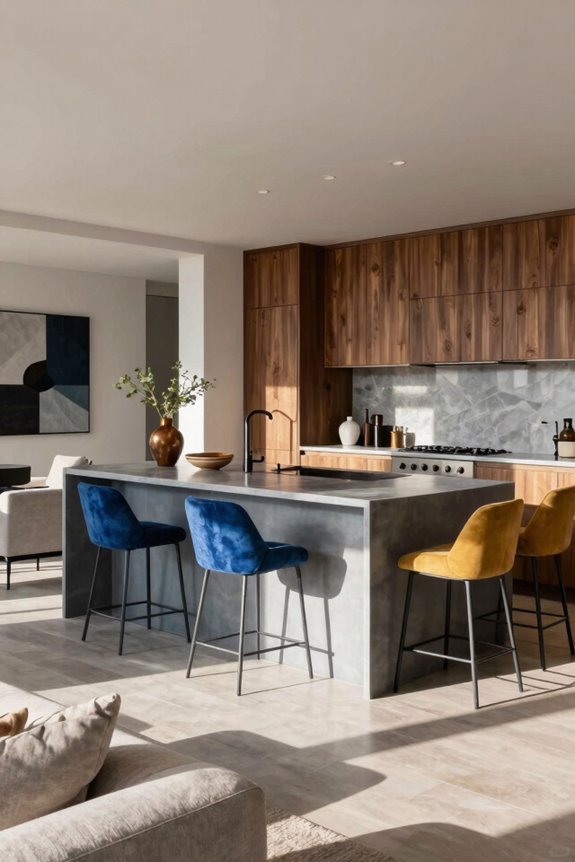
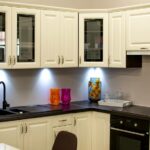
While your island anchors the kitchen functionally, color definition does the substantial work that keeps open-plan spaces from feeling visually chaotic. I’ve found that strategic color choices establish clear boundaries between zones without sacrificing the unity modern living demands. A two-tone approach, lighter cabinetry above with deeper tones below, creates depth while preserving sightlines across your lounge kitchen.
You might introduce a feature wall in muted blue or warm terracotta that signals the kitchen’s presence without fragmenting your layout. Consistent materials and hues throughout both areas enhance flow considerably. When your kitchen cabinets, countertops, and accent walls work together chromatically, they communicate function while maintaining visual unity.
Color becomes your architectural element, guiding the eye naturally from living space to culinary zone.
Positioning Furniture as Zone Dividers
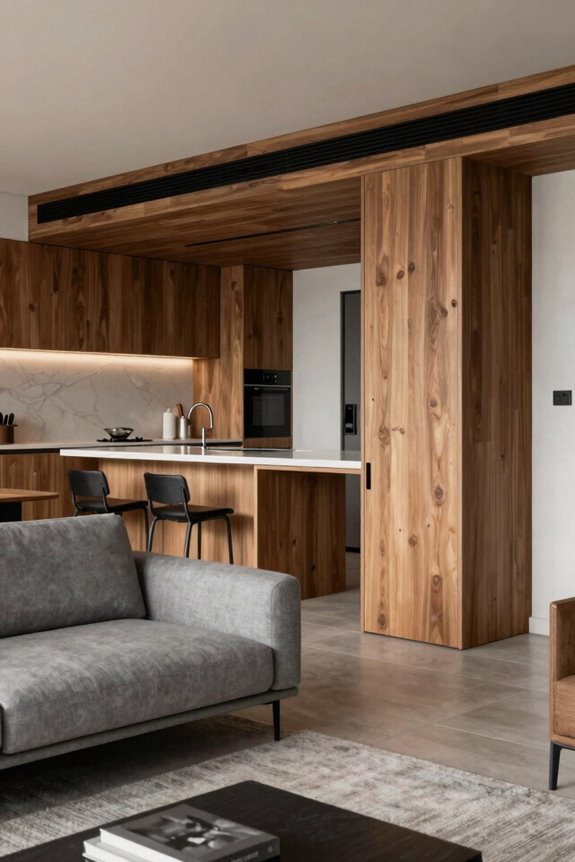
Beyond color and materials, your furniture placement does the physical work of carving distinct zones from an undivided footprint. I position my sofa with its back toward the kitchen, creating a soft visual stop that signals where the living area begins. This furniture placement strategy preserves sightlines while establishing clear boundaries in my open floor plan.
| Zone Divider | Primary Function |
|---|---|
| Sofa Back | Soft boundary marker |
| Area Rug | Visual zone containment |
| Island Counter | Kitchen-living delineation |
An area rug anchors my seating arrangement, defining the living zone through visual weight rather than walls. My kitchen island serves as another natural break, delineating spaces without obstruction.
Strategic furniture placement maintains easy movement between areas while preventing the open floor plan from feeling shapeless. These zone dividers work together, creating distinct territories that feel planned and unified.
Using Windows and Glass Doors to Enhance Flow
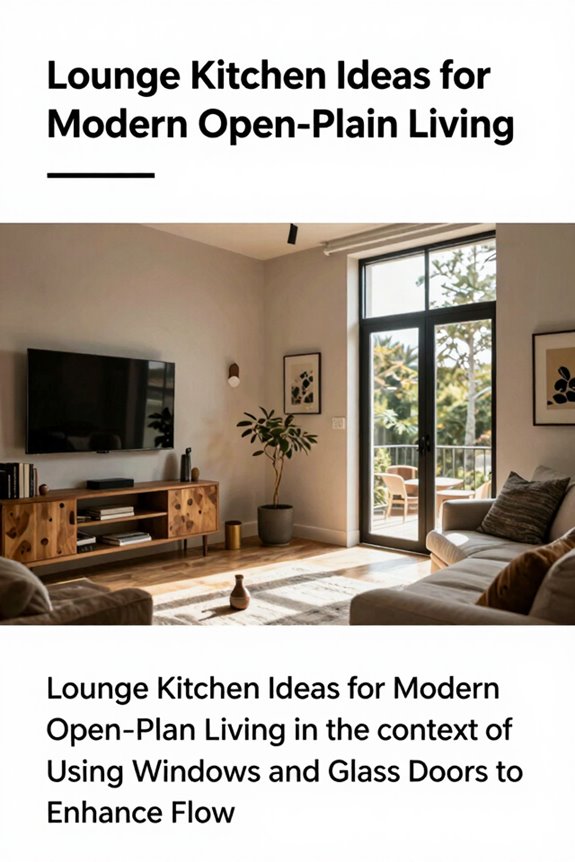
I’ve found that floor-to-ceiling Crittall doors and expansive window walls don’t just flood your space with daylight; they fundamentally reshape how you experience the kitchen-to-living transition by erasing visual barriers. When you position these glass elements along outer walls, light travels unobstructed across zones, and your sightlines naturally extend from the cooking area through seating clusters and toward garden views, which guides spatial flow without requiring walls or furniture blockades.
This strategy uses natural light as your primary zone divider, since the brightness gradient and framed outdoor views create psychological boundaries that keep the open plan feeling deliberate rather than undefined.
Natural Light Maximizes Space
How effectively does natural light work in an open-plan kitchen and lounge? It makes a significant difference. Full-width Crittall doors and exterior windows create unobstructed sightlines that enhance connection between zones. I’ve found that maximizing daylight penetration reduces reliance on artificial lighting while strengthening visual connection throughout the space.
Light-colored finishes and minimal upper cabinetry prevent obstruction, keeping interiors bright and airy. Low-profile sofas preserve these crucial sightlines, allowing illumination to travel freely across open-plan layouts. Glass surfaces act as visual connectors, guiding movement while maintaining spatial openness.
Strategic window placement, positioning large panes along exterior walls, enables daylight to spill into both kitchen and living areas simultaneously. This approach eliminates heavy dividers while establishing natural flow. The result: spaces feel simultaneously larger and more connected, creating environments where natural light fundamentally reorganizes how inhabitants experience and navigate their homes.
Floor-To-Ceiling Glass Transitions
While maximizing natural light establishes the foundation for open-plan unity, glass transitions amplify that effect by removing the physical barriers that typically fragment space. Floor-to-ceiling glass doors and expansive windows create seamless visual connections between kitchen and living areas, enabling you to perceive your entire layout as one unified zone.
- Wide glazing frames provide uninterrupted sight lines that enhance perceived square footage
- Glass transitions delineate functions: dining, cooking, lounging, without closing off areas
- Double- or triple-glazed units optimize thermal and acoustic performance in high-traffic spaces
- Regular maintenance preserves clarity, reinforcing brightness and spaciousness
Strategic glass placement allows furniture arrangement that defines distinct zones while maintaining the unified flow you’re seeking. This approach balances openness with subtle functional separation, creating an environment where you’ll naturally gather and move together as a community.
Sightlines Connect Interior Zones
Why do certain open-plan spaces feel fragmented while others flow smoothly? The answer lies in maintaining clear sightlines across your kitchen and living zones. I’ve found that positioning your seating to face the kitchen naturally extends visual connection throughout the space.
An island that bridges both areas works similarly, creating a visual anchor point that unifies the open-plan layout. Light colors on walls and minimal upper cabinetry preserve unobstructed sightlines, allowing your eye to travel seamlessly from one zone to another. Large archways or slim-framed openings delineate spaces without heavy barriers, maintaining that crucial visual continuity.
These strategic choices don’t require expensive renovations. They’re about intelligent placement and purposeful design that keeps your interior zones feeling unified rather than disjointed.
Archways and Framing for Subtle Separation
Because open-plan living demands visual continuity without sacrificing functional zones, archways emerge as one of the most effective architectural tools at your disposal. I’ve found that large archways delineate kitchen from living room while maintaining flow and openness.
Consider these approaches:
- Wood-clad archways add texture and warmth beyond standard plaster finishes
- Integrated shelving frames either side and overhead, subtly defining zones without full separation
- Warm off-white finishes in both spaces help archways serve as effective transitional features
- Strategic placement balances delineation with continuous sight lines, supporting spacious layouts
The key lies in understanding that archways work best when they respect the open-plan aesthetic. They’re not walls; they’re visual anchors that guide movement while preserving the expansive feeling you’re seeking.
The Dining Table as a Functional Boundary
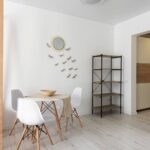
I’ve found that positioning a substantial dining table—say, a 36-by-72-inch walnut or oak piece—parallel to your kitchen run creates a physical threshold that naturally separates zones while preserving sightlines across the open floor plan.
This boundary strategy works because the table simultaneously serves as a social gathering point for meals and conversation while its scale and placement signal a distinct functional area without requiring walls or permanent structures. By layering in an 8-by-10-foot area rug beneath the table and adding pendant lighting above, you reinforce the table’s role as a deliberate design element that supports multi-functional living, workspace by morning and dining by evening, while maintaining the visual flow that defines modern open-plan homes.
Creating Natural Separation
How do you carve distinct zones from an undivided floor plan without surrendering the openness you’ve worked to achieve?
A dining table functions as your open-plan separation strategy, one that maintains flow while establishing clear boundaries. I’ve found that positioning a long, narrow table creates a natural divider that doesn’t require walls. This dining table boundary accomplishes what feels impossible: separation without isolation.
Consider these elements:
- Orientation: Face the table toward your living area to preserve sightlines
- Scale: Select dimensions that suit your space without overwhelming it
- Materials: Match wood tones or finishes with adjacent cabinetry for zone integration
- Placement: Position it perpendicular to your kitchen to maximize definition
The result is distinct social spaces that encourage conversation between kitchen and living areas while maintaining the visual continuity you value.
Social Gathering Anchor
While a strategically positioned dining table establishes visual separation between zones, its real power emerges when you recognize it as more than a boundary. It’s the social anchor that unifies your open-plan layout into a cohesive gathering space. A substantial rectangular table, positioned to face your living-area focal point, guides foot traffic naturally while maintaining clear sightlines across kitchen, dining, and lounge areas.
This placement fosters conversation that flows seamlessly between cooking and socializing. Thierry Lemaire’s Normandy farmhouse exemplifies how a chunky custom dining table grounds an open-plan interior, creating an intimate hub for both everyday meals and larger entertaining moments. Your dining table becomes the functional heart where the open-plan layout achieves its purpose: unifying dispersed zones into one intentional gathering space.
Multi-Functional Layout Strategy
Because open-plan living demands intentional spatial organization, a strategically positioned dining table accomplishes what walls cannot: it delineates zones without sacrificing sightlines or flow. I’ve found this approach reshapes how your space functions and feels.
Your dining-table boundary works hardest when it serves multiple purposes simultaneously:
- Acts as a physical divider between kitchen and living zones while maintaining visual connectivity
- Provides meal preparation, work surface, and casual seating around its perimeter
- Creates a social hub encouraging interaction across both areas
- Reinforces cohesive design through tonal finishes or integrated storage matching adjacent zones
A slim, extended dining table preserves sightlines across your open-plan layout without visual heaviness. Choose materials, walnut wood or matte-finished tops, that echo your kitchen cabinetry and living room furnishings. This multi-functional approach makes your dining table function as architecture itself, organizing space through purpose rather than permanent walls.
Smart Storage to Reduce Visual Clutter
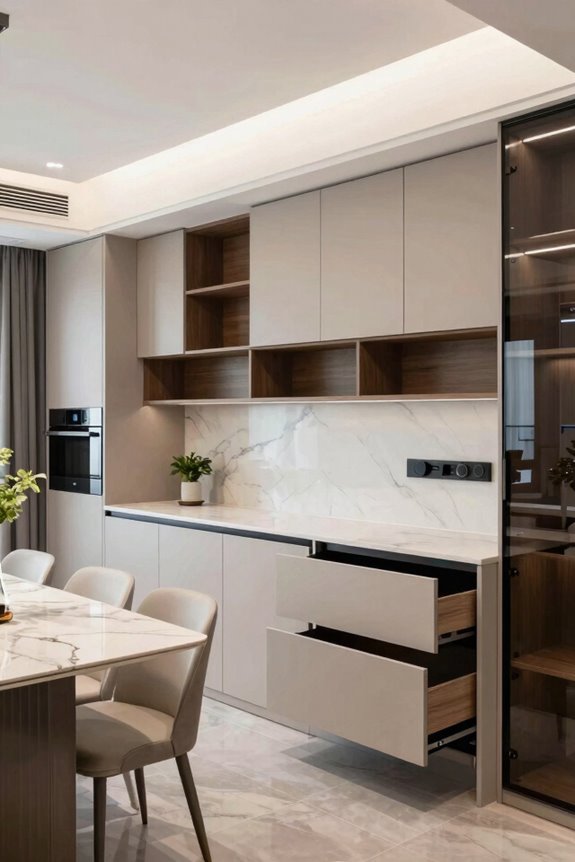
Strategic storage design helps open-plan kitchens by concealing everyday items while maintaining sight lines between cooking and living zones. I recommend tall pantry units that maximize vertical space without crowding floor areas. Integrated cabinetry aligned with your kitchen-to-living workflow keeps pathways clear and organized.
Rather than heavy upper cabinets, choose compact, efficient cabinetry that preserves openness while serving your daily routine. Smart, hidden storage, including pull-out organizers, deep drawers, and recessed shelving, consolidates clutter-prone items like small appliances and pantry goods. Position frequently accessed items within arm’s reach to minimize visual blocks.
This approach consolidates chaos behind closed doors, creating a unified aesthetic that defines modern open-plan living while supporting how you actually move through your space.
Pendant Lights to Mark Kitchen vs. Living Zones
Pendant lights serve as functional dividers in open-plan spaces, using illumination and positioning to distinguish the kitchen’s work zone from the living area’s relaxation space. Strategic placement and fixture selection create visual boundaries without walls, establishing clear zoning that supports how you actually live.
Pendant lights create visual zones in open-plan spaces, using illumination and placement to define work and relaxation areas without walls.
Here’s what works:
- Install brighter, task-focused pendants over islands or counters; warmer, ambient pendants above seating areas
- Vary heights and metal finishes, such as brushed brass over the kitchen and matte black in the living zone, to reinforce separation
- Scale fixtures proportionally: larger statement pendants for work zones, smaller intimate fixtures for relaxation areas
- Choose dimmable LED pendants in both zones to shift atmosphere as activities transition from cooking to unwinding
This approach creates open-plan layouts with clear purpose, where function guides form and each zone serves its specific needs.
Traffic Patterns That Keep Spaces Flowing
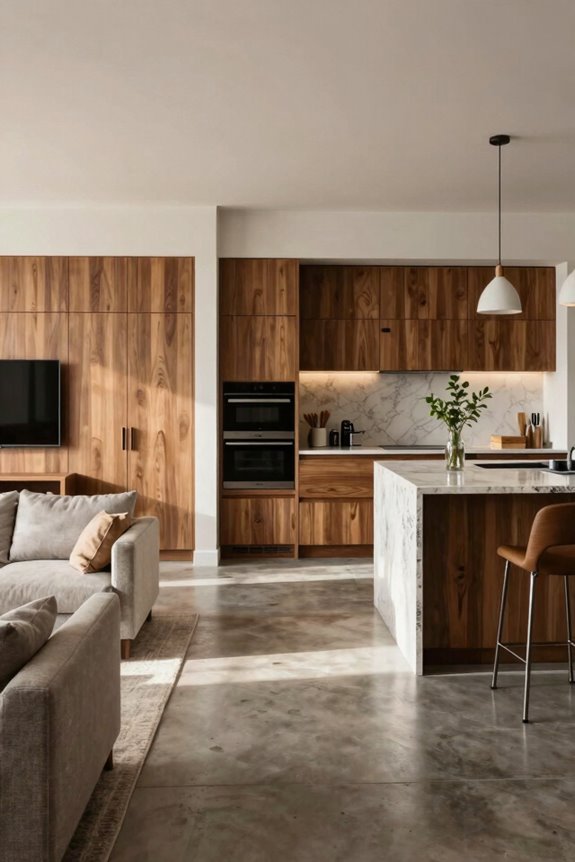
How do you keep an open-plan kitchen and living area from feeling cramped or chaotic? Strategic traffic patterns are essential. I recommend maintaining one-meter-wide walkways between prep zones, dining areas, and living spaces for smooth circulation. Position seating away from outer walls to create natural pathways rather than blocking movement.
Islands or peninsulas serve as visual boundaries that guide foot traffic without disrupting flow between zones. Ground your zoning with area rugs or low-profile furniture; these delineate spaces while preserving sight lines. Key furniture placement matters: keep pieces away from doors, counters, and primary sightlines to prevent bottlenecks. This thoughtful circulation planning prevents your open-plan layout from feeling crowded, allowing your space to breathe while maintaining distinct functional areas.
Sofa Placement for Conversation and Kitchen Views
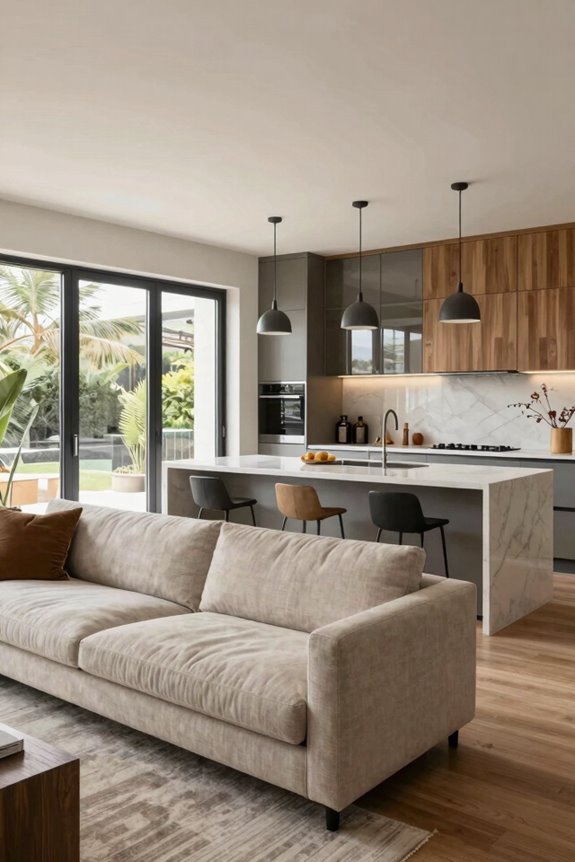
Once you’ve established clear traffic patterns, your sofa becomes the anchor that bridges kitchen and living zones while reinforcing spatial perimeters. Strategic sofa placement maximizes both conversation and kitchen views, which is the foundation of functional open-plan design.
Consider these positioning strategies:
- Back-facing placement: Orient the sofa with its back toward the kitchen, creating a visual boundary that signals distinct zones while maintaining sightlines to cooking areas
- Right-angle arrangement: Position seating perpendicular to your island, prioritizing interaction without obstructing movement or workflow
- Low-profile frames: Select sofas under 32 inches tall to preserve natural light and unobstructed views between spaces
- Offset positioning: Float furniture away from walls, keeping seating within conversational distance of the island while protecting clear walkways
Each approach reinforces your open-plan’s social function. The cook stays connected, guests remain engaged, and sightlines flow seamlessly between zones.