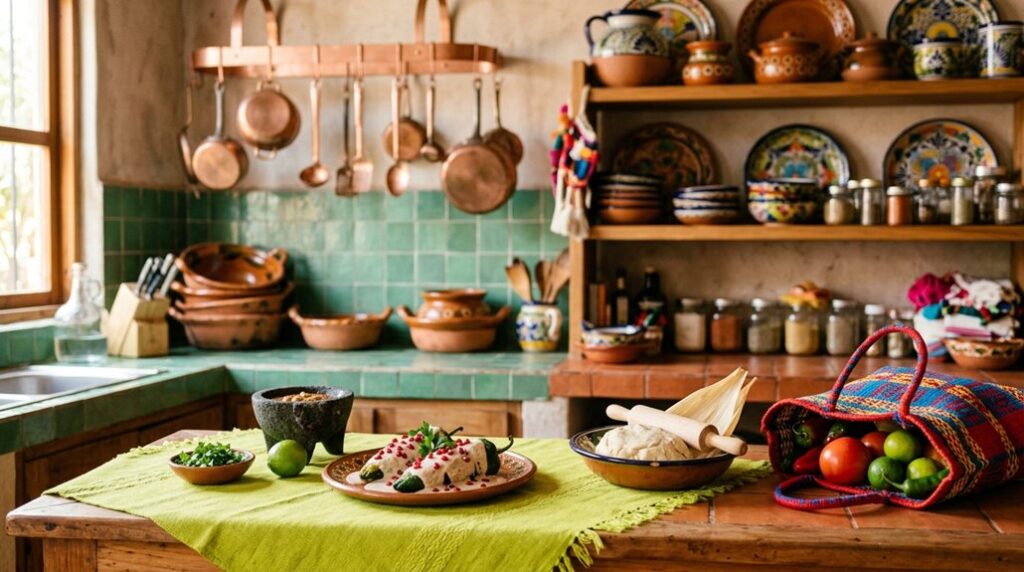
When a homeowner in Santa Fe replaced standard cabinetry with terracotta tile floors and clay plaster walls, they discovered how authenticity creates a compact kitchen that feels like an inviting gathering space.
You’ll notice that Mexican design relies on specific material choices: hand-painted Talavera pottery, natural stone counters, and woven baskets that combine functionality with cultural warmth.
What separates kitchens with decorative elements from those with real character comes down to intentional choices and authentic materials.
Terracotta Floor Tiles: Create Space and Warmth
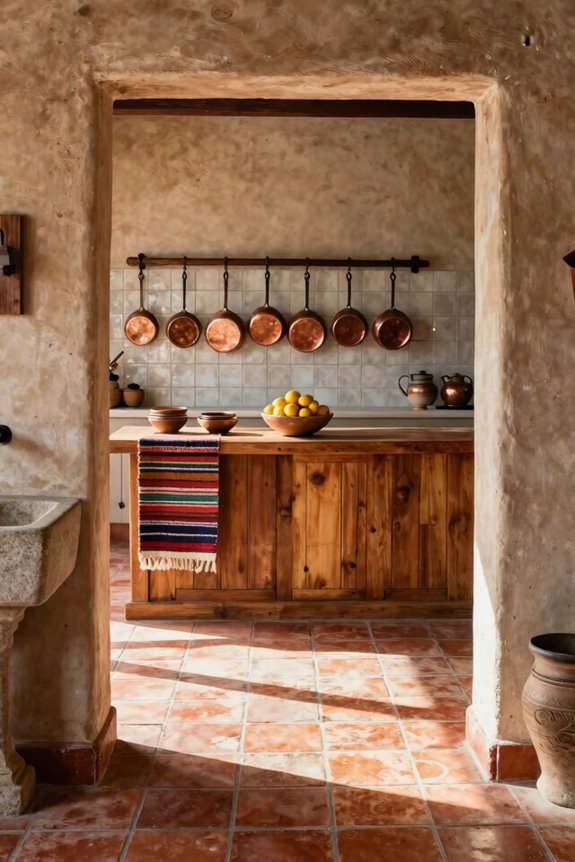
How do you make a compact kitchen feel expansive without renovating the walls? Terracotta tiles accomplish this through their earthy tones and natural warmth. These handcrafted accents reflect light, enhancing brightness in smaller spaces.
Large-format tiles minimize grout lines, amplifying the space illusion considerably. When you install them diagonally or in herringbone patterns, dynamic movement visually expands the area. The warm orange and rust hues draw attention outward, reinforcing perception of openness.
This approach works because terracotta’s earthy surface guides your eye horizontally, creating depth. The material’s inherent warmth complements Mexican design traditions while solving practical spatial challenges. Unlike cold finishes, these tiles establish an inviting atmosphere that makes compact kitchens feel generous and airy, turning limitations into design advantages.
Talavera Pottery: Gallery-Worthy Focal Points for Every Kitchen
While terracotta tiles establish the foundational warmth of your kitchen’s floor, Talavera pottery turns walls and open shelving into curated gallery spaces that command attention. I’ve found that handcrafted Talavera pieces, featuring bold cobalt blues, yellows, and earthy terracotta hues, create striking focal points when displayed strategically. Group these gallery-worthy ceramics in odd numbers with varying heights to establish visual depth.
Morning sunlight illuminates the glazed finishes beautifully, highlighting intricate patterns that showcase artisanal quality. Talavera tiles function exceptionally as dynamic backsplashes or accent centers, drawing the eye directly. Floating wooden shelves provide ideal platforms for this collectible art.
The handcrafted nature brings your kitchen beyond functional dishware, turning everyday spaces into personal museums that reflect your design sensibility and appreciation for Mexican craft heritage.
Open Wood Shelving With Walnut and Pine: Storage Meets Craftsmanship
Where upper cabinets typically conceal kitchenware, open wood shelving replaces them entirely, dissolving visual barriers that make compact spaces feel cramped. I find that walnut and pine, with their distinctive grain patterns, create striking contrast against white walls while anchoring terracotta walls through warm undertones. These natural materials establish visual continuity with your kitchen’s existing palette.
The shelving strategy balances function with design. I arrange handcrafted ceramics, woven baskets, and everyday essentials in grouped displays that encourage frequent use. This accessibility turns storage into active participation rather than hidden necessity. The lived-in aesthetic that emerges feels authentic, neither sterile nor chaotic.
Proper spacing between shelves accommodates varying item heights while maintaining clean sightlines. Open shelving demands careful selection and arrangement, but the payoff proves substantial: your kitchen becomes both efficient and inviting, reflecting genuine craftsmanship.
Clay Plaster Walls: Bring Organic Texture and Instant Calm
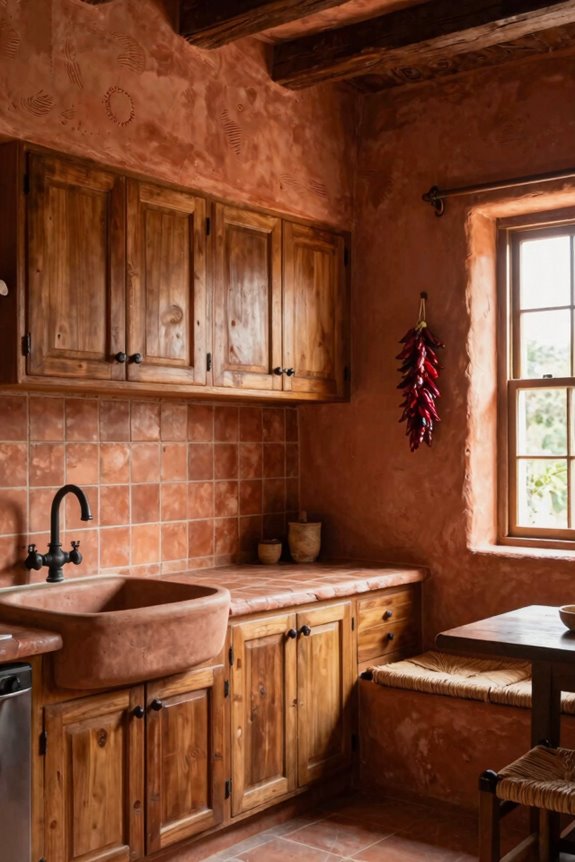
Why do kitchens painted with conventional latex feel fundamentally different from those finished in clay plaster? The answer lies in material authenticity. Clay plaster walls deliver organic texture and natural ambience that make your Mexican kitchen a welcoming sanctuary.
I’ve observed how these finishes enhance spaces:
- Warm terracotta and adobe tones create welcoming, rustic atmospheres that reflect light softly throughout the day
- Textured surfaces absorb sound, improving acoustics while adding depth and character to the cooking space
- Matte cabinetry paired with clay walls reduces glare and balances competing materials
Clay plaster’s earthy tones establish calming environments where families naturally gather. When applied over traditional walls, these finishes develop a subtle patina, aging gracefully. The tactile backdrop supports your Mexican kitchen’s narrative: grounded, authentic, and undeniably inviting.
Exposed Wooden Beams: Rustic Character That Anchors the Room
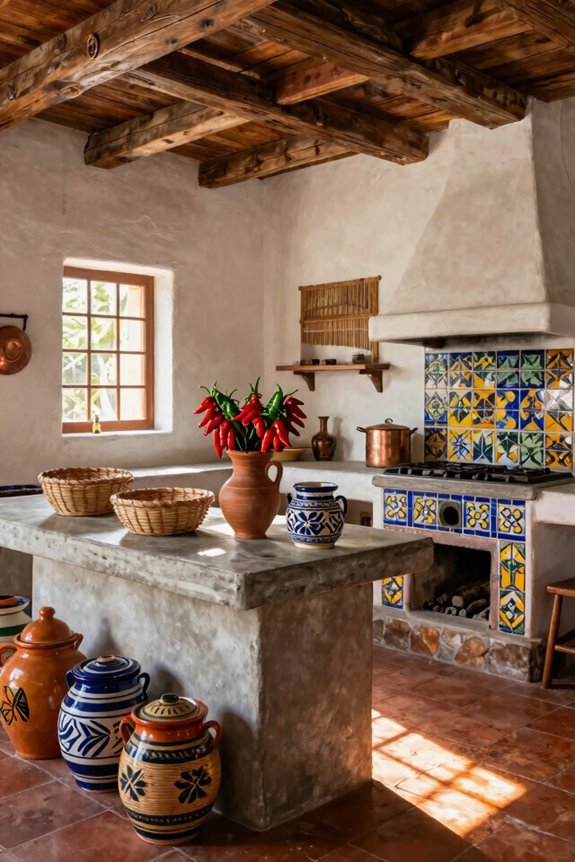
Reclaimed timber beams suspended across your kitchen ceiling establish the architectural foundation that clay plaster walls and terracotta accents depend upon; they’re not merely decorative elements but structural anchors that ground the entire space in authentic Mexican vernacular design. Exposed beams create visual drama while drawing the eye upward, enhancing perceived spaciousness.
Pairing reclaimed wood with warm pendant lighting, such as Edison bulbs or hammered copper fixtures, amplifies the cozy atmosphere and showcases the grain patterns that give your wooden ceiling character.
| Design Element | Visual Impact |
|---|---|
| Reclaimed beams | Authentic weathered patina |
| Warm pendant lights | Highlighted wood grain |
| Rustic character | Depth and focal points |
| Natural texture | Organic warmth |
| Architectural framing | Island definition |
The weathered surface of reclaimed timber tells a story, anchoring your space in genuine Mexican heritage while modern functionality remains seamless.
Copper Range Hoods: Why Do They Work as Dramatic Centerpieces?
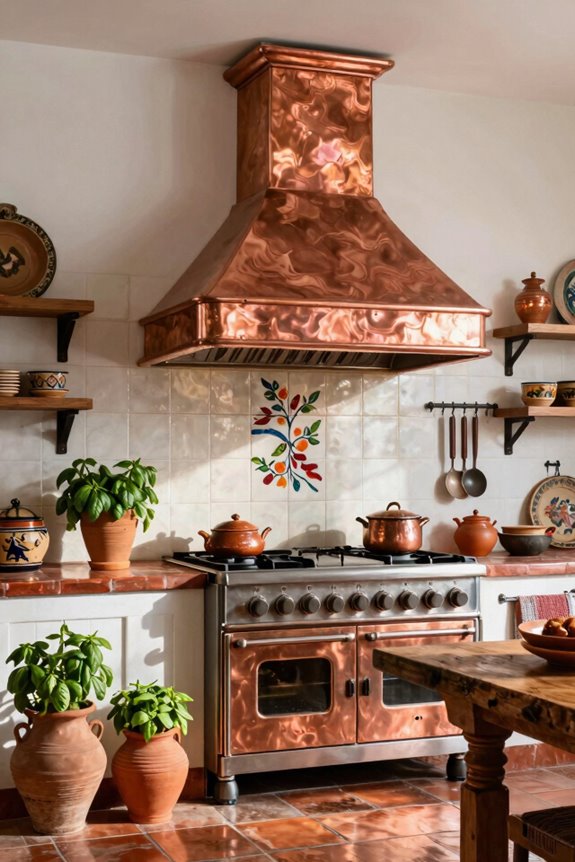
A copper range hood commands attention in your Mexican kitchen by serving as an arresting focal point that anchors the cooking zone with warmth and textural depth. This dramatic centerpiece works because it delivers multiple design functions simultaneously.
A copper range hood anchors your Mexican kitchen with warmth and textural depth, commanding attention as a dramatic focal point.
Consider these visual elements:
- Rich burnished metal contrasting sharply against dark cabinetry and terracotta accents
- Golden light reflection from surrounding fixtures enhancing ambient glow
- Hammered copper textures creating handcrafted, artisanal character
The hood’s patina develops over time with regular use, evolving its appearance and adding authentic character. When paired with natural stone countertops and warm woods, copper range hoods reinforce cohesive, traditional Mexican kitchen aesthetics.
This integration makes the cooking space a unified design statement rather than isolated appliance placement.
Built-In Banquettes: Comfort, Storage, and Seating in One
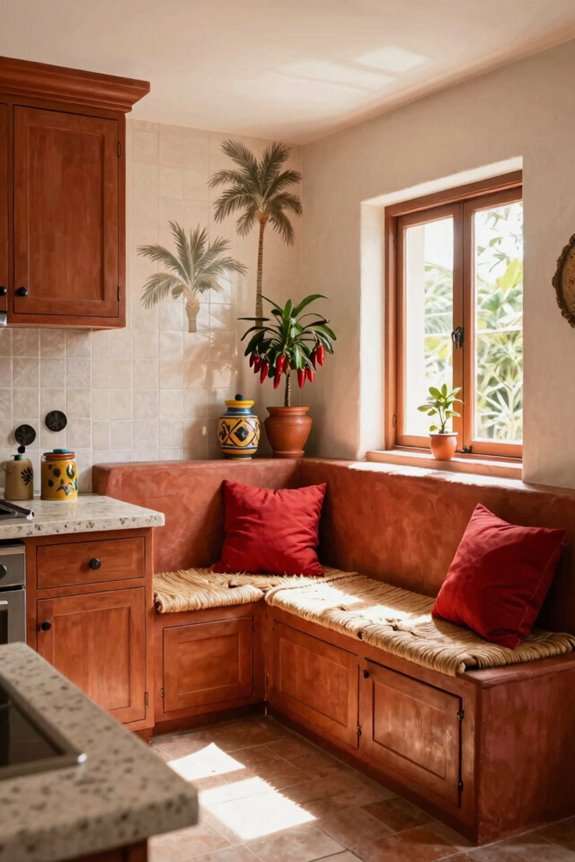
I’ve found that built-in banquettes work well in Mexican kitchens by anchoring dining areas within tight footprints, since custom benches fitted along walls or beneath windows eliminate the spatial demands of freestanding chairs. Beneath plush cushions in geometric Saltillo patterns, I’ve incorporated pull-out drawers and hinged storage compartments that hold serving vessels and textiles, reducing visual clutter while honoring the practical aesthetic of traditional Mexican design.
Paired with rustic pine or mesquite tables, these integrated seating solutions create purposeful nooks where vibrant upholstery becomes the room’s secondary focal point, following the copper hood’s visual dominance.
Maximizing Square Footage Efficiently
How do you triple a kitchen’s functional capacity without expanding its footprint? Built-in banquettes offer the answer. They’re architectural solutions that merge seating, dining, and storage into one integrated unit, perfect for tight kitchen–dining transitions.
I’ve found this approach particularly effective when paired with terracotta walls and natural wood elements that enhance warmth while preserving open floor space. Here’s what makes them work:
- Hidden compartments beneath cushioned seating store utensils, linens, and cookware with relative ease
- Plush geometric-patterned cushions provide comfort without protruding furniture bulk
- Rustic wooden tables anchored to banquettes create comfortable nooks while maintaining aisle width
Storage integration becomes invisible yet functional. Natural light reflects off terracotta surfaces, amplifying perceived spaciousness. The result is a space where you’re not sacrificing walkability or aesthetics; instead, you’re strategically optimizing every square inch through thoughtful design layering.
Hidden Storage Solutions Under Seating
Where does a Mexican kitchen store dining essentials without consuming precious wall real estate? Built-in banquettes offer the answer. These seating nooks integrate well with terracotta walls and warm wood cabinetry, creating storage compartments beneath cushioned benches. Hidden storage under the seating area accommodates table linens, serving dishes, and entertaining supplies, all within arm’s reach for convenient access.
The Mexican-inspired design works best when you pair plush cushions with geometric patterns that echo traditional textiles. Positioning frequently used items strategically means you won’t struggle during meal preparation. These banquettes maximize your kitchen’s functionality while maintaining visual consistency. By replacing upper cabinets with open shelving above, you’ll gain visual breathing room.
The result is a kitchen that balances practicality with authentic southwestern charm, where every square inch serves dual purposes.
Vibrant Cushions and Rustic Tables
The appeal of a Mexican kitchen banquette lies in layering comfort and visual interest through strategic cushion placement and table selection. I’ve found that grouping plush cushions in odd numbers at varying heights creates depth while maintaining visual balance. Pairing these banquettes with rustic wood tables anchors the space authentically.
Consider these elements for maximum impact:
- Vibrant cushions featuring geometric patterns in terracotta, navy, and cream tones that echo handmade tiles
- Solid wood tables with natural grain visible, measuring 36-42 inches wide for comfortable dining
- Layered seating with 2-3 cushions per section, alternating heights between 12-16 inches
This combination creates an inviting gathering space in your kitchen. The terracotta hues complement rustic wood naturally, while geometric patterns add personality without overwhelming the design.
Banquettes hug walls efficiently, maximizing your cooking and entertaining areas simultaneously.
Woven Baskets: Keep Counters Clean and Textured
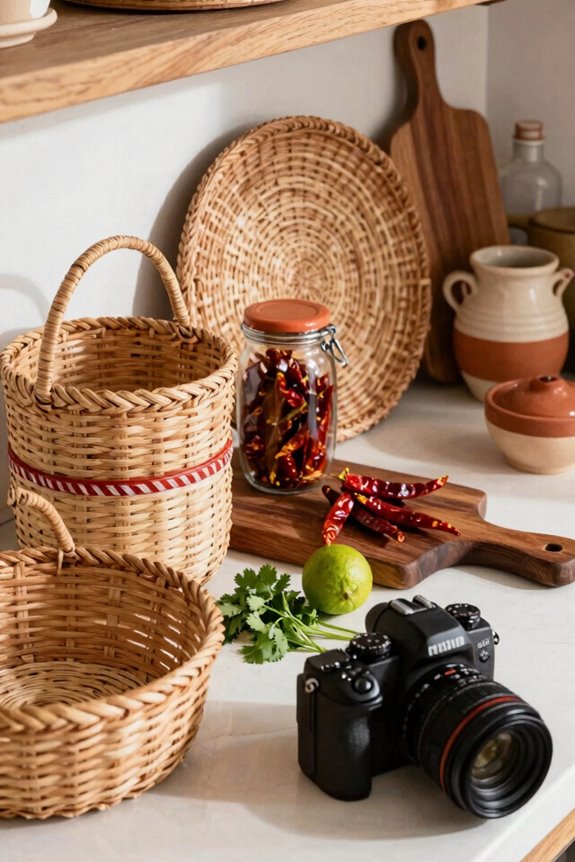
Oversized woven baskets crafted from natural fibers like palm or agave aren’t just storage solutions; they’re design anchors that create organized, textured displays on your countertops. I arrange them in odd numbers at varying heights, which creates visual rhythm while maintaining accessibility near frequently used cooking zones.
These rustic storage pieces add warmth and authenticity to Mexican kitchen aesthetics. I’ve found that grouping baskets strategically reduces visual chaos while showcasing natural textures that echo traditional design. Durable materials withstand daily wear, making them practical investments.
I use woven baskets to store produce, napkins, and kitchen essentials, keeping counters clean without sacrificing style. The organic look they provide, combined with their functionality, makes kitchen organization feel purposeful rather than utilitarian. This approach to natural textures establishes a cohesive, welcoming space.
Hand-Painted Ceramic Backsplashes: Add Vibrant, Custom Depth
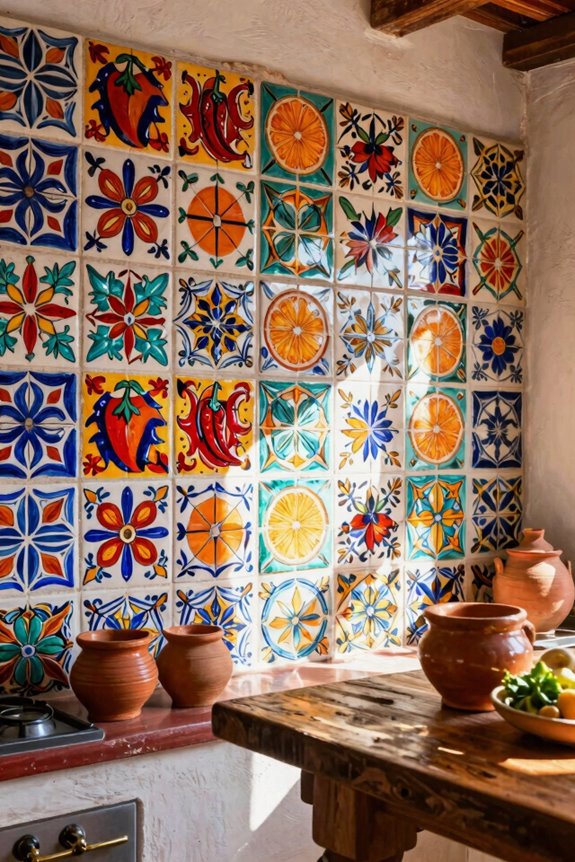
How do you create visual interest in a kitchen with a single design element? Hand-painted ceramic backsplashes accomplish exactly that. Each tile reflects authentic Mexican craftsmanship through individualized artisanal texture and depth. These vibrant color palettes, including cobalt blues, terracotta tones, and geometric motifs, establish visual anchors that shape your kitchen’s design narrative.
Consider these installation strategies:
- Subway layouts that elongate compact spaces visually
- Mosaic patterns combining multiple hand-painted tiles for dynamic movement
- Patterned arrangements featuring floral or geometric designs that catch natural light
The painted designs interact with morning and evening illumination, enriching color saturation throughout the day. Pairing ceramic backsplashes with terracotta accessories and wood cabinetry creates cohesive, hacienda-inspired atmospheres. This approach establishes belonging within a design community valuing traditional techniques and authentic material expression.
Natural Stone Countertops: Durability Meets Timeless Beauty
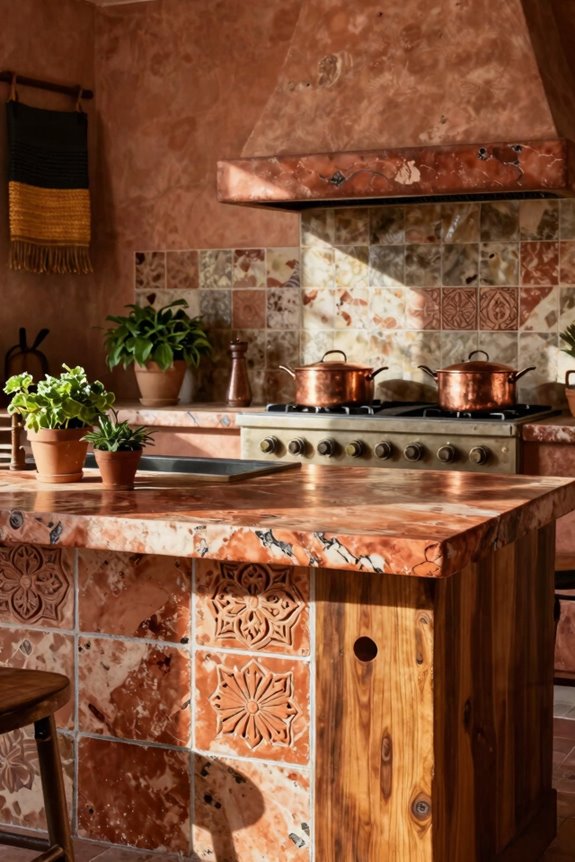
Where do you anchor a Mexican kitchen’s design when you’re seeking both lasting performance and visual authenticity? Natural stone countertops deliver on both fronts. Granite and marble provide exceptional durability while establishing the timeless beauty that defines Mexican kitchen design. These materials resist daily wear, though stone maintenance, including regular sealing and careful cleaning, preserves their surfaces from stains and etching.
I’d pair these countertops with earthy tones and warm woods to strengthen your kitchen’s authentic character. Copper and terracotta accents coordinate naturally with stone surfaces, creating visual harmony throughout the space. The refined aesthetic emerges from this intentional pairing rather than individual elements alone.
When you invest in quality natural stone countertops, you’re selecting a centerpiece that grounds your entire design while requiring reasonable upkeep to maintain its refined appearance over decades.