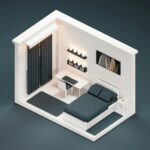
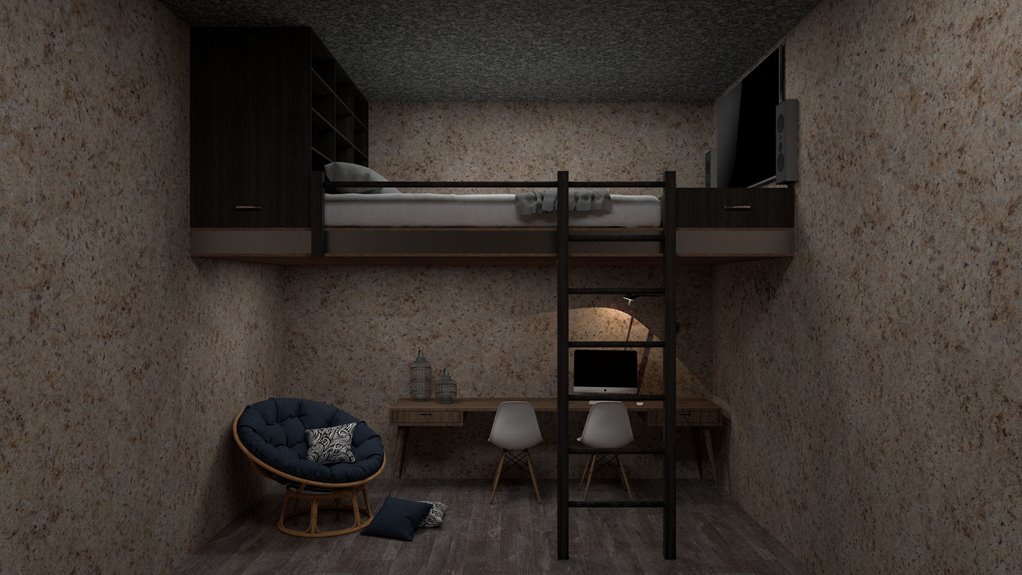
I’ve noticed that kids’ bedrooms often become chaotic catch-alls where clutter dominates and functionality disappears.
The challenge isn’t just fitting furniture into tight spaces; it’s creating zones that work for sleeping, studying, and playing without overwhelming the room visually.
Strategic design choices can make even the smallest bedroom more efficient and stylish.
But which approach actually works best for your situation?
That depends on understanding the core principles behind these seven proven solutions.
Why Small Bedrooms Need a Strategic Approach
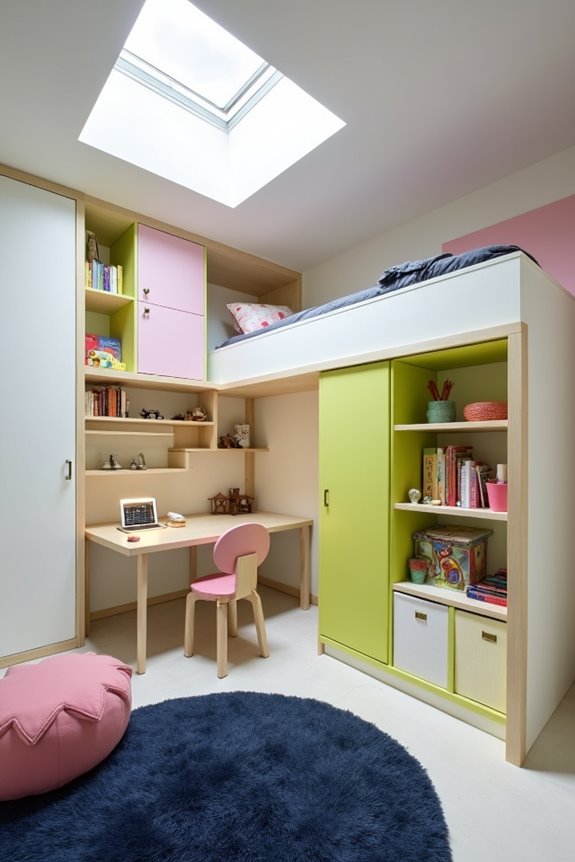
How do you fit a child’s sleeping, playing, and studying needs into 80 square feet? Strategic planning creates functional zones out of cramped quarters. Small bedrooms demand intentional layout decisions because clutter quickly overwhelms limited floor space, making rooms feel suffocating rather than restful.
The solution lies in multi-functional design. Combine sleeping, storage, and study areas within a single compact footprint, eliminating wasted zones. Built-in storage solutions—drawers beneath beds, wall-mounted cubbies, and integrated shelving—preserve precious floor space while keeping toys and books organized. Vertical storage becomes your ally when horizontal real estate vanishes.
Low-profile furniture and edge-stabilized designs maintain visual openness while supporting both rest and daytime activities. This approach turns constraints into opportunities, creating bedrooms where children genuinely thrive rather than merely fit.
Loft Beds: Free Up Floor Space Vertically
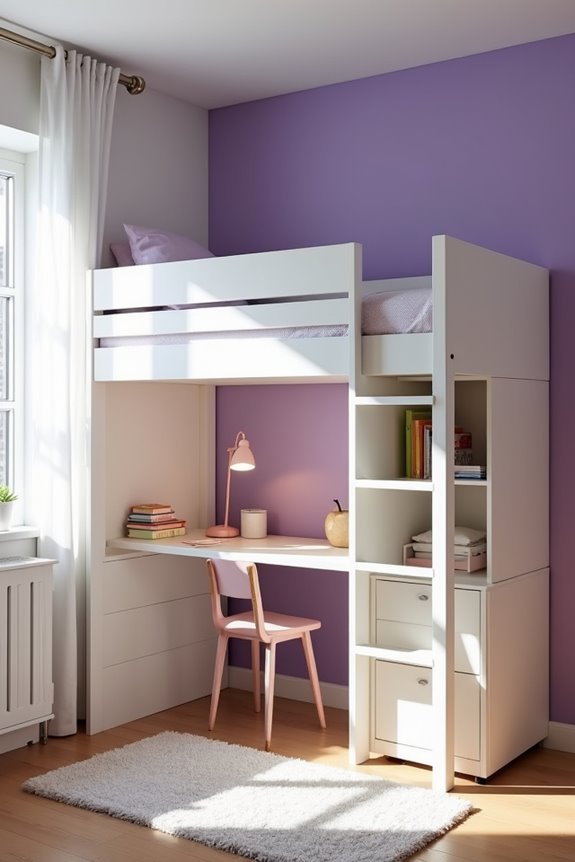
When you’re working with limited square footage, raising the bed becomes one of the most effective strategies for reclaiming usable floor space. Loft beds fundamentally change how we utilize compact rooms by creating distinct zones beneath the elevated sleeping area.
This space-saving approach works because it addresses the vertical dimension that often goes underutilized:
- Storage stairs with integrated drawers organize belongings while maintaining open floor areas
- Built-in desks slide out when needed, then tuck away to minimize clutter
- Dual dressers or bookcases fit snugly underneath without consuming additional footprint
- Adjustable heights accommodate different ceiling dimensions and your child’s developmental stage
- Maxtrix configurations offer modular combinations tailored to specific room layouts
The result is multifunctional sleeping quarters that accommodate studying, dressing, and storage without sacrificing the open play space children require for healthy development.
Built-In Storage That Maximizes Every Inch
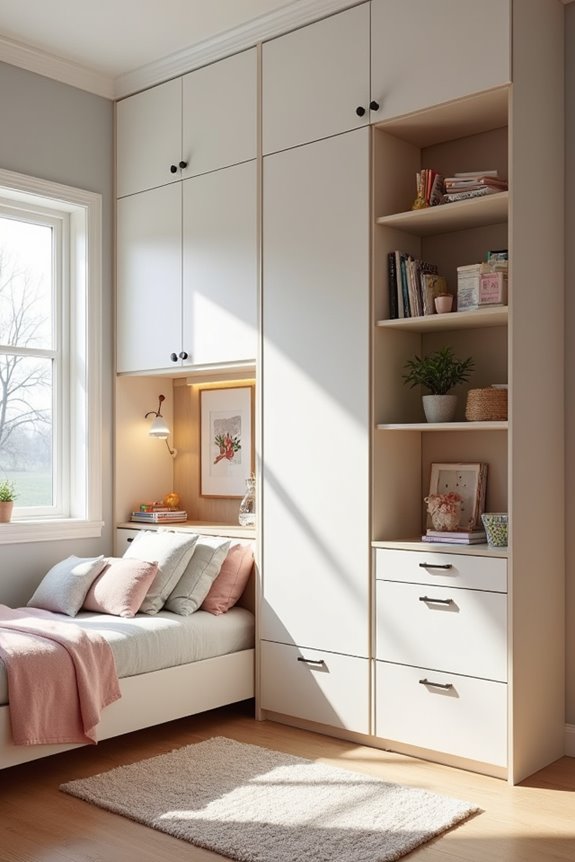
I’ve designed kids’ bedrooms where built-in storage turns tight quarters into organized spaces, and I find that vertical solutions work best. Shelving above doorways, wall-mounted cubbies, and integrated chests accomplish what freestanding furniture cannot. You’ll maximize usable inches by combining multi-functional pieces: window seats with hidden storage underneath, desks with pull-out bins, and other pieces that consolidate play zones, workspaces, and organization into single installations. When drawers, shelves, and compartments span edge-to-edge across walls in neutral tones or with personalized details like painted initials, you preserve sightlines while keeping toys, books, and clothing contained without sacrificing the room’s sense of openness.
Vertical Space Optimization
Because children’s bedrooms typically operate within modest square footage, built-in storage solutions that climb walls rather than sprawl across floors become essential design strategy. Elevating sleeping areas through lofted configurations, corner bunks, or platform beds instantly frees underneath zones for functional pieces like desks or bookcases.
Consider these vertical optimization approaches:
- Wall-to-wall shelving around beds maximizes capacity while maintaining sight lines
- Shelves positioned above doorways capture otherwise wasted overhead space
- Deep drawers integrated beneath stairs provide substantial concealed storage
- Tall, narrow units near windows preserve natural light and openness
- Box beds with built-in chests extend into wall cavities efficiently
This layered approach makes tight quarters organized and functional. Every surface serves dual purpose without crowding the floor plane.
Multi-Functional Storage Solutions
Since children’s bedrooms demand every cubic inch to work overtime, built-in storage that serves multiple purposes becomes the design backbone of functional, clutter-free spaces. Deep storage drawers beneath bunk beds convert otherwise wasted real estate into substantial organizational zones. Combining built-in shelving above doorways with free-standing vintage pieces creates layered storage without appearing overly designed. Cubby holes and toy baskets positioned at child height encourage independent tidying while maintaining accessibility. Painted cupboards featuring personalized details, such as a child’s initial, add function alongside visual interest. This approach acknowledges that storage solutions must work as hard as the children using them, preventing clutter accumulation while establishing design continuity throughout the room. Strategic placement maximizes every available surface while maintaining visual balance.
Multi-Purpose Furniture for Shared Sibling Spaces
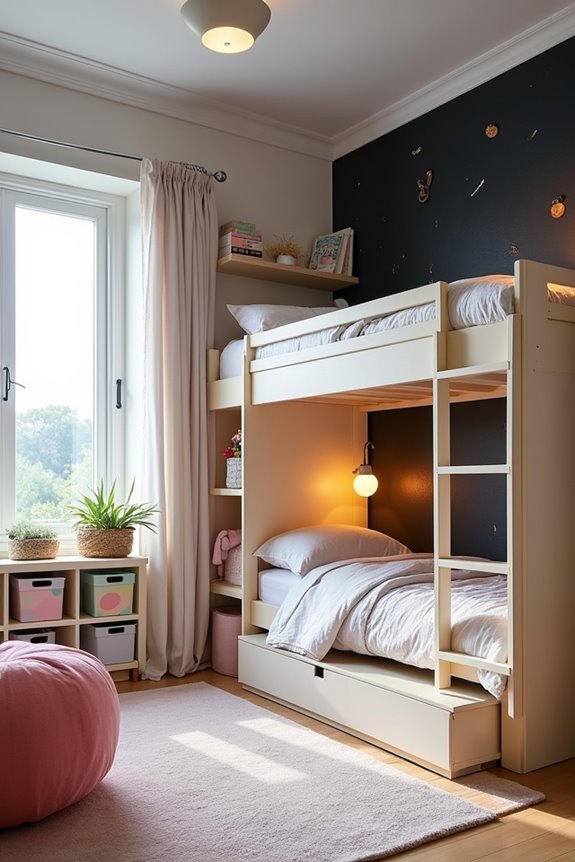
When furnishing a shared sibling bedroom, prioritize bunk beds or corner lofts; systems like Pottery Barn Kids’ Catalina collection or IKEA’s MYDAL frame anchor vertical space and preserve floor area for distinct activity zones. Select flexible furniture that adapts as your children’s needs shift: modular shelving units with adjustable shelves, rolling carts that migrate between study and play areas, and storage ottomans that function as seating, surfaces, or toy containment depending on the moment. This approach allows each child to claim a personalized nook (whether a desk tucked beneath a loft or a reading corner with individual task lighting) without sacrificing the cohesion that makes a shared room feel organized rather than cramped.
Bunk Beds and Vertical Storage
How can you transform a cramped shared bedroom into a functional retreat for two or three children? Bunk beds and vertical storage maximize limited square footage while maintaining style. Consider these solutions:
- Corner loft beds raise sleeping areas, freeing floor space for study nooks or desks beneath.
- Twin over full plus bottom bed configurations accommodate three sleepers efficiently.
- Storage stairs with integrated drawers turn each step into organizational units.
- Underbed pullout storage and built-in bookcases keep clutter out of sight.
- Multi-sleeper designs like Twin XL over Queen plus Twin XL corner triple loft bunks combine sleeping, studying, and storing within one piece.
These configurations create designated zones for sleeping, homework, and personal belongings. The vertical approach prevents the room from feeling cramped while establishing individual territories that siblings appreciate. Strategic furniture selection turns shared bedrooms into organized, purposeful spaces.
Flexible Zones for Individual Needs
While bunk beds and vertical storage solve the sleeping puzzle, they’re only half the equation; the remaining floor space demands equally strategic planning to serve multiple children’s distinct activities simultaneously. I recommend creating flexible zones that balance privacy with togetherness. Establish individual study nooks using modular desks positioned along opposite walls, allowing each child concentrated workspace. Position a shared reading or play area centrally, fostering connection without sacrificing independence. Benches with under-seat storage serve triple duty: seating, play surface, and organized toy containment. Layer in coordinated yet versatile design elements (matching paint or curtain fabrics) that unify the room while permitting future personalization. Modular storage configurations adapt as interests evolve, enabling easy reconfiguration of book, toy, and clothing zones. This approach creates shared spaces where siblings thrive individually and collectively.
Use Color & Pattern to Expand Space Visually
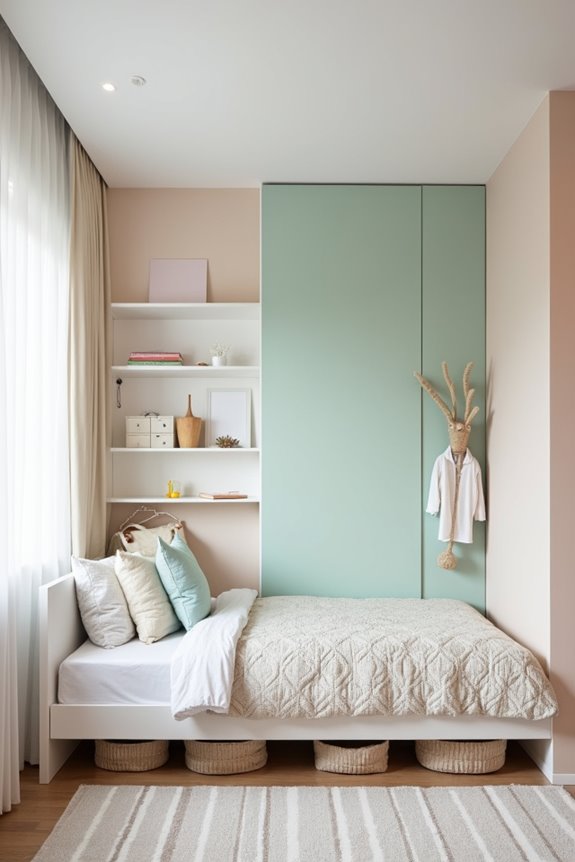
Why do some small bedrooms feel surprisingly spacious while others feel cramped? Strategic color and pattern choices create visual expansion that affects perceived dimensions.
Designers leverage specific techniques to achieve this effect:
Designers leverage specific techniques to achieve this effect: strategic color matching, bold accents, vertical patterns, and built-in storage solutions.
- Paint walls, ceilings, skirting, doors, and architraves in matching tones to establish continuous planes that artificially increase height
- Pair pale, mellow wall tones with bolder accents for playfulness while visually enlarging compact spaces
- Layer rich color palettes like Farrow & Ball’s Skylight paired with Oval Room Blue woodwork to draw eyes upward
- Incorporate patterned wallpapers and textiles that add vertical interest without sacrificing coziness
- Combine color strategies with built-in storage solutions to reduce floor clutter and maximize perceived space
These approaches work because they guide visual movement upward, away from cramped dimensions. When you match paint across architectural elements, you create uninterrupted sightlines that read as taller. Layering colors with intentional contrast pulls the eye to upper walls and ceilings. Vertical patterns in wallpaper and textiles reinforce height without adding bulk.
The key lies in coordinating color choices with practical storage. Reducing visible clutter on the floor eliminates visual noise that makes rooms feel smaller. Built-in solutions keep belongings hidden while maintaining the spacious quality that thoughtful color selection creates. These combined strategies result in rooms that feel both larger and deliberately designed.
Maximize Space With Distinct Zones: No Walls Needed
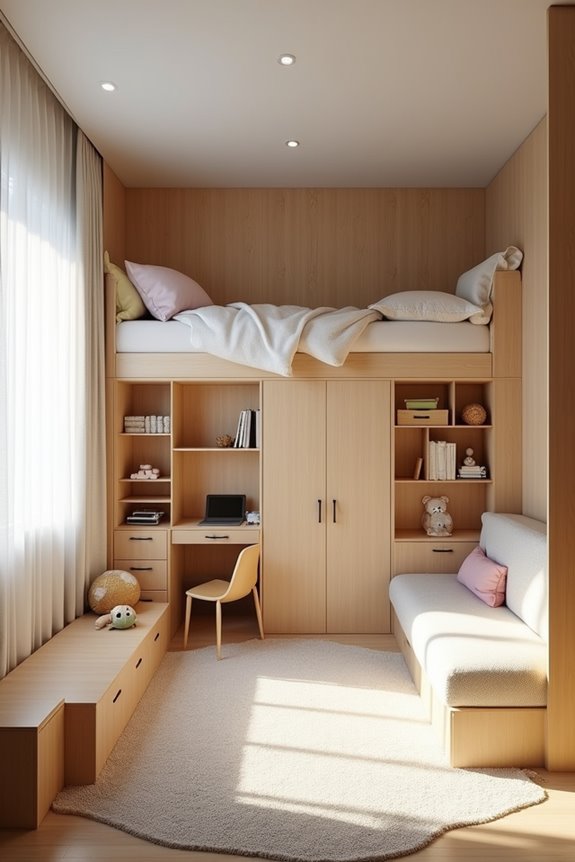
When furnishing a shared or single child’s bedroom, creating distinct functional zones without permanent walls keeps the floor open while establishing purpose-driven spaces. Loft beds naturally divide rooms into sleeping and activity areas, while storage stairs beneath them add drawer functionality that eliminates clutter from sight. Positioning a desk under the loft creates a dedicated homework zone, separating work from rest without consuming additional floor space. Corner configurations further compartmentalize the room, allowing each child their own territory. These layered zones (sleeping, studying, and storage) develop organizational habits early. By anchoring furniture strategically rather than installing walls, you preserve sightlines and maintain an airy feel. This approach accommodates growth, as modular pieces shift when needs change, making your investment adaptable through multiple developmental stages.
Choose Adaptable Bedroom Furniture That Grows With Them
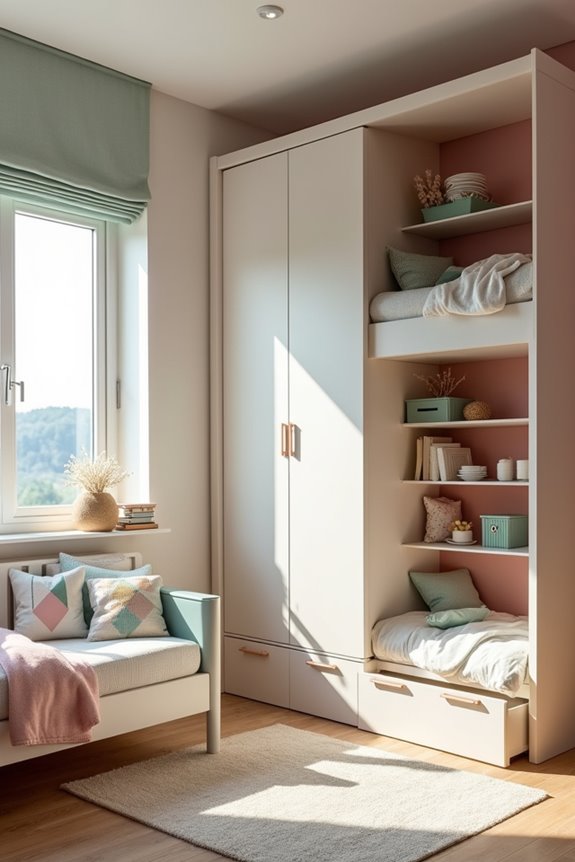
How do you furnish a child’s bedroom so it doesn’t become obsolete in three years? Multifunctional furniture and adaptable design allow your investment to grow alongside your child. Strategic pieces shift as needs evolve, eliminating costly replacements.
Consider these foundational pieces:
- Convertible benches that transition from toy storage to desks
- Loft beds with adjustable height configurations for changing room layouts
- Modular shelving systems that accommodate shifting interests and storage demands
- Expandable desks with adjustable surfaces for varying heights and functions
- Bunk bed frames designed for reconfiguration as occupancy changes
Selecting pieces with clean lines and neutral finishes (natural wood or soft grays) allows accent updates through bedding and accessories. This approach maximizes longevity while maintaining visual coherence throughout developmental stages, ultimately delivering better value and reduced environmental impact.