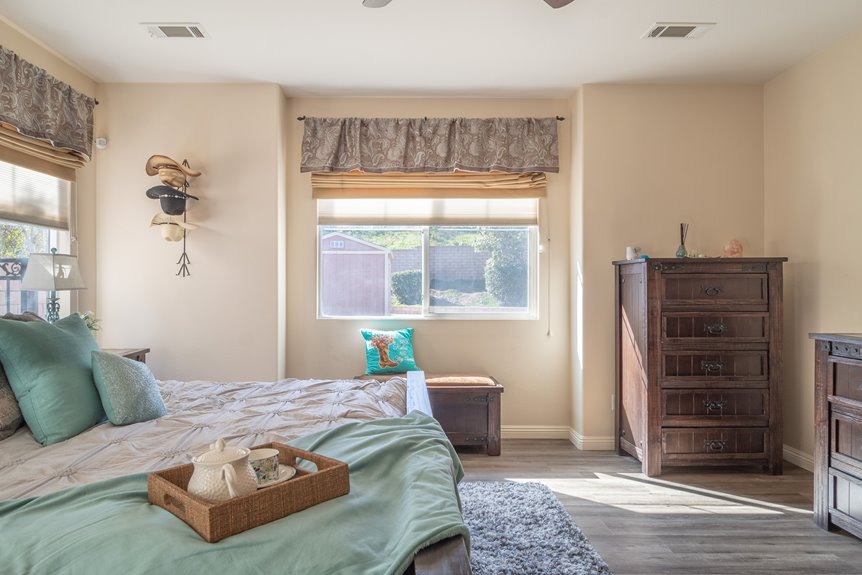
I’m going to show you how to create a genuinely restful bedroom through intentional choices, not deprivation. You’ve likely noticed that clutter doesn’t just occupy physical space; it occupies mental real estate too. The minimalist bedroom isn’t about emptiness. It’s about eliminating everything that doesn’t serve your sleep, comfort, or daily function. But here’s where most people stumble: they don’t know where to start.
Start Decluttering: The Foundation of Your Minimalist Bedroom
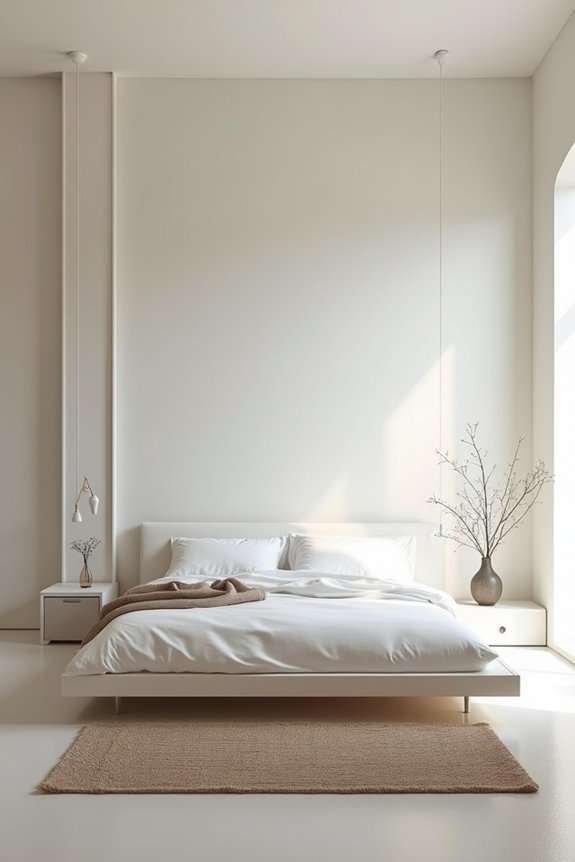
Is your bedroom functioning as a storage unit rather than a sanctuary? Begin by clearing out your wardrobe, drawers, and shelves. This establishes the base for any clutter-free space. Remove items you don’t wear, donate duplicates, and assess what remains. This process reveals what you actually need.
Next, select multi-purpose furniture that reduces surface clutter. A bed with built-in drawers or a dresser with integrated shelving maximizes functionality without consuming additional floor space. Implement under-bed storage for seasonal clothing and extra bedding to keep visible surfaces clear.
Finally, commit to a neutral color palette: soft grays, warm whites, and muted beiges. These colors preserve visual serenity. These foundational storage solutions create a genuinely restful environment where you can actually relax.
Pick Multipurpose Furniture Pieces
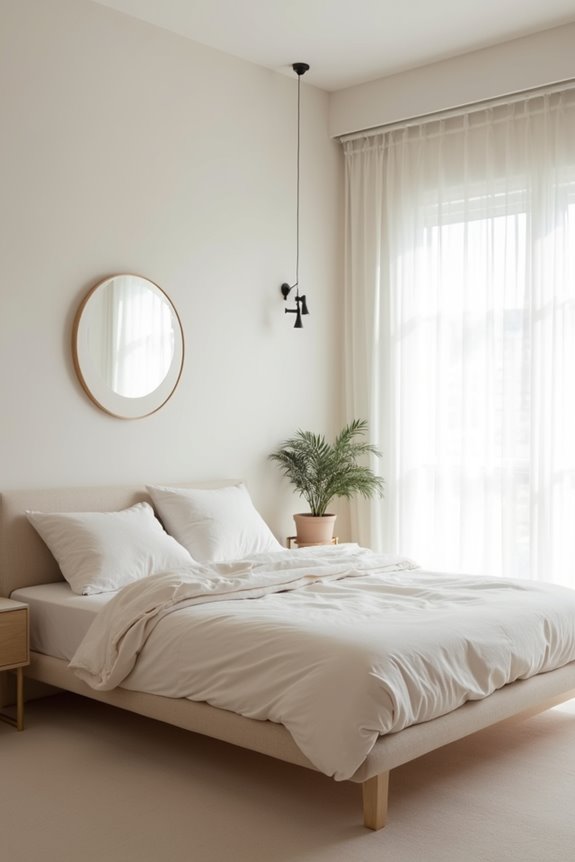
The key to maintaining a minimalist bedroom lies in selecting furniture that serves multiple functions, eliminating the need for redundant pieces that consume valuable floor space. I recommend investing in beds with built-in drawers or storage benches that anchor your room while providing hidden storage for seasonal items. Nightstands featuring concealed compartments and dressers doubling as TV stands consolidate your essentials without visual clutter.
Modular bookcase units with integrated drawers create flexible display and storage solutions. These multipurpose furniture pieces align with minimalist design principles through clean lines, neutral palettes of whites and warm grays, and natural textures such as wood or linen.
Choose the Right Color Palette for Minimalist Bedrooms
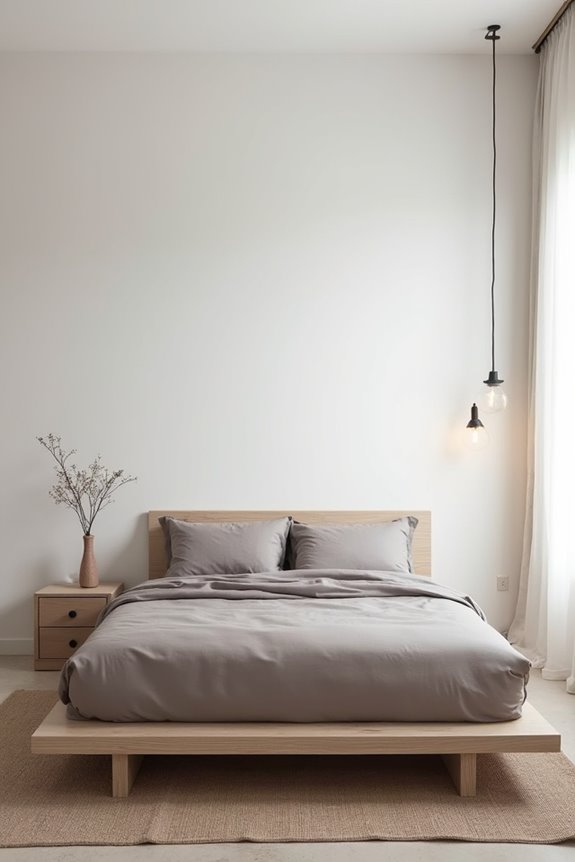
Soft neutrals—chalky whites, gentle greys, warm taupe, and muted stone—form the foundation of a minimalist bedroom by establishing visual calm without competing for attention. Strategic color restraint means you limit bold hues to deliberate focal points like a rust-colored duvet or framed Japanese prints, preventing visual noise while layering textures (linen, wool, raw wood) that add depth without chromatic complexity. This approach lets your existing art or design inspiration guide your palette, creating cohesion between furniture, accessories, and wall finishes while maintaining the uncluttered aesthetic that defines minimalist design.
Soft Neutrals Create Calm
Why do minimalist bedrooms feel so restful compared to their colorful counterparts? Soft neutrals create calm by reducing visual stimulation, allowing your mind to decompress. Chalky whites, gentle grays, warm taupe, and muted stone establish a serene foundation that makes clutter-free spaces truly restful.
To build your soft neutral palette:
- Start walls with chalky whites or gentle grays for visual quietness
- Layer bed linens in warm taupe or stone tones for cohesion
- Introduce natural textures: oak, linen, boucle. These add warmth without visual noise
- Keep accents minimal, using brushed metal or natural materials sparingly
These soft neutrals work together, not against each other. By maintaining this restrained color strategy, you’re not just decorating; you’re designing a space where your nervous system can settle.
Strategic Color Restraint Matters
How do you introduce personality into a minimalist bedroom without disrupting the calm you’ve worked to establish? Strategic color restraint. Bold hues work best as accents; think jewel-toned pillows or a single artwork against your neutral palette. This approach prevents visual noise while maintaining your clutter-free environment.
A cohesive palette comes from existing pieces. If your art features deep indigo and warm terracotta, echo those tones sparingly through accessories rather than painting walls. Balance emerges through symmetry and restrained design elements.
Layering natural textures (oak nightstands, linen bedding, brushed metal fixtures) adds depth within your minimalist décor without introducing competing colors. This method keeps your bedroom serene while reflecting your aesthetic preferences, creating a space where you belong.
Layering Textures Over Hues
While bold colors demand attention, textures whisper sophistication without disrupting your serene environment. I recommend building your minimal bedroom around a neutral palette: chalky whites, soft greys, and warm taupe. This foundation anchors the space visually.
Layered textures build on this restrained foundation and create something compelling:
- Boucle and linen for upholstered pieces
- Wool throws draped across minimal furniture
- Textured wallpaper or limewash on accent walls
- Natural stone or oak surfaces
These textured textiles create depth where bold hues cannot. Pair these materials with clean-lined, minimal furniture featuring integrated storage to maintain your clutter-free aesthetic. The result is a neutral palette enriched by tactile variety that feels deliberate rather than sparse, allowing your bedroom to support genuine rest without visual noise.
Make Your Bed the Room’s Focal Point
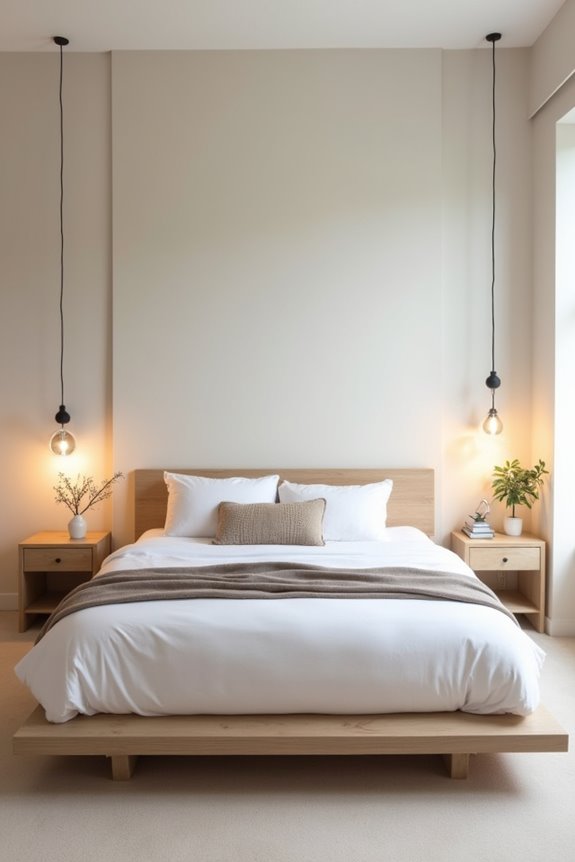
An upholstered statement headboard serves as an architectural anchor for your bed. When you select neutral grey tones or natural linen, you create visual interest through texture rather than pattern. A boxy frame with tall rectangular proportions, such as the Jacob Bed, emphasizes vertical lines that make your space feel calm and uncluttered. Pair your bed with coordinating natural materials like blonde wood nightstands or a boucle bench to maintain warmth while keeping every design choice purposeful and focused on the bed itself.
Upholstered Statement Headboards
Because your bed naturally occupies the most visual real estate in any bedroom, an upholstered headboard can anchor the entire space without introducing clutter. It’s a design choice that consolidates visual interest into a single, intentional element. Consider these strategic options:
- Select neutral grey or charcoal upholstery with clean lines for a calm, cool-toned aesthetic
- Pair soft textures like boucle or linen with white or light-cream bed frames for warmth
- Choose wingback or boxy silhouettes that add subtle vertical emphasis while maintaining geometric simplicity
- Integrate built-in nightstands to preserve your clutter-free minimalist bedroom layout
An upholstered headboard delivers texture and depth without visual overwhelm. This approach makes your bed a deliberate design choice rather than a purely decorative element, establishing the neutral palette your entire room requires.
Architectural Bed Frame Design
How can a single furniture piece anchor your entire minimalist bedroom? An architectural bed frame becomes your room’s focal point through bold, boxy silhouettes and substantial headboards that create vertical emphasis. The Jacob Bed exemplifies this approach, combining statement design with functional elegance.
Integrated nightstands built directly into the headboard eliminate visual clutter while maintaining cohesion. This streamlined integration supports the minimalist aesthetic you’re seeking.
Material selections matter considerably. Warm wood finishes like oak or stained options provide texture and warmth without compromising clean lines. Wingback or four-poster configurations add subtle drama and depth, grounding your space meaningfully.
These architectural choices turn your bed from mere furniture into a design anchor that unifies your entire bedroom environment, creating the clutter-free space you want.
Hide Storage in Your Minimalist Bedroom
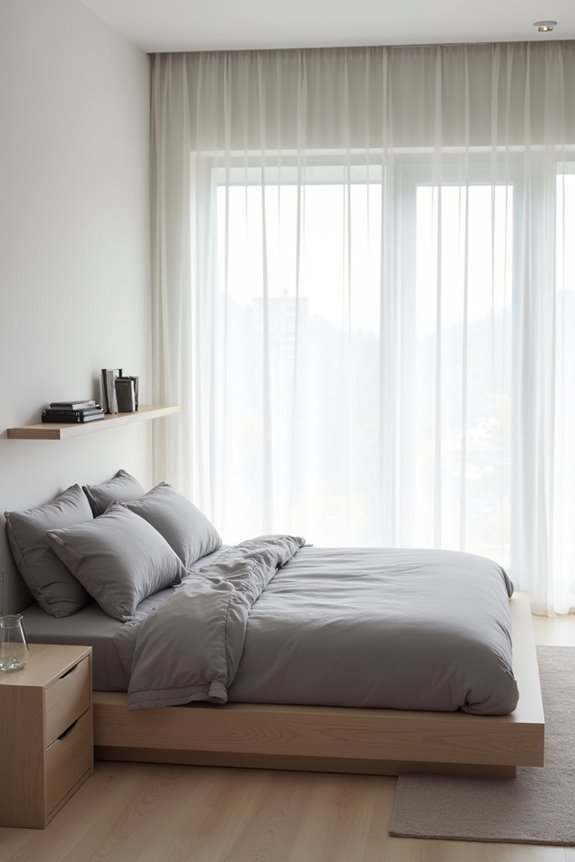
Where does all your bedroom clutter actually go in a truly minimalist space? The answer lies in strategic concealed storage that maintains clean lines while maximizing functionality.
- Built-in nightstands integrated into your headboard eliminate surface clutter and anchor the bed area
- Multi-drawer dressers with neutral finishes provide hidden compartments for clothing without visual bulk
- Trunks positioned at the foot of your bed store seasonal items and extra linens discreetly
- Bookcases with subdivided compartments organize baskets and personal items out of sight
Minimalist furniture with integrated storage creates a clutter-free bedroom. Choose pieces featuring clean lines and concealed compartments rather than open shelving. This approach doesn’t sacrifice storage capacity; it simply relocates essentials behind closed doors, creating the serene environment you’re seeking in a truly minimalist bedroom.
Layer Lighting for Function and Ambiance
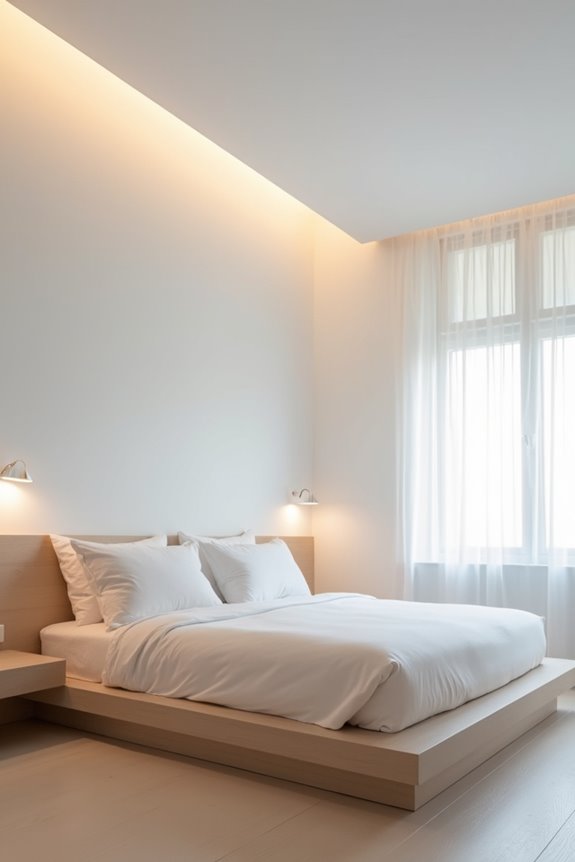
While concealed storage keeps your minimalist bedroom visually quiet, strategic lighting creates a functional, inviting retreat. Layered lighting combines natural light strategies with window treatments: blackout blinds paired with sheer curtains and upper blackout layers provide the flexibility you control throughout the day. Mirrors amplify this effect by reflecting light around your space.
For ambient warmth, bedside table lamps with natural textures like wood or woven bases work well with minimalist aesthetics. Frosted globe fixtures provide soft, calming statements, and adding a dimmer switch increases versatility from morning to evening.
Symmetry matters. Position matching lamps equidistant from your bed’s centerline and keep fixture finishes consistent across the room. This reinforces order while reducing visual clutter. Strategic placement and unified materials create the cohesive, serene environment you need.
Warm It Up: Natural Textures and Materials
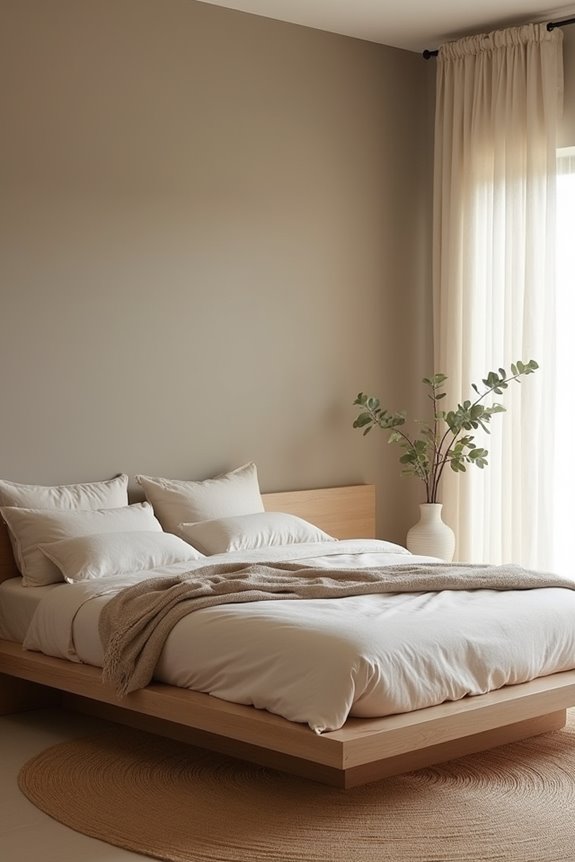
Why does a minimalist bedroom so often feel sterile? The answer lies in material choice. Introducing natural textures prevents coldness while maintaining your clutter-free aesthetic.
Consider these warm materials:
- Wood finishes like oak or walnut for bed frames and nightstands
- Boucle upholstery on ottomans or headboards for tactile softness
- Linen bedding and curtains in neutral tones
- Woven wall hangings or textured wallpaper for visual depth
Pairing these with a neutral palette creates cohesion without bold color. A brushed metal lamp complements natural wood beautifully, while a boucle storage ottoman serves function and warmth simultaneously. Textural layering combines materials strategically to provide visual interest without excess decor. These choices make minimalism feel inviting rather than austere, creating the serene retreat you’re seeking.
Create Visual Interest Without Clutter
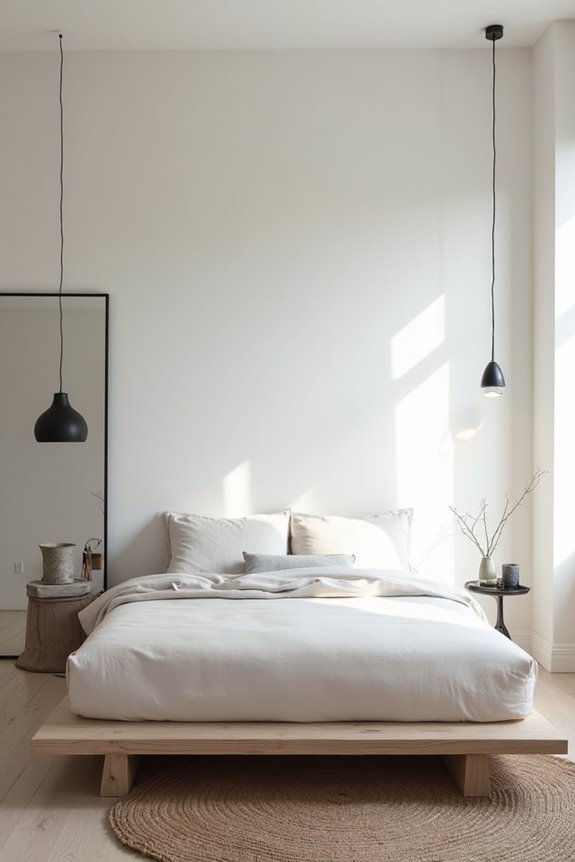
How do you create a focal point in a minimalist bedroom without sacrificing the clean aesthetic you’ve worked to establish? Strategic design choices, not decorative excess, define successful minimalist spaces. A substantial bed frame or four-poster style anchors the room architecturally. Pair it with built-in storage solutions that eliminate visible clutter while maintaining visual calm.
| Design Element | Implementation |
|---|---|
| Bed Frame | Four-poster or platform in natural wood |
| Accent Wall | Single wall in warm taupe or soft gray |
| Storage | Integrated nightstands or storage trunk |
| Lighting | Symmetrical fixtures flanking the bed |
Layer natural materials such as boucle, linen, and wood across your neutral color palette. These textures create depth without pattern chaos. This approach moves minimalism from austere to purposeful, creating spaces that invite inhabitants into deliberately composed environments.
Keep It Minimal: Weekly Habits for Long-Term Calm
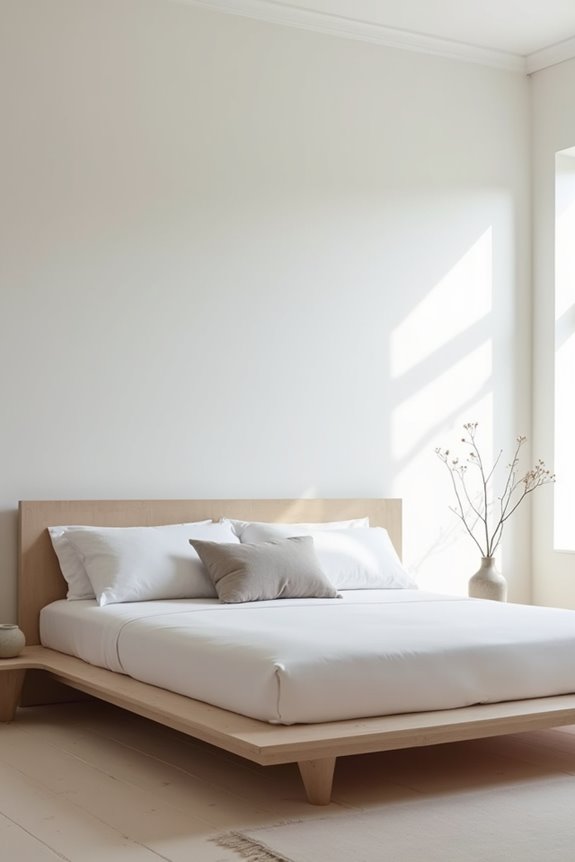
Creating a visually restful bedroom and sustaining it are two separate challenges. The design work you’ve completed forms only half the equation. Establishing minimalist habits keeps your calm space functional long-term.
Here’s what I prioritize weekly:
- Remove items that don’t belong, preventing accumulation that disrupts tranquility
- Rotate seasonal clothing into under-bed storage containers, keeping active pieces accessible
- Assess multi-purpose furniture surfaces and clear anything unnecessary
- Organize nightstand and dresser contents, limiting displays to essentials
Consistency matters more than perfection. I maintain a simple color palette and storage practices that support clutter control without extra effort. This routine takes minutes but preserves the serene environment I’ve built. Your minimalist habits become automatic over time, requiring minimal conscious effort while sustaining the calm space you’ve invested in creating.