I worked with a client whose nightstand had become a catchall. Remotes, tissues, chargers, and half-empty lip balm tubes scattered across its surface.
She wasn’t alone in this struggle. Most bedrooms suffer from surface clutter that undermines their primary purpose: rest.
The solution isn’t buying more furniture; it’s strategically hiding what you already own.
Three straightforward approaches can help you create a calm, organized bedroom that actually functions as a place to sleep.
Hide Clutter Behind Closed Storage
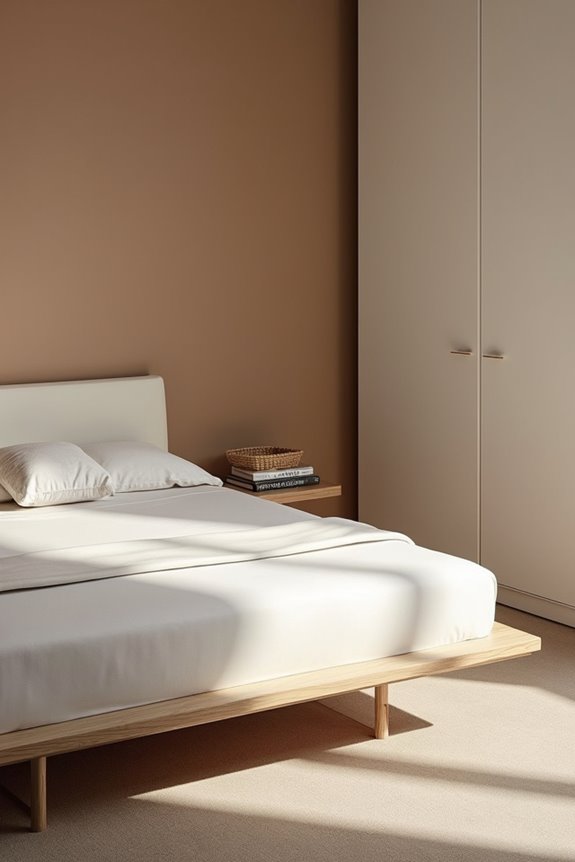
How do you prevent a bedroom from feeling visually chaotic? Closed storage solutions work effectively for this purpose. By investing in storage furniture with neutral finishes and clean lines, you create a clutter-free environment that doesn’t overwhelm the senses. Nightstands with drawers and cabinets conceal everyday items like remotes and tissues, keeping surfaces tidy. Drawer dividers help organize contents efficiently, designating specific sections for cross-room items. This hidden storage approach aligns with minimalism principles; what you can’t see won’t trigger mental clutter. Behind closed doors, only sleep-related essentials remain visible. Each item deserves a dedicated home, whether in cabinetry or dresser drawers. This strategy maintains a calm atmosphere while preserving functionality, creating the quiet space you need.
Keep Only What You Sleep With: And Store the Rest
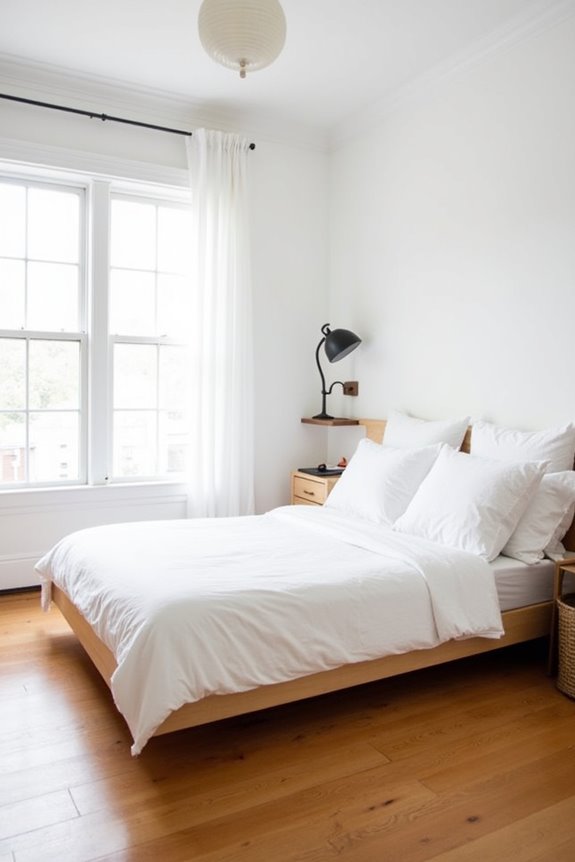
While closed storage solutions hide clutter effectively, they work best when you’ve already decided what belongs in your bedroom in the first place. I implement a strict rule: only sleep essentials remain in my sleep space. Lip balm, tissues, and remotes live in drawer organizers rather than nightstands. Everything else, including work gear, seasonal items, and hobby supplies, gets relocated to permanent homes elsewhere in my house.
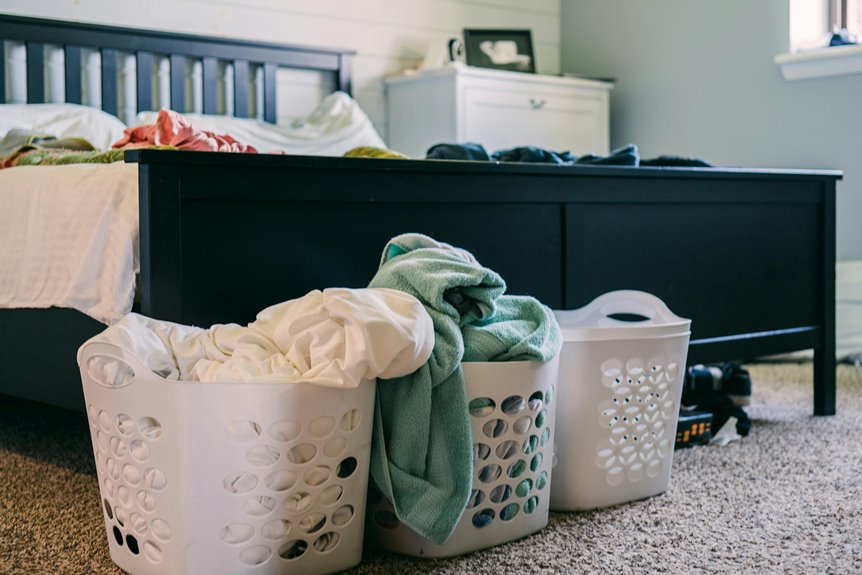
This minimalism approach changes bedroom organization considerably. My dedicated surface holds only a lamp and phone charger. Clothes get put away immediately using storage hampers near my closet, preventing pile accumulation. During my nighttime routine, I do a quick five-minute pickup, removing any non-sleep items that wandered in.
This clutter-free space supports better rest. The principle is straightforward: your bedroom functions best when it’s reserved exclusively for sleep.
Reset Every Night to Stop Clutter Before It Starts
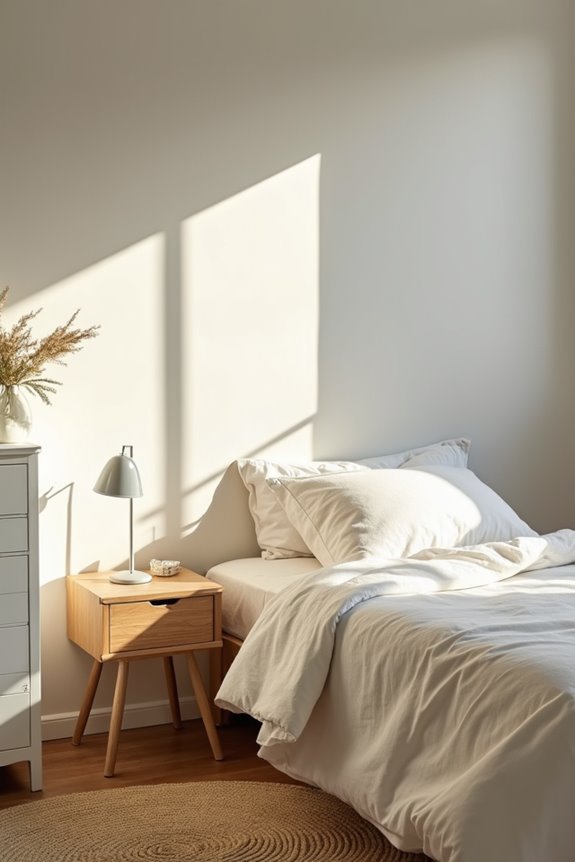
Why do clutter patterns emerge so quickly in bedrooms, even after you’ve carefully organized everything? Daily habits determine your space’s trajectory. Establishing a nightly reset routine prevents accumulation effectively. Each evening, I return items to their designated homes and clear surfaces completely. This tidy routine maintains a calm visual environment essential for sleep quality.
I use wall pockets and wall shelves as practical storage solutions that contain items without consuming floor space. Designating specific homes for each object (books on the nightstand, clothes in drawers) reinforces consistency. When I clear surfaces systematically, my bedroom organization stays intact, and natural light planning feels purposeful rather than chaotic.
Reorganizing zones seasonally sustains this clutter-free momentum, keeping my space restful and orderly throughout the year.