I’ve found that couples sharing compact bedrooms often struggle with the same fundamental challenge: how do you create separate zones within one intimate space without sacrificing style or function?
The solution isn’t about cramming in more furniture; it’s about working smarter with what you have.
From anchoring your layout with the right bed to strategically layering storage, there’s a methodical approach that makes tight quarters livable for both partners.
Let’s explore how.
Maximize Your Bed in a Small Bedroom and Anchor the Room Visually
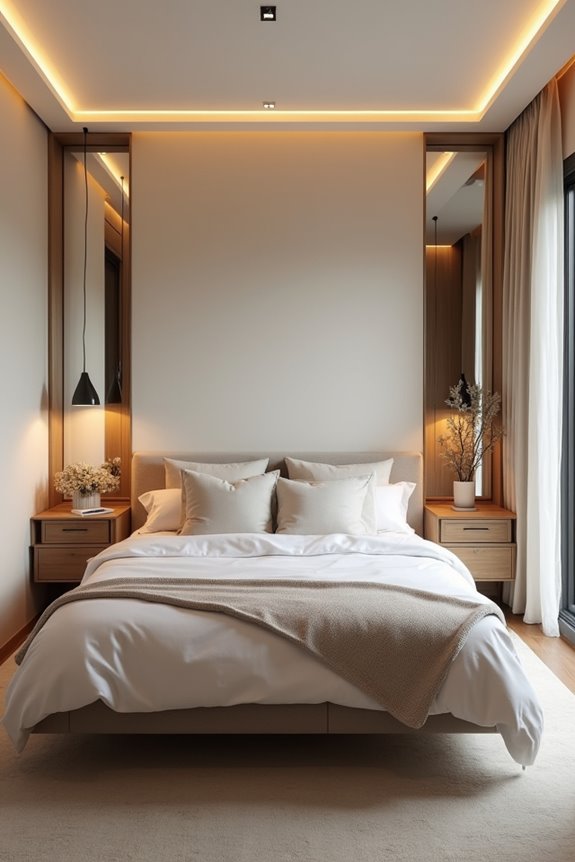
Since your bed will occupy a substantial portion of a small bedroom’s square footage, it functions as both your primary comfort investment and your room’s visual anchor. Select the largest bed that fits comfortably, typically a queen, and position it against a wall to maximize floor space and enhance perceived dimensions.
A low-profile bed with integrated under-bed storage optimizes space while maintaining clean sightlines. Pair this with minimal furniture and consider a statement headboard to anchor the bedroom layout without crowding it.
For cohesive color scheme success, coordinate your bedding, throws, and pillows with existing seating. This design strategy creates visual continuity throughout your shared sanctuary. Layer textures using linen, cotton, or performance fabrics in complementary neutrals or soft jewel tones to establish a sophisticated, unified aesthetic that supports both relaxation and space optimization.
Layer Storage Solutions Throughout a Small Bedroom to Eliminate Clutter
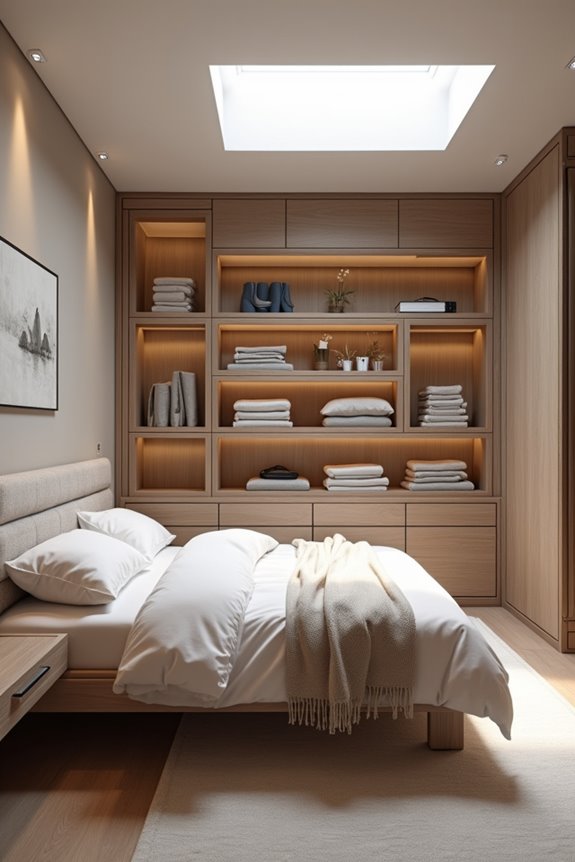
While a carefully curated bed anchors your bedroom’s aesthetic, strategic storage keeps it functional for two. Multifunctional storage beds with under-bed drawers use otherwise wasted space for linens and seasonal clothing. Install vertical storage through tall wardrobes or wall-mounted shelves, keeping essentials accessible without consuming floor area. Hidden storage behind doors, ottomans, and built-in cabinets reduces visible clutter while maintaining easy access. Organize smaller items using baskets, bins, and slim storage solutions positioned beside the bed or along walls. Modular storage units and room-dividing furniture adapt as your needs shift, containing clutter within your limited footprint. This layered approach distributes storage throughout your space, creating order and preventing the cramped feeling that plagues shared small bedrooms.
Zone a Small Bedroom to Define Separate Sleeping and Living Areas
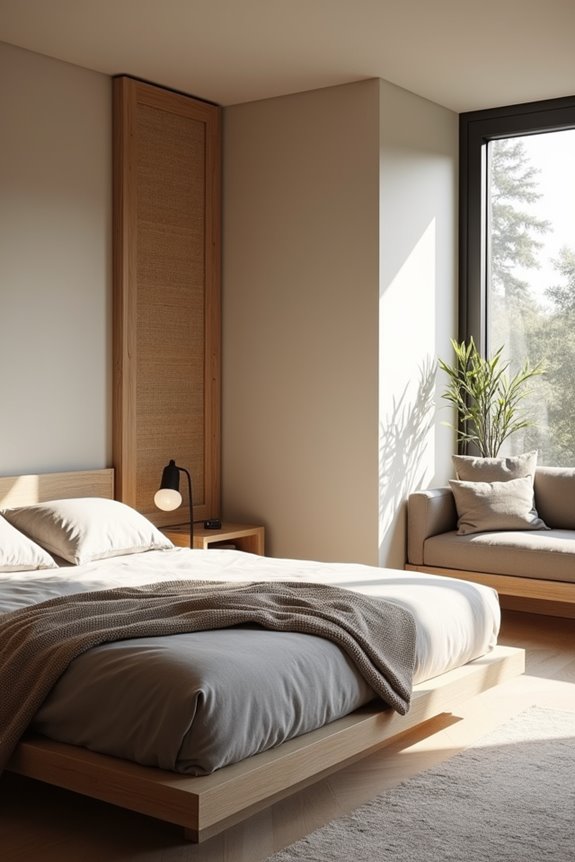
How do you carve out distinct zones within a bedroom that’s meant for two? Strategic room zoning creates functional areas for couples sharing limited space.
| Zoning Strategy | Implementation | Benefits | Best For |
|---|---|---|---|
| Privacy Curtains | Sheer fabric dividers on ceiling tracks | Soft separation without permanent walls | Sleeping area definition |
| Multifunctional Furniture | Sofa bed positioned opposite bed frame | Delineates living area while saving floor space | Day lounging, night sleeping |
| Storage Solutions | Floor-to-ceiling shelving as visual partition | Creates distinct zones while organizing essentials | Small space organization |
| Neutral Palette | Coordinated textiles in whites, grays, taupes | Maintains visual cohesion across separated areas | Design continuity |
Low-profile pieces positioned strategically establish sleeping and living areas without crowding sightlines. Modular wardrobes maintain cohesive finishes while separating functions. Connect spaces visually through coordinated color ties between bed textiles and lounge furniture, maintaining unity across your zoned small bedroom.
Unify Your Small Bedroom With Coordinated Colors and Textures
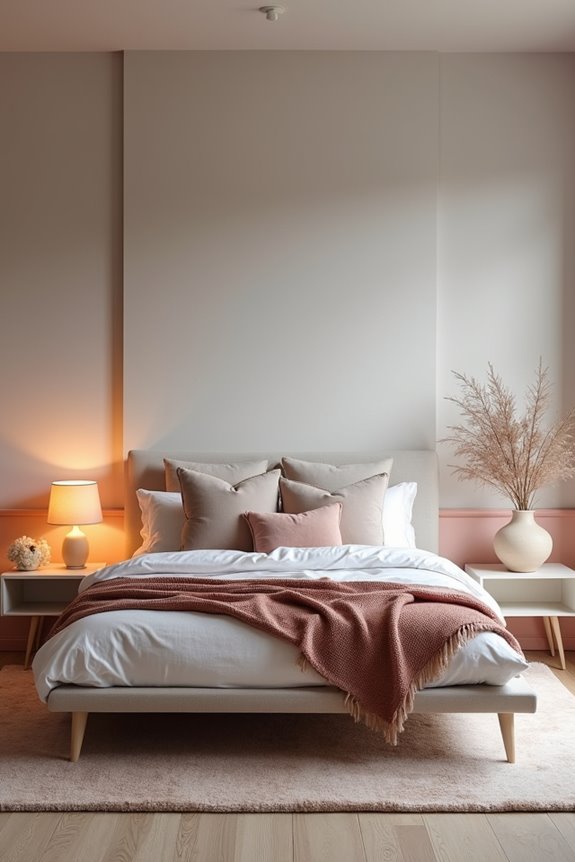
What makes a cramped bedroom feel like a cohesive retreat? Coordinated colors and textures that unify every surface. I recommend selecting a subtle color palette, perhaps soft grays anchored by berry accents, then repeating this scheme across bedding, throws, and wall paint. This consistency across zones prevents visual chaos in small bedrooms where couples share limited square footage.
Layer textures strategically: velvet pillows paired with knit blankets, linen curtains coordinating with area rugs. These textiles create depth without clutter. Balance bold patterns with quieter hues; a geometric duvet works beautifully when paired with solid-colored shams.
Tie bed textiles to your sofa’s color, establishing visual continuity between sleeping and living areas. By repeating motifs across furnishings and maintaining consistent textures throughout, your compact space will read as thoughtfully designed rather than cramped.
Design Lighting That Opens Up a Small Bedroom Without Cramping It
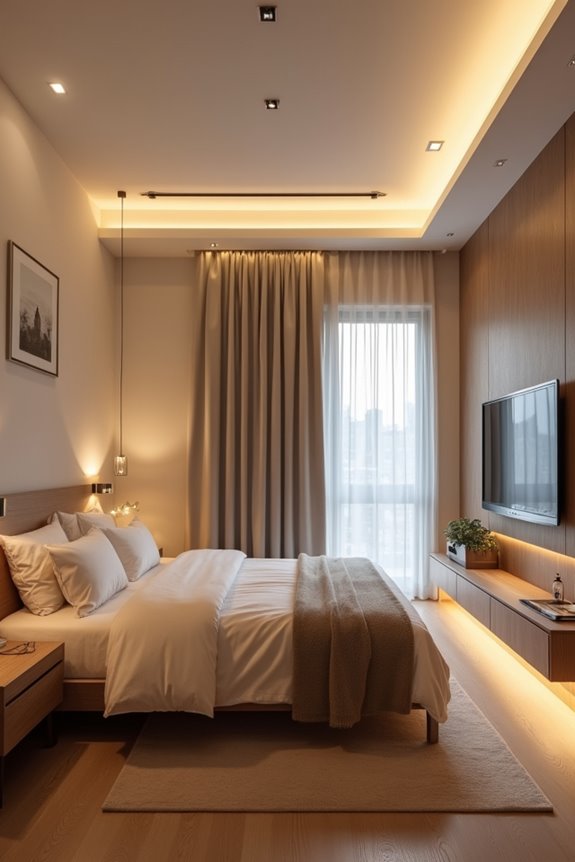
Strategic lighting opens up a cramped bedroom by reducing visual weight from surfaces while layering illumination across multiple zones. Install suspended ceiling lights and wall-mounted fixtures to preserve floor space for movement. This approach provides ambient lighting that establishes overall brightness without overwhelming the room.
Add task lighting through tall, slender bedside lamps or wall sconces, keeping nightstands clear for shared essentials. Incorporate accent lighting with warm LEDs or string lights to create depth and coziness. Position mirrors opposite windows and light sources to reflect and amplify natural illumination, visually expanding your space.
Choose light-colored furniture and translucent window treatments that allow light to flow freely. This combination of suspended fixtures, reflective surfaces, and strategic placement achieves an open and airy design without cramping your shared quarters.