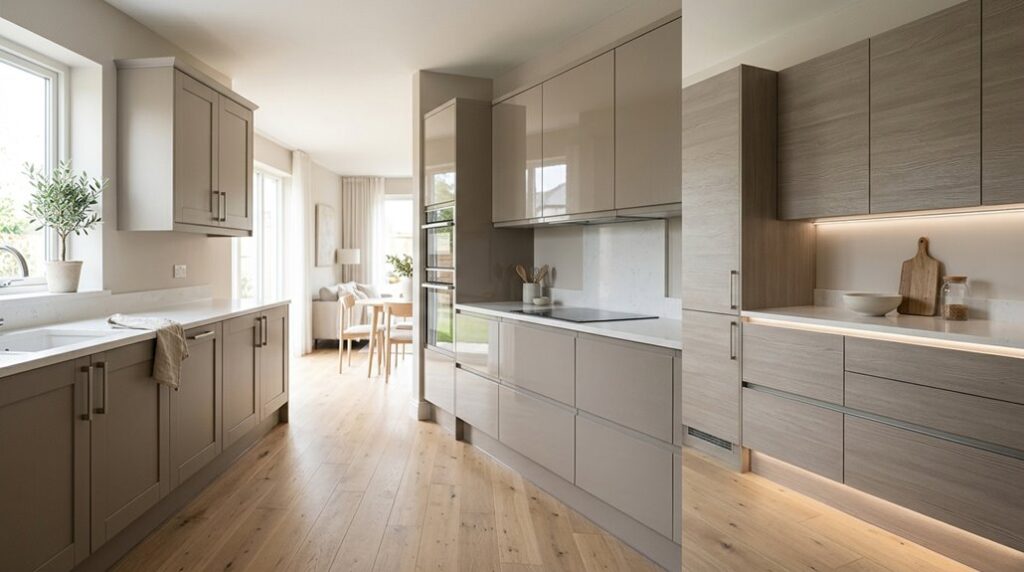
Most homeowners don’t realize that taupe, a neutral between brown and gray, actually reflects light differently depending on undertone, which directly impacts how a kitchen feels.
I’m here to walk you through three distinct cabinet approaches that utilize this quality in unexpected ways.
Each style addresses a specific design challenge, from maximizing cramped square footage to introducing modern sophistication without sacrificing warmth.
The strategies ahead reveal how strategic color pairing and material layering create kitchens with purpose and thoughtful design.
Monochromatic Taupe for Small Spaces: Create Calm Without Clutter
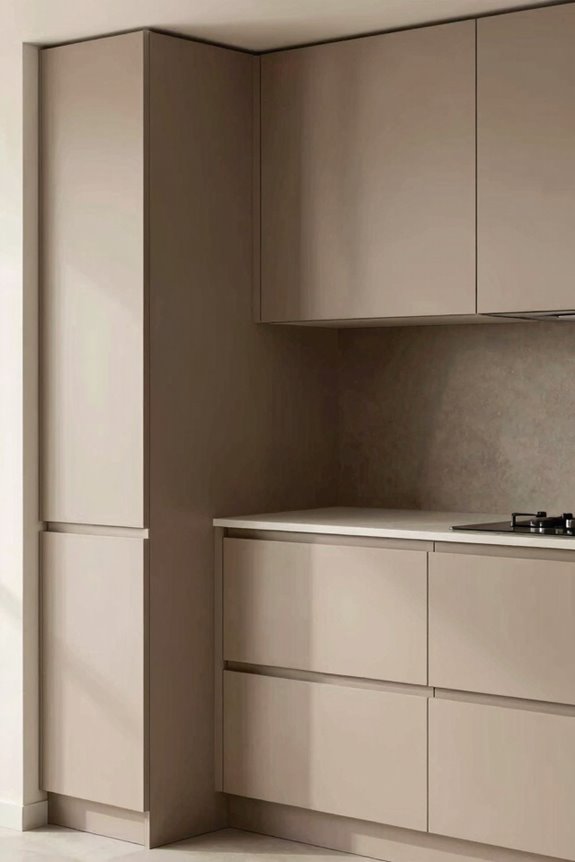
Why does a single taupe tone work so effectively in compact kitchens? I’ve found that monochromatic taupe creates visual unity across your narrow galley design, making the space feel carefully planned rather than cramped. When you choose taupe cabinets with warm undertones for both base and upper units, you’re establishing a unified kitchen design that reflects light and expands perception of square footage.
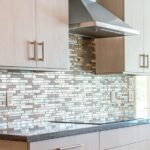
However, flat monochromatic schemes require strategic texture. I introduce honed countertops or subtle tile backsplashes within the same taupe family to maintain visual interest. These varied surfaces, including stone, ceramic, or textured laminate, prevent your small kitchen from feeling monotonous while preserving that uncluttered dining area aesthetic.
Light-reflecting taupe cabinets paired with textured elements create depth without introducing competing colors, allowing your minimalist kitchen to feel both serene and purposeful.
Two-Tone Taupe and Black: Modern Contrast That Stays Warm
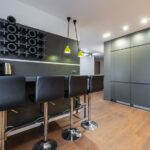
Two-tone taupe and black kitchens deliver modern contrast while preserving the warmth that makes taupe so versatile in residential design. I’ve found that pairing taupe cabinets with matte black hardware creates sophisticated visual interest without sacrificing the neutral warmth you’re seeking.
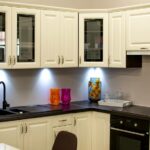
The combination works particularly well in small spaces where you’d paint lower cabinets taupe and keep white upper cabinets bright, establishing clear sightlines that expand the room. Matte black accents ground the space while taupe’s inherent softness prevents the palette from feeling too severe. This warm contrast approach offers kitchen design flexibility; you can refresh knobs or backsplashes without complete renovation.
The result is a modern, unified aesthetic that feels both current and inviting, supporting your desire for belonging in a thoughtfully designed home.
Taupe With Wood and Greenery: Layer Softness and Depth
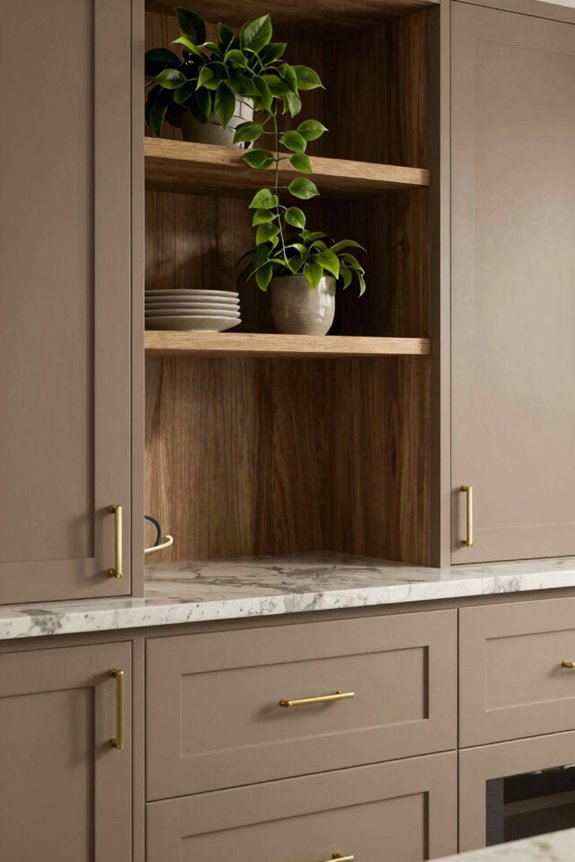
Where taupe cabinets truly shine is when you layer them with natural wood accents and living greenery, creating depth that prevents the palette from feeling flat or austere. Warm taupe paired with oak or walnut shelving establishes visual interest through contrasting wood tones. I recommend incorporating potted plants on open cubbies to soften the two-tone kitchen look while introducing organic movement.
| Element | Material | Effect |
|---|---|---|
| Lower cabinets | Warm taupe | Grounds the space |
| Upper storage | Oak shelves | Adds natural richness |
| Backsplash | Subtle tile | Maintains visual rhythm |
Ash taupe serves as a transitional neutral bridging taupe with white uppers and darker wood tones. Test wood-cabinet interactions using virtual mockups to evaluate lighting effects before committing.
Natural textures, including honed countertops and woven baskets, complete this layered, harmonious approach.