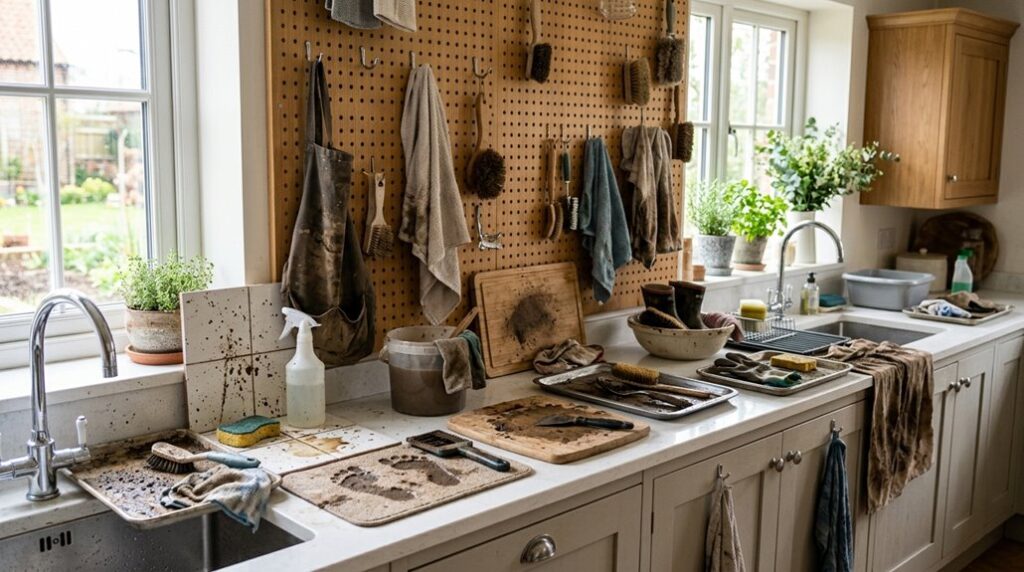
Research indicates that outdoor mud kitchens reduce tracked-in dirt by up to 60% when properly designed. I’ll walk you through positioning, flooring, and storage solutions that create a functional outdoor station from a messy play zone. You’ve likely noticed how containment strategies work, from permeable deck tiles to weatherproof bins.
Here’s what separates chaos from controlled creativity.
Position Your Mud Kitchen Away From Indoor Zones
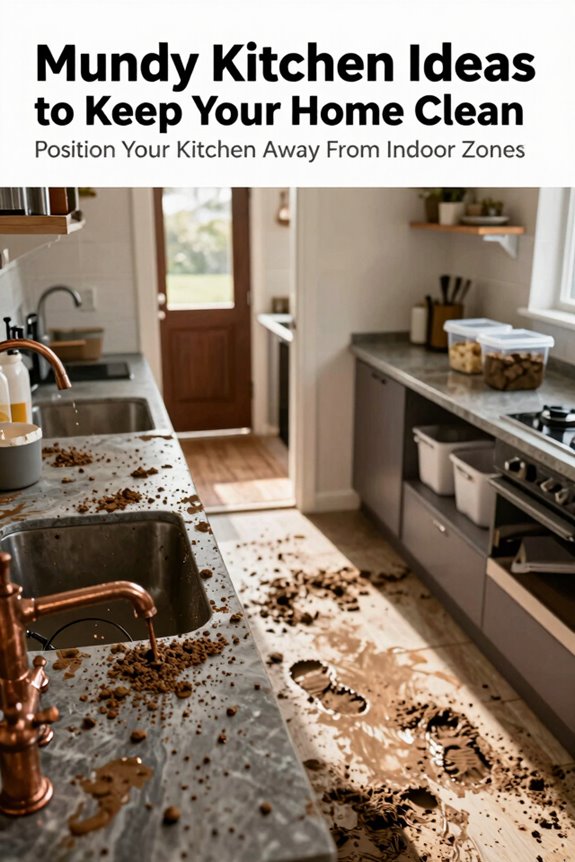
Where should you actually place a mud kitchen on your property? I’d recommend positioning your outdoor play space in a partially shaded area that’s distinctly separate from high-traffic indoor zones. This strategic placement minimizes mud tracked into your home’s living spaces.
Position it near an accessible water source and a door leading outside, reducing cross-traffic when children transition between indoors and outdoors. Choose a low-lying, stable surface; concrete or pavers work well to contain mud effectively. Keep the mud kitchen a short distance from indoor furniture and electronics, lessening contamination risk while making quick cleanups easier.
Select a weather-protected spot with slight slope or drainage to prevent standing water. This setup protects your home’s interior while creating a dedicated outdoor play space where kids can explore freely.
Cordon Off the Play Area With Contained Flooring
I’ll create a contained flooring strategy that protects your home while maintaining functionality for supervised outdoor play. You can choose from interlocking foam tiles, outdoor deck tiles, or a budget-friendly tarp with edging. Each option defines clear play limits and contains mud spillage within a washable zone.
A moisture-resistant mat or tray positioned under your work surface catches drips and soil runoff, which you can then rinse away with a hose to prevent mud accumulation and keep surrounding areas clean.
Flooring Materials And Options
How can you establish a mud kitchen zone that doesn’t track dirt throughout your home? The foundation begins with your flooring choice. I recommend outdoor-grade rubber mats or interlocking tiles that drain water while preventing slips. Beneath these, sealed weatherproof plywood or composite decking creates a moisture-resistant base with a gentle slope for drainage.
Rubber mulch, polypropylene turf, or outdoor rugs with drainage holes offer durable alternatives resistant to sun fading and staining. A removable vinyl border defines your mud kitchen boundary, containing mess effectively. These layered materials work together: the permeable top surface allows water drainage while the sealed base prevents moisture from seeping into surrounding areas. This strategic combination keeps your flooring functional and your home protected from mud infiltration.
Containment Boundaries And Setup
To proceed after selecting your flooring materials, it’s time to cordon off the mud kitchen zone with defined limits that stop dirt from spreading beyond your designated play area. I recommend installing low edging or laying a protective tarp across your chosen surface to create physical boundaries.
For a pallet mud kitchen setup, position a portable barrier around the structure’s perimeter. This containment prevents spills from reaching your home’s walls or furniture. Install water-resistant plastic sheeting or vinyl edging along the edges; these materials simplify cleaning and trap moisture effectively.
Next, establish a dedicated entry/exit point with a small mat and towel station near your kitchen counters. This transition zone catches dirt before children re-enter your home, protecting your interior spaces from contamination.
Use Shallow Water Trays and Refresh Between Sessions
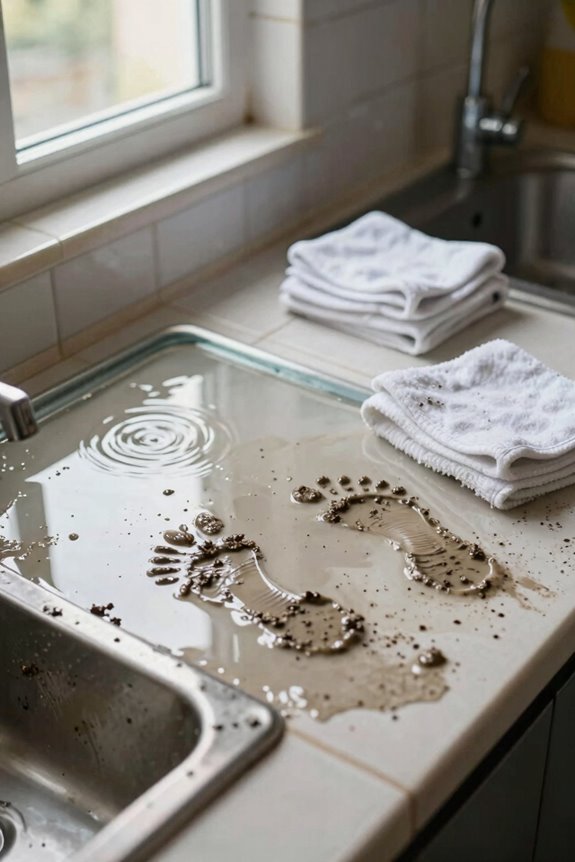
Why do shallow water trays work better than large buckets for mud kitchens? They minimize spill risk while containing mess within your designated work area. I refresh water between sessions to prevent stagnation and mud buildup, which streamlines mud kitchen cleanup considerably.
| Tray Feature | Benefit | Implementation |
|---|---|---|
| Shallow depth (2-4 inches) | Reduces spillage onto floors | Position at elbow height |
| Wide surface area | Easier access for children | Use 18×24-inch trays minimum |
| Lightweight material | Simple water changes | Refresh after each session |
Positioning trays on stable surfaces at elbow height prevents tipping and drips onto surrounding counters. I maintain a dedicated wash bin nearby to rinse utensil edges, preventing muddy water from spreading across work surfaces.
Covering trays when inactive keeps debris and animals from contaminating your water supply.
Place a Barrier or Tarp to Stop Soil Spillover
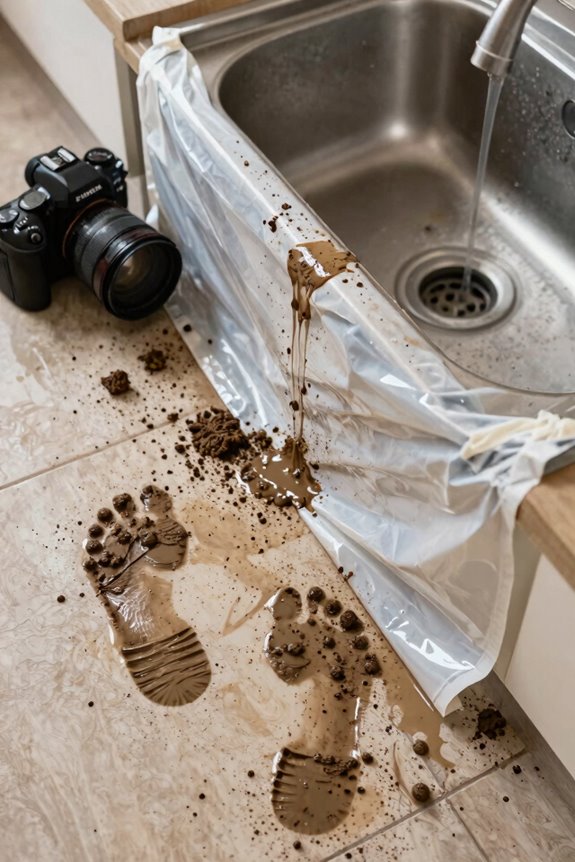
I’ve found that creating effective soil containment requires two critical decisions: selecting the right barrier material and installing it properly to handle the messy reality of active mud play. Heavy-duty polyethylene tarps (mil-thickness of 6 or higher) or reinforced plastic sheeting work best because they resist tears, shed water quickly, and wipe clean between sessions, unlike fabric alternatives that absorb moisture and harbor soil.
Anchoring your barrier with landscape stakes every 2-3 feet around the perimeter, extending it 12-18 inches beyond your work zone, prevents the shifting that happens when children splash and move equipment across the play area.
Containment Strategies For Soil
How can you prevent mud from migrating beyond your designated play zone? Strategic containment creates a controlled environment for your mud kitchen.
I recommend implementing these essential containment strategies:
- Heavy-duty tarp foundation: Lay a reinforced polyethylene or vinyl groundsheet beneath the entire mud kitchen area, creating an impermeable barrier that catches spills and accelerates cleanup
- Defined perimeter edging: Install low brick or composite raised borders around the play space, establishing a physical boundary that contains soil displacement
- Transition zone matting: Position moisture-absorbent mats or wood decking strips between outdoor and indoor areas, reducing tracked debris
On windy days, secure waterproof PVC curtains or splash partitions to contain spray patterns. Regularly inspect tarps and edging for deterioration; replacing torn materials maintains system integrity and prevents gradual soil leakage.
This layered approach keeps your mud kitchen contained while supporting active play.
Material Selection And Installation
When it comes to containing soil and water within your mud kitchen’s boundaries, the right barrier setup is important for the difference between manageable cleanup and tracked debris throughout your yard. I’ve found that selecting the proper materials provides long-term effectiveness and durability.
| Material | Thickness | Best Use |
|---|---|---|
| Heavy-duty tarp | 6-10 mil | Primary barrier layer |
| Landscaping fabric | 3-4 oz | Ground-level foundation |
| Plastic edging | 4-6 inches | Perimeter containment |
A reinforced tarp with grommets provides secure anchoring against wind interference. Position heavy-duty landscaping fabric beneath your mud kitchen first, then layer a washable, waterproof tarp overtop.
Install low-cost plastic bucket ring edging around the perimeter to establish clear boundaries that deter spillover into adjacent spaces. Regular inspection catches wear patterns early, allowing timely replacement before soil seepage compromises your surrounding lawn or pavers.
Set Up a Wash Station Right Next to the Kitchen
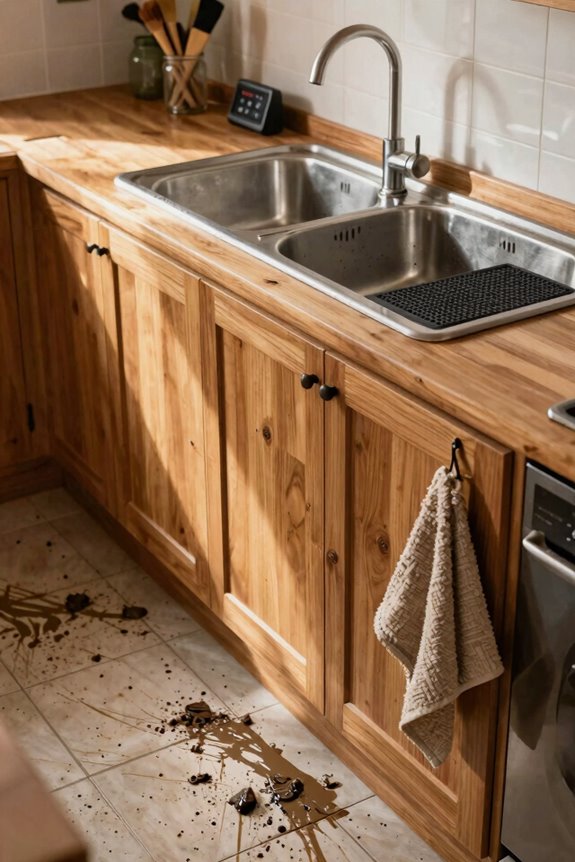
Positioning a dedicated wash station adjacent to your mud kitchen, rather than forcing children indoors to track debris through hallways, creates an immediate containment barrier that interrupts the mud-to-home pipeline. Situating this station near your back door or kitchen exit enables smooth transitions between outdoor play and indoor routines.
A strategically positioned wash station near your back door creates a containment barrier that interrupts the mud-to-home pipeline.
Consider these practical elements:
- Child-height basin with soapy water supply, paired with a hose or small dispenser for rinsing
- Drain-friendly tray or mat underneath to capture spills and prevent muddy footprints
- Quick-access caddy stocked with soap, brushes, nail brush, and extra towels
A nearby towel or rag bin encourages immediate post-play cleansing. This strategic placement makes cleanup an integrated design feature that protects your home’s interior while establishing healthy hygiene habits.
Brush and Wipe Tools Daily to Prevent Grime Creep
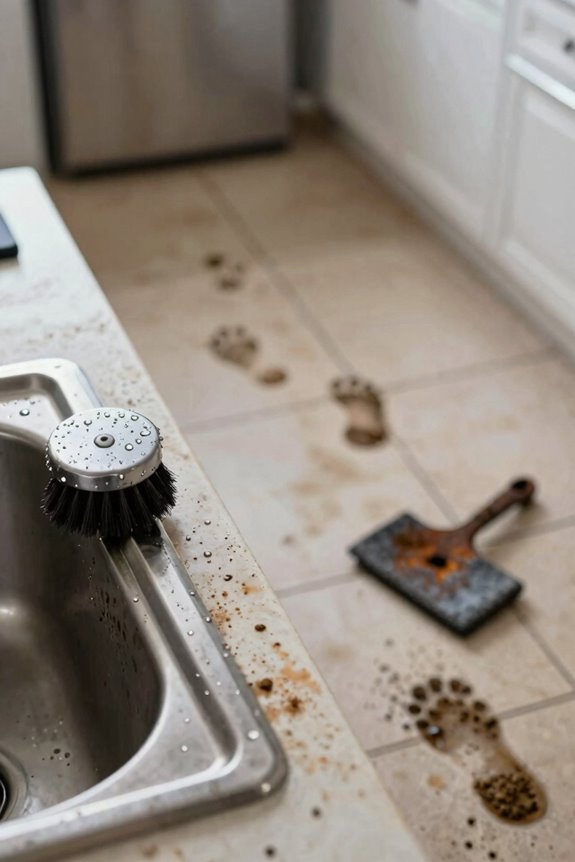
Why does mud harden into stubborn, caked-on residue that becomes exponentially harder to remove? Moisture evaporation binds particles to wood and plastic surfaces, creating adhesion that intensifies over hours. I’ve found that establishing a daily cleaning routine prevents this process, keeping your mud kitchen functional and welcoming.
| Step | Tool | Timing |
|---|---|---|
| Brush loose debris | Soft-bristled brush | Immediately after use |
| Wipe surfaces | Damp cloth | Following brushing |
| Target problem areas | Mild soap solution | Weekly assessment |
| Dry thoroughly | Absorbent towel | Final step |
You’ll notice corners and shelves trap moisture pockets where mildew develops. By brushing first, then wiping with warm water, you eliminate grime before it hardens.
This predictable maintenance rhythm makes cleanup straightforward and preventative rather than frustrating. Regular care keeps shared spaces inviting for everyone.
Store Tools and Ingredients in Labeled, Stackable Bins
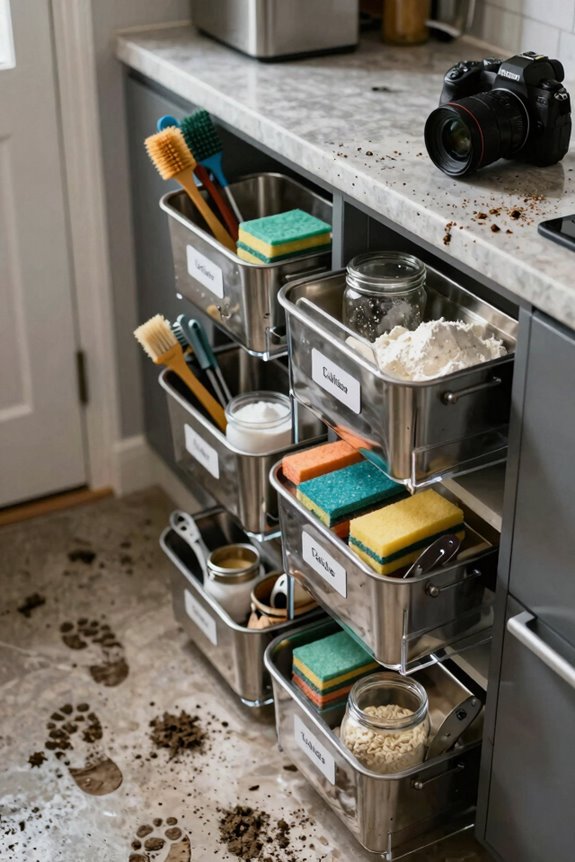
I find that selecting durable, waterproof bins, such as BPA-free plastic containers or coated fabric options, creates a foundation for effective mud kitchen organization while withstanding frequent outdoor washing and the wear of daily use. You’ll want to implement a dual-labeling system pairing printed text with simple icons on each bin, which enables younger children to independently sort tools and ingredients while reinforcing organizational habits through visual recognition.
Arranging these stackable bins by function (water play, dry ingredients, measuring tools) rather than by random placement minimizes cross-contamination, streamlines cleanup routines, and positions everything within arm’s reach on a low shelf adjacent to your work surface.
Choosing The Right Bins
How can you maintain organization in a mud kitchen without constant shuffling between scattered supplies? Strategic bin organization creates an orderly play environment with streamlined sessions. I recommend selecting transparent or color-coded storage bins that reveal contents instantly, eliminating search time during setup and breakdown.
Consider these practical features:
- Stackable design with removable lids that contain dust and debris while promoting quick drying between uses
- Durable, weather-resistant label tags affixed to each bin for consistent item returns and family accountability
- Low-shelf placement or modular cart positioning that keeps essential supplies within arm’s reach without cluttering surfaces
Blue bins work well for water-related tools, while green containers suit soil-based ingredients. This visual system reduces cross-contamination and maintains the tidy aesthetic you’re seeking. Transparent walls mean you’ll spot depleted supplies before playtime begins.
Labeling Systems For Organization
When chaos lurks beneath a muddy kitchen’s surface, a strategic labeling system organizes scattered supplies into an instantly recognizable inventory. Durable, wipeable labels with bold fonts and color codes (blue for tools, green for ingredients) enable quick identification even for young children during cleanup.
Stackable bins maximize vertical storage while keeping loose parts organized and accessible. I recommend updating your labels whenever tools or ingredients shift locations, keeping consistency across your organization system.
| Label Type | Material | Best For | Color Code |
|---|---|---|---|
| Wipeable adhesive | Vinyl | Bins and crates | Multi-color |
| Laminated paper | Cardstock | Pantry doors | Category-specific |
| Chalkboard | Slate finish | Rotating items | Neutral |
| Waterproof | Plastic | High-moisture areas | Bold hues |
A master inventory on your cabinet door tracks replenishments and seasonal additions without clutter accumulation.
Stackable Storage Best Practices
Why do mud kitchen tools scatter across countertops when a single organizational system could contain them? Stackable storage brings order to chaos, making cleanup intuitive for everyone in your household.
I arrange clear, shallow bins on low shelves, creating a mud kitchen that functions like a well-designed pantry. Each container holds specific categories:
- Spoons and measuring cups in designated shallow bins
- Soil, sand, and natural materials in separate stackable crates
- Water accessories organized by type and frequency of use
Labels on every bin speed up the end-of-session routine. I position frequently used tools in lower bins for quick access, while rotating less-used items higher up. Adding a “wash & dry” bin and “return to tray” bin streamlines post-play tidying. This stackable storage approach eliminates decision fatigue during cleanup, making organization feel straightforward rather than burdensome.
Pick Weatherproof Materials That Won’t Hold Mud
What separates a mudroom that stays functional from one that deteriorates is material selection. The right surfaces matter significantly. Weatherproof materials resist moisture and mud without swelling or rotting, keeping high-traffic zones durable for years.
| Material | Mud Resistance | Maintenance |
|---|---|---|
| Stainless Steel | Excellent | Wipe clean |
| Powder-Coated Aluminum | Excellent | Rinse easily |
| Treated Wood | Good | Oil-treat annually |
Avoid untreated pine or cedar; they absorb water and warp. Instead, choose stainless steel fixtures, high-density polyethylene trays, and grooved metal surfaces. Resin and metal withstand freeze-thaw cycles better than ceramic or glass.
Sloped counters and detachable tubs prevent mud from settling in crevices. Ribbed rubber mats offer low-slip protection while remaining simple to rinse. These choices create a durable, welcoming space that handles mud without compromise.
Swap Seasonal Add-Ins to Reduce Debris Buildup
How you stock your mud kitchen throughout the year directly impacts how much debris accumulates and how easily you’ll maintain it. Rotating seasonal add-ins prevents organic matter from building up and becoming difficult to clean. Swapping items strategically keeps your water source cleaner and extends the life of your setup.
Consider these rotating options:
- Summer: ice chips and fresh mint leaves for sensory play
- Fall: autumn leaves and cinnamon sticks for textural variety
- Winter: lightweight snow bricks for winter-themed exploration
- Spring: flower petals and blossoms for seasonal discovery
Store seasonal add-ins in labeled bins positioned near your mud kitchen. This organization prevents scattering while keeping materials accessible.
Schedule brief post-season cleanups to remove dried residues and prevent mold. Using shallow water containers further reduces splashes and mud accumulation around your workspace.
Plan Off-Season Storage to Protect Your Kitchen
When the mud kitchen season winds down, proper storage determines whether you’re reinstalling a pristine setup come spring or salvaging water-logged wood and rust-spotted tools. I’ve learned that creating an end-of-season routine protects your investment.
First, I rinse all tools and drain remaining water completely. I dry wooden surfaces thoroughly using sun exposure and ventilation, which prevents mildew growth. Next, I store labeled bins on low shelves, keeping them separate from food areas to prevent cross-contamination.
Sand and soil supplies go into tight-fitting lidded containers to deter pests. A partial-covered outdoor cabinet minimizes moisture exposure, reducing wood rot and mold. This systematic approach to mud kitchen storage allows for quick setup and functionality when play season returns.