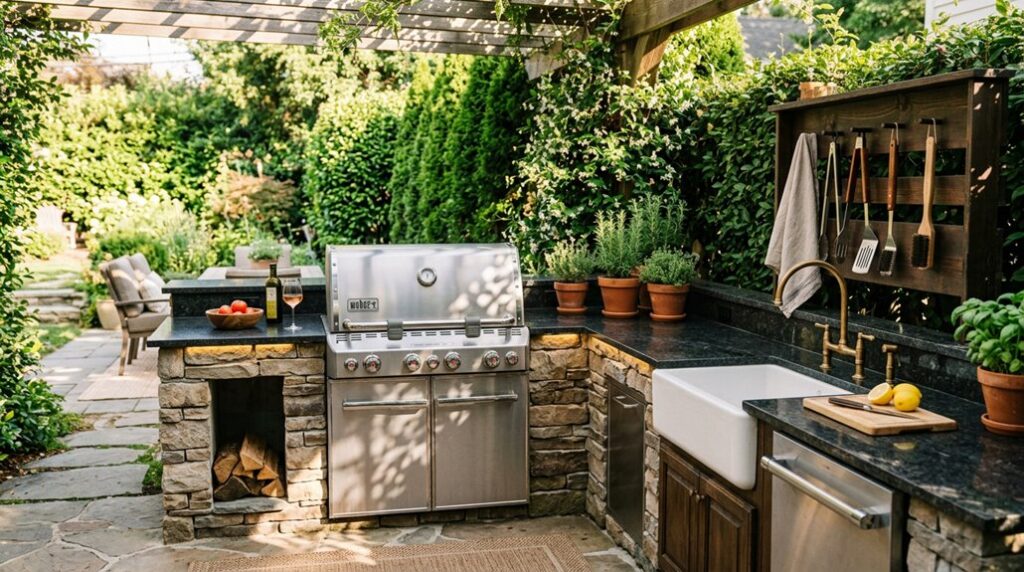
I’ve seen countless backyards redesigned from unused patches into functional outdoor kitchens; spaces where cooking, dining, and lounging converge smoothly. Your home’s architectural DNA should guide every material choice: if you’ve got stone facades, bluestone patios complement that aesthetic; if cedar siding dominates, integrate timber elements throughout.
The key to success lies in how you strategically divide your space into purpose-driven zones and incorporate the right details. But here’s where most homeowners stumble: they overlook one critical element that determines whether their setup actually gets used year-round.
Match Your Outdoor Kitchen to Your Home’s Architectural Style
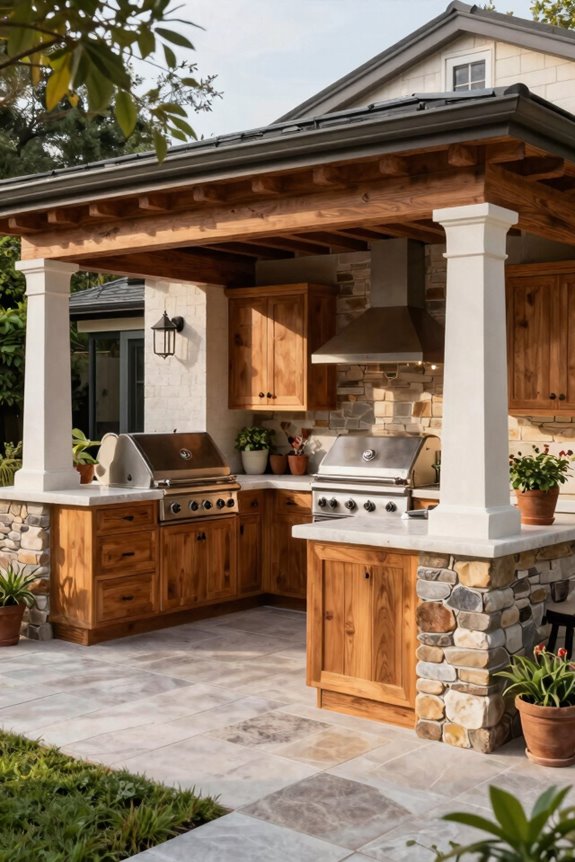
How does your backyard’s design language currently speak to your home’s architecture? Your outdoor kitchen design ideas should mirror your house’s existing style, creating a unified design that demonstrates clear planning rather than appearing like an afterthought.
Consider your home’s material palette. Rustic-modern homes benefit from stucco walls paired with bluestone countertops, while contemporary residences thrive with concrete and cedar combinations. Stone finishes ground the space authentically.
The indoor-outdoor transition matters equally. Pergolas with climbing greenery, exposed beams, and integrated lighting echo your interior finishes, establishing architectural continuity. Built-in millwork and matching hardware reinforce this relationship.
Select focal elements such as a tessellated pizza oven or jewel-toned accents that align with your home’s color scheme. This thoughtful material selection and structural detailing helps your backyard become a natural extension of your home’s identity, not a disconnected addition.
Select Weather-Resistant Materials: Concrete, Stone, and Wood
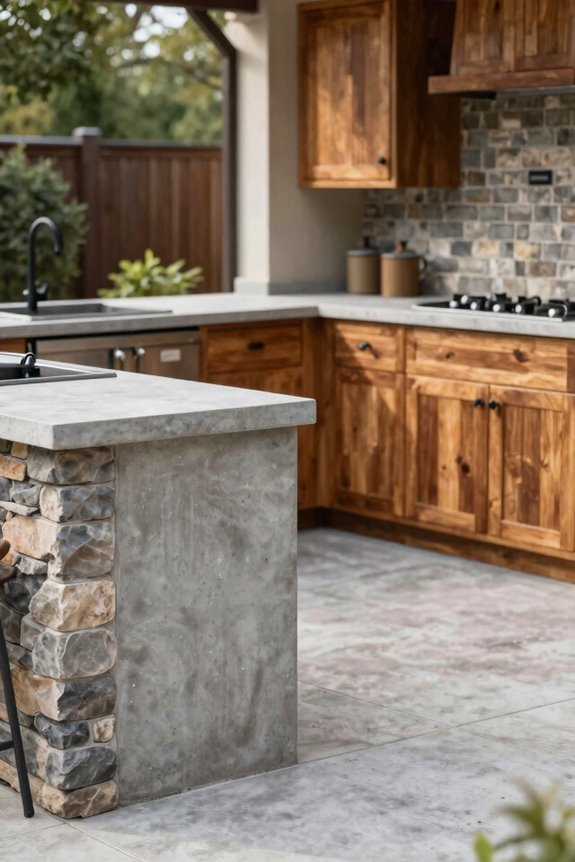
I recommend pairing concrete or stone foundations with wood accents to balance durability and visual warmth in outdoor kitchens exposed to sun, salt, or moisture. Concrete and cedar create a modern aesthetic with cool tones and clean lines, while bluestone, brick, and shiplap offer rustic-contemporary backdrops that support architectural lighting without sacrificing weather resilience.
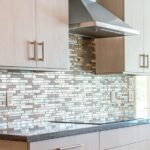
Textured finishes, from quartz backsplashes to tile applications, add depth and visual interest while maintaining the performance standards necessary for coastal or poolside cooking environments.
Durability Across Climates
When you’re designing an outdoor kitchen that’ll withstand rain, UV rays, and temperature swings, material selection becomes your foundation for longevity. I’ve found that natural stone like bluestone resists salt spray and moisture better than softer alternatives, making it ideal for waterfront properties. Concrete offers cool-toned durability with smooth lines, while wood elements—cedar or reclaimed varieties—need consistent sealing and maintenance to combat outdoor exposure.
The key to outdoor kitchen durability lies in understanding your climate. In harsh sun-exposed settings, textured quartz backsplashes and sealed brick maintain weather resistance without degrading. Pairing concrete with properly sealed wood creates both aesthetic contrast and climate-resilient finishes. These weather-resistant materials, combined with regular sealing and maintenance protocols, keep your outdoor kitchen functional and visually appealing for years.
Material Finish Options
Selecting the right finish creates functional design elements that protect your outdoor kitchen while establishing its visual character. Cool-toned concrete and stone pavers form a foundational palette, offering weather-resistant durability against seasonal shifts. These durable materials withstand freeze-thaw cycles and UV exposure effectively.
Natural materials perform well in waterfront settings, resisting salt spray and moisture damage. Red cedar complements existing house siding while contrasting beautifully against concrete flooring, creating visual connection across spaces.
For visual depth, textured backsplashes featuring quartz and tile options add interest while maintaining outdoor resilience. Bluestone and brick combine rustic charm with contemporary appeal, especially when paired with architectural lighting that highlights surface variations.
Each material choice serves dual purposes: protecting investments and defining aesthetic identity. Your finish selection anchors the entire kitchen’s functionality and visual narrative.
Natural Beauty Integration
The foundation of any enduring outdoor kitchen rests on materials that won’t deteriorate under relentless environmental pressure. I recommend concrete and stone for their cool-toned palettes and smooth lines, especially in waterfront staging where salt and sun exposure demand durability. These durable outdoor surfaces support your outdoor kitchen design while maintaining visual harmony with surrounding landscape.
Wood accents—red cedar and natural timbers—create striking contrast against concrete flooring, reinforcing a coastal aesthetic. Bluestone and brick combine beautifully with shiplap, forming rustic yet contemporary backdrops that withstand outdoor elements. A textured backsplash using quartz or tiles adds architectural depth while staying functional.
This integration of natural materials creates spaces where you belong. Designs age gracefully while standing firm against nature’s demands.
Divide Your Space Into Cooking, Dining, and Lounge Zones
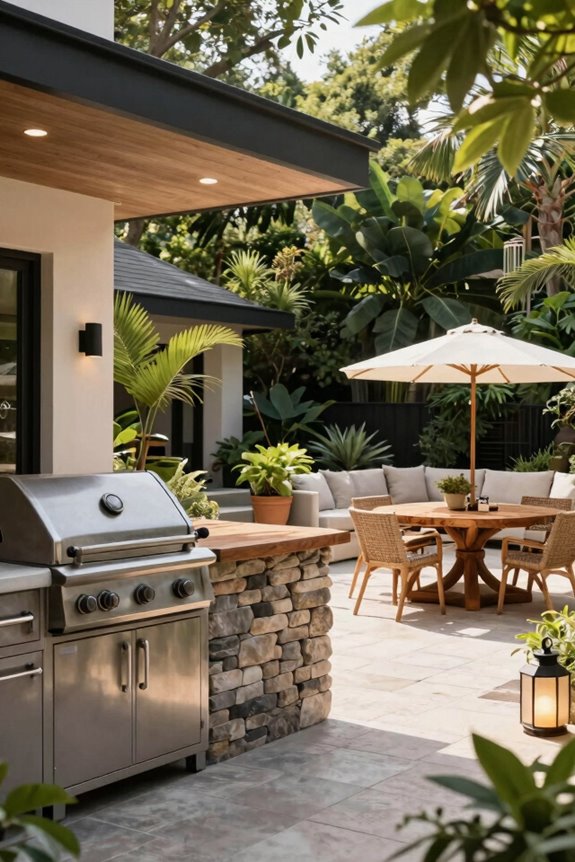
How do you create a backyard that functions as a destination rather than just a yard? By dividing your outdoor kitchen zones into three intentional areas. I create a cooking area anchored by the grill and prep surfaces, positioning a dining zone nearby with sturdy tables and chairs. The lounge space, outfitted with weather-resistant seating, completes the triangle.
This layout encourages natural movement between activities while fostering connection. A seamless indoor-outdoor transition amplifies this effect; I align full-dining setups with glass walls or large windows that dissolve boundaries between inside and outside. Integrated storage and built-ins such as millwork and sinks keep the cooking area uncluttered while enabling efficient service.
This zoning strategy makes entertaining purposeful rather than purely functional, creating spaces where guests naturally gather and linger.
Install Just-Enough Appliances to Eliminate Indoor Trips
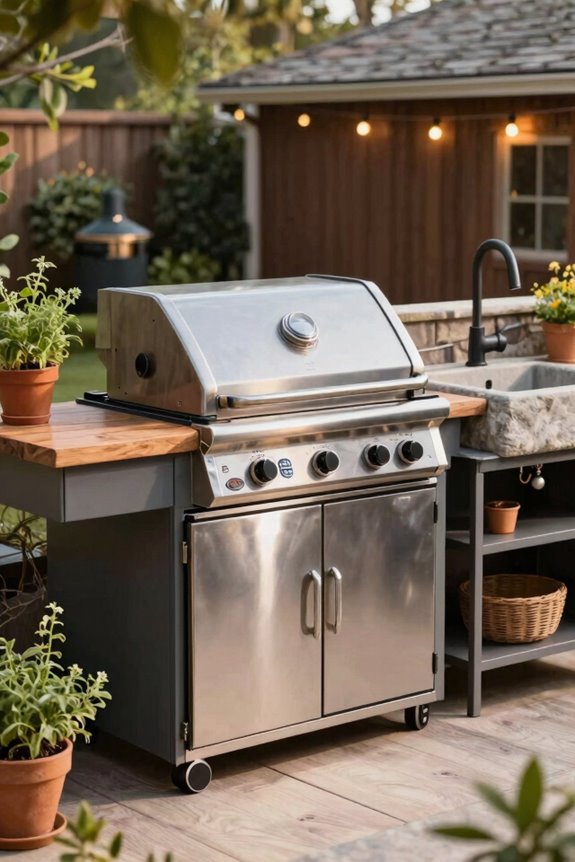
Once you’ve mapped out your three zones, you’ll want to stock your cooking area with appliances that handle the work without demanding constant trips inside. A built-in grill serves as your centerpiece, paired with a compact refrigerator for ingredient storage and a prep sink for washing vegetables. Add a side burner or warming drawer to round out your outdoor kitchen’s core functions.
This streamlined approach maintains an efficient workflow from prep to plating on a single island or counter. Weather-resistant finishes on stainless steel or powder-coated surfaces keep your equipment durable year-round. Strategic placement of these essentials eliminates unnecessary indoor access while supporting complete outdoor entertaining. You’ll reduce clutter and maintenance demands while keeping your compact layout functional and inviting.
Protect Your Kitchen: Pergolas, Screens, and Overhead Heaters
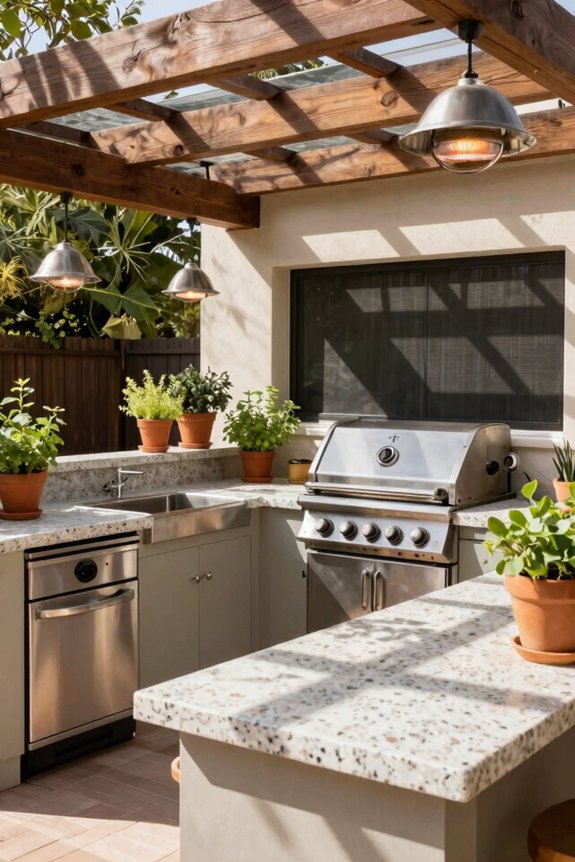
Why settle for a seasonal outdoor kitchen when strategic structural elements can create a year-round retreat?
Pergolas laced with climbing vines create airy dining zones while connecting cooking and dining areas seamlessly. I’d recommend adding translucent roll-down screens hidden within wood-planked ceilings; they lower easily to control sun and weather without compromising outdoor ambiance. Overhead infrared heaters mounted to your covered patio extend usable seasons by warming cooking zones effectively.
| Protection Element | Primary Benefit |
|---|---|
| Pergolas with greenery | Airiness and visual continuity |
| Roll-down screens | Weather and sun control |
| Infrared heaters | Extended seasonal comfort |
| Wood-planked ceilings | Integrated, clean aesthetic |
This layered approach balances serenity, style, and functional comfort. Your outdoor kitchen feels like an indoor space while maintaining that coveted outdoor character year-round.
Choose Between a Fireplace or Fire Pit for Warmth
The choice between a fireplace and fire pit fundamentally shapes how you’ll experience your outdoor kitchen year-round. A fireplace integrates adjacent to your lounge area, delivering sustained heat and formal architectural appeal through masonry and stone accents. It extends evening usability during cooler months with longer-lasting warmth. Conversely, a fire pit defines seating zones with flexible placement, emphasizing rugged aesthetics that range from stone to metal designs.
Fire pits encourage intimate social gathering and work well for milder-season entertaining. Consider your entertaining priorities: fireplaces suit year-round functionality and polished ambiance, while fire pits create accessible, casual gathering spots. Both pair effectively with overhead heaters and lighting. Your outdoor kitchen’s layout, climate, and desired formality level determine which feature best serves your entertaining vision and warmth needs.
Design a Bar and Seating Layout That Encourages Gathering
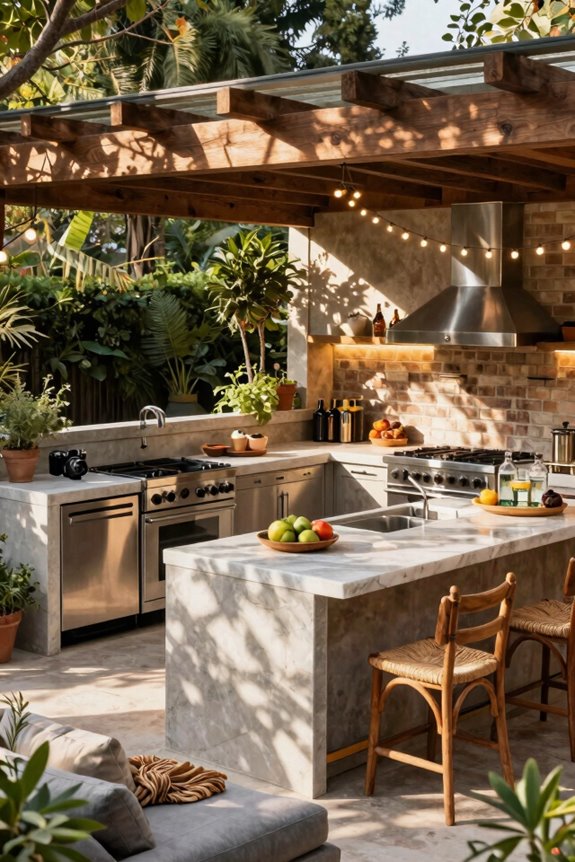
How you arrange your bar and seating directly influences whether guests become passive observers or active participants in your outdoor entertaining experience. I position ample bar seating around the cooking zone to draw people into the action, creating natural gathering points.
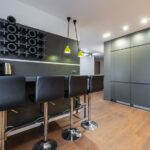
An integrated outdoor bar with submerged stools and expansive counter space pulls guests toward your entertaining area and pool. I pair this with a dining area adjacent to the kitchen, facilitating seamless service and conversation flow. Integrated millwork conceals appliances and clutter while maintaining visual unity.
This strategic seating layout creates an inclusive environment where entertaining guests feels naturally easy. Everyone stays connected, engaged, and part of the culinary experience.
Make It Feel Like Home: Comfort, Lighting, and Style
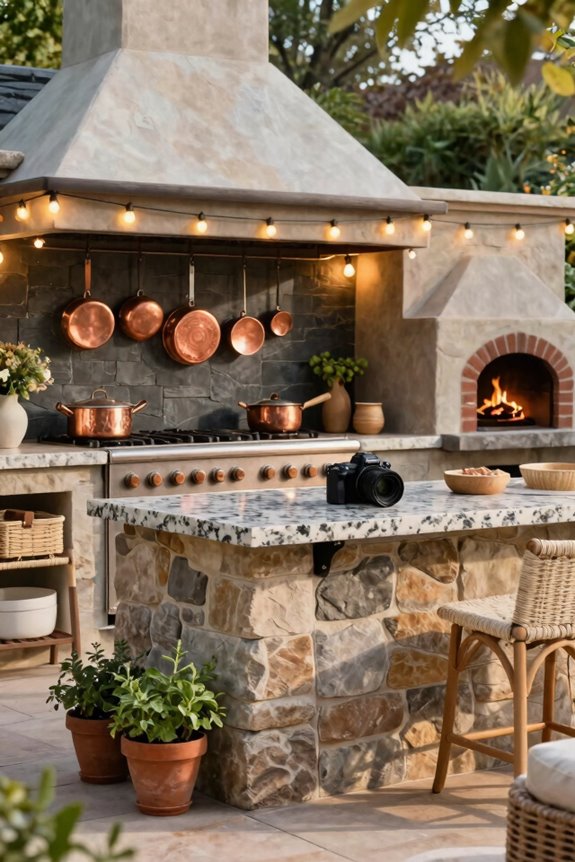
I believe the magic of outdoor entertaining happens after sunset, which is why I’ve learned that layered lighting creates an inviting retreat in a functional kitchen. You’ll want to install warm-toned LED strips beneath countertops and overhead fixtures that mimic indoor ambiance; think 2700K color temperature. Ceiling heaters extend your season and create that living-room coziness you’d find indoors.
Ground-soft seating, weather-resistant throw blankets, and outdoor rugs anchor the space psychologically, signaling to guests that this kitchen deserves the same comfort standards as any room in your home.
Ambient Lighting For Evenings
When does your outdoor kitchen truly come alive? After sunset, when ambient lighting creates an inviting gathering place. I recommend layering illumination through multiple sources: under-counter fixtures illuminate countertops for food prep, while string lights and wall sconces create mood lighting overhead.
Weather-resistant fixtures in stainless steel or bronze withstand moisture and temperature shifts. Warm-toned LEDs (2700K-3000K color temperature) enhance comfort during evening entertaining. Position safety lighting along steps and pathways to prevent accidents without casting glare on cooking surfaces or diners’ faces.
This strategic approach balances functional visibility with atmospheric appeal, keeping your outdoor kitchen feeling both welcoming and practical year-round.
| Fixture Type | Primary Function |
|---|---|
| Under-counter lights | Task illumination |
| String lights | Ambient mood |
| Wall sconces | Accent lighting |
| Recessed fixtures | General visibility |
| Pathway lights | Safety navigation |
Indoor Comfort Elements Outside
The shift from indoor entertaining to outdoor cooking doesn’t mean sacrificing the coziness you’ve cultivated inside your home. Weather-resistant furnishings, think Sunbrella fabrics and teak wood, create a cozy seating area that withstands rain and UV exposure. Durable countertops like granite or concrete composite materials maintain functionality while enduring harsh conditions.
Ground-level soft elements matter here: outdoor rugs anchor your outdoor living room, while pillows and throws add comfort. Fire features, whether fireplaces or firepits, establish focal points that invite gathering. Integrated outdoor lighting beneath counters and within hardscape elements illuminates your space while maintaining ambiance.
A sheltered dining area extends entertaining into cooler months. These layered comfort elements create a backyard that functions as an extension of your interior sanctuary, where style meets durability.