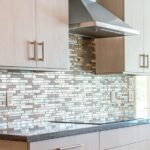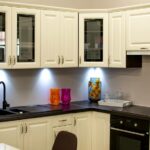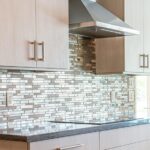
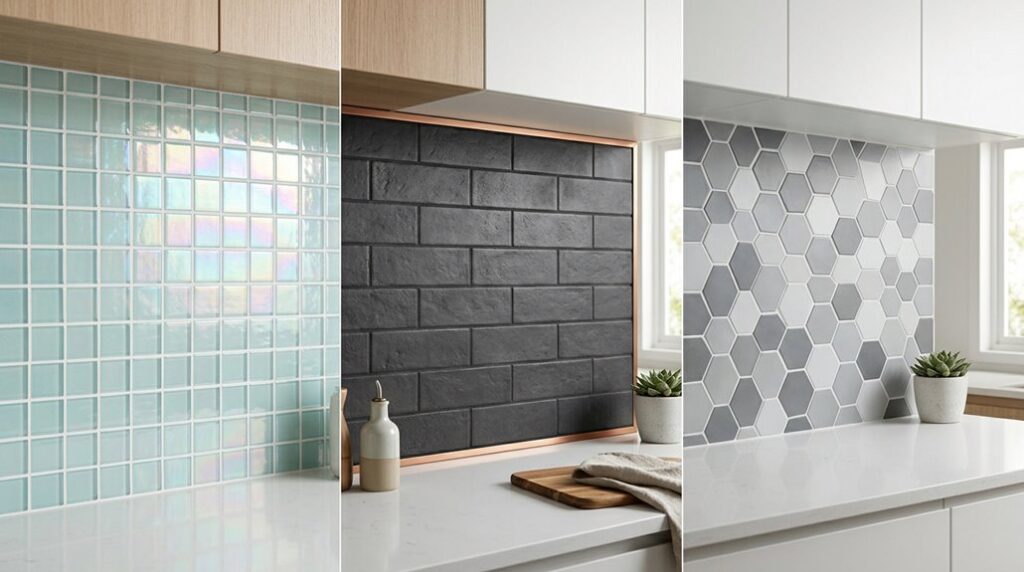
I’ve found that a kitchen splashback does more than protect your walls; it anchors your entire design narrative. Whether you’re drawn to geometric tile combinations, jewel-tone statements, or layered stone-and-glass compositions, each approach fundamentally shifts how light and color move through your cooking space. The right splashback choice turns a practical element into a visual centerpiece.
But here’s what most homeowners overlook before committing to materials.
Combine Tile Shapes for Pattern and Personality
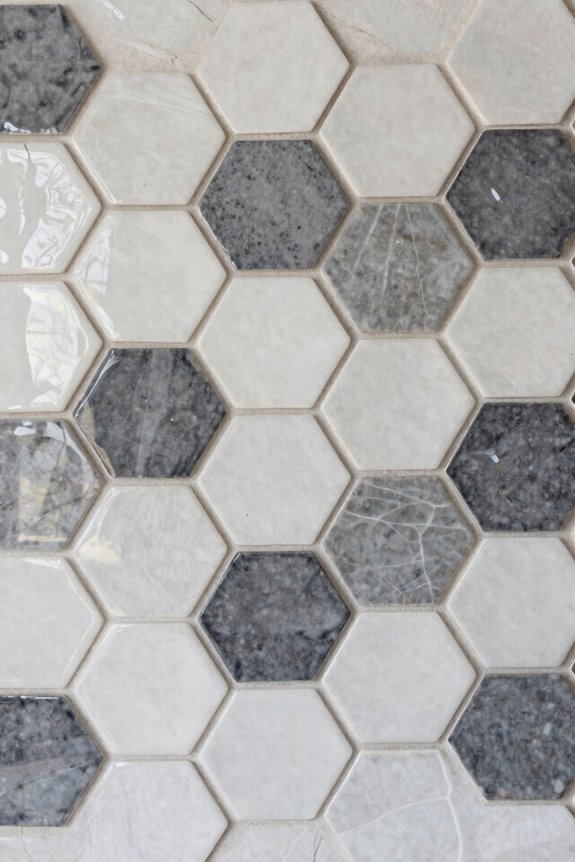
How do you prevent a backsplash from becoming visually monotonous while keeping it cohesive? I recommend mixing shapes—rectangles, squares, and hexagons—to create visual rhythm without sacrificing unity. A staggered tile layout featuring your dominant shape at roughly 70% coverage anchors the composition, while secondary shapes fill the remaining 30%, establishing balance and depth.
Start with a design sketch on graph paper to map distribution across your focal point, such as behind the stove. Consider grout interaction; darker lines enhance pattern-driven backsplash appeal.
Custom cavity molds enable repeatable mixed shapes that deliver varied, unified results. Order samples first. This strategic approach ensures your backsplash becomes a deliberate design choice: textured, balanced, and distinctly yours.
Make a Statement With Bold Colors and Textures
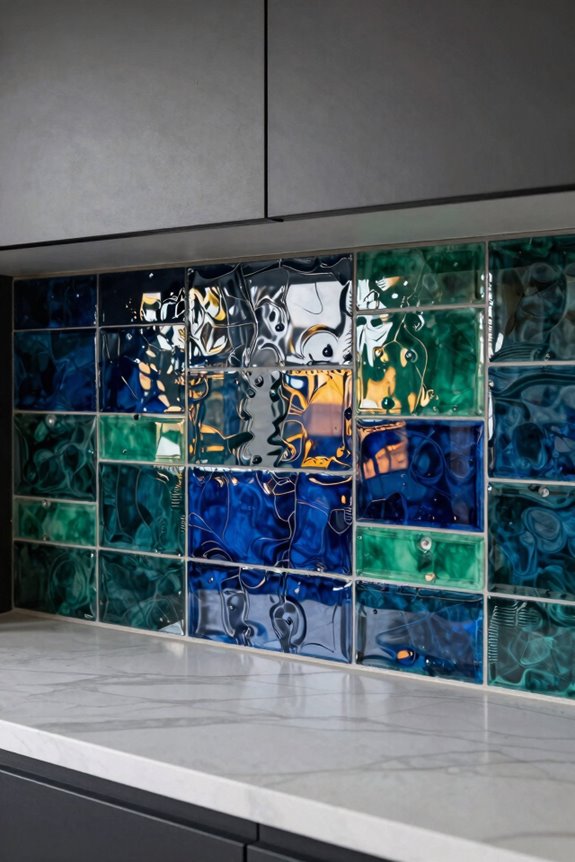
Why settle for neutral when your backsplash can be the centerpiece of your kitchen’s visual narrative? Bold colors and textures create kitchens that feel intentional and reflect your design sensibility.
Geometric tiles in vivid hues deliver modern artistic dimension while establishing focal points. Deep jewel tones convey elegance; warmer tones energize the space. Layer metallic accents with textured surfaces to enhance depth without overwhelming your cohesive space.
| Color Family | Psychological Effect | Best Lighting |
|---|---|---|
| Jewel Tones | Elegance, sophistication | Warm artificial |
| Warm Hues | Energy, hospitality | Natural daylight |
| Cool Tones | Calm, clarity | Bright LED |
| Earth Shades | Grounding, balance | Mixed lighting |
Pull samples and view them under actual kitchen lighting before committing. This prevents bold design choices from dating your space, keeping your kitchen backsplash timeless while reflecting color psychology principles that resonate with your aesthetic values.
Layer Stone and Glass for Warmth and Shine
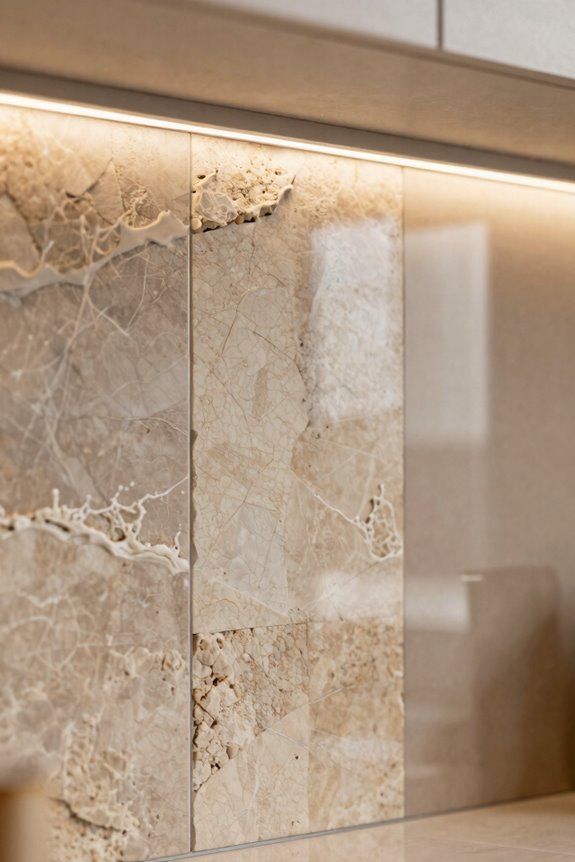
Stone and glass create a backsplash combination that balances visual warmth with reflective sophistication. When layered strategically, these materials work together to establish both depth and durability.
I recommend using warm-toned travertine paired with amber glass accents, while cool slate pairs beautifully with clear or blue-tinted glass to maintain a consistent mood throughout your kitchen. The layered approach works because glass borders frame stone sections, creating visual interest without overwhelming the space.
Mixing polished and honed stone finishes adds texture variation that enhances elegance. For maintenance, you’ll seal your stone to prevent staining while cleaning glass with standard tile cleaner preserves its shine effortlessly. This combination resists heat and staining, making it exceptionally durable for long-term kitchen use. The result is a backsplash that delivers both warmth and contemporary polish.