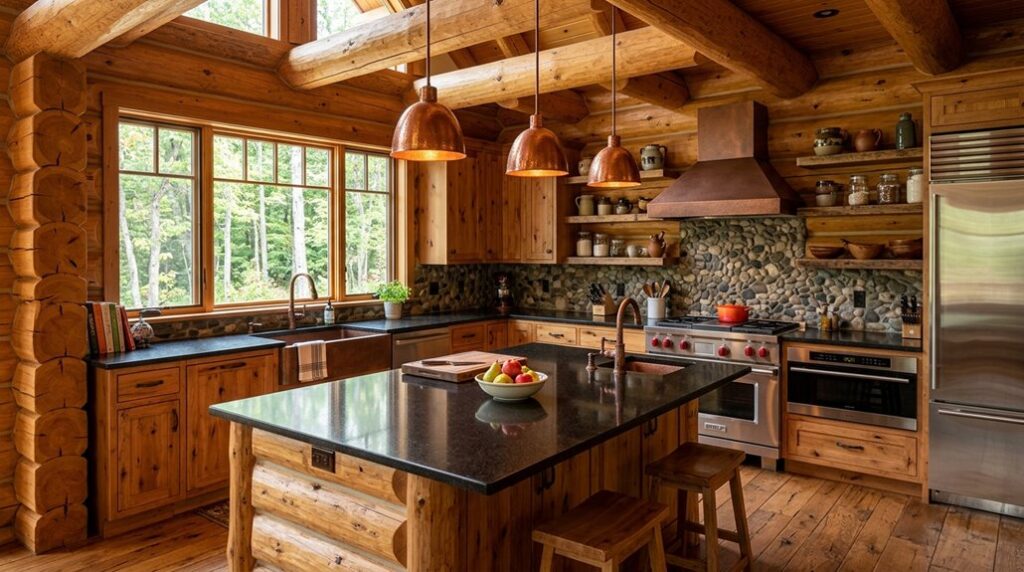
I’ve noticed that many homeowners redesigning log cabins face the same dilemma: how do you preserve rustic authenticity without sacrificing modern convenience? It’s a genuine tension. The kitchens that succeed aren’t those choosing one aesthetic over the other, they’re the ones that marry both deliberately.
Reclaimed wood meets quartz countertops. Exposed beams frame stainless steel appliances. The balance isn’t accidental. So what’s the actual formula?
Pair Reclaimed Wood With Sleek Countertops in Your Rustic Kitchen
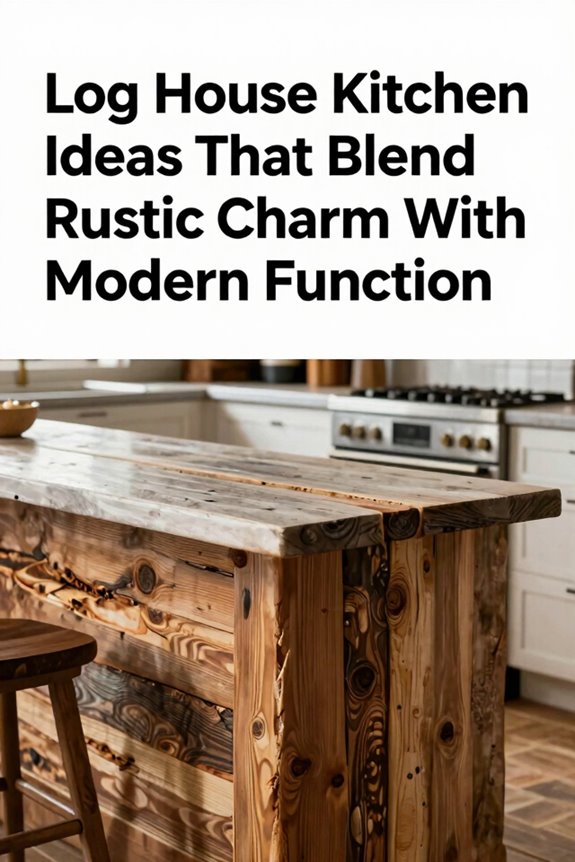
How do you preserve the authenticity of a log home’s interior while keeping your kitchen functional with contemporary efficiency? I’ve found that pairing reclaimed wood with sleek countertops creates this balance beautifully. Your wood cabinetry or open shelves showcase natural patina and historic character, while modern quartz or soapstone countertops provide low maintenance and refined contrast.
Live-edge reclaimed wood island bases work exceptionally well with smooth, honed stone countertops, establishing tactile balance between rustic charm and practical design. Consider using reclaimed barn wood for wall panels or pantry doors to maintain authentic cabin character, then introduce engineered stone or stainless-steel accents for modern edge. Finish all wood surfaces with matte protective sealants to preserve texture and keep your stone countertops as the center of attention in your rustic kitchen design.
Ground Modern Appliances With Rustic Stone Accents
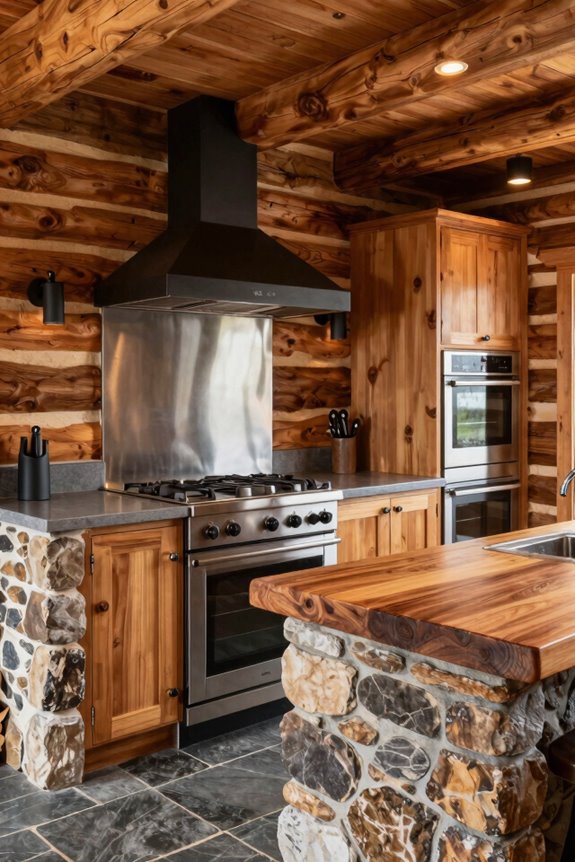
I ground modern appliances in rustic aesthetics by anchoring them with stone elements that establish visual weight and authenticity. Your stone backsplash, whether stacked slate, honed soapstone, or tumbled limestone in 3–4 inch formats, creates a textural foundation that legitimizes contemporary appliances.
Countertop selections like honed soapstone or leathered granite in charcoal or warm gray tones reinforce the earthy palette and conceal fingerprints common on stainless steel. This material strategy ties a high-performance refrigerator or induction cooktop into your kitchen’s overall design rather than making it stand out awkwardly, as the stone’s natural color variation and tactile surface draw visual attention away from sleek appliance lines.
Stone Backsplash Design
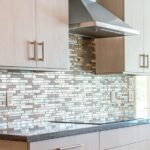
Stone backsplashes anchor modern kitchens within log homes by providing textural contrast that grounds sleek stainless-steel appliances and countertops to the cabin’s rustic foundation. I recommend selecting natural materials like slate, limestone, or quarried fieldstone that echo your home’s exterior while delivering durability and easy maintenance. These stone textures create visual interest without competing with surrounding elements.
A stone wall behind your range hood becomes a focal point, particularly when it connects to existing stone accents like fireplaces or rock features. Copper fixtures or wood trim enhance the rustic-modern aesthetic without overwhelming the space.
Proper sealing protects your stone backsplash in open-concept kitchens with radiant heating systems, extending its lifespan. Strategic ventilation prevents moisture damage, maintaining both beauty and functionality throughout your log home’s heart.
Countertop Material Selection
Because your countertops anchor both functionality and aesthetic continuity in a log-house kitchen, selecting the right material requires balancing durability with design cohesion. Soapstone resists heat and stains, making it ideal alongside rugged stone backsplashes. Granite offers low-maintenance surfaces with natural veining that echoes your stone walls and floors.
Butcher block and wood countertops introduce warmth, contrasting beautifully against reclaimed wood islands and stone features. These durable surfaces withstand daily use while reinforcing your rustic-modern fusion. Pair your selection with radiant heating and stone flooring to maintain consistent temperature control and unified material storytelling throughout the space. Your countertop choice becomes the visual bridge connecting modern appliances with rustic stone accents, creating a kitchen that belongs entirely to your home’s character.
Hide Storage Behind Cabinetry to Keep Surfaces Clean
While open shelving and visible countertop storage showcase rustic character, they’re often at odds with the clean, functional aesthetic that modern log home kitchens demand. Hidden cabinetry conceals small appliances and daily-use items behind cabinet fronts, creating a clutter-free environment without sacrificing accessibility.
Install pull-out organizers and toe-kick drawers within these integrated storage solutions to maximize functionality. Shallow 12–15 inch units work well for spices and flatware, while deeper 18–24 inch spaces accommodate small appliances when not in use.
Soft-close hinges and push-to-open mechanisms minimize visible hardware, maintaining your rustic-modern aesthetic. Match cabinetry with surrounding natural wood finishes: pine, oak, or reclaimed wood. Use integrated plinths for a seamless appearance. This approach preserves your log home’s warm character while delivering contemporary organization.
Open Sightlines and Beams Guide Kitchen Flow
How do you create a kitchen that breathes visually while maintaining the structural drama of a log home? I’d argue that exposed beams become your design’s backbone, literally framing sightlines that pull the eye from cooking zones into living spaces.
Remove upper cabinets or opt for glass-front options. This choice creates an open-concept kitchen where natural light travels unobstructed through windows and across work surfaces. Strategic island design using reclaimed wood tops anchors the space without fragmenting flow.
Frameless cabinetry along perimeters minimizes visual mass, preserving that rustic-modern balance. These elements work together: the beams guide movement, the open sightlines invite connection, and the materials reinforce your log house’s authentic character. Kitchen flow becomes intuitive when you prioritize sight over storage walls.
Design a Feature Island for Gathering and Prep Work
Where should your kitchen’s social and functional anchor truly live? A reclaimed wood island serves as both gathering point and workspace. I recommend pairing a butcher-block or live-edge wood top with a stone countertop for durability and authentic appeal.
Hidden drawers and soft-close mechanisms maintain clean lines while supporting daily prep tasks. Integrate a prep sink to separate cooking zones naturally within open-plan layouts. Brass hardware adds vintage warmth without overwhelming modern sensibilities. Consider housing a wine rack and extra storage within the island’s base, practical elements that encourage lingering conversations.
Integrated lighting, whether hanging fixtures or recessed spotlights, provides proper task visibility for chopping and food arrangement. This centerpiece bridges rustic character with everyday functionality, creating a kitchen where family and friends naturally gather and linger.
Layer Warm and Cool Lighting for Depth
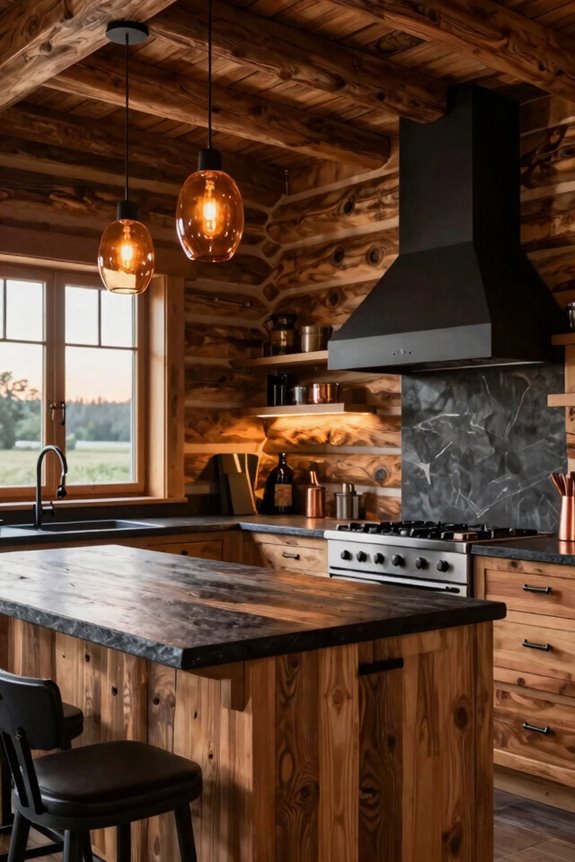
When should you introduce contrast into your log kitchen’s lighting scheme? The answer lies in layered illumination that balances rustic charm with modern function. I recommend creating depth through warm-cool lighting combinations:
- Mix amber-toned tungsten fixtures (2700–3000K) with cooler daylight LEDs (4000–5000K) to establish visual interest across cabinetry and task areas
- Install copper fixtures above your island paired with under-cabinet LED strips, emphasizing both efficiency and ambient glow
- Position dimmers on all layers, allowing warm tones to dominate gatherings while cool lighting intensifies during cooking
This approach highlights architectural features like exposed beams and stone textures through focused, cooler illumination while softer ambient lighting balances the space. Modern rustic design thrives when you strategically direct brighter task lighting toward work zones and let warmer fixtures create gathering-friendly atmospheres elsewhere.
Keep Your Cabin Kitchen Uncluttered to Showcase Textures
I’ve found that a minimalist display strategy works well in a cabin kitchen by letting materials like reclaimed wood, granite countertops, and copper fixtures become the visual stars rather than competing with clutter. You’ll want to curate your shelving to include only functional items: think ceramic bowls, woven baskets, and glass storage jars that echo natural textures while keeping flat surfaces clear.
Interior designers like Joanna Gaines emphasize this approach as necessary for rustic-modern balance. Regular decluttering through daily wipe-downs and seasonal purges keeps your wood grain and stone details as the main attractions, preventing the visual noise that undermines the sophisticated simplicity you’re after.
Embrace Minimalist Display Strategy
How do you showcase the inherent beauty of raw wood, stone, and copper without drowning it in decorative excess? Rustic minimalism demands intentional restraint. I recommend embracing this philosophy through three strategic moves:
- Limit open shelving displays to texturally rich pieces—clay pots, mason jars—that celebrate natural materials rather than multiply visual noise.
- Install concealed storage solutions like hidden pantries and push-to-open cabinets to maintain clutter-free surfaces while preserving rustic character.
- Select matte cabinetry and hardware that reduce glare, allowing wood grain and copper accents to command attention.
Your neutral palette and earthy tones provide a calm backdrop. Restrict decorative focal points to three or five items maximum; perhaps a vintage lantern or crafted wooden bowl.
Clean lines around your island and countertops amplify texture-focused design without distraction, creating a kitchen that balances both form and function.
Highlight Natural Material Textures
Why do reclaimed wood shelves and unpainted cabinetry command attention in minimalist log kitchens? Because they celebrate authentic material character. Natural textures deserve starring roles when you strip away visual clutter.
Pair stone countertops with smooth wood finishes to create tactile contrast. Apply tung oil or Danish oil to exposed wood beams and cabinetry; these finishes deepen grain visibility while maintaining restraint. The resulting depth rewards close inspection without demanding it.
Layer in limited tactile accessories: pottery, woven baskets, ceramic dishes. These pieces read as texture-rich accents rather than decorative noise.
An earth-toned palette of browns, creams, and greens lets materials breathe. Stone, wood, and metal become your design conversation. Nothing competes. Everything resonates. Your kitchen becomes a studied composition where every surface tells its material story.