When your kitchen layout isn’t quite performing at its potential, an L-shaped configuration often emerges as the solution. I’ve found that these two-wall designs create efficient work triangles while maintaining open sightlines; a balance that rectangular or galley kitchens struggle to achieve.
The benefits become clear when you add islands, maximize corner storage, or adapt the layout to your traffic patterns. However, most homeowners overlook key considerations when planning their L-shaped kitchen.
Maximize Two-Wall Efficiency With Classic L-Shaped Layouts
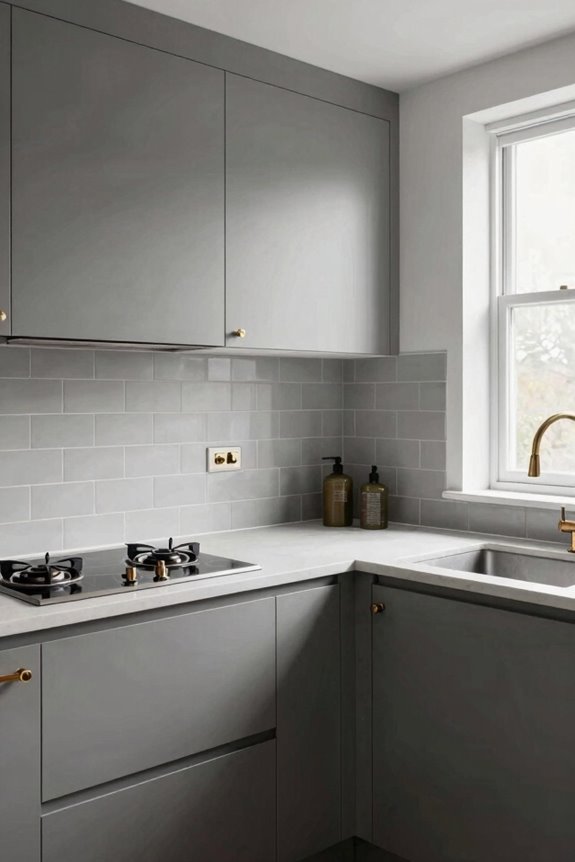
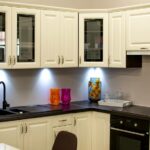
When you’re working with limited square footage, an L-shaped kitchen layout offers a practical solution that doesn’t sacrifice functionality for form. This configuration positions two countertops along perpendicular walls, creating distinct work zones while maximizing corner space.
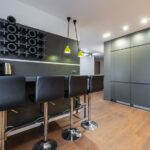
You’ll find that the classic L-shaped design naturally supports the work triangle, enabling efficient movement between fridge, sink, and stove. The longer run accommodates major appliances, while the shorter leg handles prep work and storage optimization. Adding a peninsula breakfast bar extends seating without consuming floor area, fostering that open-concept feel your community values.
Corner cabinets and thoughtful counter space allocation prevent wasted territory. This layout suits small-to-medium kitchens exceptionally well, balancing accessibility with defined cooking, prep, and cleaning zones.
Double Your Work Surface by Adding an Island
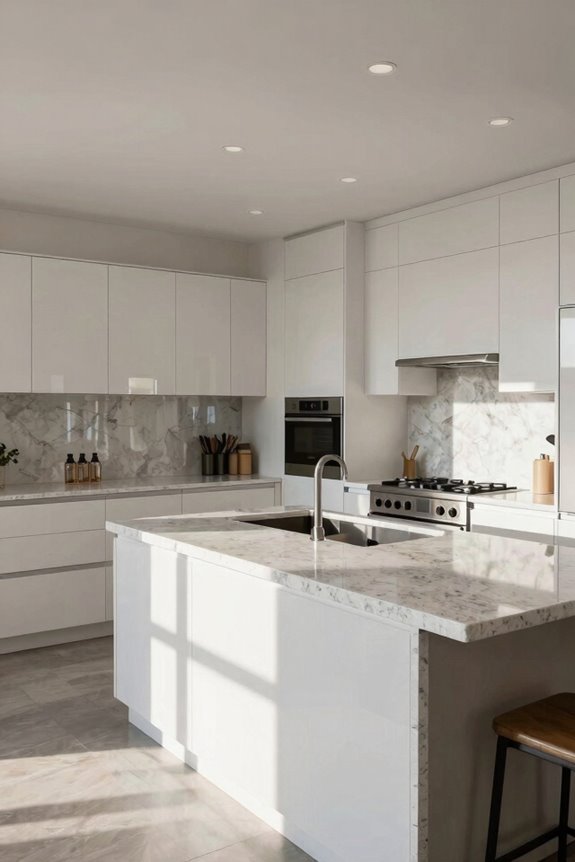
Add an Island to Double Your Work Surface
Anchor an island into the open floor space between the two walls of your L-shaped kitchen to boost efficiency. You’ll gain valuable work surface and counter space while maintaining the practical design principles that make L-shaped layouts functional. The island accommodates extra storage, additional prep zones, and optional seating for casual dining within your open layout.
Maintain at least 3 feet of clearance, ideally 4 feet, around all sides to preserve unobstructed workflow and movement. Built-in appliances or integrated seating on the island create a cohesive visual flow without disrupting your L-shaped footprint. This strategic addition converts isolated corners into a unified gathering space, allowing you and your family to enjoy both functionality and connection in your redesigned kitchen workflow.
Will an Island Fit? Sizing Your L-Shaped Kitchen
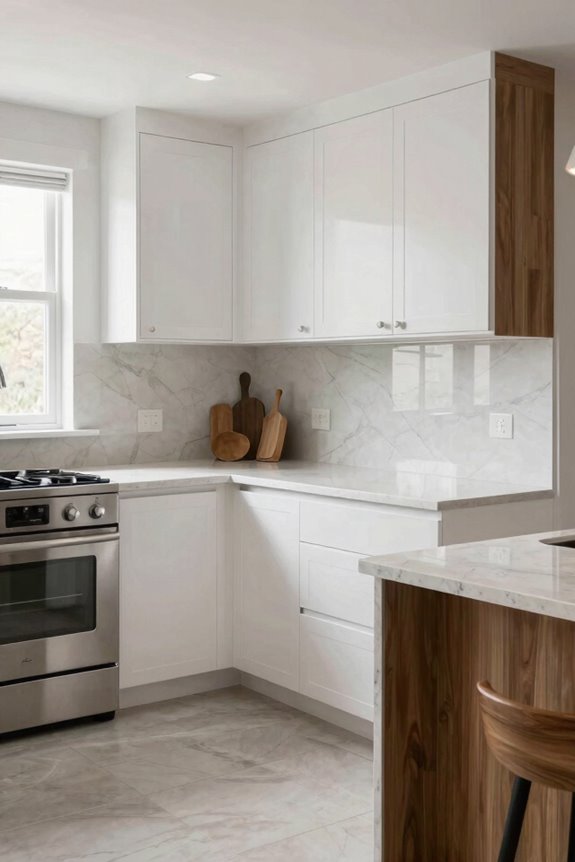
How do you know whether your L-shaped kitchen has enough square footage to accommodate an island without compromising workflow?
I’ll help you assess your space systematically. Your island placement depends on several critical factors:
- Island clearance requirements: Plan for minimum 3 feet around all sides, ideally 4 feet for comfortable movement and seating
- Working triangle efficiency: Keep your refrigerator, stove, and sink accessible with the island positioned centrally
- Long run cabinets: Position built-in appliances along your longer leg to maintain cabinet continuity
- Shorter leg sink placement: Keep your sink on the shorter leg to optimize workflow and dishwasher access
- Peninsula variant option: If space is constrained, extend a peninsula into the room instead for casual dining without sacrificing clearance
Measure your kitchen’s total dimensions before committing. This data-driven approach helps your island improve rather than hinder your L-shaped layout’s functionality.
Gain Extra Prep Space With Peninsula Solutions
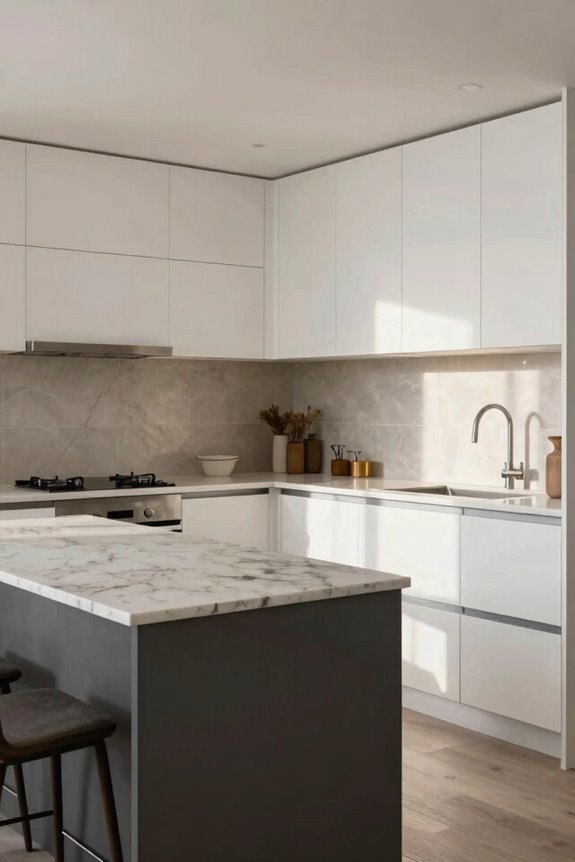
If your L-shaped kitchen doesn’t quite have room for a full island, a peninsula offers a practical alternative that delivers nearly identical benefits without consuming precious floor space. This layout optimization extends your L-shaped kitchen’s footprint strategically, creating extra prep space while maintaining open-concept flow.
A peninsula functions as both dining bar and casual dining solution, establishing distinct cooking and eating zones without blocking traffic patterns.
| Feature | Benefit | Best For |
|---|---|---|
| Extended countertop | Additional prep surface | Food preparation |
| Seating capacity | Casual dining option | Breakfast gatherings |
| Under-counter storage | Maximized utility | Tight spaces |
| Work triangle preservation | Efficient workflow | Fridge-sink-stove access |
| Traffic flow | Open layout | Family movement |
Under-counter cabinets amplify functionality in compact kitchens. This kitchen island alternative preserves your work triangle effectively, keeping essential appliances within arm’s reach while adding valuable workspace that improves daily cooking routines.
Reclaim Wasted Corner Space: Strategies and Hardware
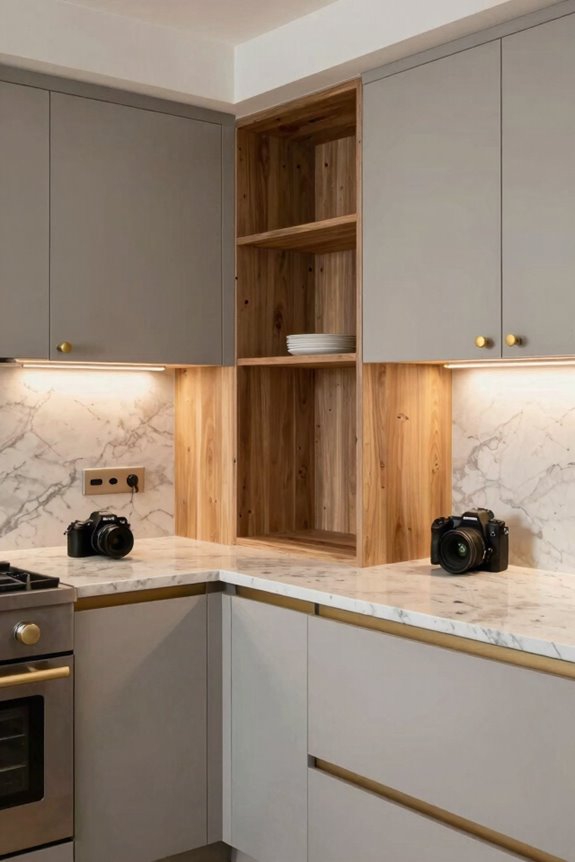
I’ve observed that corner cabinets in L-shaped kitchens typically represent the biggest storage inefficiency, yet hardware innovations like Blum’s Corner pull-out systems and magic corner units make these dead zones functional storage without consuming additional counter real estate. When you install a lazy Susan mechanism or a 270-degree pull-out organizer in a 24-36 inch corner cabinet, you gain access to roughly 40-60% more usable depth than traditional fixed shelving would provide.
Strategic placement of these solutions requires balancing your work triangle’s ergonomics. Make sure that reaching into corner storage doesn’t compromise the efficient flow between your refrigerator, sink, and cooktop.
Corner Cabinet Solutions
The corner cabinet represents one of L-shaped kitchens’ most underutilized storage opportunities, yet it doesn’t have to remain wasted space. I’ve found that modern corner cabinet solutions make these awkward zones into functional storage that matches your design vision.
Corner Cabinet Solutions That Work:
- Lazy Susans rotate items from back corners into easy reach, boosting storage efficiency without expanding footprints
- Pull-out organizers and corner drawers reduce bending in tight L-shaped layouts
- Tall upper cabinets and modular corner units maintain cohesive aesthetics while increasing capacity
- Vertical storage options integrate seamlessly with open-plan designs
- Corner solutions preserve flow between cooking, cleaning, and dining zones
These hardware upgrades, whether you choose pull-out organizers or lazy Susans, reclaim otherwise forgotten areas. Your L-shaped kitchen gains genuine functionality while maintaining the visual continuity that makes open-plan living work.
Hardware Optimization Techniques
How can you make a corner cabinet more functional and accessible? Strategic hardware selection is important. I’d install a Lazy Susan or pull-out organizers that rotate items into reach, eliminating the frustration of fishing for dishes in shadowy recesses. Magic corner units offer another solution, sliding out to reveal previously inaccessible storage.
Pair these with tall units positioned at one end of your L-shaped run; you’ll preserve continuous countertop workspace while maximizing vertical capacity. Choose consistent finishes across all cabinetry—matte black hardware, brushed nickel pulls—and integrate matching appliances. This consistency, combined with work triangle optimization, improves storage efficiency and creates a streamlined appearance where corner storage feels like a planned part of your design rather than an afterthought.
Go Bigger With a Double L-Shaped Layout
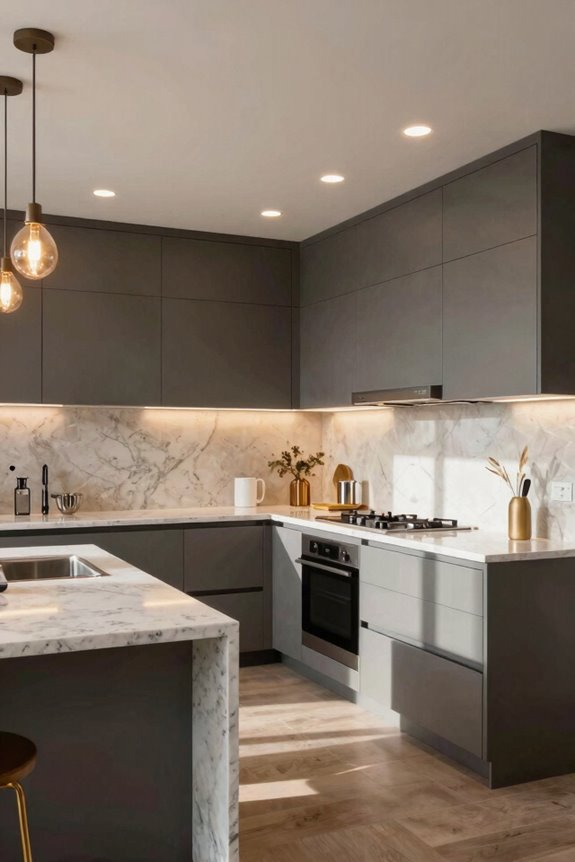
When you’re working with a spacious kitchen, a double L-shaped layout, pairing a classic L-perimeter with an opposing island or peninsula, creates distinct rectangular work zones that naturally organize your prep, cooking, and cleanup functions. You’ll notice that this configuration gives you multiple counter depths, typically 24–36 inches, positioned around both the perimeter legs and island, which means you can keep related tasks separated without sacrificing the efficient kitchen work triangle that professional designers emphasize.
The rectangular footprint also preserves clear traffic corridors on all sides. Even when multiple cooks are moving through the space simultaneously, you’re not colliding at bottleneck points like you would in tighter single-L arrangements.
Maximizing Kitchen Functionality
Why settle for a single work zone when you’ve got the square footage to support multiple ones? A double L-shaped layout creates a highly functional space where appliances placement and island integration work seamlessly together.
I’ve found that this configuration maximizes countertop space while maintaining clear traffic flow around both the perimeter cabinetry layout and central island. Here’s how you can optimize functionality:
- Position cooking appliances on one leg, cleaning stations on the other
- Use the island for seating area and secondary prep surfaces
- Integrate open shelving above counters for accessible storage solutions
- Distribute appliances evenly to prevent bottlenecks during meal preparation
- Design the L-shaped layout with 48-60 inches between work zones
This approach creates distinct zones: cooking, cleaning, and dining, while encouraging interaction. The result is a kitchen that supports your lifestyle and brings people together naturally.
Creating Rectangular Work Zones
If you’re working with a kitchen larger than 200 square feet, a double L-shaped layout offers what single L-configurations can’t: two perpendicular work legs that form a rectangular footprint while preserving traffic flow. This design creates distinct rectangular work zones that separate cooking, cleaning, and prep activities into defined areas.
The double L layout naturally distributes your fridge, sink, and stove across two legs, establishing multiple efficient work triangles. Kitchen islands become functional anchors, providing additional counter space and storage while maintaining zoning boundaries. Clear pathways around work stations allow unobstructed movement, preventing congestion during meal preparation.
This configuration supports dining or bar seating on the island, fostering connection without compromising workflow. The rectangular footprint maximizes every square foot, delivering the functionality and social interaction that open-concept kitchens struggle to achieve in larger spaces.
Solve Traffic Flow: Broken L Layouts for Multiple Doorways
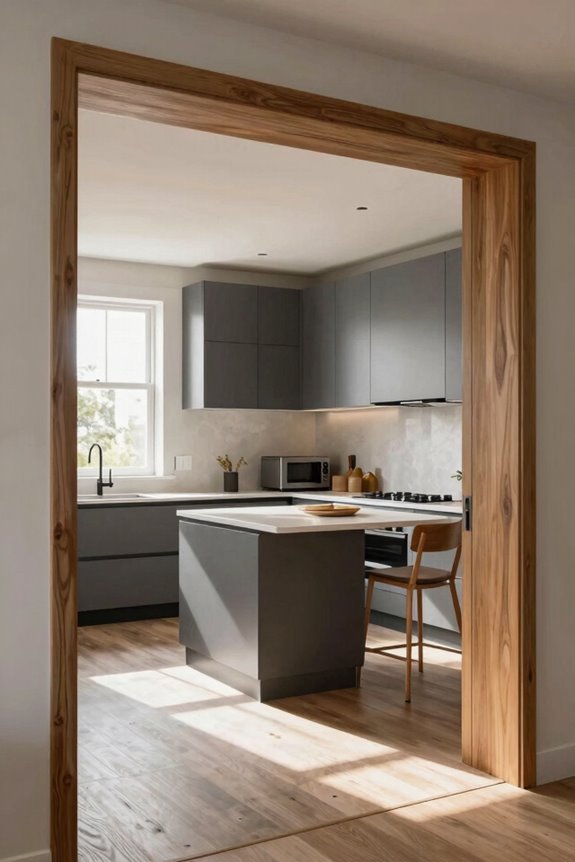
How do you maintain a functional work triangle when doorways interrupt your layout? A broken L layout solves this challenge by strategically positioning gaps in your L-shaped kitchens to accommodate multiple doorways without sacrificing functionality.
Consider these design strategies:
- Offset cabinet runs along walls to create natural traffic corridors between entry points
- Strategic pantry storage placement that shields work zones from main walkways
- Floating islands positioned to define zoning while maintaining open-concept flow
- Reconfigured counter space that wraps around obstacles rather than forcing linear arrangements
- Intentional gaps between cabinet sections that prevent congestion around appliances
This broken L layout preserves your work triangle by distributing the sink, stove, and refrigerator across accessible zones. The design supports clear pathways while maintaining distinct cooking, cleaning, and prep areas.
Multiple doorways no longer trap you in a single corridor; instead, they enhance traffic flow through intentional kitchen zoning.
Position Your Fridge, Stove, and Sink for Smooth Workflow
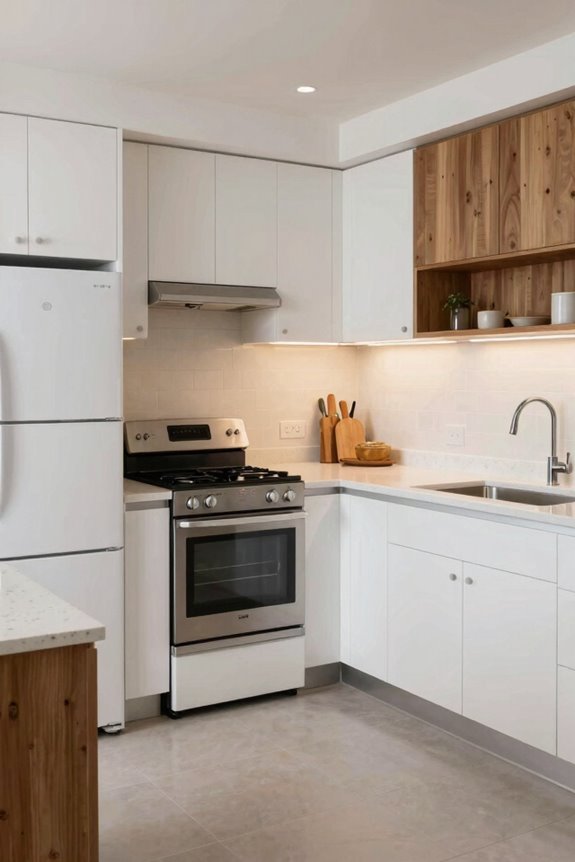
I’ll position your appliances strategically to create an efficient work triangle that minimizes wasted steps and keeps you in a natural rhythm as you move between refrigeration, prep, and cooking zones. Place your fridge and stove on the longest wall of your L-shaped layout, spacing them 4 to 9 feet apart, while positioning your sink on the shorter wall to anchor the third point of the triangle and keep dishwashing tasks contained.
This arrangement typically generates a work triangle totaling 15 to 26 feet, which is the ideal range where you’re not cramped but also not traveling excessive distances. The layout helps major zones flow in a logical sequence without backtracking or crossing your primary traffic paths.
Work Triangle Efficiency
Why does workflow matter in kitchen design? I’ll tell you—it’s the difference between cooking feeling effortless and feeling chaotic. Your work triangle connects three essential zones, and optimizing this path reduces unnecessary steps.
In your L-shaped layout, I recommend:
- Place your fridge and cooktop on the longer leg for streamlined prep work
- Position your sink on the shorter leg to create natural traffic flow
- Maintain 15 to 26 feet total distance between all three points
- Position tall units at one end to preserve uninterrupted counter space
- Consider an island or peninsula to enhance layout flow without disrupting your triangle
When you align fridge placement, sink position, and cooktop location strategically, you’ll notice immediate improvements in efficiency. This intentional arrangement makes your L-shaped kitchen a space where cooking becomes enjoyable rather than frustrating.
Appliance Placement Strategy
Where you position your three primary appliances determines whether your L-shaped kitchen functions smoothly or forces you into repetitive steps. I’d place your fridge and oven on the longest run to maximize workspace continuity. This appliance placement preserves the countertop continuity you’ll value during meal prep.
Your sink grouping and dishwasher location belong on the shorter leg, keeping plumbing accessible and clustering cleaning tasks efficiently. The work triangle connecting these three points should total 15 to 26 feet, preventing unnecessary backtracking. Position tall units at one end of your L-shaped kitchen, reducing visual clutter while keeping prep areas unobstructed.
Consider a peninsula or island for secondary functionality, perhaps a wine cooler, supporting social cooking without disrupting core workflow.
Coordinate Cabinets and Materials Across Your L
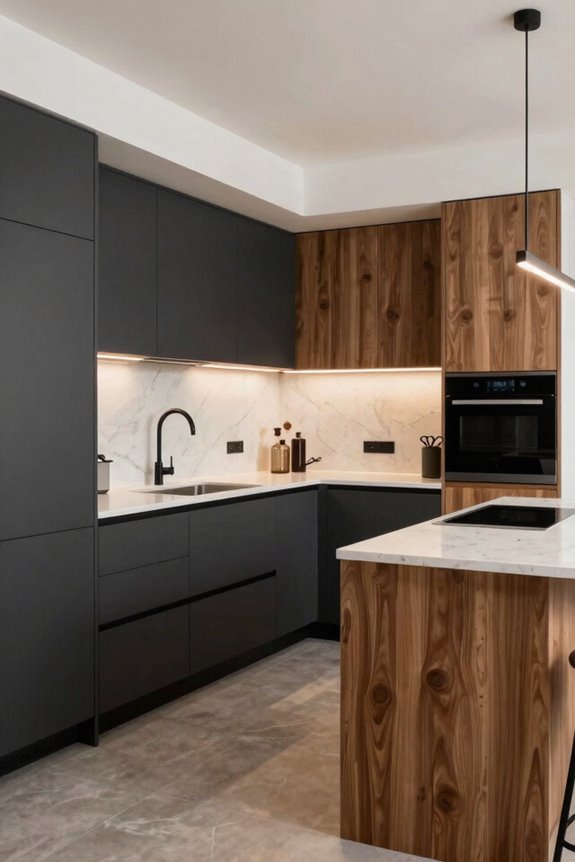
When you’re designing an L-shaped kitchen, the two legs of your layout can easily feel disconnected if you’re not deliberate about material and cabinet choices. Achieving cross-leg harmony requires intentional coordination across your entire space.
Achieving cross-leg harmony in L-shaped kitchens requires intentional material and cabinet coordination across your entire space.
Here’s what I recommend for cabinet coordination in your two-leg layout:
- Match cabinet door styles and heights on both legs to preserve consistent finishes
- Select uniform countertops; quartz pairs beautifully with quartz across both sections
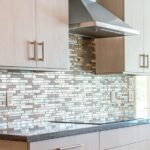
- Choose consistent backsplashes that reinforce your architectural rhythm
- Align integrated hardware finishes, whether brushed nickel or matte black
- Apply matching leg finishes using similar wood tones or painted surfaces
These choices create an integrated hardware approach that strengthens your overall design. When cabinetry and materials work together across both legs, your L-shaped kitchen reads as one unified space rather than disconnected sections.
Adapt L-Shaped Kitchens to Small Spaces and Tight Budgets
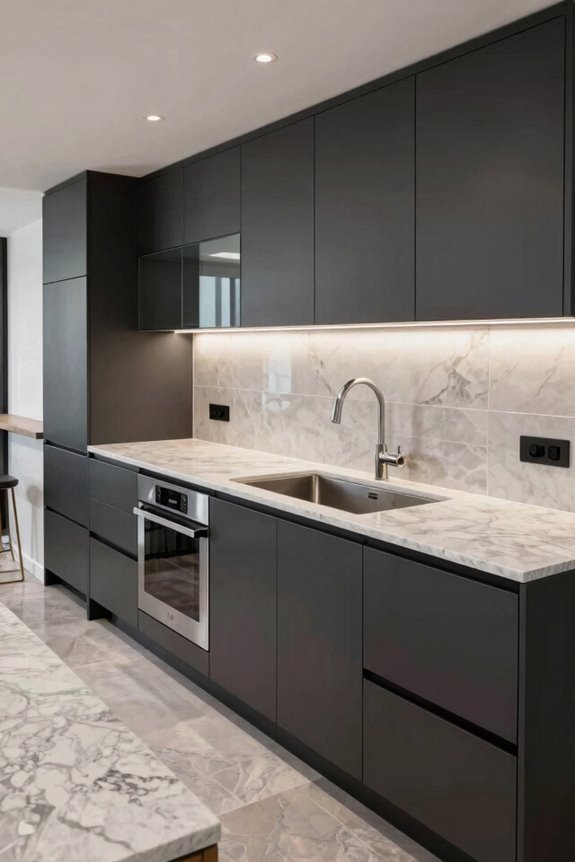
Once you’ve locked in your material coordination across both legs, you’re ready to tackle the real challenge: fitting an L-shaped layout into compact square footage without sacrificing function or breaking the bank. I find that banking appliances along the long run creates efficiency while open shelving and slim cabinetry preserve your budget.
Corner storage solutions, such as lazy Susans and pull-out organizers, maximize those awkward angles that typically waste space. A peninsula extends counter space and seating without expanding your footprint, a smart move when square footage is limited. What matters most is maintaining clear traffic flow between the L’s legs and keeping your work triangle (fridge, sink, stove) practical. These strategies will help your small L-shaped kitchen deliver both functionality and style within realistic financial constraints.