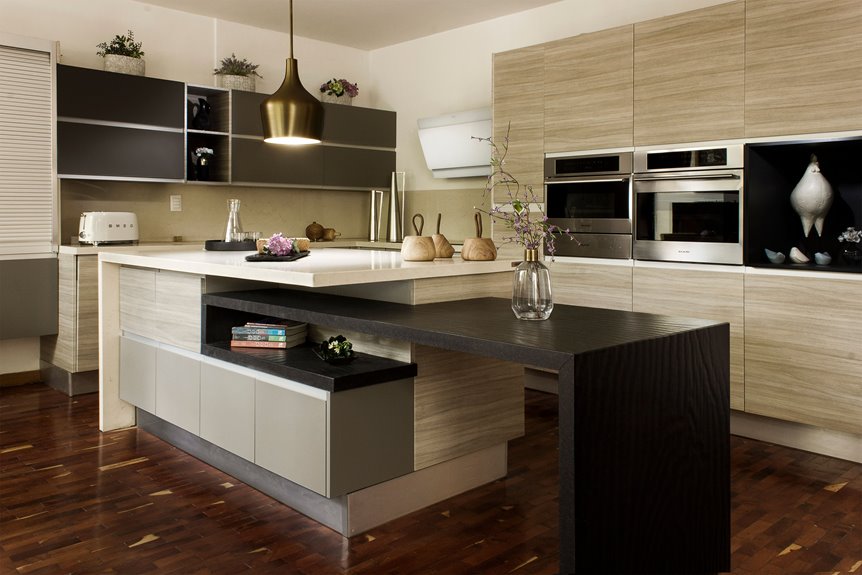
Kitchen flooring accounts for roughly 9% of your home’s total renovation budget, yet it influences daily comfort and resale value significantly. I’ve found that choosing the right material shapes how your space functions and feels.
Whether you’re drawn to porcelain’s durability, vinyl’s affordability, or microcement’s modern appeal, each option presents distinct advantages and trade-offs. Let’s explore which flooring solution aligns with your home’s demands and design vision.
Porcelain Tile: Durable Kitchen Flooring, Endless Designs
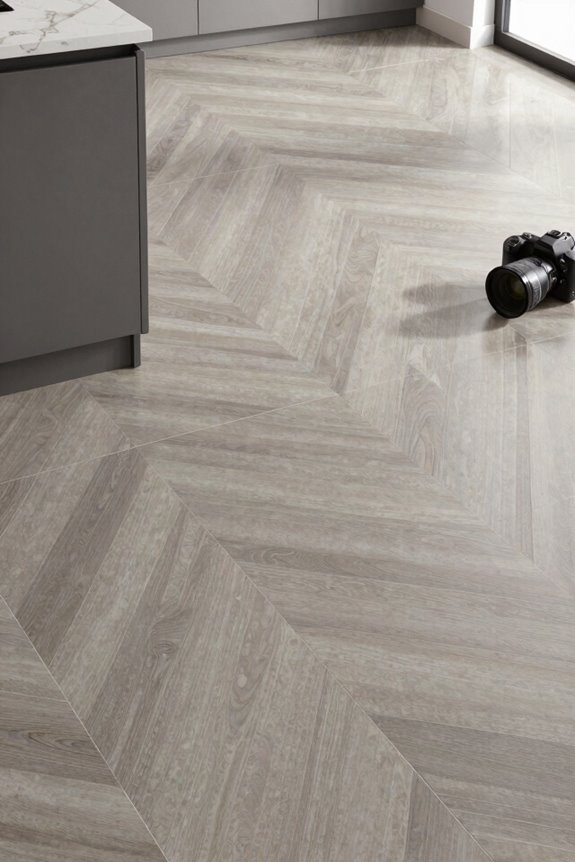
Why does porcelain tile dominate kitchen flooring across residential and commercial spaces? The answer lies in its exceptional durability and water resistance, which withstand high-traffic demands. I’ve found that large-format tiles reduce grout lines significantly, creating a seamless appearance that’s remarkably maintenance-friendly.
The design versatility proves equally compelling. Wood-look porcelain mimics authentic timber, while polished marble and matte natural stone options simulate premium materials at practical price points. What makes porcelain tile particularly valuable is its radiant heating compatibility, balancing comfort with functionality in busy kitchens.
Whether you’re drawn to contemporary aesthetics or traditional warmth, durable kitchen flooring in porcelain delivers lasting performance. This smart investment combines aesthetic flexibility with genuine practicality, positioning porcelain as the flooring choice for kitchens that work as beautifully as they perform.
Vinyl Plank Kitchen Flooring: Hardwood Look, Easy Care
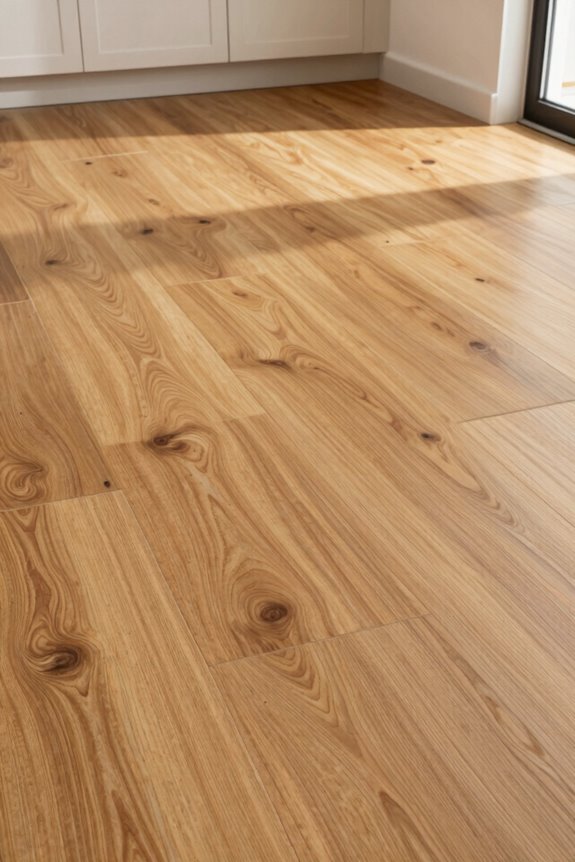
How can you achieve authentic hardwood aesthetics without the maintenance burden? Luxury Vinyl Plank flooring delivers exactly that combination. LVP offers a wood-like look at a fraction of hardwood’s cost while remaining waterproof and remarkably durable in kitchens.
Luxury Vinyl Plank flooring delivers hardwood aesthetics without maintenance, offering waterproof durability at a fraction of the cost.
The wear layer protects against scratches and scuffs that plague busy spaces. Large-format planks minimize grout lines, creating seamless surfaces ideal for open layouts. Installation proves straightforward; many homeowners tackle DIY projects successfully, reducing remodeling downtime significantly.
LVP’s design versatility shines through patterns mimicking oak, walnut, and hickory species. You’ll find realistic grain textures and tonal variations that rival authentic hardwood. Easy care means simple sweeping and occasional damp mopping, with no refinishing required.
Budget-friendly pricing combined with low maintenance makes kitchen flooring accessible without compromising visual appeal or performance.
Microcement: Modern, Seamless, Built to Last
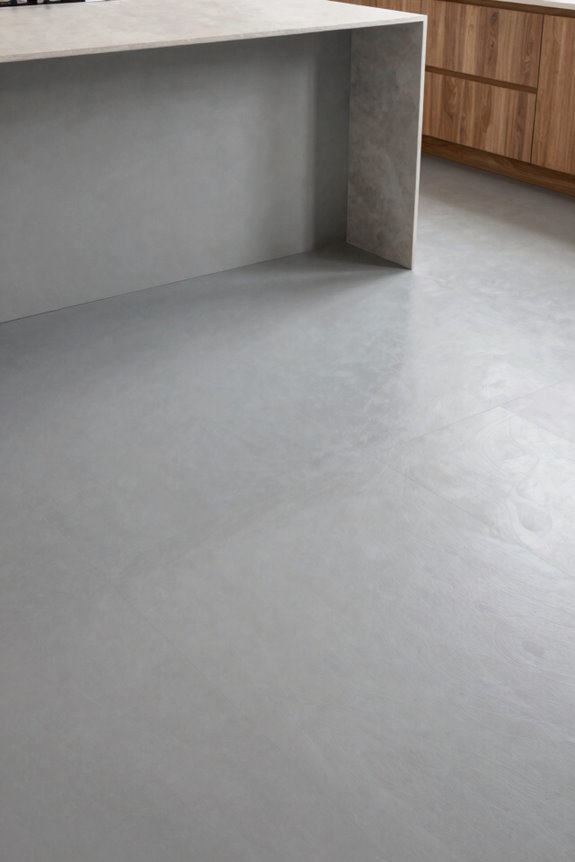
When you’re ready to move beyond traditional kitchen flooring, microcement delivers a distinctly contemporary solution that creates polished, unified spaces. This seamless material resists stains, moisture, and impacts, which are important qualities for hard-working kitchens. I appreciate how microcement’s minimalist aesthetic requires minimal maintenance; you’ll clean it effortlessly compared to tile or wood alternatives.
The customizable finishes and colors let you personalize your kitchen while maintaining that modern unity. What sets microcement apart is its installation flexibility. TOPCRET, a leading durable microcement provider, can apply it directly over existing surfaces, minimizing disruption to your home.
Because the installation happens seamlessly across your entire floor, you’ll achieve architectural continuity that traditional flooring struggles to match. This low-maintenance, moisture-resistant kitchen flooring builds lasting value.
Hardwood vs. Bamboo: Cost, Durability, and Moisture
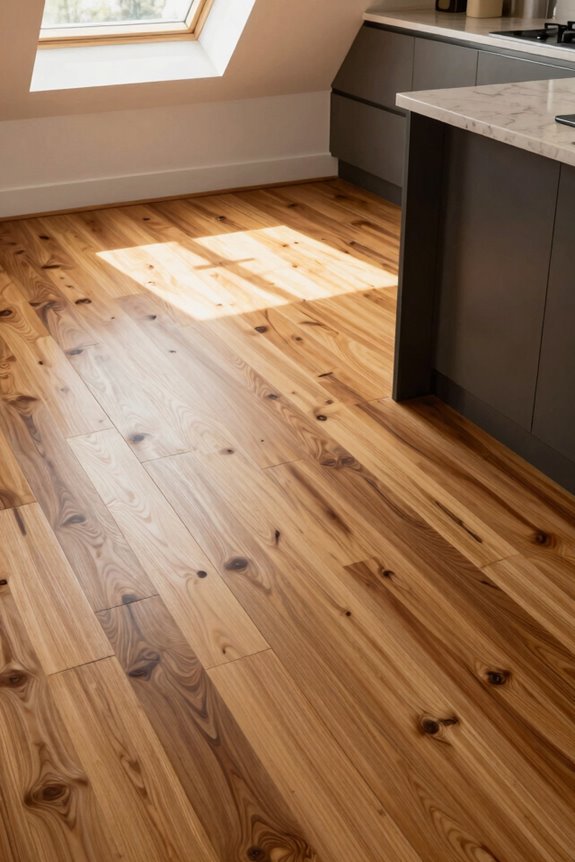
If you’re drawn to the warmth of wood flooring but concerned about kitchen moisture, understanding the differences between hardwood and bamboo becomes important to making an informed choice.
| Flooring Type | Moisture Resistance | Cost |
|---|---|---|
| Solid Hardwood | Lower | Higher |
| Engineered Hardwood | Higher | Moderate |
| Bamboo Flooring | Lower | Moderate |
Solid hardwood delivers classic beauty yet demands protection from kitchen humidity and spills. Engineered hardwood mitigates warping risk through its layered construction, making it practical for moisture-prone kitchens.
Bamboo flooring offers eco-friendly appeal with distinctive grain patterns, though it’s notably susceptible to humidity fluctuations. Your choice hinges on balancing durability, finish options, and maintenance commitment. Engineered hardwood and bamboo provide similar pricing while delivering different performance profiles. Consider your kitchen’s humidity levels carefully; proper sealing and regular maintenance extend any wood floor’s lifespan significantly.
Budget Kitchen Flooring: Designer Style for Less
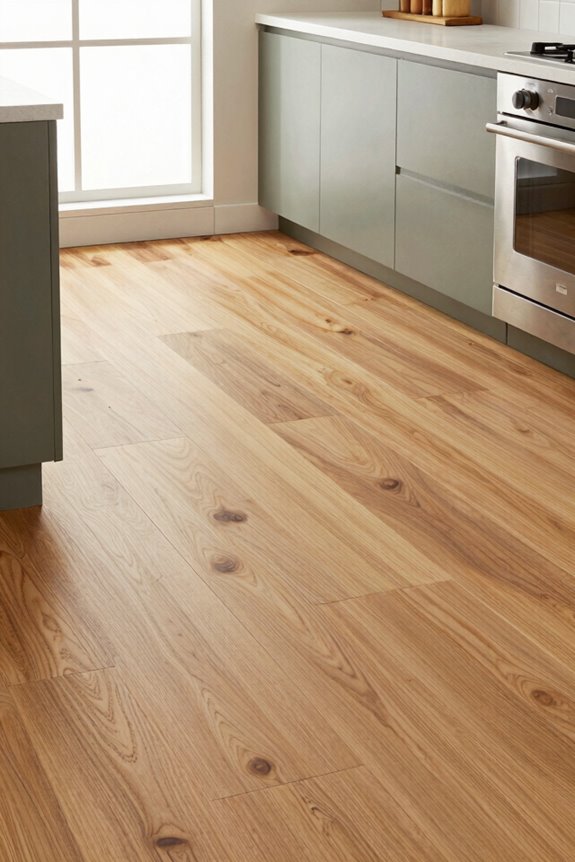
Why settle for outdated aesthetics when budget constraints needn’t compromise your kitchen’s visual impact? Laminate flooring and vinyl planks deliver realistic hardwood appearances with strong scratch and stain resistance. Luxury Vinyl Plank (LVP) offers waterproof protection and easy maintenance while mimicking authentic wood species at a fraction of the cost. Sheet vinyl stands as the most budget-friendly option, providing diverse patterns and textures for substantial savings.
For quick updates, peel-and-stick tiles enable self-adhesive installation in subway and geometric designs without professional help. If you already possess hardwood, refinishing presents a cost-effective alternative to replacement, revitalizing your kitchen dramatically. Each option supports designer-look kitchens through accessible materials and straightforward installation, allowing you to invest confidence in your design choices without financial strain.