Your kitchen sink deserves more than functional neglect. I’m here to show you how strategic material choices, from fireclay’s durability to copper’s distinctive patina, can make this workspace a design centerpiece.
Whether you’re drawn to farmhouse aesthetics or minimalist undermount installations, the right sink configuration improves both your workflow and home’s visual appeal.
Let’s explore how these ten ideas can enhance your kitchen’s functionality and character simultaneously.
Farmhouse Sinks: Classic Charm Meets Modern Kitchens
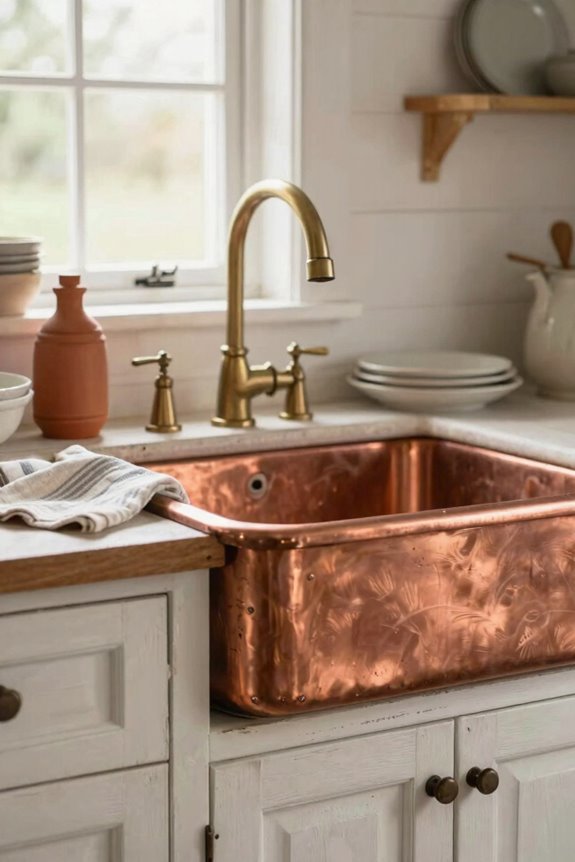
A farmhouse sink, or apron-front sink as designers often call it, isn’t your grandmother’s kitchen fixture anymore. I’ve watched these fixtures evolve dramatically, with 2024 bringing sleeker profiles and materials like matte granite that bridge traditional and modern aesthetics seamlessly.
The deep basin design accommodates large pots effortlessly, while durable options span fireclay, copper, cast iron, and stainless steel. Fireclay resists scratches and stains effectively; copper develops a distinctive patina over time, adding character to your kitchen.
However, you’ll need cabinetry reinforcement to support the sink’s weight and account for countertop height adjustments. These sinks demand custom installation, increasing costs compared to standard drop-in models. Yet their visual impact changes kitchens, whether rustic or transitional, creating that coveted gathering-space aesthetic you’re seeking.
Undermount Sinks: The Seamless Design Solution
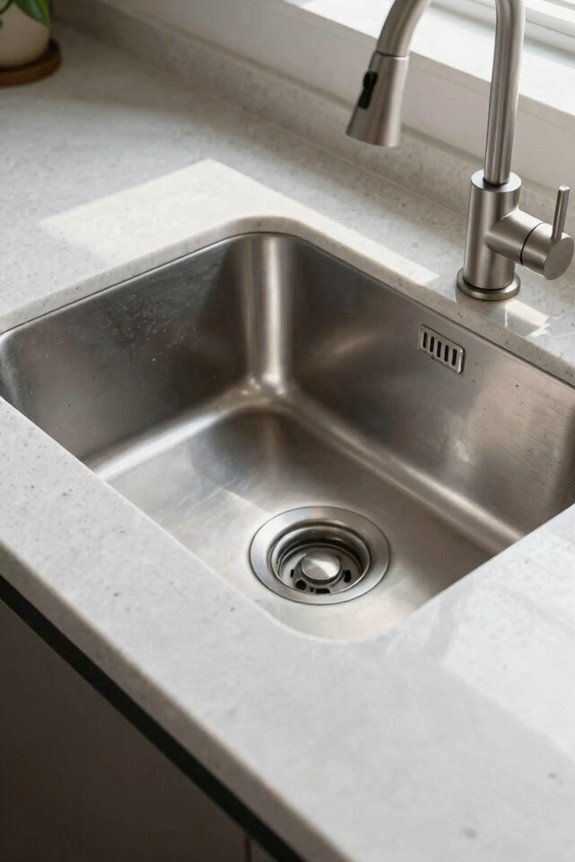
I’ve learned that undermount sinks create that desirable seamless look by sitting beneath your countertop surface, eliminating the rim that typically traps debris and interrupts your counter’s visual continuity. You’ll want to match your sink material carefully with your countertop choice; stainless steel undermounts work well with granite, quartz, and solid surface countertops, while laminate and tile surfaces simply can’t support this installation method.
The trade-off involves more demanding installation requirements and sturdier cabinetry, since the sink hangs from below rather than resting on a rim. This makes the project less forgiving for DIY installations than drop-in alternatives.
Seamless Countertop Integration
How do you eliminate the visual interruption of a traditional rim sink and create an unbroken counter surface? Undermount sinks accomplish this through seamless countertop integration, positioning the basin beneath your solid-surface, granite, or quartz countertops. This undermount installation creates a continuous countertop-to-sink flow that defines contemporary kitchen design.
The seamless transition eliminates the rim where debris accumulates, improving cleanability significantly. Your countertop extends uninterrupted to the sink’s edge, establishing visual coherence across your workspace. Granite and quartz countertops particularly benefit from this approach, as their natural patterns remain unbroken by traditional lip edges.
Success requires sturdy cabinetry and precise undermount mounting techniques, ensuring the countertop’s weight distributes evenly. Single or double basin configurations both achieve this aesthetic, though the undermount installation demands professional installation expertise for optimal durability and performance.
Material Compatibility and Selection
Now that you’ve envisioned the seamless aesthetic undermount sinks provide, you’ll want to match that vision with compatible countertop materials. Not every surface works equally well with this installation method.
Solid surface, granite, and quartz countertops are your ideal partners for undermount installation. These materials support the sink’s weight while maintaining proper sealing around the edges. Laminate and tile, however, cannot accommodate undermount configurations due to structural limitations.
| Material | Compatibility | Best For |
|---|---|---|
| Granite | Excellent | Durability and natural appeal |
| Quartz | Excellent | Low maintenance and consistency |
| Solid Surface | Excellent | Seamless repairs and customization |
| Laminate | Incompatible | Budget countertops only |
| Tile | Incompatible | Traditional designs only |
Your sink’s material—stainless steel, copper, or granite composite—complements these countertops beautifully. Strong cabinet support and precision installation support long-term performance. This compatibility foundation creates the kitchen you’re building.
Double Basin Layouts: Mastering Multitasking Workflows
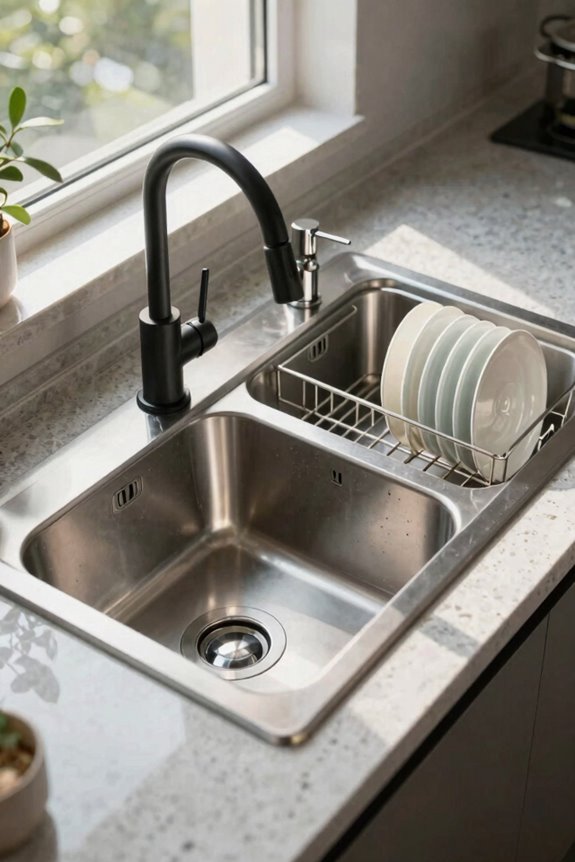
When you’re juggling multiple kitchen tasks simultaneously, a double basin sink becomes your strategic advantage. Equal-sized basins work best for balanced workflows, though a larger main basin paired with a smaller secondary basin handles specialized multitasking well. Soaking cookware while prepping vegetables reduces cross-contamination effectively.
Your layout choice influences drainage requirements significantly. Make sure adequately sized trap and supply lines accommodate two drains, particularly if incorporating waste disposal in one basin. Undermount installations provide seamless aesthetics, while drop-in options suit various countertop materials without extensive modifications.
Depth matters considerably. Deeper basins manage bulky items easily but demand more bending; shallower designs reduce strain yet splash during heavy use. I recommend 8-10 inches for optimal balance between functionality and ergonomics, creating a workflow that serves your household’s actual needs.
Workstation Sinks: Built-In Prep and Organization
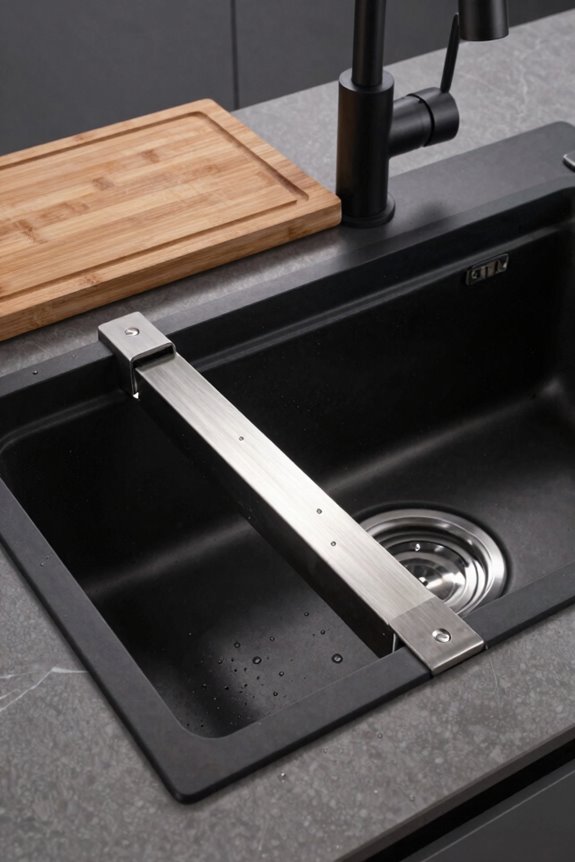
Why settle for a standard basin when you can consolidate your entire prep workflow into one strategically designed fixture? Workstation sinks integrate built-in accessories—cutting boards, drying racks, colanders, and prep bowls—into your countertop, creating a multifunctional command center. This space-saving design proves invaluable in compact kitchens, enabling smooth transitions between washing, chopping, and drying without sacrificing counter real estate or organization.
The configuration typically combines sturdy basins with accessory recesses optimized for various countertop materials and cabinet layouts. Once you’ve experienced this efficient workflow, you’ll struggle to return to traditional setups.
The consolidated prep station reduces movement between tasks while minimizing clutter. You’ll join other practical cooks who’ve discovered how thoughtful design improves everyday kitchen functionality.
Corner Sinks: Reclaiming Wasted Kitchen Space
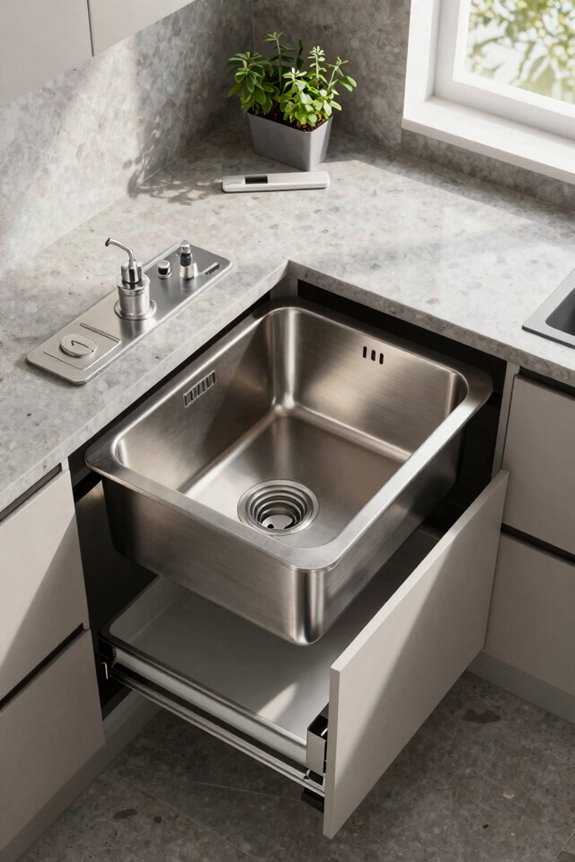
I’ve reclaimed more than a few awkward kitchen corners into functional prep zones by installing a corner sink, which interrupts the wasted dead space that typically collects clutter and disrupts your workflow triangle. When you position a corner sink, whether you choose a compact 30-inch single bowl or a 36-inch double configuration, you open up square footage that your stove, refrigerator, and main prep area can now access more efficiently.
The key is custom cabinetry that accommodates the diagonal footprint. While this limits your under-sink storage, designers like those at NKBA recommend pairing the installation with open shelving or a decorative faucet to anchor the corner as a visual asset rather than a compromise.
Maximizing Underutilized Corner Space
Because most kitchens feature angular dead zones that neither workflow nor storage effectively uses, corner sinks represent a pragmatic solution to reclaiming these awkward spaces. I’ve found that strategic corner sink placement makes better use of wasted real estate by turning it into functional zones. Consider these configuration options:
- Undermount designs create seamless countertop transitions
- Drop-in styles suit existing cabinetry modifications
- Farmhouse sinks anchor rustic aesthetics while maximizing bowl capacity
- Double-bowl configurations separate prep from cleaning tasks
- Single-bowl setups optimize compact footprints
When you implement a corner sink, you’re strategically optimizing kitchen workflow. The configuration frees your central island and main counters for cooking and storage, establishing better spatial hierarchy.
Though custom cabinetry requirements and under-sink storage limitations exist, the resulting compact footprint enhances efficiency, particularly in small or open-plan kitchens where visual focal points matter.
Workflow Efficiency and Layout
When you position a corner sink strategically, you’re reshaping your kitchen’s functional hierarchy, particularly the work triangle connecting your sink, stove, and refrigerator. This corner configuration makes use of tight, underutilized spaces and turns them into purposeful prep zones that improve your workflow efficiency.
Aligning the sink with adjacent appliances creates smooth movement between stations, reducing unnecessary steps during meal preparation. However, the corner layout requires careful planning. Your cabinet and plumbing setup must accommodate the configuration without extensive trenching or rework that increases costs.
Under-sink storage diminishes due to plumbing constraints, so integrate pull-out organizers and wall-mounted shelving nearby. In open-layout kitchens, corner sinks prove particularly effective, maximizing space-saving benefits while maintaining visual flow. The work triangle becomes truly functional rather than theoretical, a practical advantage for anyone seeking kitchen layouts that work as hard as you do.
Sink Materials: Durability, Style, and Maintenance
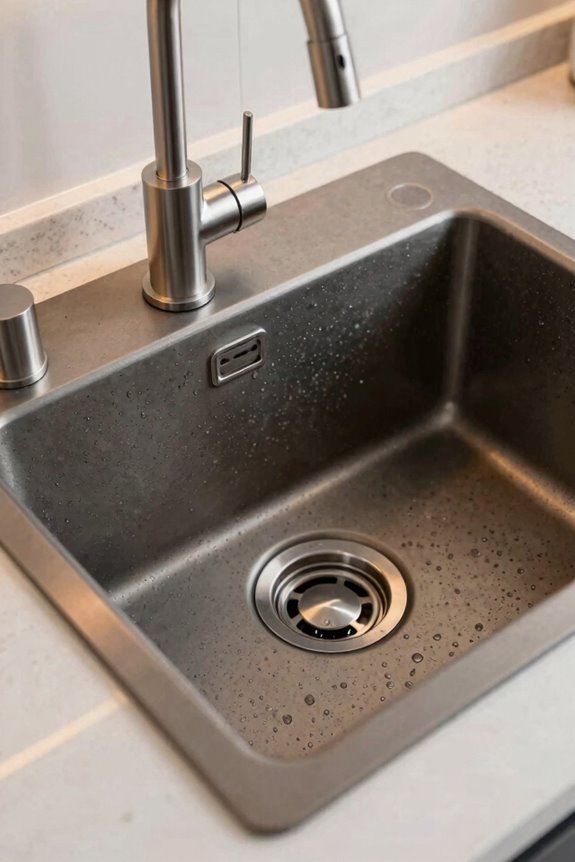
Your sink’s material foundation determines how well it’ll withstand daily wear while complementing your kitchen’s aesthetic. Selecting the right material balances practicality with style, allowing your investment to serve you well for years.
Consider these five popular options:
- Stainless steel: Budget-friendly, heat-resistant, and wipeable to minimize water spots
- Fireclay: High-fired ceramic with glossy glaze, ideal for farmhouse kitchens
- Granite composite sinks: Durable up to 535°F with excellent noise reduction
- Copper sinks: Develop unique patina and offer natural antimicrobial properties
- Cast iron with enamel: Timeless appearance requiring sturdy cabinetry support
Each material demands different maintenance routines. Stainless steel needs regular wiping, while fireclay resists chips and discoloration. Granite composite delivers durability and heat resistance without excessive noise.
Copper evolves beautifully over time, embracing natural patina development. Cast iron maintains its classic look but requires careful handling due to weight considerations.
Bold Colors and Statement Finishes That Elevate Your Kitchen
If you’ve grown tired of standard stainless steel, bold-colored enamel sinks offer an immediate way to anchor your kitchen’s visual identity without undertaking a full renovation. Statement finishes like navy blue, forest green, and copper/brass-toned options function as powerful focal points in neutral kitchens. Color-forward sinks in sage green provide personality while maintaining durability against everyday wear.
These durable finishes align with current design trends, yet they require thoughtful maintenance planning. Enamel surfaces can chip, necessitating repair strategies you’ll want established beforehand. Matte black and deep jewel tones influence your kitchen’s overall ambiance significantly.
Smart Sink Features: LED Lighting and Hands-Free Controls
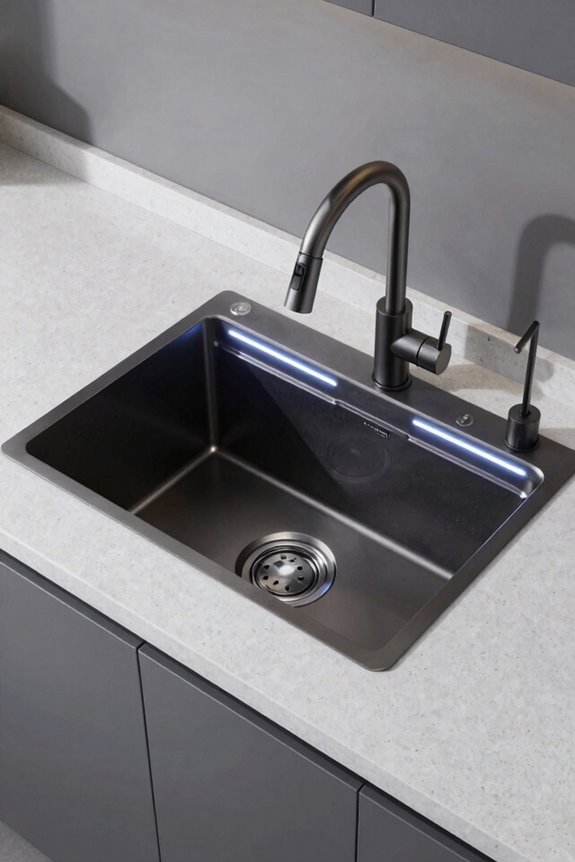
I’m introducing you to smart sink features that merge functionality with modern convenience, starting with LED lighting integrated directly into the basin and under-sink areas. These systems deliver task lighting for food preparation and dishwashing while offering color-changing options for ambient effects. You can visualize these options beforehand using 3D design tools like Homestyler before committing to installation.
Paired with hands-free control systems that activate through sensor technology, these sinks reduce water waste through automation while improving hygiene. Many coordinate seamlessly with other fixtures in curated lines like Tapmasters for a unified kitchen upgrade.
LED Lighting Benefits
How often do you find yourself squinting at a cutting board or struggling to spot a dish at the bottom of your sink? LED lighting improves your workspace by delivering practical illumination where you need it most.
Integrated LED features enhance your kitchen’s functionality:
- Task illumination reduces shadows on work surfaces during food prep and dishwashing
- Under-sink LEDs improve nighttime visibility for locating items and navigating safely
- Color-changing LEDs customize ambient lighting without additional fixtures
- Water temperature indicators signal hot or cold water, prioritizing safety before contact
- Smart faucet integration creates a well-organized, hygiene-focused kitchen workflow
These elements work together to establish a professional-grade environment. When LED lighting pairs with hands-free controls, you’re investing in both efficiency and cleanliness, which are essential components of a modern kitchen that supports your daily routine.
Hands-Free Control Systems
Hands-free control systems allow your sink to operate without touching faucet handles during food prep and dishwashing. Motion sensors detect hand movements, triggering water flow instantly, while foot pedal alternatives provide additional activation options for those seeking maximum surface contact reduction. Touchless technology integrates seamlessly with popular faucet lines, including Tapmasters, creating a unified aesthetic that complements your countertop design.
Pairing hands-free operation with under-sink LED lighting or faucet-integrated illumination enhances visibility during evening tasks. These systems typically require countertop power sources or battery support, depending on your sink configuration: whether undermount, integrated, or corner installations. The result is a cleaner workspace that accommodates diverse user preferences while maintaining modern functionality.
Matching Your Kitchen Sink to Home Style
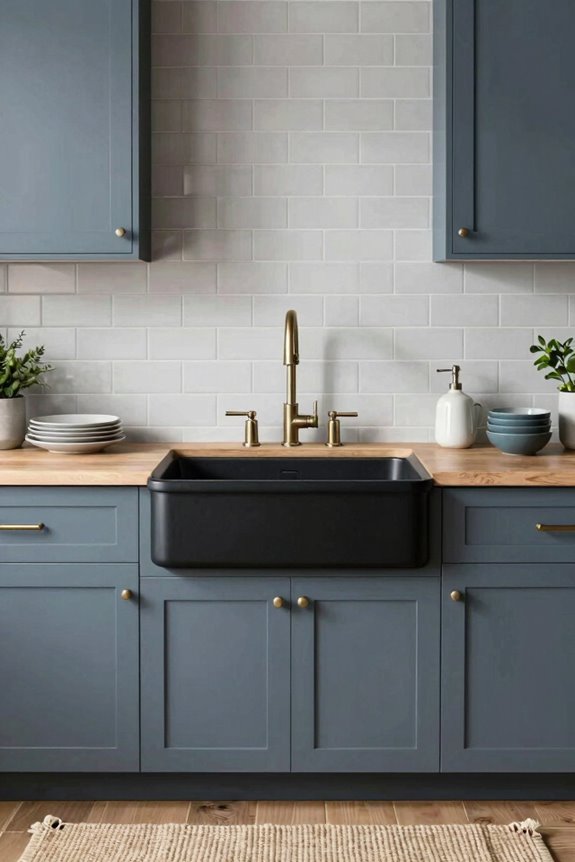
Your kitchen sink’s style should reflect your home’s overall aesthetic, whether that’s rustic charm or contemporary minimalism. I’ll help you navigate this choice by matching materials and designs to your space’s existing character.
Consider these pairings:
- Farmhouse sinks with front aprons suit traditional homes with heavier cabinetry
- Undermount designs deliver sleek, seamless countertop integration for contemporary kitchens
- Stainless steel complements modern spaces with clean lines and minimal visual weight
- Fireclay or copper brings warmth and distinct character to classic interiors
- Integrated workstations align with modern workflows, combining functionality with polished aesthetics
Material choice significantly impacts both appearance and maintenance requirements. Fireclay offers glossy traditional charm but demands specific cabinet support. Copper develops a beautiful patina over time, evolving naturally.
Stainless steel provides durability with contemporary appeal. Balance your preferred style against daily use patterns, keeping your sink harmonious with kitchen workflows while reflecting your home’s authentic character.
Configuration That Matches Your Cooking Style
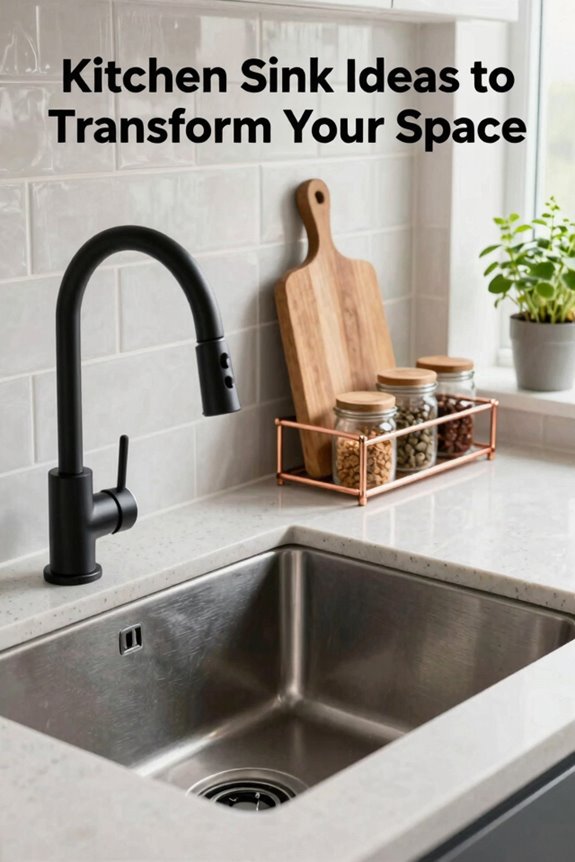
Once you’ve settled on a style that reflects your home’s character, the next decision centers on which sink configuration will actually support how you cook and clean.
If you regularly handle oversized pots and bulk ingredients, a Single Basin offers the spacious clearance you need without multitasking constraints. A Double Basin configuration separates prep workflow from cleanup, with equal or asymmetrical sizing depending on your priorities. For serious cooks, a Workstation Sink integrates cutting boards and drying racks directly into your workspace.
Corner Sinks maximize underused kitchen layout areas, while a Bar/Prep Sink on an island creates secondary functionality for entertaining. Consider an Undermount installation for seamless integration. Match your configuration to your actual cooking habits, not aspirational ones, and your kitchen becomes truly functional.