Picture yourself standing in a narrow galley kitchen with walls close enough to touch both simultaneously, and you’re wondering how to make it functional.
I’ll show you how parallel counters, ceiling-height storage, and strategic lighting create an efficient workspace.
The seven ideas I’m sharing work together to create distinct zones, preserve workflow, and expand the space visually.
Here’s what changes everything.
Optimize Your Galley Layout: Parallel Counters and Work Zones
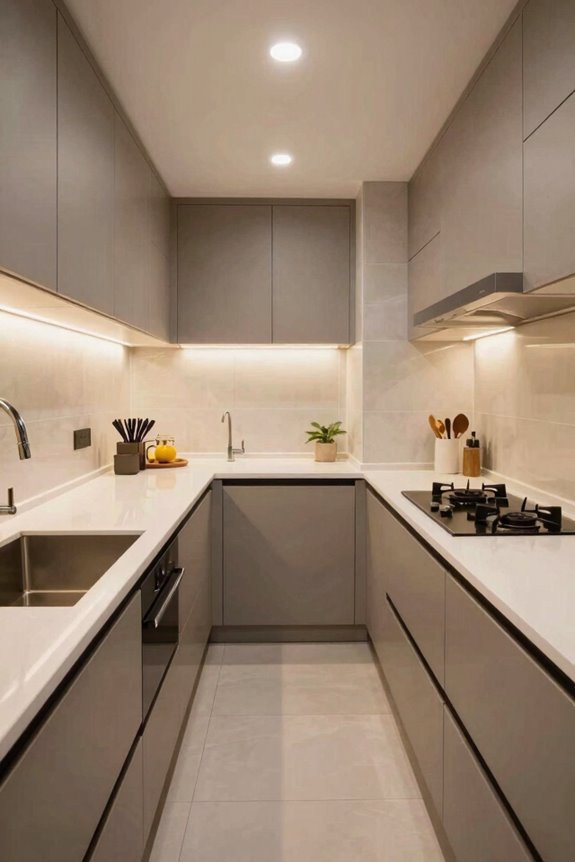
How do you maximize functionality in a galley kitchen without sacrificing workflow? I’ve found that organizing your galley layout around parallel counters creates distinct work zones that support two-person cooking. Position your sink on one side and cooktop on the opposite counter; this separation establishes dedicated prep and cooking areas.
Your refrigerator should tuck into a corner, bookending cabinetry while maintaining continuous countertop flow. The key is maintaining adequate aisle width between counters, typically 42-48 inches, so you won’t have doors swinging into pathways. By establishing these clearly delineated work zones, you’ll find that sink, range, and fridge remain readily accessible. This thoughtful arrangement makes your narrow space into an efficient galley kitchen that accommodates multiple users simultaneously.
Maximize Vertical Storage From Counter to Ceiling
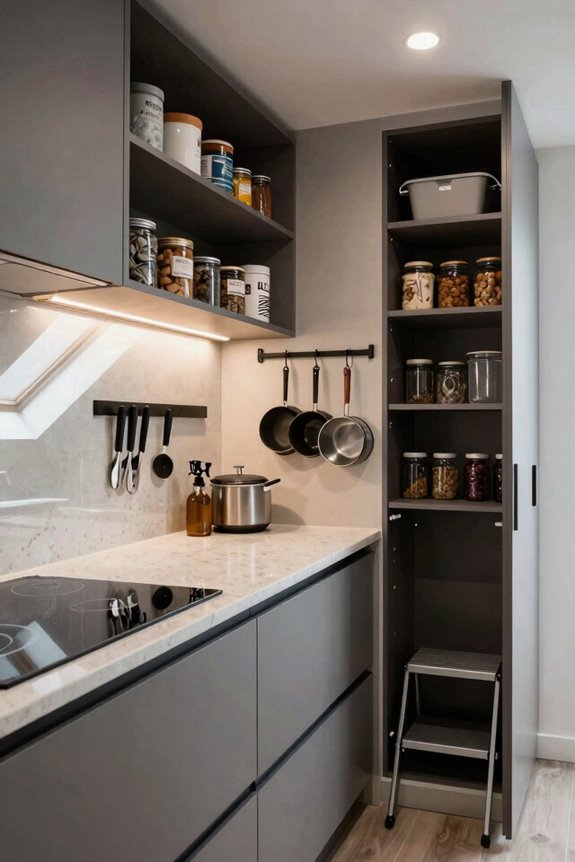
In a narrow galley kitchen, I’d recommend installing cabinetry that extends to the ceiling, which captures otherwise wasted wall space and creates a unified vertical storage column from your countertop to the top of the room. Pairing light or white cabinetry with a darker countertop, such as a charcoal quartz or deep walnut, establishes depth perception while interior organizers and adjustable shelving keep items accessible without visual clutter.
Beyond standard cabinets, you can integrate hidden storage solutions like toe-kick drawers or slim pull-out organizers between base units. Strategically positioned floating shelves above lower cabinets maximize every functional inch without narrowing your working corridor.
Custom Cabinetry to Ceiling
Why waste the vertical real estate above your standard upper cabinets when you’re working with a narrow galley kitchen? Custom cabinetry to ceiling makes use of underutilized wall space and creates functional storage that belongs in every compact kitchen. Full-height cabinetry eliminates gaps, creating seamless visual continuity while maximizing capacity.
I’d recommend integrating interior organizers—pull-out bins, dividers, and shelf inserts—within these tall cabinets. This keeps frequently used items accessible without cluttering countertops. Light finishes on cabinetry reflect natural light, contrasting effectively against darker countertops to enhance perceived depth.
Precise millwork ensures your custom units fit narrow dimensions perfectly. Hardware selection matters; quality handles and hinges support daily functionality. When properly configured, floor-to-ceiling cabinetry turns a constraint into an advantage, delivering organized vertical storage that serves as both practical solution and design anchor for your galley space.
Hidden Storage and Organization
When you’re designing a galley kitchen with minimal square footage, every inch, from countertop to ceiling, demands purposeful allocation. I’ve found that hidden storage solutions work well in narrow kitchens by concealing items behind seamless cabinetry faces while maintaining visual openness.
Interior organizers like pull-out drawers, tiered shelving, and compartmentalized inserts maximize vertical storage efficiency. You’ll access everyday essentials without sacrificing the clean aesthetic that narrow spaces require.
| Storage Solution | Placement | Item Type | Benefit |
|---|---|---|---|
| Deep drawers with dividers | Lower cabinets | Cookware, linens | Quick retrieval |
| Sliding spice racks | Inside doors | Seasonings, oils | Hidden accessibility |
| Vertical dividers | Upper shelves | Baking sheets, boards | Space optimization |
| Toe-kick drawers | Base level | Small appliances | Reclaimed floor space |
This layered approach combines hidden storage with strategic organizers to keep your galley kitchen functional and visually serene throughout daily workflows.
Use Mirrors and Light to Expand the Space Visually
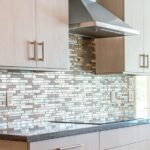
Mirrors and strategic lighting are your most effective tools for combating the inherent narrowness of a galley kitchen. A wall of mirrors bounces light across the space, creating visual width that doesn’t actually exist. I’d recommend pairing this with reflective backsplashes. Use them sparingly behind your cooktop or sink to avoid overwhelming the area while maximizing light reflection.
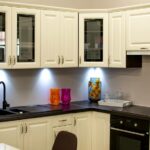
Layered lighting significantly improves your galley kitchen. Implement task lighting under cabinets for work surfaces, ambient lighting via recessed fixtures for overall brightness, and accent lighting to highlight architectural features. This three-tier approach eliminates shadows that compress narrow spaces.
Consider interior windows or pass-throughs connecting to adjacent rooms; they allow natural light penetration that opens the kitchen visually. Glass or translucent partitions maintain sightlines while keeping the space feeling integrated rather than cramped.
Select Panel-Front Appliances and Unified Finishes
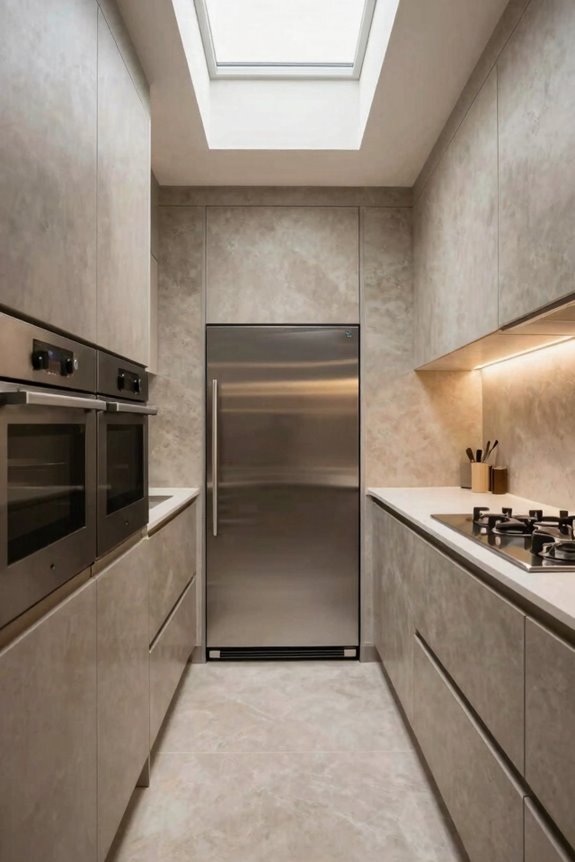
How do you maintain visual continuity in a space where every inch counts? Panel-front appliances offer the answer. By selecting refrigeration and dishwashers that align flush with adjacent cabinetry, you create an uninterrupted visual rhythm throughout your galley kitchen. This seamless integration preserves the cabinet’s clean lines while actually saving valuable aisle width in tight quarters.
Unified finishes amplify this effect considerably. Match your appliance panels, cabinet doors, and drawer fronts in consistent materials; matte gray, white, or wood-tone options work exceptionally well. Keep sheen levels identical across all surfaces to minimize contrast and maximize perceived space. When every surface speaks the same design language, your narrow galley feels organized and purposefully composed rather than cramped.
Strategic appliance placement paired with matching finishes turns constraint into controlled elegance.
Layer Lighting and Bold Color to Brighten the Galley
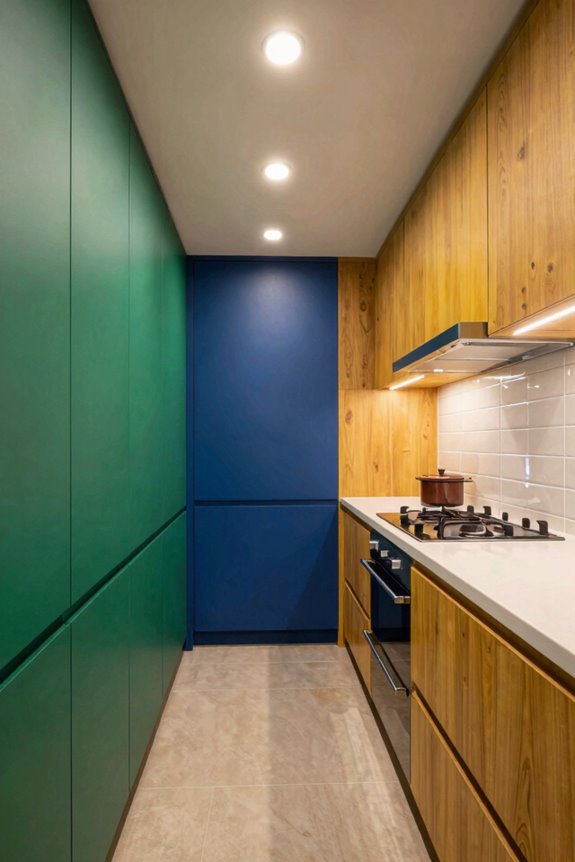
I’ll brighten your galley kitchen by layering three lighting types: task lighting via pendant fixtures positioned 30-36 inches above countertops, ambient ceiling lights for overall illumination, and accent strips along upper cabinets. Together, these eliminate shadows and expand the perceived width of the space.
Your color strategy should anchor one wall in a deep jewel tone (navy, forest green, or charcoal) or introduce bold accessories in complementary hues. This contrast against light-colored cabinetry and reflective backsplashes adds visual interest to the narrow layout without overwhelming it.
Properly spaced fixtures with diffusers prevent glare on glossy surfaces and backsplashes, keeping the galley functional and welcoming rather than clinical.
Pendant Lighting Over Work Zones
When you’re working in a galley kitchen’s narrow confines, focused illumination becomes essential. Pendant lights positioned strategically above countertops deliver exactly that. Task lighting from pendants reduces shadows on work surfaces, sharpening visibility where you need it most. Position fixtures 28–34 inches above the countertop to balance glare control with effective illumination.
Slim-profile pendants with reflective finishes minimize visual bulk while complementing white cabinetry and darker countertops. Metallic or bold-colored options function as design statements, adding character without overwhelming tight spaces. When layered with under-cabinet lights or ambient fixtures, pendants brighten vertical storage and expand perceived dimensions.
This combination of task-focused pendant lighting integrated with supplementary sources creates a functional, inviting workspace where every surface receives adequate light.
Bold Color Strategy Solutions
Why settle for an all-white galley when strategic color placement actually expands the space? I recommend pairing dark cabinetry with light walls to establish cabinetry contrast that creates visual depth. This lighting strategy, combined with bold color palettes on your backsplash or cabinet faces, draws the eye upward and outward, counteracting narrow proportions.
Consider navy or charcoal cabinetry paired with white subway tile and soft gray walls. The contrast prevents monotony while reflective surfaces bounce light throughout your galley. Balance bold accents, perhaps a jewel-toned backsplash, with neutral countertops to evoke warmth without overwhelming cramped dimensions.
Incorporate pendant lights above work zones alongside this color approach. Together, they combat the width restrictions inherent to galley layouts, allowing you to create a kitchen that feels both deliberate and unified.
Layered Brightness Enhances Perceived Space
How do you make a narrow galley feel less dim and claustrophobic while appearing visually expansive? Layered lighting strategically combines task, ambient, and accent illumination to reshape perception. Task lighting above work zones eliminates shadow lines on prep surfaces, while ambient fixtures provide overall brightness throughout the corridor. Accent lighting highlights open shelves and vertical storage, drawing the eye upward and outward.
Reflective finishes amplify this effect. Glass-front cabinets, glossy backsplashes, and polished countertops diffuse light, making tight spaces feel airier. Pendant lights positioned correctly over countertops enhance depth along narrow planes.
| Lighting Type | Placement | Effect | Material |
|---|---|---|---|
| Task | Work zones | Shadow elimination | LED strip |
| Ambient | Ceiling | Overall brightness | Recessed |
| Accent | Open shelves | Vertical emphasis | Track lights |
| Reflective | Surfaces | Light diffusion | Glass/gloss |
Add Seating Without Compromising Workflow
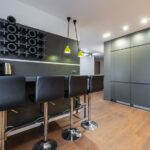
Since galley kitchens demand efficient movement between opposing countertops, I’d recommend positioning seating strategically at the kitchen’s perimeter rather than its center. Counter stools at the back wall create an inviting galley seating arrangement while preserving the 36–42 inch walkway that’s essential for workflow clearance. Slim-profile designs minimize footprint; models like the Blu Dot Real Good Chair offer comfort without bulk.
For a compact snack nook, fold-out tables or wall-mounted drop-leaf surfaces disappear when unused. Benches with built-in storage maximize utility. IKEA’s PINNIG series combines seating with concealed organization beneath.
This approach creates narrow spaces into social dining areas without disrupting meal preparation. Your kitchen becomes both functional and welcoming, where family members can linger while maintaining clear passage for cooking tasks.
Consider Passthrough Openings (If Your Layout Allows)
While strategic seating arrangements create a welcoming gathering space in your galley kitchen, opening up the kitchen visually can amplify both light and usable square footage. Pass-through openings connect galley kitchens to adjacent rooms, creating functional bridges between spaces without requiring full layout overhauls.
Consider these practical applications:
- Position openings to align with main prep zones, maintaining efficient two-workflow circulation patterns
- Install windowed or steel-and-glass frames that maximize natural light while preserving spatial separation
- Design larger pass-throughs doubling as casual dining or breakfast bars for increased surface area
- Verify structural feasibility and cabinet depth compatibility to protect storage and appliances
This space optimization strategy preserves your galley’s efficiency while fostering visual connectivity. This approach is particularly beneficial for narrower kitchens seeking to feel more spacious and integrated with surrounding living areas.